
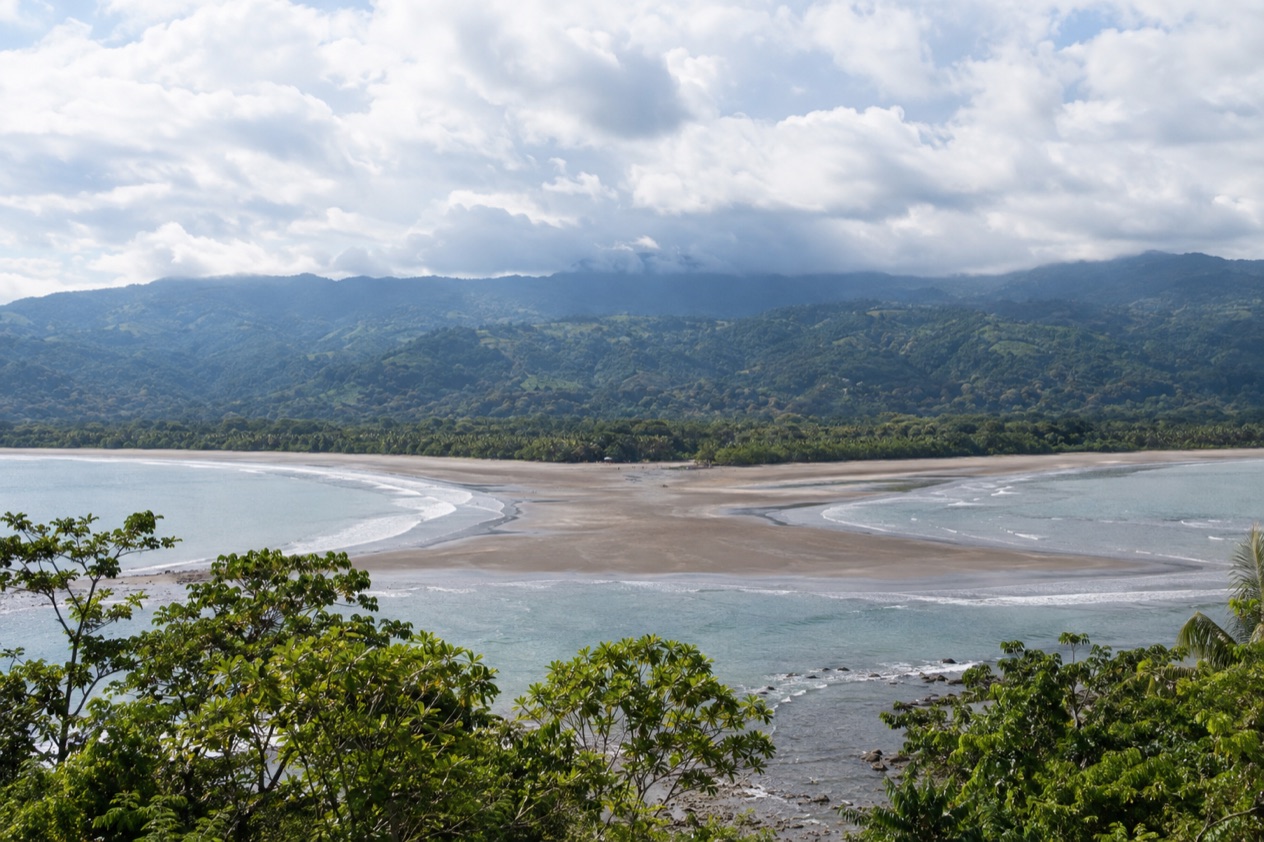
At low tide the sand at the end of Playa Ballena stretches out into the Pacific in a long, curving spit, and families wander out along it with their sandals in their hands while the surf breaks on both sides. Behind the beach, jungle-covered hills fall almost to the sand, and toucans and scarlet macaws cross the sky at dusk.
Uvita is a small, relaxed town on the southern Pacific coast, built for people who like to spend their days outdoors and their evenings on a porch. It suits couples, families, nature lovers and anyone who wants whales, waterfalls and a quiet beach in the same trip.
What are the best things to do in Uvita?
The best things to do in Uvita revolve around the sea and the forest that comes down to it: the whale-tail sandbar in Marino Ballena National Park, a boat trip to look for humpback whales and dolphins, and an afternoon at a waterfall. Everything else, from the beaches to the dinners, grows out of those three.
Uvita is not a town of monuments, so the days are shaped by the tide, the light and the animals rather than by a checklist of sights. Mornings tend to be the time for boats, hikes and birdwatching, and afternoons are for the beach, a long lunch or a swim in a hotel pool.
- Walk the whale-tail sandbar at Playa Ballena at low tide, the picture most people associate with Uvita and a surprisingly peaceful stroll once the tide has gone out.
- Go whale watching by boat, because humpbacks visit this coast twice a year and the season is one of the longest in the world.
- Spend an afternoon at the Nauyaca waterfalls, the big inland day trip, with a long fall of water and green pools set in the foothills.
- Take a guided walk in the rainforest, where sloths, monkeys, toucans and frogs are chances rather than promises, and a guide spots what you would walk past.
- Spend a day in Dominical, the surf town just up the coast, for waves, a lively beach strip and a different mood from Uvita.
- Eat a casado at a small local restaurant, with fresh fish, rice, beans and plantains on a single plate, followed by a fruit shake.
- Watch the sunset from the beach, when the sky turns orange over the water and the macaws fly home to the almond trees.
- Add Manuel Antonio to the itinerary for a change of scene, since the park and its beaches are about an hour away.
Pair a whale-watching morning with a quiet afternoon on the sand, and keep the waterfall for a day when you feel like a longer outing. Between them, you will have covered the coast, the sea and the forest.
Sights and landmarks in Uvita
Uvita’s landmarks are natural ones. The town itself is a scatter of roadside restaurants, small hotels, fruit stands, surf and tour offices and shaded side roads running up into the hills, with the Costanera highway as its main street. What draws visitors are the shapes the land and sea have made, and the national park that protects them.
The whale-tail sandbar at Marino Ballena National Park
Near Uvita, Marino Ballena National Park guards a reach of Pacific coastline and ocean, famed for humpback whales, dolphins and its whale-tail sandbar. At low tide, the sand and rock at the end of the beach form a long, curving spit that really does look like a whale’s tail seen from above. The best views are from the hills above the coast, where the two lobes of the tail and the line of surf are clear, and the best photographs are usually taken from the beach as the tide drops.
The tide decides everything here, so ask your hotel or a local tour office when low tide falls on the day you plan to go, and arrive with time to spare. The sandbar is wide, flat and sunny, with little shade, so a hat, sunscreen and water matter. Rules and entry arrangements at national parks change, so check the park’s official page before you go.
The surf on both sides of the spit can be strong, and currents here are real. Since lifeguards and signs about dangerous conditions are absent at most beaches, think of the sand as somewhere to stroll and take in the view, and stay close enough to grab your kids.
Viewpoints in the hills above the coast
The ridges behind Uvita give the wide views that the beach cannot. From the winding roads and hillside lodges you look straight down the coast to the sandbar, the line of the park and the open Pacific, with forest running right down to the water. Many hotels in the hills have their own terraces for this, and breakfast with a view of the ocean is one of the quiet pleasures of staying up there.
Early morning and late afternoon give the softest light, and the sunsets from up here are some of the best on this coast. Birds are active at the same hours, so a viewpoint breakfast often comes with toucans, tanagers and parakeets. Expect steep, winding roads on the way up, which means taxis or organized pickups are easier than walking.
The town and the coastal road
There is no historic center to tour. Instead, the Costanera strip is where you find small supermarkets, bakeries, juice stands, a few craft stalls and the signs advertising whale boats, waterfall tours and horseback rides. It is worth an unhurried walk or a short ride to get a feel for a town that still lives mostly from tourism, farming and fishing.
Side roads lead down to the beaches and up into the hills, and the Uvita area has a growing community of artists, yoga teachers, surf instructors and long-term visitors, which explains the number of cafés that serve good coffee and vegetarian food next to the rice-and-beans restaurants.
Beaches and outdoor things to do in Uvita
The beaches of Uvita are long, wild and framed by forest, with fine sand, big skies and very little development along most of the shore. The park runs along several of them, each with its own character, and the sea behaves differently from one stretch to the next, so it pays to ask locally on the day.
Playa Ballena and the neighboring beaches
The whale-tail sandbar at Punta Uvita is the scene most people picture, with a backdrop of dark green hills. Close by, a string of other beaches in the park, among them Playa Colonia and Playa Piñuela, offers long stretches of sand with almond trees for shade and often few people. Some are good for sunbathing and walking, and others are better for watching the surf than for getting in the water.
Each year, rip currents prove extremely hazardous and lead to multiple drownings among U.S. tourists. Conditions change with the tides and the swell, and most beaches do not have lifeguards or warnings about unsafe conditions, so follow any posted flags and keep children within arm’s reach at all times.
Whale and dolphin watching by boat
Twice annually, humpbacks come to this shoreline, roughly December through April and then roughly July through October, giving whale watchers one of the longest seasons anywhere on earth. In season, boat trips offer a chance to see humpback whales, dolphins, seabirds and the coastline of the park from the water.
Sightings are a chance, not a promise, but the odds are good in season, and you may see breaching, tail slaps or mothers with calves. Local operators run small boats with naturalist guides, and many trips also stop for snorkeling at a rocky point. Calm mornings tend to be the best for spotting, and a light jacket helps on the water.
Rainforest walks and birdwatching
Behind the coast, the hills hold secondary forest, farm trails and private reserves that run guided walks. You may see sloths, monkeys, toucans, scarlet macaws and a surprising variety of frogs and insects. A guide makes a real difference, because most animals are camouflaged and high in the trees, and guided walks are the way most visitors see wildlife.
Early morning is when birds and monkeys are most active, and the forest is cooler before the sun climbs. Bring insect repellent, closed shoes and a rain layer, since the green season brings frequent rain. Some reserves also offer waterfalls, hanging bridges and horseback riding, which suit travelers who prefer something less strenuous than a long hike.
Other ways to spend a day outdoors
Surf lessons are available on beaches along the coast, kayaking and stand-up paddling are common near the river mouths, and snorkeling trips run out to rocky reefs. Horseback rides along the beach at sunset are a popular choice, and some farms offer chocolate and coffee tours that show how local crops are grown and processed.
Day trips from Uvita
Uvita is a good base because the rest of the southern Pacific coast is within easy reach, from a famous surf beach to a national park known for its monkeys, and the roads that lead to them are some of the prettiest in the country.
Nauyaca waterfalls
A trip inland to the Nauyaca waterfalls takes you up into the foothills behind the coast, and in this area no other outing of the kind draws more people. The falls drop in two stages into a deep green pool, surrounded by forest, and the setting is as much a part of the trip as the water itself. Most visitors go with an organized tour, on horseback or on foot, which gives a feel of the countryside on the way.
Confirm access, conditions and timing before setting out for the Nauyaca waterfalls. Rain can make the access roads muddy and the water stronger, so ask the operator about conditions on the day. Bring a swimsuit and a towel if the operator says swimming is allowed, plus shoes that can get wet.
Dominical and its surf beach
A quick drive north from Uvita brings you to Dominical and its surf beach, an easy outing for half a day or a whole one. The town has a bohemian, surf-and-backpacker feel, with open-air restaurants, shops selling handmade jewelry and clothes, and a long beach where the waves draw surfers all day.
Even if you do not surf, the beach is good for watching the waves and the sunset, and the main street is a pleasant place to eat and browse. The surf is powerful and the currents are strong, so this is a beach for watching or for lessons with a local school rather than casual swimming. Many visitors come for lunch and a stroll, then drive back to Uvita in the afternoon.
Manuel Antonio
Manuel Antonio is about an hour from Uvita by road, and its national park, with white sand beaches, monkeys and trails through lowland forest, is one of the best-known in Costa Rica. A guide helps you see sloths, capuchin monkeys, iguanas and birds, and the beaches inside the park are some of the prettiest on the Pacific coast.
Because it is such a popular place, mornings are the best time to go, before the heat and the crowds build. Check SINAC’s official page for current entry and reservation requirements before you plan the day. Many travelers prefer to stay a night nearby rather than do the round trip in one day, since the drive and the walking add up.
Smaller outings nearby
Closer to home, there are smaller options for a half day: a coffee or cacao farm tour in the hills, a private nature reserve with trails and waterfalls, a horseback ride, a river or mangrove kayak, and a drive along the coast to look for quiet beaches and roadside stands selling fruit and fresh coconut water.
What to eat in Uvita
Eating in Uvita means Costa Rican home cooking with a coastal accent: fresh fish, rice and beans, fried plantains, tropical fruit and strong coffee, served in small family restaurants called sodas and in open-air places along the highway.
The casado and other everyday plates
The casado, meaning married man, is the plate to know. It brings rice, black beans, a salad, fried plantains and a choice of fish, chicken, beef or pork, all on one plate.
Order it at lunch at a soda, where the cooking is simple, generous and often delicious. Gallo pinto, a mix of rice and beans cooked with onion, pepper and cilantro, is the breakfast staple, usually served with eggs, fresh cheese, sour cream and tortillas.
Patacones, which are twice-fried green plantain disks, come with bean dip or guacamole as a snack, and chicharrones, fried pork, show up at many bars. Vegetarian and vegan travelers find plenty of choices, since the area has many cafés that cater to them.
Fish, ceviche and the catch of the day
Near the sea, the fish is the thing to order. Look for the catch of the day, often mahi-mahi, snapper or tuna, grilled, fried whole or served in a garlic sauce. Ceviche, raw fish cured in lime juice with onion, cilantro and sweet pepper, arrives cold with crackers or plantain chips and is a perfect lunch after a morning on the water.
Shrimp, fish tacos and rice dishes with seafood are common too, and a few restaurants near the beach set tables in the sand with a view of the sunset, which is a pleasant way to end a day.
Fruit, coffee and drinks
Roadside stands sell pineapple, papaya, mango, watermelon, bananas and rambutan in season, and batidos, fruit shakes made with water or milk, are easy to find. Agua de pipa, fresh coconut water drunk straight from the coconut, is just right on a hot afternoon, and a cold glass of horchata or fresco, a fruit drink, goes well with a meal.
Costa Rican coffee is taken seriously, and many cafés brew it in a chorreador, a cloth filter on a wooden stand. Beer drinkers will find local labels such as Imperial and Pilsen at most bars, and cocktails with local rum and fruit are popular in the evening. Chocolate made from local cacao is another treat to look for.
Things to do in Uvita at night
Evenings in Uvita are quiet and early. The sun sets over the Pacific, the heat eases and people drift to open-air restaurants, hotel terraces and small bars, with the sound of frogs and insects rising from the forest. This is not a nightlife destination, and that is part of the appeal.
Sunset, dinner and a drink
The evening usually begins at the beach or on a terrace in the hills, watching the sky change color as the macaws fly to their roosts. Dinner is relaxed, with grilled fish, pasta, pizza or a casado, and a few places offer live acoustic music or a DJ on certain evenings, with a crowd of travelers and residents who all seem to know each other.
Beers, cocktails and fresh juice fill the tables, and the pace is slow. Many visitors are up early for boat trips and hikes, so the town tends to empty out soon after dinner.
Night walks and stargazing
Some local guides lead night walks in the forest, where you might see frogs, insects, snakes, sleeping birds and other creatures that stay hidden by day. A guide is essential, since the forest is dark and the animals are hard to see. Away from the town, the sky can be very dark, and on a clear night stars fill the horizon over the water.
Back at your lodge, a quiet porch, a hammock and the sound of the forest can be the best evening of the trip. For a livelier night, some travelers head north to Dominical, where bars and restaurants stay open later, though the road is dark and winding, so arrange a ride in advance.
Things to do in Uvita with kids
Children enjoy Uvita for its animals, its open spaces and the simple pleasure of a wide beach. Nothing here is built as a theme park, so the fun comes from nature, and it pays to plan around the sun, the tides and the distances.
Beach days and the sandbar
A walk out along the whale-tail sandbar at low tide delights children, with its tide pools, shells, crabs and the odd bird. Playa Ballena is wide and sandy, with room to run and almond trees for shade. Building sandcastles can fill an easy morning.
The sea needs care. Rip currents are very dangerous and can pull swimmers in even in shallow water, and most beaches do not have lifeguards. Keep children within arm’s reach at all times, follow any flags, and ask the hotel or a surf school about the day’s conditions before anyone gets in the water.
Boats, wildlife and waterfalls
A boat trip to see humpback whales and dolphins is often the highlight for children, especially when a whale breaches or a pod of dolphins races alongside. Seasons run roughly December to April and July to October, and sightings are never guaranteed, so keep expectations flexible and let kids enjoy the birds and the ride.
On land, a short guided walk in the forest turns into a treasure hunt for sloths, monkeys, frogs and toucans. Choose easy trails, bring repellent, water and snacks, and expect to move slowly. The Nauyaca waterfalls are a bigger outing that suits school-age children who can handle a long day.
What to keep in mind
The sun is strong along this coast, so sunscreen, hats, light long sleeves and plenty of water are part of the daily routine. Heat and humidity tire little ones quickly, so plan outings for the morning and rest after lunch, when many families return to the pool.
Distances between the beaches, the town and the hills are longer than they look, and the roads are winding, so car seats, patience and a few snacks help. Choose a hotel with a pool and a bit of shade, which gives children somewhere to cool off between outings.
Good to know before you go
The U.S. State Department rates Costa Rica Level 2, ‘Exercise increased caution,’ due to crime; it says petty crime is common throughout Costa Rica and that violent crime also affects tourists, including armed robbery, homicide and sexual assault.
Uvita is about 3.5 to 4.5 hours by road from San Jose, and a car makes everything easier, since the beaches, hills and restaurants are spread along the highway and up winding side roads.
The Pacific coast has a wet, green season, so a rain layer is useful on most trips, and many travelers carry both cash and a card for small restaurants and roadside stands. Pack sunscreen, insect repellent and shoes that can get wet.
Sources
- Open-Meteo / ECMWF ERA5, normals 1991-2020 computed for the grid cell at 9.1561N 83.7347W, checked October 8, 2026
- U.S. Department of State, Costa Rica Travel Information, Safety and security (https://travel.state.gov/content/travel/en/international-travel/International-Travel-Country-Information-Pages/CostaRica.html), checked October 8, 2026
- U.S. Department of State, Costa Rica Travel Advisory, issued April 1, 2026 (https://travel.state.gov/content/travel/en/traveladvisories/traveladvisories/costa-rica-travel-advisory.html), read via the State Department open data API on October 8, 2026