
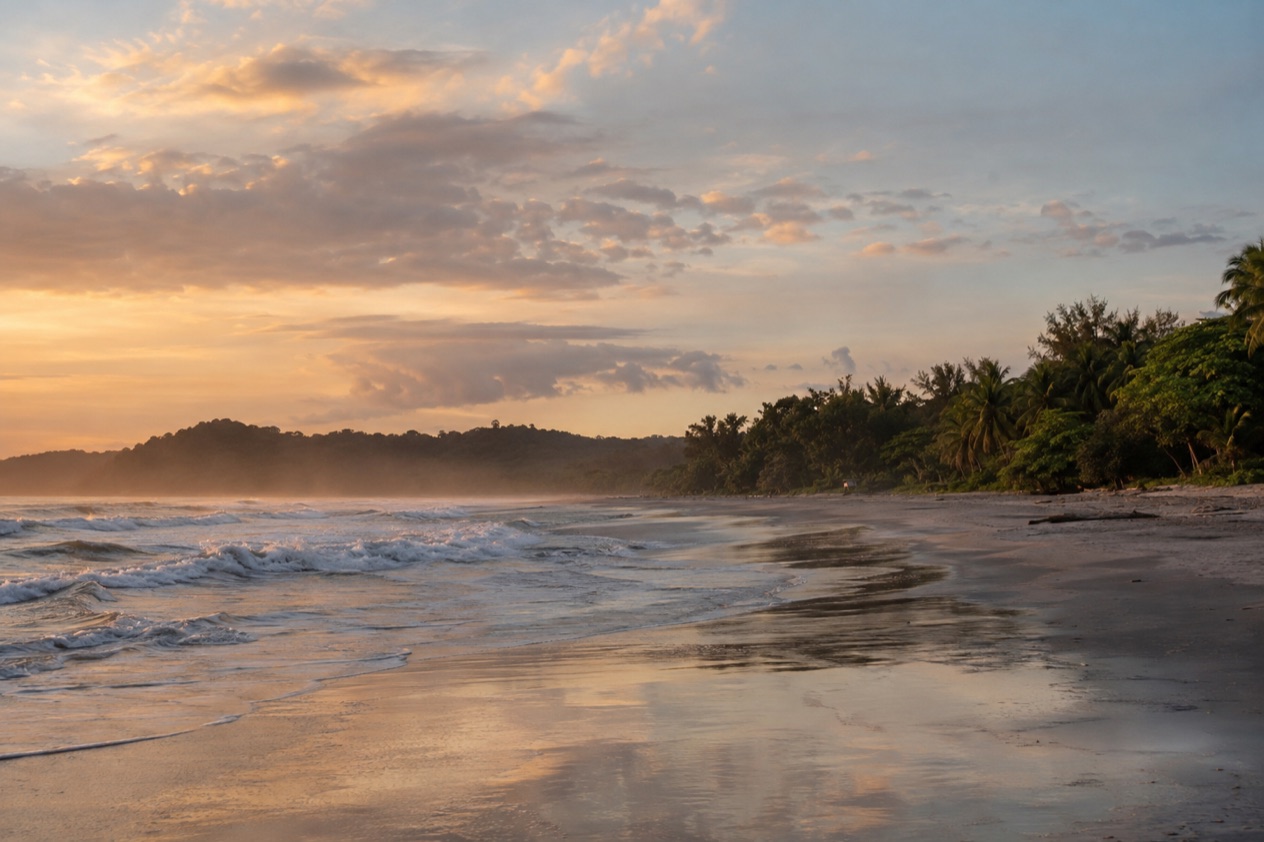
Early in the morning in Nosara, howler monkeys start up in the trees behind the beach, surfers carry their boards down sandy paths toward Playa Guiones, and a yoga class stretches out on a wooden deck in the shade. By evening, the scene moves a few minutes away to a lantern-lit restaurant near Pelada or a plastic table in the village, where a plate of casado comes with a cold drink. Nosara is spread out, green and quiet, and where you sleep decides which of those Nosaras you wake up in.
What is the best area to stay in Nosara?
For a first visit, Playa Guiones and the streets around it are the easiest choice, while Pelada suits travelers who want a smaller, quieter beach, the village suits those who want local life and simple lodging, and families should favor a lodging with a pool rather than assume the nearby water is calm. Nightlife is the one thing Nosara does not really sell: evenings here mean a long dinner, a drink and an early night before a dawn surf or yoga session.
If this is your first time, think about what your days will look like. Surfers, yoga students and people who plan to spend most of the day at the beach want to be near Guiones, where the wellness studios, cafés, juice bars and surf schools cluster. Staying near Guiones keeps the beach, surf schools, wellness studios and places to eat in the same general area.
Budget travelers have the most options away from the beachfront. The village inland has small guesthouses, family-run cabins and simple rooms, with the market, the bakery and the sodas (the small local restaurants serving a set lunch) at your doorstep. You trade a short walk or ride to the sea for a more everyday atmosphere and a quieter bill at the end of the week.
Beach lovers who do not surf have a different choice to make. Guiones is long and wide, which means room to spread out, but it is also a surf beach with strong currents. Pelada and the northern Garza stretch feel smaller and more secluded, with rocks, tide pools and fewer people on the sand. Each has its own rhythm, and you can easily visit one while sleeping in another.
Families tend to like the neighborhoods where a pool, a kitchen and a grocery run are all close by. Apartments and villas with a kitchenette make breakfast and nap time simple, and a place within a short stroll of the beach saves a lot of hauling of towels and snacks. Children need to stay within arm’s reach in the water here, so a pool at your lodging is a useful plan B.
Couples looking for a romantic stay will find boutique hotels set in the forest above the beaches, with outdoor showers, hammocks and the sound of birds at dawn. Groups of friends often rent a house or a set of apartments together, which works well in a place where so much of the day is spent outdoors and the evenings are quiet.
The turtle beach at Ostional sits a little farther north and is a day outing for most visitors, though a handful of simple places to sleep exist in the village itself. In the green season especially, olive ridley turtles arrive on that shore by the hundreds to lay their eggs, which means a room close by is ideal for those who value animals over amenities.
The best areas to stay in Nosara
Playa Guiones and Beach Hills
This is the Nosara most people picture: a long, open beach with steady surf, shaded lanes lined with trees, and a cluster of cafés, studios and shops that feel closer to a wellness retreat than a typical beach town. Mornings are for surf lessons and yoga, afternoons for hammocks and smoothies, and evenings for a restaurant meal in the open air. Monkeys and iguanas turn up in the trees around many lodgings.
Lodging here ranges widely. You will find boutique hotels, villas, apartments with kitchens, and small guesthouses tucked into the greenery, most of them intimate in size rather than resort-scale. The hillside part of the neighborhood, known as Beach Hills, trades a longer walk to the sand for ocean views and cooler evening breezes. Getting around is easiest by bicycle, on foot or by short taxi rides, since the lanes are sandy and often rough.
Guiones suits first-timers, surfers, yoga travelers, couples and families who want everything close. A tip: choose by how far you want to walk to the beach, not just by the photos, because the area is spread out and a place that looks near on a map may mean a hot walk on a loose road. Ask about the beach access when you book.
Playa Pelada
Playa Pelada is a smaller, more intimate bay to the north, known for its rocky edges, tide pools and an easygoing local feel. People come here at sunset to watch the light on the water, and the beach has a relaxed, almost neighborhood quality compared with the wider sweep of Guiones. A few restaurants and bars give it a modest evening life without any real crowd.
Lodging is mostly small: hotels with a handful of rooms, villas, rental houses and apartments, often in a lush setting just back from the shore. It suits couples, small groups and travelers who like a calmer base but still want to reach the Guiones studios and surf breaks by a short ride or a longer bike trip. The beach here has its own rocks and currents, so ask your host about the day’s conditions before you swim.
A good tip is to plan on getting around by taxi or bicycle if you stay here, since some evenings you may prefer not to walk the dark paths back to your lodging. Many guests like to divide their stay: Pelada for a quiet first nights, Guiones if they want more activity.
Playa Nosara and Garza
Playa Garza lies south of the main Guiones hub, along a wilder, less visited coast, while Playa Nosara sits north near the river mouth. Playa Garza and Playa Nosara sit on opposite sides of the main Guiones hub and offer different bases for a stay. Dining and shopping options are more limited, so it rewards those who like to plan their days.
Lodgings here are fewer and often more secluded, including villas, rental homes and a few small hotels, many of them aimed at people who want privacy and quiet. It suits couples, writers, nature lovers and anyone who wants to be away from the surf crowd. These areas are separated from Guiones, so ask your lodging what transportation you will need.
As a tip, stock up on groceries and water before you settle in, and ask your host how the road and the paths behave after heavy rain. In the green season, the wet weather can turn the landscape a deep, dramatic green, though it can also make the quietest corners feel even more remote.
The village inland
The village is where Nosara’s day-to-day life happens: small grocery stores, a bakery, sodas serving gallo pinto and casado, mechanics, schools and neighbors chatting on the corner. It is less polished than the beach areas and far less scenic, but it gives you a sense of how people live here, and food tends to be simple and filling. Roosters and the occasional bus replace the sound of the surf.
Lodging leans toward guesthouses, hostel-style rooms, cabins and basic apartments, which makes this the practical option for budget travelers, long stays and those who want to cook for themselves. You are farther from the sea than anywhere else, so plan your days around a bike, a taxi or a shared ride to the beach. Surfers on a tight budget often make this trade happily.
A useful tip is to check how a place handles heat and sleep: fans, screens and air conditioning vary, and nights can feel warm and close. Ask about quiet hours too, because village life starts early.
Ostional
Just north of Nosara sits Ostional, a tiny fishing village whose dark-sand beach matters for a single reason: olive ridley sea turtles come ashore there in big numbers to nest, mainly during the green season. The village has a rural feel, with a few sodas, a church and a laid-back pace that feels a long way from the surf scene.
Lodging is limited and basic, mostly family guesthouses and small cabins, so it suits wildlife enthusiasts, photographers and travelers who do not mind simple rooms in exchange for a short walk to the nesting beach. Most visitors prefer to base themselves around Guiones or Pelada and visit Ostional as an outing, which is perfectly reasonable.
A tip: turtle nesting is a chance, not a promise, and it depends on timing and conditions, so treat it as a bonus rather than the reason to book.
Nosara areas compared
| Area | Best for | Feel | Getting around |
|---|---|---|---|
| Playa Guiones and Beach Hills | First visit, surf, yoga, families | Lively by Nosara standards, with cafés, studios and shops | Bicycle, on foot, short taxi rides |
| Playa Pelada | Couples, quiet beach days, sunsets | Small, relaxed, rocky and intimate | Taxi or bicycle |
| Playa Nosara and Garza | Privacy, long walks, nature | Wild, spacious and secluded | Car or regular taxis |
| The village inland | Budget stays, local life, longer visits | Everyday, practical and unpolished | Bicycle, taxi or shared rides to the beach |
| Ostional | Turtle-nesting season, wildlife | Rural, quiet and simple | Taxi or a guided outing |
The main trade-off in Nosara is beach against local life. The closer you sleep to Guiones or Pelada, the more your days revolve around surf, yoga and café culture, and the more your meals reflect that world. Move inland to the village and the sea becomes a ride away, but you gain everyday Costa Rican routines, simple food and a gentler bill.
Quiet and nightlife pull in opposite directions here, though neither is extreme. Guiones has the most restaurants and a few places to linger over a drink, but it still winds down early. Garza and Ostional offer near-total silence, which some people love and others find lonely by the third evening.
Convenience matters too. A place on the sand lets you walk to the surf at dawn, but it may mean a longer ride to the market and a heavier use of taxis.
A place a few streets back from the beach can be quieter, cheaper and just as pleasant, as long as you are happy to walk or ride a bike. Split stays are a sound option: a few nights in one area, a few in another.
How to choose your hotel in Nosara
Large all-inclusive resorts are not the Nosara style: most lodging is small, with boutique hotels, villas, guesthouses and apartments, and meals tend to be eaten in the cafés and restaurants nearby. If you want everything handled on site, look for a hotel with its own restaurant, a pool and organized activities, but expect a more intimate scale than in big resort areas elsewhere.
If you prefer to cook, an apartment or villa with a kitchen can save money and give you a base for slow mornings. The village and the streets near Guiones have small grocery stores and markets, so basic supplies are easy to find, and breakfast on a terrace under the trees is one of the quiet pleasures of staying here.
Beachfront or not is a real question. A property close to the beach puts the sound of the waves nearby, but a lodging farther back in the trees may feel cooler, greener and quieter. Ask how long the walk to the beach really takes and whether the path is shaded, sandy or steep, especially in the midday heat.
Rain changes the picture depending on when you go. January and the dry months are bright and hot, while July and especially October bring rain on most days, often heavy, which turns the surroundings lush and green and sometimes makes roads muddy. In the wet season, a covered terrace, good drainage and a place that does not feel cut off are worth more than a view.
Peak weeks fill up first. The dry months from about December to April, school-break periods and any big surf or yoga events draw crowds to a small place with limited rooms, so book early if your dates are fixed. Outside those weeks, the green season is quieter, rooms are easier to find and the rain tends to give the landscape a fresh, almost tropical-forest look.
Families and travelers with limited mobility should look closely at the layout. Many properties have steps, sandy or uneven paths and open-air rooms, and the lanes around the beaches are not smooth.
Ask about ground-floor rooms, the distance from parking to your door, a pool with a shallow end and how far you are from a restaurant. A place close to the beach with a pool gives families a useful second option when the surf is rough.
Before booking, check a few practical details. Noise is the first: roosters, howler monkeys at dawn, construction and the occasional party can carry far in open-air buildings, so read recent reviews with that in mind. Ask also about screens and fans, since air conditioning is not universal and humid nights are common.
Transfers matter as well. Ask your lodging how guests usually cover the final stretch from the airport, since the answer depends on where you stay and the state of the roads. You should also check with the staff on how the beach looks right now, since rip currents are a genuine danger here and lifeguards or warnings are absent at most beaches.
Good to know before you go
The U.S. State Department rates Costa Rica Level 2, ‘Exercise increased caution,’ due to crime; it says petty crime is common throughout Costa Rica and that violent crime also affects tourists, including armed robbery, homicide and sexual assault.
Arrange the last leg from the airport with your lodging before you arrive, since it is the part that depends on which neighborhood you pick, and keep some cash for small village shops and sodas. Rip currents, one of the most lethal hazards, kill multiple U.S. tourists in Costa Rica annually, and on the majority of beaches no lifeguards are present and no alerts appear once the water becomes dangerous. Check with your hotel or a surfing teacher on how the water looks that day, obey any flags that are flying, and stay close enough to grab your children.
Sources
- Open-Meteo / ECMWF ERA5, normals 1991-2020 computed for the grid cell at 9.9792N 85.6531W, checked October 8, 2026
- U.S. Department of State, Costa Rica Travel Information, Safety and security (https://travel.state.gov/content/travel/en/international-travel/International-Travel-Country-Information-Pages/CostaRica.html), checked October 8, 2026
- U.S. Department of State, Costa Rica Travel Advisory, issued April 1, 2026 (https://travel.state.gov/content/travel/en/traveladvisories/traveladvisories/costa-rica-travel-advisory.html), read via the State Department open data API on October 8, 2026
To plan your stay
- Best Time to Visit Nosara: Dry Season, Green Season, Surf and Turtles
- Things to Do in Nosara: Surf at Playa Guiones, Yoga, Ostional Turtles and Where to Eat
- Nosara in January: Weather, Playa Guiones Surf, Ostional and a Two-Day Plan
- Nosara in February: Weather, Playa Guiones Surf, Yoga and a Two-Day Plan