
On the evening of September 14, children in Uvita walk down the road with paper lanterns, the faroles, glowing in the dusk while the frogs start up in the wet grass. The next morning school bands and small flags take over the town for Independence Day. September here is deep green season, with warm water, empty trails and a town that feels like it belongs to the people who live in it.
What is the weather like in Uvita in September?
September in Uvita is hot, humid and very wet, with rain falling on almost every day of the month and the heaviest downpours arriving in the afternoon or overnight.
| Month | Average high (°F) | Average low (°F) | Rain days | Sea (°F) |
|---|---|---|---|---|
| August | 81.0 | 72.8 | 30.7 | 85.6 |
| September | 80.8 | 72.9 | 29.6 | 85.8 |
| October | 80.0 | 72.8 | 30.7 | 85.1 |
Mornings are often the best part of the day. The air is thick but the sun can break through early over the Pacific, and the hills behind town steam after a night of rain. Many travelers plan beach time, walks and wildlife outings before lunch, then expect clouds to build in the early afternoon.
When the rain comes, it can be a heavy tropical downpour that turns dirt roads to mud and sends rivers up quickly, or a long gray drizzle that settles over the coast for hours. Some days hold off until late, and others give only short breaks between showers. Rain this month is part of the rhythm, so it is wise to treat any dry window as a bonus.
Warm evenings mean you can wear short sleeves, and at night it hardly gets cooler. Pack light, quick-drying clothes and a real rain jacket. You get a bit more than twelve hours of light, and because the sun goes down early, most dinners happen in darkness, accompanied by insects and rain on the roof.
Can you swim in Uvita in September?
The sea is warm, but whether you can swim safely depends on conditions that day.
Warm water does not mean easy water. Along Costa Rica’s Pacific coast, rip currents pose a serious threat, drowning several U.S. tourists each year, and at most beaches no lifeguards are on duty and no warnings are posted. In September the swell and the runoff from heavy rain can make conditions change from one day to the next, so ask locals about the day’s conditions before you wade in.
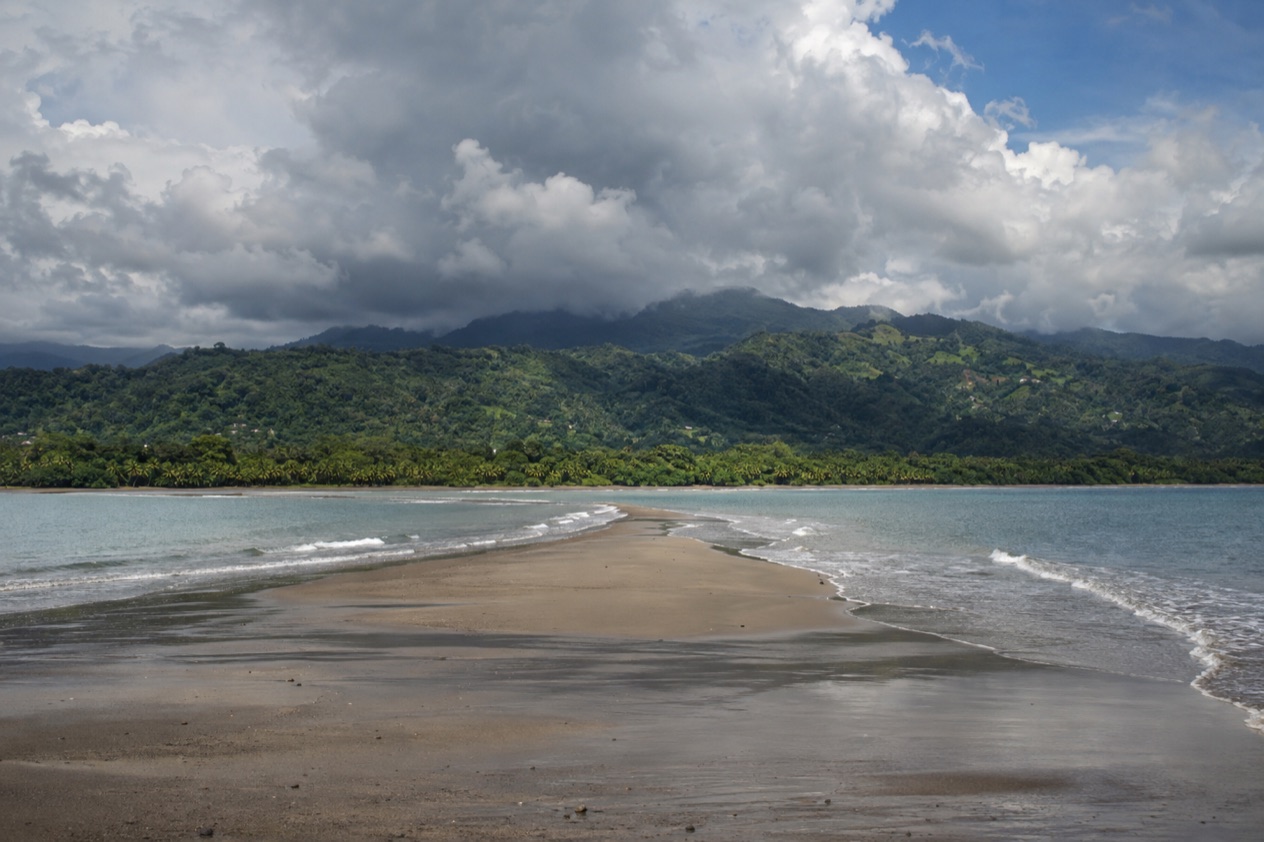
The beach at Marino Ballena National Park is the one most visitors come for, and it is lovely for wading and strolling at low tide along the sandbar shaped like a whale’s tail. Nervous swimmers and families with small children may prefer to stay at the water’s edge and not go out far.
Surfers tend to head north to Dominical, where waves are a regular feature. Since a shower can arrive without warning, pack a dry bag for your phone, water shoes for rocky patches, and a rash guard.
What to do in Uvita in September
The date to know is September 15, Independence Day. On the evening before, children carry paper lanterns in the Desfile de Faroles, and the next day brings school bands and flags. It is a modest, local celebration, and watching from the roadside with a cold drink is a pleasant way to see how the town marks the holiday. Expect people to be out in the street despite the weather, and umbrellas as common as flags.
Beyond the holiday, September suits slow, green-season pleasures, including the whale-watching boat trips that are one of Uvita’s signature experiences. Mornings are for getting outside, afternoons for a long lunch under a metal roof listening to rain, and evenings for small restaurants with plates of rice and beans, fresh fish and fruit juices.
Marino Ballena National Park
This is the reason most people stop in Uvita. The park’s beach curves out into the sea in a long sandbar that, at low tide, forms the shape of a whale’s tail. You can walk out along the sand with the Pacific on both sides, watch pelicans and other seabirds working the surf, and look back at forested hills rising behind the beach.
Go in the morning, when clouds are lighter and the tide table suits a walk on the tail. In September the rain can swell the streams that reach the beach, and skies can turn quickly, so keep an eye on the weather and plan to be back at your car by early afternoon. Check the official SINAC page for current entry requirements before you leave.
Nearly anyone can enjoy the park, from families looking for a beach walk to photographers chasing the tail’s curve when the tide is low. Bring water, a hat and sunscreen, because the sun can be strong when the clouds part. Go in with respect for the currents and stay near the shore.
Nauyaca waterfalls
Inland from Uvita, a day trip brings you to the Nauyaca waterfalls, tucked into green hills where the forest grows dense and the air turns a touch cooler. The falls are a classic outing from this coast, and in the green season the rivers that feed them run full, which makes the scene more dramatic.
Choose a start early in the day and keep plans flexible. Wear shoes with grip and bring a rain layer, a change of clothes and a waterproof bag for your camera.
It suits travelers who like a bit of effort for a payoff and do not mind getting wet. Check conditions locally the day before, and be ready to switch to a beach morning or a café afternoon if the weather says no.
Dominical and the surf coast
Head north from Uvita for a short drive and you reach Dominical, along with its surf beach. It is a laid-back beach town of surf shops, open-air cafés and a steady stream of people carrying boards, and it makes an easy half day when you want a change of scene from the national park.
Watching the surfers is a pleasure even if you never touch a board, and the town has places for a coffee or a smoothie. Waves here can be big and currents strong, so treat the water with caution and stay out if you are not experienced. Head out early while the light stays gentle, and watch the sky for rain later in the day.
A two-day itinerary for Uvita in September
Day 1 is for the park and the beach. Start early, since the sun rises with the day’s best light and the clouds tend to build later. In the morning, while the tide is low, walk along the beach at Marino Ballena out to the whale’s tail, and afterward enjoy a late breakfast of gallo pinto, eggs and fruit at a small café in town.
By midday, the heat and humidity are heavy, so take a long lunch at a family-run soda, the casual local restaurant serving casados. When the afternoon rain arrives, stay put, read, or browse the shops along the main road.
If the sky clears before dusk, walk back to the shore for sunset, which comes a little after the twelve hours of daylight have run their course. Dinner can be fresh fish at a place near the beach.
Day 2 heads out of town. Aim for the Nauyaca waterfalls in the morning, when the day is calmer, and then return to the coast by early afternoon. If the weather is too wet, switch to Dominical, where you can watch surfers, wander the cafés and shops, and wait out showers with a smoothie.
In the evening, come back to Uvita for a quiet dinner. If it is September 14, look for the faroles parade, with children and their lanterns lighting up the dark road. On a rainy night, a long dinner under a roof and an early bedtime are a good way to end the trip.
Is Uvita busy in September?
No, September is one of the quieter months in Uvita, a green-season stretch when the town belongs more to residents than to visitors.
Rain keeps many travelers away, so beaches, trails and restaurants are rarely crowded. Finding a place to stay is usually simple, rental cars are in lower demand, and walking into a restaurant without a reservation is often possible. The exception is the days around Independence Day on September 15, when local families may travel and the town has a festive feel, so it is wise to book lodging a bit ahead if your dates include that holiday.
As a habit, book earlier for any holiday weekend and later for ordinary weeks. For the national park, check the official page for any current rules about entry and reservations.
What to pack for Uvita in September
Bring quick-drying clothing and shoes made for mud, since September means heat, damp air and rain that arrives without warning.
- A real rain jacket, because afternoon downpours are heavy and umbrellas struggle in the wind.
- Quick-drying shirts and shorts, since nothing dries slowly in this humidity.
- For muddy trails and slick rocks, bring shoes that grip and sandals that strap.
- A dry bag is a must for waterfall outings and days at the beach, keeping your phone and camera safe.
- Pack sunscreen and a hat, since once the clouds break, that sun hits hard.
- Insect repellent for the evenings, when the air is damp and the bugs are out.
Good to know before you go
The U.S. State Department rates Costa Rica Level 2, ‘Exercise increased caution,’ due to crime; it says petty crime is common throughout Costa Rica and that violent crime also affects tourists, including armed robbery, homicide and sexual assault.
September falls within the Atlantic hurricane season, and while Uvita sits on the Pacific side, the month still brings long spells of heavy rain, so keep plans flexible.
Uvita in September vs August and October
Going a month earlier changes little. August is just as warm and just as wet, with a sea that is nearly the same, and the town is a touch busier with school-break travelers. September’s advantage is the quieter feel and the Independence Day lanterns, which August does not have.
A month later, October is a little cooler in the air and brings even more rain, with a bit more total water falling than in September, so the green is richer and the roads can be muddier. The sea is a shade cooler but still comfortable. Fewer visitors are around, and some small businesses may slow down.
If you want the lanterns and a calm, local mood, choose September. If you want the least stormy skies, neither neighbor will give you much of a break, so the choice rests on the festival and the crowds. Travelers who dislike heavy rain should look to another time of year altogether.
Is September a good time to visit Uvita?
Yes, for travelers who like green, quiet places and can live with rain, and no for anyone who needs reliable sun and dry trails.
It will suit people who enjoy wandering with a rain jacket, listening to the forest, and eating long lunches while the clouds pass. Wildlife watchers, photographers who love dramatic skies, and anyone who wants a beach without a crowd will find a lot to like. It is a poor fit for those who want fixed beach days, long hikes or snorkeling in clear water, since showers and runoff can interrupt all three.
On arrival, look at the sky and the tide first, then plan your park walk for the morning. Keep your afternoons loose, and ask locals about beach conditions before you swim. What is special about September in Uvita is the lantern parade on the evening of the 14th, when children carry their faroles down a wet, warm road and the whole town comes out to watch.
Sources
- Open-Meteo / ECMWF ERA5, normals 1991-2020 computed for the grid cell at 9.1561N 83.7347W, checked October 8, 2026
- Open-Meteo Marine API, average 2015-2024, checked October 8, 2026
- sunrise-sunset.org, sunrise and sunset calculated for the 15th of the month, checked October 8, 2026
- U.S. Department of State, Costa Rica Travel Information, Safety and security (https://travel.state.gov/content/travel/en/international-travel/International-Travel-Country-Information-Pages/CostaRica.html), checked October 8, 2026
- U.S. Department of State, Costa Rica Travel Advisory, issued April 1, 2026 (https://travel.state.gov/content/travel/en/traveladvisories/traveladvisories/costa-rica-travel-advisory.html), read via the State Department open data API on October 8, 2026
- U.S. Department of State, Costa Rica Travel Information, Entry and exit requirements (https://travel.state.gov/content/travel/en/international-travel/International-Travel-Country-Information-Pages/CostaRica.html), checked October 8, 2026