
Mornings in Manuel Antonio start with capuchin monkeys working the hotel railings and a haze lifting off the Pacific, while in Monteverde the same hour brings mist drifting through ferns and hummingbirds at the feeders. By evening, a surf town like Tamarindo smells of salt and grilled fish, and a small village in the Caribbean sounds of reggae and bicycle bells. Costa Rica is a country where the base you pick shapes the whole trip, so the real question is which corner suits the way you like to travel.
What is the best area to stay in Costa Rica?
For a first visit, most travelers do well with a volcano base such as La Fortuna paired with a beach base such as Manuel Antonio, while surfers head to Tamarindo, Jaco or Santa Teresa, families to Samara or Manuel Antonio, budget travelers to the surf towns and small guesthouses, and anyone chasing nightlife to Tamarindo or Jaco.
The areas differ less by quality than by character. The Central Valley around San Jose is mild and practical, a place to land, see a theater and a market, and move on. The northern lowlands around La Fortuna are built around a volcano, hot springs and waterfalls.
The mountains of Monteverde are cool and misty, a world of canopy bridges and night walks. Along the Pacific, beaches stretch in a long chain, ranging from polished to barefoot, while the Caribbean side moves at a slower, quieter rhythm, with food, music and pace that are more Afro-Caribbean.
Weather adds another layer. From about December to April, the Pacific side and the Central Valley dry out, and from about May to November they turn greener, when rain tends to come in the afternoon. On the Caribbean coast, rain arrives on its own schedule throughout the year, which means two spots an hour apart can seem like separate nations. The spine of volcanic mountains that splits the country is the reason.
For a first trip
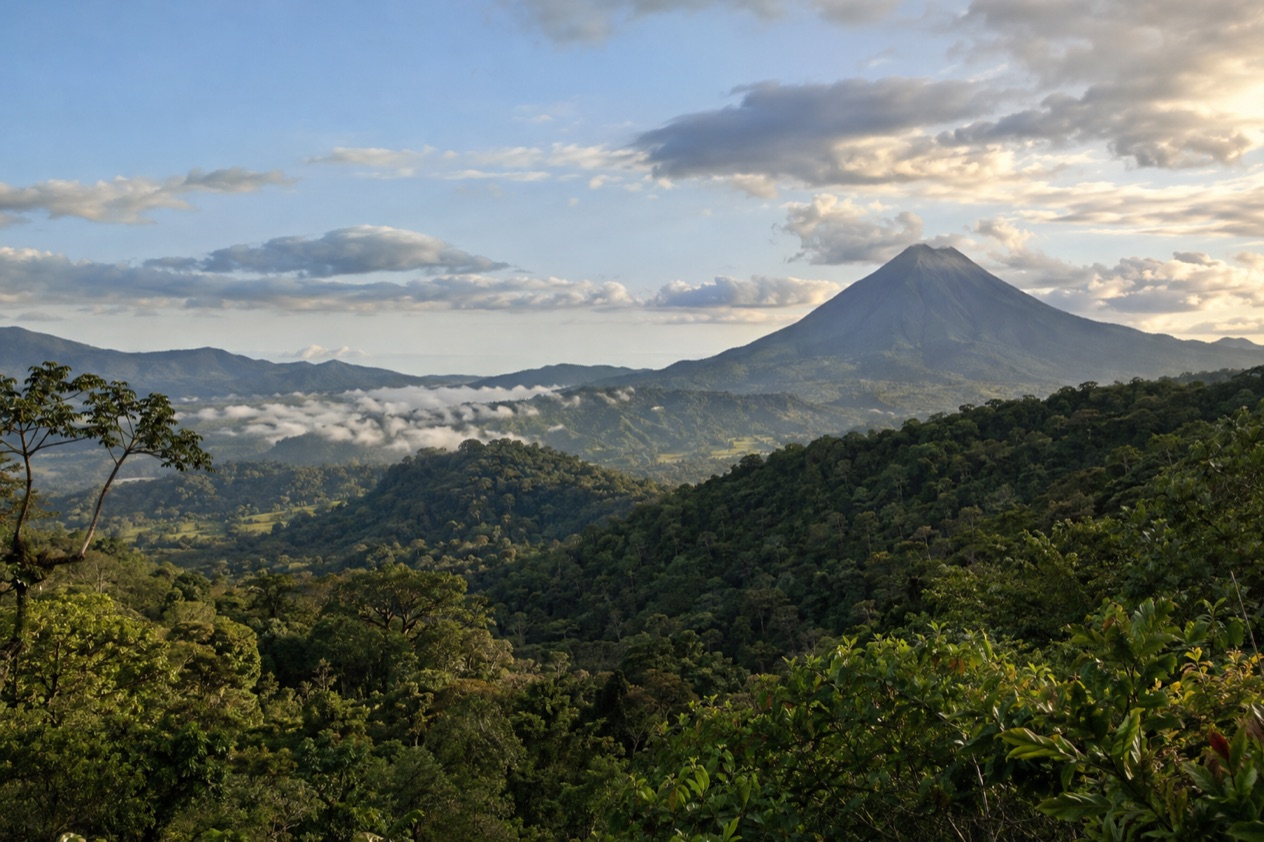
La Fortuna gives you the classic picture: a cone of a volcano above a small town, with hot springs, a waterfall, hanging bridges and a lake close by. Many first-timers pair it with either Monteverde for the cloud forest or Manuel Antonio for beach and wildlife. That combination covers mountains, rainforest and ocean without too many long transfers.
San Jose works as a one-night stop on arrival day, handy for an early start, rather than a base for the whole stay. Its mild Central Valley air makes for a pleasant evening stroll after a flight.
For beaches, surf and nightlife
Along Tamarindo’s main street you’ll find places to eat, browse and go out at night, plus a beach break made for those just starting out. Jaco turns the volume up even more, offering a long beach of dark sand, plenty of bars and restaurants, and a spot just about two hours from San Jose by road. Santa Teresa is the barefoot alternative, with small hotels and cafes along a dirt road behind the beach.
If you want quieter sand, Nosara and Samara on the Nicoya Peninsula trade late nights for yoga, early surf and calm mornings. Uvita, in the south, suits those who would rather spend the day on a whale-tail sandbar or looking for whales.
For families and for wildlife
A broad curving bay cradles Samara, and with a reef plus an island offshore breaking the swell, the sea stays calm, so its easy waves draw families and new surfers, while kayaking and horseback riding wait nearby. Manuel Antonio puts monkeys and sloths close to the park paths, which children tend to remember longest.
For the most immersive wildlife stay, Tortuguero is a village of canals and rainforest with no roads in, reached only by boat or small plane. Most visitors sleep at lodges that arrange guided boat trips for caimans, monkeys, herons and kingfishers.
The best areas to stay in Costa Rica
La Fortuna and the Arenal Volcano
Set in the northern lowlands at the foot of Arenal, La Fortuna is a little town and the primary hub for the region’s hot springs, waterfall, hanging bridges and lake. Arenal’s iconic peak released lava with hardly a break from 1968 onward, then went quiet after 2010, luring travelers who long to see it and to trek over old flows. On clear mornings the cone and Lake Arenal show themselves, and clouds often close in later in the day.
Lodging runs from simple guesthouses and cabins in town to larger resorts and boutique hotels spread along the roads toward the park, many with hot-spring pools and a volcano view from the garden. Staying in town lets you walk to dinner, while staying out on the hillside buys quiet and a view. The La Fortuna Waterfall is reached by a long staircase down into a green basin, a good morning outing before the day warms up.
It suits couples, families and first-timers who want a lot to do without moving hotels. The drive from San Jose is a long half day, and the airport at Liberia is another option for arriving. Tip: pick a hotel with a view of the cone only if you accept that clouds sometimes win.
Monteverde and Santa Elena
Monteverde is a cloud-forest region set high in the Tilaran mountains and focused on the village of Santa Elena, where the air stays cooler and often misty, and ferns, orchids and mosses fill the woods in dense growth. Visitors head out on the reserve’s trails, cross hanging bridges woven through the canopy, soar on zip lines high over the treetops, and join guided night walks looking for frogs, insects and birds at rest. The resplendent quetzal is the bird people hope for, best sought with a guide early in the morning.
Lodging is mostly small: mountain lodges, boutique hotels tucked into the trees, family-run guesthouses and a few apartments in Santa Elena. Bring a light jacket and expect evenings that feel nothing like the coast.
The final leg of the journey climbs sharply, rattles along, and runs partly on dirt, which means you’ll arrive later than the map makes it look. That is the main limit: Monteverde rewards a stay of a couple of nights rather than a rushed stop, and suits nature lovers more than beach seekers.
Manuel Antonio and Quepos
A national park that ranks among Costa Rica’s most visited is framed by the hills and beaches of Manuel Antonio, located on the central Pacific coast right below Quepos. White-faced capuchins, squirrel monkeys, sloths, iguanas and raccoons appear regularly within the park and its surroundings, and visitors are asked to refrain from feeding them. At the point where forest paths finish, you will find little bays of white sand.
Along that single curving road with ocean views, hotels and rentals rise up the hill from Quepos to the park entrance, which means your choice of lodging determines if you stroll to the beach or ride the bus. Boutique hotels and villas with ocean views dominate the hillside, while Quepos below offers more budget guesthouses, apartments and local restaurants.
It suits families, couples and anyone who wants beach and wildlife in the same day. Tip: a room lower on the hill saves a steep walk, and a room higher up buys the view and the monkeys at breakfast.
Tamarindo and Guanacaste
On the Pacific coast of Guanacaste, Tamarindo blends surf and beach culture, and its main street is lined with places to eat, shop and enjoy the nightlife, roughly an hour by car from the Liberia airport. Beginners will find the beach break manageable, boards and lessons are available from surf schools, and a short drive north or south leads to beaches with larger waves.
From December through April, Guanacaste enjoys the country’s driest, sunniest conditions, and its green season instead delivers afternoon rain and thinner crowds. Lodging ranges from beachfront hotels and condos to guesthouses and apartments a few streets back, and large all-inclusive resorts line other stretches of the coast.
It suits travelers who want sunsets, restaurants and an easy arrival, and you can walk most of town. Tip: a room on a side street is quieter than one on the main strip.
Puerto Viejo de Talamanca
On the southern Caribbean coast, the easygoing town of Puerto Viejo is celebrated for beaches like Playa Cocles and Punta Uva, along with its Afro-Caribbean culture, reggae and bicycles. A shallow reef lies beneath the break called Salsa Brava just offshore, and it is a spot meant only for veteran surfers. Cahuita National Park, with its shoreline trail, reef, sloths and monkeys, is nearby.
Lodging is small and relaxed: beach cabins, guesthouses, hostels and boutique stays among the trees, and the bicycle is the way most people move between beaches. Along the coast the seasons keep a different rhythm, with September and October and then February and March often drier, while the Pacific side is wet. It is a longer drive from the capital, so it suits travelers with time who want local music, food and a slow pace over a big resort.
Costa Rica areas compared
| Area | Best for | Feel | Getting around |
|---|---|---|---|
| La Fortuna | First trip, volcano and hot springs | Small town under a volcano | Walk in town, tours and taxis beyond |
| Monteverde | Cloud forest, canopy walks | Cool, misty, quiet | Slow, steep road in, short local rides |
| Manuel Antonio | Families, beach and wildlife | Hillside hotels, sea views | One winding road, buses to the beach |
| Tamarindo | Surf, nightlife, easy arrival | Lively beach town | Walkable main street |
| Jaco | Nightlife, first surf | Lively, bars and restaurants | Walkable beach strip |
| Santa Teresa | Surf and yoga | Barefoot, dusty or muddy road | Bikes and ATVs along a dirt road |
| Puerto Viejo | Culture, music, quiet beaches | Laid-back Caribbean | Bicycles |
| Tortuguero | Turtles and canals | Remote village, lodges | Boat or small plane only |
The trade-offs are mostly about what you give up. A lively beach town like Tamarindo or Jaco gives you restaurants and nightlife but less of the barefoot calm you find in Santa Teresa or Nosara. A mountain base such as Monteverde gives you forest and cool air but no swimming. Remote places such as Tortuguero and Santa Teresa reward the effort with atmosphere, yet they cost a long travel day each way.
If you want local life and a little culture, San Jose and Puerto Viejo offer markets, music and everyday scenes. If you want ease, pick a place near an airport and spend more time on the sand. Quiet against nightlife is the choice many couples argue over, and the answer is often two bases of three or four nights each rather than one compromise.
Seasons shift the balance too. In the green season the Pacific is lush and quieter, with showers usually in the afternoon, so mornings are the time for tours and beaches. The Caribbean can be a smart choice when the Pacific is at its wettest, because it keeps its own calendar.
How to choose your hotel in Costa Rica
Start with the kind of days you want. All-inclusive resorts suit travelers who want meals, pool and activities in one place, mostly along the Guanacaste coast. Boutique hotels and lodges suit those who want design, a view or a forest setting. Guesthouses and apartments suit longer stays, families who want a kitchen, and anyone who likes to eat at local restaurants and order a casado at lunch.
Think about where you will actually spend your hours. A beachfront room puts you on the sand but often on the noisy side near bars.
A room a few streets back or up the hill is usually quieter and often has more space, but you may need a short walk, ride or bus to the beach. In Manuel Antonio, the hillside position matters most, since the single road decides whether you walk down or take a bus.
Think about the weather you will meet. The Pacific side and Central Valley see drier, popular conditions from roughly December through April, so for the busiest weeks near the end of the year, book early. In the green season, rooms are easier to find, and afternoon showers mean you plan outings for the morning. The Caribbean has its own pattern, so check it separately.
For families, look for gentle water and easy walking: Samara and Manuel Antonio are common choices. Rooms with stairs, steep paths or hillsides can be hard for visitors with limited mobility, so ask about the layout, the slope to the room and the way to the pool before you book. Remote lodges, like those in Tortuguero, are reached by boat or small plane, which is worth considering for small children.
Before you book, check a few practical things. Ask about noise from bars and roads, and whether the room has air conditioning or fans, especially on the hot lowland coasts.
Ask whether transfers are included, since roads to Monteverde and Santa Teresa are slow, steep or partly unpaved, and Tortuguero has no road at all. In Santa Teresa, that dirt road turns dusty during the dry season and muddy during the green season, which means a room set back from it is quieter.
Finally, match the lodging to the wildlife you hope to see. Lodges near forest, like those in Monteverde or beside Tortuguero’s canals, put you close to animals and often include guided walks or boat trips. If you stay in a town close to a national park, Uvita for example, whales can come through from about December to April and then again from about July to October, so being based by the water helps you make those early boat departures.
Good to know before you go
The U.S. State Department rates Costa Rica Level 2, ‘Exercise increased caution,’ due to crime; it says petty crime is common throughout Costa Rica and that violent crime also affects tourists, including armed robbery, homicide and sexual assault.
Most visitors land at Juan Santamaria International near San Jose, or at Daniel Oduber Quiros International in Liberia, the closest airport for the Guanacaste beaches, so choose the one that matches your first base. In tourist areas, almost everyone takes U.S. dollars, and many hotels, tours and restaurants quote their rates in dollars, though the change you receive will often come in colones. Restaurant bills usually include a sales tax plus a service charge, so anything extra you leave is your call, and U.S. plugs work in the outlets here without an adapter.
Sources
- U.S. Department of State, Costa Rica Travel Advisory, issued April 1, 2026 (https://travel.state.gov/content/travel/en/traveladvisories/traveladvisories/costa-rica-travel-advisory.html), read via the State Department open data API on October 8, 2026
To plan your stay
- Best Time to Visit Costa Rica: Dry and Green Seasons, Weather by Region and Festivals
- Things to Do in Costa Rica: Volcanoes, Beaches, Wildlife and Day Trips
- Costa Rica Airports: San Jose or Liberia? Beaches, Drive Times and Getting to Your Hotel
- Know Before You Go to Costa Rica: Entry Rules, Money, Getting Around and Local Customs