
In May, the first heavy afternoon clouds pile up over the hills behind Uvita and the whole coast turns a deeper green almost overnight. Mornings are bright and loud with birds, the Pacific is as warm as bathwater, and the long gray beaches of Marino Ballena National Park are nearly empty. This is the month the green season begins on the southern Pacific coast, a good moment for travelers who like an early start, a slow afternoon and a lot of jungle.
What is the weather like in Uvita in May?
May in Uvita is hot, humid and wet, with sunny mornings and rain that arrives most days, usually in the afternoon.
| Month | Average high (°F) | Average low (°F) | Rain days | Sea (°F) |
|---|---|---|---|---|
| April | 83.1 | 73.6 | 23.3 | 87.8 |
| May | 81.9 | 73.8 | 29.7 | 87.7 |
| June | 81.5 | 73.5 | 29.4 | 85.8 |
The rhythm of the day matters more than the forecast. Mornings are usually the clearest and freshest part of the day, with soft light on the water and the forest edge, and that is when you want to do anything outdoors: the beach walk, the trail, the boat. Clouds tend to build by midday, and the rain often comes in the afternoon as a heavy shower or a thunderstorm that can last an hour or run into the evening.
Do not expect a dry stretch, because almost every day sees at least a little rain. Some days it is a brief downpour followed by steam rising from the road, on others a gray, drizzly afternoon that settles in. Nights stay warm and sticky, so you will sleep with a fan or air conditioning, and a thin rain layer is more useful than any sweater.
The sea stays about as warm as the air, which makes the ocean the one place you will not feel hot. Humidity is the main thing you notice: clothes dry slowly, sandals stay damp, and shade becomes a priority by late morning. Plan outdoor time around the light, and keep the afternoon flexible for a long lunch, a nap or a hammock.
Can you swim in Uvita in May?
Yes, the water is warm enough to stay in for a long time, with no shock when you wade in, though the conditions on the beach decide whether you should.
The beaches of Marino Ballena National Park run in a long curve along the coast, and the waves here are open-ocean waves, often with a solid swell rolling in. Some days are gentle enough for paddling and floating, others bring breaking surf and strong pulls of water.
Rip currents are a real danger on this coast and claim the lives of multiple U.S. tourists annually, plus most beaches have no lifeguards and no notice of dangerous conditions. Ask a surf school or the hotel about that day’s water conditions, watch for flags wherever they appear, and never swim alone.
Families with small children usually do best wading near the sand rather than swimming out, and nervous swimmers can simply enjoy the warm shallows. Snorkelers and kayakers go out on the calmer mornings, since the afternoon brings clouds and often choppier water. Bring a rash guard, a hat and sunscreen, because the tropical sun burns you fast even on cloudy days.
What to do in Uvita in May
May is the start of the green season, and that is the story of the month. The hillsides turn lush, the creeks begin to run and the forest fills with sound. May 1 is Labor Day, a national holiday, so beaches and little restaurants can see a few more Costa Rican families that weekend. After that the coast settles into a quiet, unhurried rhythm of early mornings and rainy afternoons.
Food fits the season. Look for a casado, the standard plate of rice, beans, salad, plantains and fish, chicken or beef, served at small family restaurants called sodas.
Fresh fish and ceviche come out of the local boats, and roadside stands sell cold coconut water (pipa) and tropical fruit. A rainy afternoon is a good excuse for a long lunch with a plate of gallo pinto, the rice and beans that anchor breakfast all over the country.
The Whale’s Tail at Marino Ballena National Park
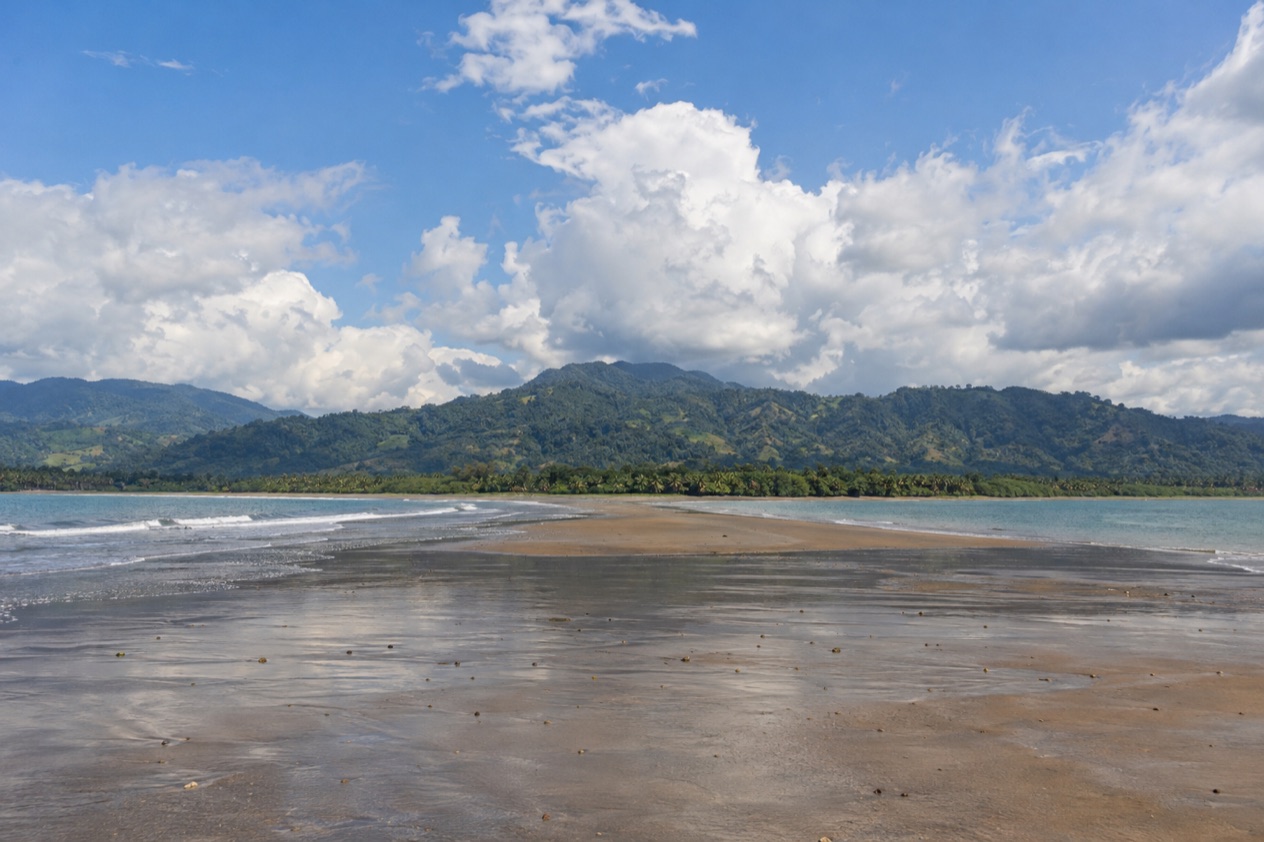
Most visitors head to Uvita for the park. When the tide is low, the beach forms a sandbar shaped like a whale’s tail, and walking out along it with water on either side is what defines a visit. The sand is wide and dark, the water is clear on a good morning, and the forest runs right down to the back of the beach.
Set out early, after confirming the park’s current opening time, and plan your stroll around low tide, when the sandbar shows itself. Wear water shoes for the rocks and shells, and carry a hat and plenty of water.
Since regulations, admission procedures and possible limits may change, check the park’s official website prior to setting off. Afternoon storms can roll in fast, so do not linger on the tip when the sky turns dark.
Beaches and sea caves along the park
South of the main sandbar, quieter beaches such as Playa Colonia and Playa Ballena stretch along the coast with fewer people and more driftwood. They are good for a long barefoot walk, a picnic and watching pelicans and frigatebirds work the surf.
Boat and kayak outings leave from the coast and are best on a calm morning. Guides know where dolphins, seabirds and the rocky islets are most likely to be seen, and they will tell you what the sea is doing that day. Wildlife is always a chance, never a promise, so go for the ride and treat any sighting as a bonus.
Forest, waterfalls and birds in the green season
The hills behind Uvita are good for walking in the early hours. Rain makes the forest loud with frogs, insects and birds, and scarlet macaws are a common sight flying over the coast in pairs. A guided walk is how most visitors see sloths, monkeys and the smaller things that are easy to miss, and it is also the safest way to handle slippery trails.
Waterfalls in the area are fuller than in the dry months, and the surrounding foothills are at their greenest. Trails can be muddy and rivers can rise quickly after storms, so choose mornings and ask locally how the day’s conditions look. Dominical, the surf town up the coast, is an easy afternoon change of scene, with small cafes and craft stalls to browse when it drizzles.
In the evening, the town itself is low-key, with a few open-air restaurants and bars where the sound of frogs and rain on tin roofs takes over. May generally falls between Uvita’s main humpback whale seasons, while any wildlife sighting remains a bonus rather than a promise.
A two-day itinerary for Uvita in May
Day 1 is for the park and the coast. Start early, with a coffee and a gallo pinto breakfast, and be on the beach while the light is still soft and the sky mostly clear. Walk the whale’s tail at low tide, then continue along the quieter beaches to the south, stopping often for the birds and entering the water only when local conditions are safe.
Have a late lunch at a soda, with a casado or fresh fish, just before the clouds typically build. The afternoon is for rest, a hammock, a book or a short nap while the rain does its work.
If the sky clears, take a short walk to a lookout or the beach again, since there is a little over twelve hours of daylight and evenings arrive warm. Dinner can be a seafood plate at an open-air restaurant in town.
Day 2 moves inland and out onto the water. Take a boat or kayak outing early, when the sea is usually at its gentlest, and watch for dolphins, seabirds and the rocky islets. By midday, head to the foothills for a guided walk, a waterfall or a bird walk in the green forest, finishing before the afternoon storms.
Rain card: if the weather turns, spend the afternoon in Dominical browsing craft stalls and cafes, or take a long lunch and a coffee at a roadside place with a covered terrace. A chocolate or coffee farm visit is also a good wet-weather option. Finish with a quiet dinner in town and an early night.
Is Uvita busy in May?
No, May is one of the quieter times on this stretch of coast, with the dry-season crowds gone and the rains only beginning.
Costa Rican families and a smaller number of international visitors fill the town around the May 1 holiday weekend, but after that the beaches, trails and restaurants are calm. Rooms are easier to find, rental cars are less in demand, and tables at the popular restaurants rarely need much notice. You will still want to book early for any holiday weekend and for a favorite hotel, but May is generally a quieter month.
Check availability directly with tour operators, especially when weather may affect outings. To confirm whatever booking policy the park follows, check its official site, as those rules can shift. Come with flexible plans, because a stormy afternoon can reshuffle the day, and the rooms and tables you would fight for in the dry months are simply available.
What to pack for Uvita in May
Pack for heat, humidity and daily rain, and keep everything easy to dry.
- A light rain jacket or a small poncho, for the afternoon downpours that arrive most days.
- Quick-dry clothing, because damp air keeps cotton wet for hours.
- Water shoes or sturdy sandals, for rocky shorelines and the walk out to the sandbar.
- Sunscreen, a hat and a rash guard, since the sun is strong even through cloud.
- Insect repellent, for the forest and for evenings near the water.
- A dry bag for phone and documents, to survive sudden storms and boat rides.
Good to know before you go
The U.S. State Department rates Costa Rica Level 2, ‘Exercise increased caution,’ due to crime; it says petty crime is common throughout Costa Rica and that violent crime also affects tourists, including armed robbery, homicide and sexual assault.
Plan outdoor activities for the morning, keep the late afternoon loose and allow extra time to get anywhere by road.
May 1 is Labor Day, a national holiday, so expect some closures and busier buses that weekend. Book your first boat outing or guided walk early, as these are what fill first, and keep an eye on the beach flags and local advice about the sea.
Uvita in May vs April and June
Moving the trip four weeks earlier brings you to April, which is clearly drier and sunnier, with fewer afternoon storms and a sea just as warm. The beaches are a bit livelier and the forest is less green, so it suits travelers who want more reliable mornings and afternoons on the sand. The cost is a slightly busier coast and less of the quiet, lush mood that defines May.
Moving four weeks later brings you to June, which feels much like May in the rain, with a similar pattern of sunny mornings and wet afternoons. The sea cools a little, and the coast is quieter still, with the forest in full growth. It is a good choice for people who care more about green scenery and empty beaches than guaranteed sun.
Choose April if sunshine and long beach afternoons come first, and May or June if you are happy to plan around the rain in exchange for calm, green and easy-to-book surroundings. May is the gentle middle, with the first rains just beginning and the crowds already thinning.
Is May a good time to visit Uvita?
For travelers who enjoy lush scenery, balmy seas and uncrowded shores, and who do not mind the rain dictating their afternoons, May works well.
It suits early risers, birders, walkers, families who are comfortable with a flexible day, and anyone who would rather have the whale’s tail almost to themselves. It is less ideal for travelers who want a guaranteed sunny afternoon on the beach or a precise itinerary that cannot bend to a storm. On arrival, plan your first morning around the beach walk at low tide, then book a boat or a guided walk for the next day.
What makes May special here is the turn of the season: the first afternoon rains wake the forest, the sea is still bathwater warm, and the park’s long beaches belong mostly to the pelicans, the macaws and you.
Sources
- Open-Meteo / ECMWF ERA5, normals 1991-2020 computed for the grid cell at 9.1561N 83.7347W, checked October 8, 2026
- Open-Meteo Marine API, average 2015-2024, checked October 8, 2026
- sunrise-sunset.org, sunrise and sunset calculated for the 15th of the month, checked October 8, 2026
- U.S. Department of State, Costa Rica Travel Information, Safety and security (https://travel.state.gov/content/travel/en/international-travel/International-Travel-Country-Information-Pages/CostaRica.html), checked October 8, 2026
- U.S. Department of State, Costa Rica Travel Advisory, issued April 1, 2026 (https://travel.state.gov/content/travel/en/traveladvisories/traveladvisories/costa-rica-travel-advisory.html), read via the State Department open data API on October 8, 2026
- U.S. Department of State, Costa Rica Travel Information, Entry and exit requirements (https://travel.state.gov/content/travel/en/international-travel/International-Travel-Country-Information-Pages/CostaRica.html), checked October 8, 2026
To plan your stay
- Things to Do in Uvita: Whale-Tail Beach, Whale Watching, Waterfalls and Where to Eat
- Best Time to Visit Uvita: Dry Season, Whale Seasons, Weather and Festivals
- Uvita in April: Weather, Whale Season, Marino Ballena and What to Do
- Uvita in June: Green Season Weather, Marino Ballena and Nauyaca Waterfalls