
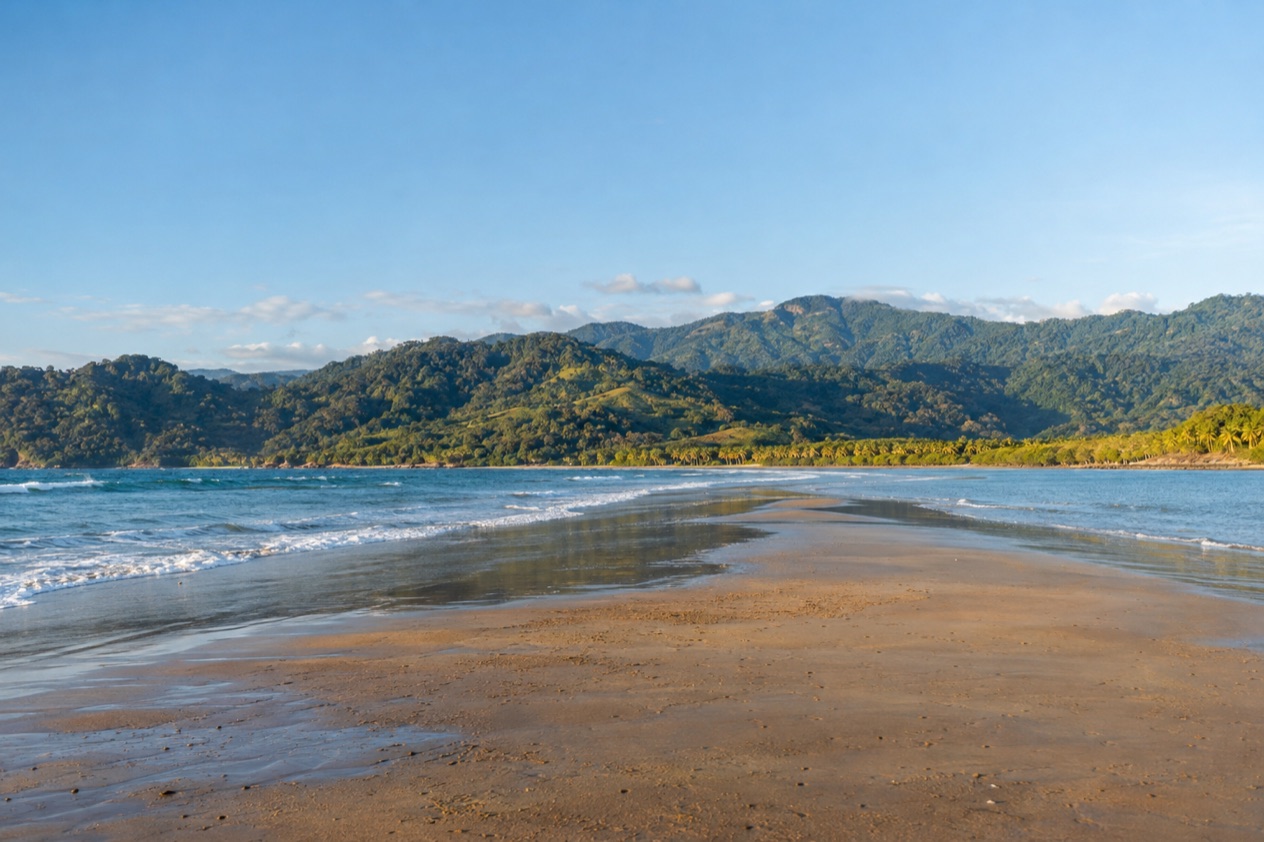
As the tide pulls back from the beach in Marino Ballena National Park, the long sandbar in the shape of a whale’s tail slowly appears, with pelicans working the shallows on either side. By midday the air is thick and hot, and the afternoon clouds start piling up over the green hills behind town.
March is the last stretch of the drier season on this coast, with the first hints of the greener months creeping in. It is a good month for beach mornings, rainforest walks and slow evenings in a small town on the southern Pacific.
What is the weather like in Uvita in March?
Hot and humid, with sunny mornings and a fair chance of an afternoon shower, since March is already past the driest stretch of the year. The month sits between a slightly drier February and a much wetter April, so it feels like a hinge.
| Month | Average high (°F) | Average low (°F) | Rain days | Sea (°F) |
|---|---|---|---|---|
| February | 83.4 | 72.2 | 12.9 | 87.0 |
| March | 84.1 | 73.4 | 15.3 | 87.4 |
| April | 83.1 | 73.6 | 23.3 | 87.8 |
The day’s finest hours come before noon. The light is bright and clean from early on, the heat is still manageable, and the sky is often clear enough for a long beach walk or a hike before the air gets heavy. By early afternoon it feels properly tropical, and the hours after lunch are the ones for shade, a swim or a nap in a hammock.
Rain in March usually comes as a downpour in the afternoon or early evening, often short, sometimes loud and heavy for an hour, and then the clouds break and the evening turns soft and golden. Some days stay dry from dawn to dusk, and a few are gray from start to finish. A day of real rain is the exception, but it is worth keeping a plan B in your pocket.
Nights stay warm enough for a T-shirt and dinner outside, with only a fan or air conditioning needed to sleep well. Pack light, quick-drying clothes, a hat, and a thin rain jacket for the afternoons. The sea is as warm as the air, which changes how you plan the day: you can swim at almost any hour without a shiver.
Can you swim in Uvita in March?
Yes, the water is warm enough for a long, lazy swim at any hour, and the Sea column above shows why: it is close to bathwater. The question in Uvita is less the temperature than the surf and the currents.
The beaches of Marino Ballena National Park are wide, wild and backed by forest, and the waves on this open Pacific coast can be strong. Conditions depend on the tide and the swell, and the waves on this open Pacific coast can be strong.
In Uvita in March, rip currents are a grave danger and cause the deaths by drowning of several American visitors in Costa Rica every year, while most beaches have no lifeguards or warnings about dangerous conditions. Ask at your hotel about the day’s conditions, keep children within arm’s reach, and never swim alone.
Near low tide, the sandbar in Marino Ballena National Park emerges, and the walk is half the fun. Families with young children tend to stay close to the sand and keep an eye on each other.
Snorkelers often join boat trips from the park’s waters, while surfers head north toward Dominical. Bring water shoes for rocky patches, sunscreen, and a shirt for the sun at midday.
What to do in Uvita in March
March in Uvita is about the outdoors. The big festival of the month, the Dia del Boyero, takes place on the second Sunday of March in Escazu, near San Jose, and honors the oxcart drivers who once hauled coffee to the coast.
The parade of painted oxcarts is a Central Valley event, not a Uvita one, but the bright wheels you see on souvenirs and in restaurant decor all over Costa Rica come from the same tradition. If you are passing through San Jose that weekend, it is a colorful stop.
Here on the coast, the month belongs to the beach and the forest. In the mornings, people walk and swim, while midday brings a leisurely lunch of casado (rice, beans, salad, plantain and your pick of fish, chicken or beef) or fresh ceviche, and the afternoons go however the clouds decide. Cold fruit drinks, batidos and coconut water sold along the roadside are exactly what the heat calls for.
Marino Ballena National Park
The park is what brings most travelers to Uvita. At low tide, the beach creates the well-known sandbar that looks like a whale’s tail, and strolling out on it with water on either side is the picture that represents the town. Beyond the sandbar there are quieter stretches of coast, forest meeting the shore, and tide pools at the rocky points where small fish and crabs hide in the retreating water.
Go early, when the light is soft and the sand is cooler, and plan your visit around the tide, since the tail appears best near low tide. Boat trips from the area sometimes spot dolphins and, with luck, whales, though sightings are never guaranteed. Park rules, entry details, and opening days can shift, so before you head out, look at the park’s official page, and bring water, a hat, and sun protection.
The Nauyaca waterfalls
A day trip from Uvita takes you inland to the Nauyaca waterfalls, where pastures, rivers, and wooded hills create a setting that seems completely removed from the shore. The falls drop in two tiers into a deep green pool, and the approach is by a rural road and then a walk or ride, depending on how you choose to go. Mornings are the sensible time, because the afternoon rain in March can turn trails muddy and slippery.
It suits travelers who like to hike and want a break from the sun, and it is a good half-day or full-day plan on a cloudy beach day. Wear shoes with grip and bring a dry change of clothes.
Dominical and the surf coast
Head north from Uvita for a little while by car, and you reach Dominical, along with the beach where people surf. It is a laid-back beach town with surf shops, small restaurants, a few craft stalls and a long, wave-battered stretch of sand lined with palms. Even if you do not surf, watching the surfers from the shore with a cold drink is a fine way to spend a late afternoon.
Beginners can take lessons, but the waves and currents here are serious, so go with an instructor and follow the local advice. In the early evening, the town turns into a relaxed place for dinner, with fresh fish, pizza and cold beer at tables close to the sound of the sea.
Beyond these three, Uvita rewards a slow pace. Small roadside stands sell fruit, there are local cafés for breakfast with gallo pinto (rice and beans fried together, the classic morning plate), and the forest edges around town are good for birdwatching at dawn. Toucans, parrots and herons often show up if you are quiet and patient, and a guided walk is the way most visitors find sloths and monkeys.
A two-day itinerary for Uvita in March
Day 1 is for the beach. Start early with coffee and gallo pinto in town, then head to the park while the sun is still gentle and the tide lets you walk the sandbar. Splash, drift, or frolic where the water meets the shore, check with the hotel or a surf school on how the day looks, always swim with a buddy, stay right beside your kids, and get back beneath a roof for the midday meal, fish and rice on a plate at an easy spot by the main road, ahead of the worst heat.
After lunch, rest. With a little over twelve hours of daylight, the evening arrives early enough for a relaxed plan: head to a viewpoint or a beach bar on the coast for the late afternoon, watch the sky change, and eat dinner at a restaurant with a breeze. If rain arrives, linger over a long meal or find a café with a covered terrace and watch the downpour.
Day 2 goes inland and north. Leave early for the Nauyaca waterfalls, so you finish the walk before the clouds build, and spend the morning on the trail and by the water. Come back for a late lunch and a shower, then drive up the coast to Dominical for the afternoon.
Walk the beach, watch the surfers and browse the shops, then have dinner in town. If the weather turns, shift the day around: do the craft stalls, cafés and a long lunch first, and keep the beach for the end of the afternoon when the clouds often clear. A rainy day also suits a hammock, a book and a slow breakfast.
Is Uvita busy in March?
Moderately, since March still carries some of the dry-season energy, but it is calmer than the heart of the winter holidays. Uvita is a small town, so even a modest increase in visitors is noticeable at the beach and in the restaurants.
Travelers from North America often come in March for spring break and for the drier weather, and Easter weeks, when they fall in March or April, bring Costa Rican families to the coast too. The weeks around those dates fill up first, while the rest of the month feels easier. The surf in Dominical and the boat trips from the park draw a steady stream of day visitors, but the long beaches absorb them well.
For rooms, book early if your trip lands on a holiday week or a spring break week, and a bit later if you are traveling in a quieter stretch. Restaurants rarely require reservations except on busy weekend evenings, when a table at a popular place is easier with a call ahead.
Because the park’s rules and how you get in can shift, check its official page before settling on a particular day.
What to pack for Uvita in March
Think hot, damp and active: light clothes that dry fast, protection from the sun, and something for the afternoon rain.
- A thin rain jacket or compact umbrella, for the afternoon downpours that can arrive without much warning.
- Sunscreen, a hat and sunglasses, because the sun on the sandbar and the sea is strong from mid-morning.
- Water shoes or sturdy sandals, for rocky tide pools and slippery trails to the waterfalls.
- Quick-drying shirts and shorts, since cotton stays damp in the humidity.
- Insect repellent, for the forest edges and the evenings.
- A dry bag or zip-top bags, to protect phones and cameras from rain and spray.
Good to know before you go
The U.S. State Department rates Costa Rica Level 2, ‘Exercise increased caution,’ due to crime; it says petty crime is common throughout Costa Rica and that violent crime also affects tourists, including armed robbery, homicide and sexual assault.
March is a good month to rent a car or arrange transfers, because the coastal road makes the beaches, the waterfalls and Dominical easy to link, and rain on the hillside roads is more common in the afternoon than in the morning. Start outings early and plan to be back by the time the clouds build.
Rip currents are a real hazard on this coast, so ask locally each day about the sea. Most beaches have no lifeguards, so take the same care you would at any wild beach. Bring some cash for small roadside stands and local sodas, and keep your valuables out of sight when you leave the car at a beach or trailhead.
Uvita in March vs February and April
Moving the trip four weeks earlier brings a slightly drier and somewhat less humid Uvita. February mornings are often brighter and the afternoon showers rarer, which suits travelers who want reliable beach days, long hikes and clearer skies. The crowds are a little more of the winter-season kind, and rooms near the beach can be harder to find on weekends.
Moving four weeks later brings a very different place. April is much wetter, with rain on most days, greener hills, fuller rivers and waterfalls, and the sea even a shade warmer. Visitors are fewer, the town is quieter, and the forest is most lush, but you plan the day around the rain, and the trails to the waterfalls get muddier.
If you want the most reliable beach weather, choose February. If you like green landscapes, quiet roads and do not mind afternoon rain, April is rewarding. March sits in the middle: still mostly good for mornings outdoors, with enough rain to make the forest glow and not enough to ruin a plan.
Is March a good time to visit Uvita?
Yes, for travelers who like warm water, early starts and a coast that is still mostly sunny but beginning to turn green. It suits beach lovers, hikers, birdwatchers, families who enjoy gentle mornings and surfers heading for Dominical.
It is less ideal for anyone who needs guaranteed dry afternoons, or who dislikes heat and humidity. If you want long stretches without a cloud, an earlier month will serve you better. If you are happy to plan around a short downpour, March works well.
Once you get there, look up the tide for the sandbar, find out where the water is calmest that day, and set aside one early morning for the park and another for the waterfalls. Keep the afternoons flexible for a swim, a long lunch or a nap while the rain passes. What stays with you from March in Uvita is the early walk out along the sandbar, with the whale’s tail drawn in sand, the sea warm on both sides and the hills still green behind you.
Sources
- Open-Meteo / ECMWF ERA5, normals 1991-2020 computed for the grid cell at 9.1561N 83.7347W, checked October 8, 2026
- Open-Meteo Marine API, average 2015-2024, checked October 8, 2026
- sunrise-sunset.org, sunrise and sunset calculated for the 15th of the month, checked October 8, 2026
- U.S. Department of State, Costa Rica Travel Information, Safety and security (https://travel.state.gov/content/travel/en/international-travel/International-Travel-Country-Information-Pages/CostaRica.html), checked October 8, 2026
- U.S. Department of State, Costa Rica Travel Advisory, issued April 1, 2026 (https://travel.state.gov/content/travel/en/traveladvisories/traveladvisories/costa-rica-travel-advisory.html), read via the State Department open data API on October 8, 2026
To plan your stay
- Things to Do in Uvita: Whale-Tail Beach, Whale Watching, Waterfalls and Where to Eat
- Best Time to Visit Uvita: Dry Season, Whale Seasons, Weather and Festivals
- Uvita in February: Envision Festival, Marino Ballena Beaches and a Two-Day Plan
- Uvita in April: Weather, Whale Season, Marino Ballena and What to Do