
Late in the afternoon in February, the light turns amber over the Pacific and the palms behind Playa Uvita hold still. Families wander out along the sandbar at low tide, shoes in hand, while pelicans skim the swells and the jungle hills go quiet behind the highway. Uvita in February is a small southern Pacific town in the drier season, with warm water, a music and yoga festival at the month’s end and Marino Ballena National Park on the doorstep.
What is the weather like in Uvita in February?
February in Uvita is hot, humid and mostly sunny in the mornings, with showers that come and go rather than settle in. February in Uvita feels like a warm, sticky morning that stays sunny until quick showers drift through.
| Month | Average high (°F) | Average low (°F) | Rain days | Sea (°F) |
|---|---|---|---|---|
| January | 82.1 | 71.4 | 18.6 | 85.8 |
| February | 83.4 | 72.2 | 12.9 | 87.0 |
| March | 84.1 | 73.4 | 15.3 | 87.4 |
Mornings are the best hours. The air is already warm at breakfast, the sky is often bright, and the beaches and trails feel easy before the heat builds. By midday it is properly hot, the kind of heat that sends you to the shade of an almond tree or a table with a fan.
Rain still visits on a good share of days, but it behaves like Pacific rain in the drier months. Expect a shower or a stormy burst, usually later in the day, then clearing skies and a wet, steaming forest. A full gray day is less typical than in the greener months, though it can happen, so keep one flexible afternoon in your plans.
Evenings stay warm enough for dinner outside in a T-shirt, with a light layer only for the breeze on an open terrace. Pack for sun first, with a hat, sunscreen and light, quick-drying clothes. The light is strong and the sea is warm, which suits long days outdoors punctuated by a break in the middle.
Can you swim in Uvita in February?
Yes, the sea is warm enough for a long, comfortable swim, with no need for a wetsuit. It feels like bathwater at the edge and only slightly cooler once you wade out past the first breakers.
The beaches of Marino Ballena are long, open Pacific beaches, so waves and currents change with the tide and the swell. Playa Uvita, with its whale’s tail sandbar, is the one most people head for, and there are quieter stretches of sand to the south toward Playa Colonia and Playa Ballena. Many people wade, float and paddle near the shore rather than swim far out.
Several U.S. tourists drown here every year because of rip currents, which are extremely hazardous. On many beaches there are no lifeguards and no notices about dangerous conditions, so check for flags wherever they exist, ask someone at a local business how the day looks, and keep kids within arm’s reach.
Snorkeling happens on boat outings to rocky spots rather than from the main beaches. Bring a rash guard, water shoes for rocky patches and plenty of fresh water.
What to do in Uvita in February
The big date of the month is the Envision Festival, a music, art and yoga gathering that usually takes place in late February near Uvita. Dates change every year. When it is on, the area fills with festival-goers, the cafés and yoga studios hum, and the usually sleepy roads get busier.
February otherwise is a month for being outside. The days are long enough to fit a morning on the water, a siesta and an evening walk. Coastal cooking moves with the season: fish off the grill alongside patacones, ceviche brightened by lime and cilantro, casado (rice, beans, salad, plantain and either fish or chicken on the plate), plus cold fruit whirled into batidos or served inside coconuts.
Marino Ballena National Park and the whale’s tail
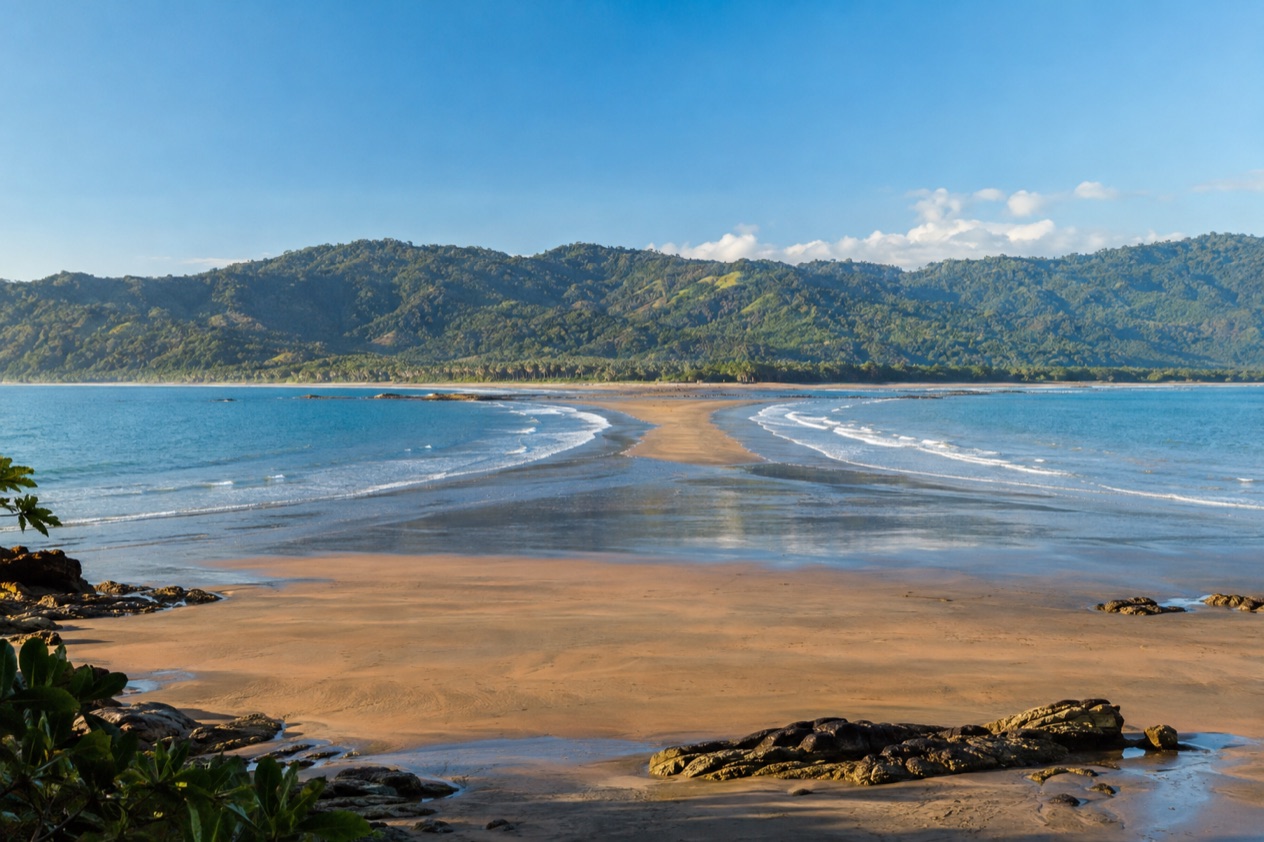
Uvita draws most visitors because of the park. When the tide is low, the sandbar reaches out into the ocean in a whale’s tail shape, with the green headland at its back and water on either side. You walk it slowly, with the surf rolling in on either flank and shorebirds working the wet sand.
Go early, when the sand is cooler and the light is soft, and match your visit to the tide, since the walkable stretch appears and disappears with it.
Boat outings, snorkeling and the coast
A boat from the Bahia Ballena side opens up a coastline the beaches only hint at, with rocky islets, sea caves and clear water for snorkeling. February’s warm sea and morning calm make the early departures pleasant. On a February outing, you may see humpback whales, birds, dolphins and other marine life, though sightings are never guaranteed.
Choose a morning trip if you can. Afternoon showers are more likely after the sun has had hours to build clouds, and the water tends to look its best before the wind rises. Sunscreen, a hat and a light cover-up matter more than any gear.
Waterfalls, forest and the hills behind town
Behind the coast, Uvita Waterfall and the rainforest hills offer birdwatching, viewpoints and forest trails. February’s lower rainfall makes forest walks more comfortable than in the soggy months, though mud and humidity still come with the territory. For most visitors, animals like toucans, monkeys and the occasional sloth are best spotted on a guided walk.
Spend the hottest hours up here when you can, where the canopy cools the air. The sea at the beach is warm in February, but waves and currents change with the tide and swell, so check conditions before you swim.
The evenings belong to the roadside. Small restaurants along the highway grill fish, stand-up paddlers drift home, and sunsets over the water draw a crowd to the beach. If the festival is on, some places stay lively late, but most of town goes to bed early.
A two-day itinerary for Uvita in February
Day 1 starts early at Playa Uvita, where the morning is cool and the tide decides how far the sandbar reaches. Walk out to the tail while the sand is still comfortable, then have a late breakfast of gallo pinto (rice and beans with eggs) at a café near the entrance. Daylight lasts just under twelve hours, which leaves plenty of room for a full day.
At midday, retreat to shade and a long lunch of fish or a casado, then rest through the hottest hours. In the late afternoon, return to the shoreline for a swim near the water’s edge, watching the flags and staying close to shore.
Finish with sunset on the beach and a dinner of grilled fish at a place along the highway. If the weather turns, spend the afternoon at a café, a chocolate or coffee tasting, or a yoga class.
Day 2 belongs to the water and the hills. Take a morning boat trip from Bahia Ballena for snorkeling and coast views, when the sea tends to be at its calmest. Back on land, eat a light lunch of ceviche, then head inland for a guided forest walk or a viewpoint in the cooler air above the coast.
Come back down for a sunset stroll and an easy dinner in town. In the rain, trade the forest for a long lunch, a local craft stop or a slow afternoon with a book and a fruit batido. If the Envision Festival is on that weekend, the evening offers a different, livelier option.
Is Uvita busy in February?
February is a lively month in Uvita but not an overwhelming one, with visitors drawn by the drier weather and the festival at the end of the month. Most days feel relaxed, with beaches that are busy near the park entrance and quiet elsewhere.
Expect more travelers than in the greener months, including North American visitors escaping winter, families on school breaks and groups heading to the festival. Rooms, rental cars and restaurant tables near the main road fill up most when the festival is close, so book early for the last weeks of the month.
The park is the one place where timing matters. The tide shapes the best walks on the sandbar, and visitors tend to bunch up at the beach entrance around the same hours. Go early or late and the stretch feels almost private.
Boat trips and guided walks are worth arranging a few days ahead if your dates are fixed. For reservations, hours and entry rules at the park, rely on the park’s official page, since those details change. Restaurants rarely need reservations outside festival weekends.
What to pack for Uvita in February
Pack light and for sun, with a few items for the afternoon showers and the rough, wet surfaces of the coast.
- Sunscreen and a wide-brimmed hat, because the sun on the sandbar is strong and shade is scarce.
- A rash guard and quick-drying swimwear for boat days and long beach hours.
- Water shoes or sturdy sandals for rocky patches and wet trails.
- A light rain jacket for the afternoon burst that sometimes rolls in.
- Insect repellent for evenings and forest walks.
- A refillable bottle, since the heat makes you drink more than you expect.
Good to know before you go
The U.S. State Department rates Costa Rica Level 2, ‘Exercise increased caution,’ due to crime; it says petty crime is common throughout Costa Rica and that violent crime also affects tourists, including armed robbery, homicide and sexual assault.
February sits in the drier part of the year on this coast, but showers still come, so keep the outdoor plans flexible and put the sea and the park in the morning. Roads between beaches and the hills can be slow, so give yourself more time than the map suggests. Book the boat outing, a guided walk and, if you are going for the Envision Festival, your room first, since those fill up before restaurants and beaches do.
Uvita in February vs January and March
Move the trip earlier to January and you meet a wetter, greener Uvita, with more days of rain and a slightly cooler sea. The forest is lush and the crowds are typically lighter in the first weeks, but showers more often interrupt beach plans. Travelers who love green hills and fewer people might like it.
Go later to March and the days get hotter and the sea warmer, with more rainy days than February but still plenty of sun. The Envision Festival is usually a late February event, so a March trip misses it, along with the buzz it brings to town. Beach time stays easy, but the heat can feel heavier by midday.
Stay with February if you want the balance, with the fewest rain days of the three, a warm sea and the festival. Shift to January for quiet and greenery, or to March for heat and an unhurried beach month. If the festival is the reason you are coming, the late weeks of February are the ones to aim for.
Is February a good time to visit Uvita?
Yes, February is a very good time to visit Uvita, especially for beach lovers, families and anyone who likes to spend whole mornings outdoors. The sea is warm, the rain is mostly confined to short showers, and the days have room for the sandbar, a boat trip and a forest walk.
It suits travelers who like a warm, active vacation with a bit of festival energy in the air. It suits less those who want empty beaches, deep green scenery or a cool break from the heat. If you need a quiet, rainy-season feel, choose another month.
On arrival, check the tide for the sandbar and book your boat outing and room first. Then slow down, find a table near the water and let the first evening be easy. What stays with you from Uvita in February is the end of the day, when the tide drops, the sandbar draws its whale’s tail into the sea and the music of the festival, if it is on, drifts in from the hills.
Sources
- Open-Meteo / ECMWF ERA5, normals 1991-2020 computed for the grid cell at 9.1561N 83.7347W, checked October 8, 2026
- Open-Meteo Marine API, average 2015-2024, checked October 8, 2026
- sunrise-sunset.org, sunrise and sunset calculated for the 15th of the month, checked October 8, 2026
- U.S. Department of State, Costa Rica Travel Information, Safety and security (https://travel.state.gov/content/travel/en/international-travel/International-Travel-Country-Information-Pages/CostaRica.html), checked October 8, 2026
- U.S. Department of State, Costa Rica Travel Advisory, issued April 1, 2026 (https://travel.state.gov/content/travel/en/traveladvisories/traveladvisories/costa-rica-travel-advisory.html), read via the State Department open data API on October 8, 2026