
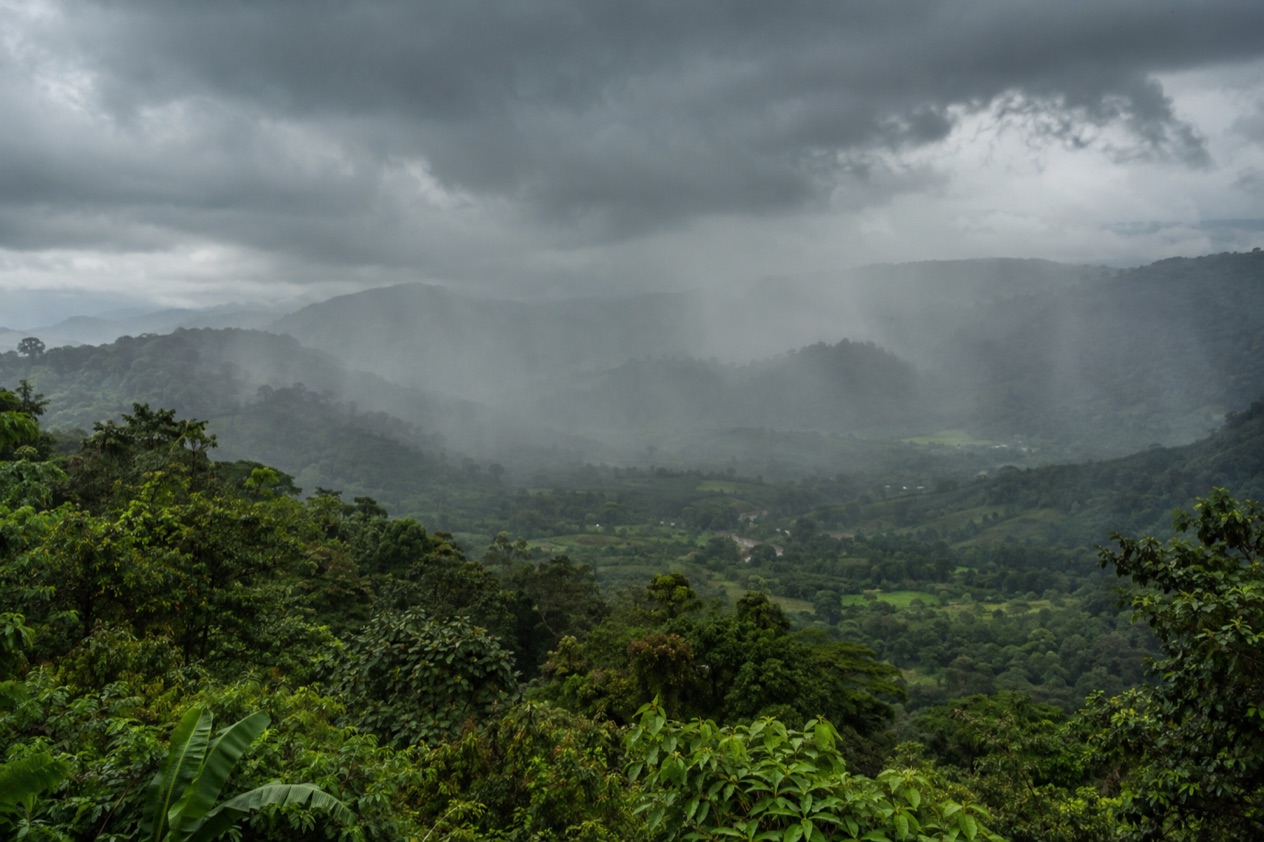
Around three in the afternoon in the Central Valley, the sky turns the color of slate, the first fat drops hit the tin roofs, and the café owner pulls the patio chairs under cover with a shrug. That is the green season at work, and it is far less gloomy than the name suggests. Costa Rica’s rainy season runs on a rhythm of bright mornings and wet afternoons, and it can make for a very good trip if you plan around it.
When is the rainy season in Costa Rica?
On the Pacific side and in the Central Valley, the rainy season runs from about May to November, and the dry season fills the months from about December to April. The rain usually falls in the afternoon, so mornings are often the best time for hikes, zip lines and boat trips. The Caribbean side does not follow this calendar at all, and it gets rain all year.
The switch is gradual rather than a wall. April is already the warm, sticky end of the dry season, with the first afternoon showers gathering over the mountains.
By October the rain settles in for long, steady spells, and November is the month when the country slowly dries out again. Flooding is common between April and October, especially in the provinces of Limon, Puntarenas and Guanacaste, so a river crossing or a low coastal road can change your plans for a day.
How the months compare in three places
You can feel a wet green season in the highlands while the northern Pacific coast and the central Pacific coast feel like a totally different month. A rain day here means at least 0.10 inch of precipitation.
| Place and month | Rain (inches) | Rain days | Average high (°F) |
|---|---|---|---|
| San Jose, January | 3.73 | 7.1 | 75.9 |
| San Jose, April | 3.89 | 10.2 | 79.6 |
| San Jose, July | 11.70 | 22.6 | 75.3 |
| San Jose, October | 16.99 | 26.8 | 74.4 |
| Tamarindo, January | 0.16 | 0.4 | 88.5 |
| Tamarindo, April | 1.54 | 4.2 | 91.6 |
| Tamarindo, July | 7.96 | 18.0 | 85.0 |
| Tamarindo, October | 15.00 | 24.8 | 82.5 |
| Manuel Antonio, January | 7.88 | 19.6 | 80.4 |
| Manuel Antonio, April | 12.55 | 22.3 | 81.9 |
| Manuel Antonio, July | 35.65 | 29.9 | 79.8 |
| Manuel Antonio, October | 38.03 | 29.9 | 78.7 |
Tamarindo, up in Guanacaste, is nearly bone dry in January and then turns properly wet by October. Manuel Antonio sits on a wetter stretch of the central Pacific, where even January sees rain on many days. October is the heart of the wet season at both, and the San Jose highlands feel it too, with showers on nearly every day of the month.
What is the green season in Costa Rica really like?
The green season is lush, humid and rhythmic: bright mornings, towering clouds by midday, and a downpour in the afternoon that often clears by evening. The hills turn an almost unreal green, waterfalls run full, and the rivers sound louder than they do in March. It is also the season when the country feels more like itself and less like a postcard.
A typical day
Start early. Breakfast of gallo pinto (rice and black beans, often with eggs and sour cream) is a good fuel for a morning walk in a cloud forest or a rainforest, when birds are active and the air is cool. By noon the light flattens and clouds stack up over the volcanoes, which is the moment for a long lunch of casado, the plate of rice, beans, plantain, salad and a protein that fills every roadside soda.
When the rain arrives, it can be loud and heavy, drumming on the roof for an hour or two. Locals treat it as an appointment: they sit it out on a porch with coffee, then go back out when the streets steam. A light rain jacket, sandals that dry quickly and a dry bag for your phone do more for your comfort than any umbrella.
On the coast and in the mountains
On the Pacific beaches the rain often arrives late in the day, so mornings can be good for the sand and the water. Rip currents are real on many Pacific beaches and lifeguards are not on every beach, so ask at your hotel how the sea has been behaving and look for the beach flags where they exist. After heavy rain, rivers can turn brown and carry debris to the shore, which is a good reason to choose a hike or a wildlife walk for those days.
In the mountains, mist drifts through the trees and the roads can be slick. Guided walks are the way most visitors see sloths, monkeys and birds, and the wet months bring quiet trails and a forest that feels alive.
Wildlife is always a chance rather than a promise, and the same goes for a clear view of a volcano summit, which cloud may hide at any hour. Rules at the national parks change, so check the park’s official page before you plan a visit.
Is the Caribbean side wet at the same time?
No, the Caribbean side has its own rhythm and gets rain all year, with no clean dry season to speak of. The coast is a quieter stretch of dark sand, canals and Afro-Caribbean towns, reached by a longer drive than the Pacific beaches, and its weather answers to different winds than the rest of the country.
Puerto Viejo through the year
Puerto Viejo de Talamanca shows how the pattern differs. January and April are wet, with rain on most days, though the average highs of around 80 degrees keep it warm. July brings the largest rainfall of the four months in the table, and October remains very wet. The sea can be rough in the wettest spells, so watch the flags and ask locals about the water that week.
| Puerto Viejo | Rain (inches) | Rain days | Average high (°F) |
|---|---|---|---|
| January | 8.78 | 13.8 | 79.2 |
| April | 6.79 | 14.4 | 81.6 |
| July | 17.34 | 27.8 | 81.0 |
| October | 14.72 | 26.3 | 81.3 |
The Caribbean’s wettest months do not match the Pacific’s. October is the deepest part of the green season on the Pacific side, while on the Caribbean coast the rain is spread more evenly and January still sees plenty of wet days. Some travelers use this by pairing the two coasts, heading to the Caribbean when the Pacific is at its wettest.
What the coast feels like in the rain
Rain here is warm and the days are still pleasant between showers. Puerto Viejo’s dirt lanes fill with bicycles, and rice and beans cooked in coconut milk, often with spicy chicken or fish, is the plate to look for at the small family kitchens. Rainforest trails near the coast are muddy and loud with frogs and birds, and flooding is common on this side in the wet months, especially in Limon province, so leave margin when you have a flight to catch.
Is it worth traveling to Costa Rica in the rainy season?
Yes, if you accept afternoon rain as part of the deal, the green season can be a rewarding time to go. The landscape is most vivid, the trails and viewpoints are quieter, and rooms and tours are often easier to find than in the dry months. What you give up is the near-certainty of sun, especially from September into November.
Who it suits
It suits travelers who like forests, waterfalls, birdwatching and a slower pace, and who are happy to spend afternoons with a book, a massage or a long lunch. Families with flexible plans do well too, as long as the day is built around the morning. Surfers often welcome the season, though the swell and the rip currents deserve respect.
It suits less well a trip built around a full week of beach time or a tight list of volcano views. On the central Pacific coast in October, nearly every day sees rain, and a few days of the month see a lot of it. If beach hours are the point, the northern Pacific in the early green season, around May and June, is usually gentler than the south in October.
How to plan around the rain
- Put the big outdoor outing in the morning and leave the afternoon open.
- Pack a light rain jacket, quick-dry clothes and a dry bag for electronics.
- Leave a buffer day before a flight if your route crosses rivers or low coastal roads, since flooding is common from April to October.
- Keep a rainy-day list: a coffee farm, a chocolate tour, a cooking class, a hot spring or a market.
Wildfires are a dry-season concern, commonly between January and the end of May in Guanacaste and the northern region, which is one more reason some travelers prefer the greener months in that area.
Good to know before you go
The U.S. State Department rates Costa Rica Level 2, ‘Exercise increased caution,’ due to crime; it says petty crime is common throughout Costa Rica and that violent crime also affects tourists, including armed robbery, homicide and sexual assault.
The Atlantic hurricane season overlaps the green season, so keep an eye on forecasts if you travel late in the year and book rooms with flexible terms where you can. Bring a few small bills for roadside stands and sodas, and keep valuables out of sight in a parked car, since petty crime is common throughout the country. Roads turn slick and slow in heavy rain, so give yourself more time than the map suggests, and keep your phone and passport in a waterproof pouch.
Sources
- Open-Meteo / ECMWF ERA5, normals 1991-2020 computed for the grid cell at 9.9281N 84.0907W, checked October 8, 2026
- Open-Meteo / ECMWF ERA5, normals 1991-2020 computed for the grid cell at 10.2993N 85.8371W, checked October 8, 2026
- Open-Meteo / ECMWF ERA5, normals 1991-2020 computed for the grid cell at 9.6558N 82.7541W, checked October 8, 2026
- Open-Meteo / ECMWF ERA5, normals 1991-2020 computed for the grid cell at 9.392N 84.1366W, checked October 8, 2026
- U.S. Department of State, Costa Rica Travel Information, Safety and security (https://travel.state.gov/content/travel/en/international-travel/International-Travel-Country-Information-Pages/CostaRica.html), checked October 8, 2026
- U.S. Department of State, Costa Rica Travel Advisory, issued April 1, 2026 (https://travel.state.gov/content/travel/en/traveladvisories/traveladvisories/costa-rica-travel-advisory.html), read via the State Department open data API on October 8, 2026
To plan your stay
- Things to Do in Costa Rica: Volcanoes, Beaches, Wildlife and Day Trips
- Where to Stay in Costa Rica: Beach Towns, Cloud Forest, Volcano Views and Which Base Fits Your Trip
- Costa Rica Airports: San Jose or Liberia? Beaches, Drive Times and Getting to Your Hotel
- Know Before You Go to Costa Rica: Entry Rules, Money, Getting Around and Local Customs