
At first light on Playa Guiones, surfers are already paddling out, howler monkeys are grumbling in the trees behind the sand, and somebody is unrolling a yoga mat on a deck above the beach. The dry months turn the hills gold and the days long and bright, while the green months wash the whole peninsula in deep color and quiet the town. Nosara, on the Nicoya Peninsula, works in every season, but each one asks something different of the traveler.
When is the best time to visit Nosara?
December through April is the best time for most visitors, when the sky is mostly clear, the days are hot and the roads and trails stay dry. The green season from May to November suits travelers who prefer lush scenery, quieter beaches and a slower town, and who accept frequent rain.
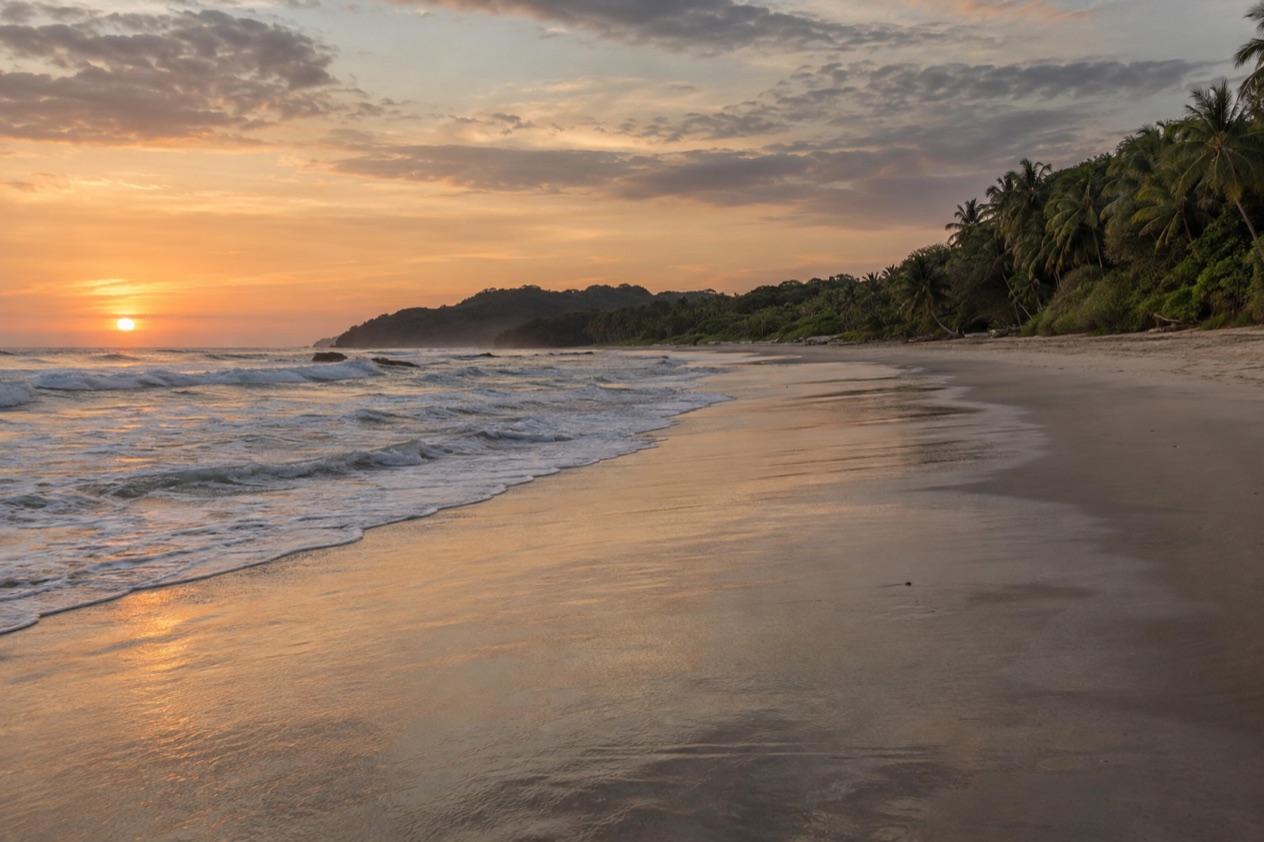
For the beach and the sea, the dry months are the easy choice. Mornings on Guiones are bright, the long beach has room for everyone at low tide, and sunsets over the Pacific are the daily gathering.
Surfers will find steady waves throughout the year, so the green season is no handicap for them, though the sea gets busier with rain and the sky grayer. Sunscreen and a hat matter more in March than at any other time.
For sightseeing and wildlife, both seasons have a case. Dry months make for comfortable walks, horseback rides and drives to neighboring beaches. The green months bring the turtle nesting at Ostional, noisier forests, and a landscape so green it hardly looks like the same place. Mornings are usually the best window for anything outdoors, since the rain tends to arrive later in the day.
For a quieter, easier-on-the-wallet trip, September and October are the months when the town empties and rooms are easiest to find. Families should know that March is spring break season for American schools, and the beaches, restaurants and surf lessons fill with students and groups. If your children are happier with space, aim for late January, February or April, or take the green months with rain jackets and a flexible plan.
Nosara weather by month
Nosara is hot all year, and what changes from month to month is the rain, not the temperature.
| Month | Average high (°F) | Average low (°F) | Rain days | Sea (°F) |
|---|---|---|---|---|
| January | 89.6 | 75.7 | 1.5 | 85.0 |
| February | 91.7 | 76.2 | 1.1 | 85.6 |
| March | 92.5 | 76.9 | 2.7 | 86.6 |
| April | 90.8 | 77.8 | 11.7 | 86.8 |
| May | 86.6 | 77.3 | 25.0 | 87.7 |
| June | 84.8 | 76.7 | 27.2 | 85.9 |
| July | 85.1 | 76.4 | 25.9 | 85.8 |
| August | 84.8 | 76.3 | 27.4 | 85.8 |
| September | 83.8 | 75.9 | 28.6 | 86.0 |
| October | 83.3 | 75.6 | 28.6 | 85.4 |
| November | 84.4 | 75.5 | 18.2 | 83.2 |
| December | 86.6 | 75.5 | 5.5 | 84.4 |
The year divides into two clear halves. From December to March, rain is a rare event and the heat builds toward its peak, with March the hottest and driest-feeling stretch. April is the turning point, as the first afternoon storms begin to break the heat.
From May through October, rain falls on almost every day, usually as heavy afternoon downpours that leave mornings workable, and the air is a little cooler but heavy and humid. November eases out of the wet season, with showers on most days but clearing skies toward its end. Nights stay warm throughout, so you never need more than a light layer.
What is there to do in Nosara in each season?
The dry season, December to April
These are the months for long beach days. Mornings belong to surf lessons and walks along Guiones, when the sand is firm and the light is soft. Midday is for shade, smoothies and a siesta, and late afternoon is for the sunset gathering on the beach, when locals, surfers and yoga students all drift toward the water.
Dry weather makes horseback rides and bike outings more comfortable. The trade-off is heat and dust, and the wildfire season, which commonly affects Guanacaste from January through the end of May. Hills turn brown, and haze can dim the views on some days. Leave the longest hikes for early morning.
The green season, May to November
The forest comes back to life. Howler monkeys, birds and frogs fill the air with sound, rivers run full and the hills are green to the top. This is the season of turtle nesting at nearby Ostional, one of the places where olive ridley turtles come ashore in large numbers, mostly in the green months. Surfers keep riding, and a quiet Guiones is a pleasure in itself.
Plan the day around the rain. Mornings are for the beach, a guided walk or a surf session, and afternoons are for yoga, a long lunch, a book or a café. Dirt roads can turn to mud, so leave far-flung beach drives for another time. Pack a light rain jacket and shoes that dry quickly.
Shoulder months and the winter holidays
April and November are the in-between months. April still has hot, sunny mornings with occasional afternoon storms, and the crowds thin out after Easter. November keeps showers on most days but sees the sky clear toward the end, and the town starts to wake up for the season ahead. Both can be good value for those who want a blend of sun and quiet.
December is when the dry season arrives, the roads firm up and the town fills with visitors for Christmas and New Year. It is a festive time to be here, with restaurants busy and evenings lively, but it is also when you most need to arrange your stay ahead of time.
When is Nosara cheapest and least crowded?
The quietest months are September and October, when the green season is at its heaviest and many visitors stay away. Rooms are easy to find, restaurants have free tables, and Guiones can feel nearly private at times. May, June, July and August are also calm, with a bit more life as the rain eases off in the mornings.
The busiest weeks are Christmas and New Year, spring break in March, and Easter week, whenever it falls. Rooms fill, surf lessons are booked and the beach has a party feeling. U.S. school vacations in summer bring a lighter wave of families. Peak-season rates apply at the busiest times, while the wet months leave more room to bargain, and that is true of rentals and lessons as well as rooms.
If you want sunshine without the crowds, aim for late January, February or April, when the dry weather is established but the big holiday groups have gone home. Midweek stays are quieter than weekends in almost every month.
Which months should you avoid in Nosara?
Avoid September and October if you want a dry beach holiday, because rain falls on nearly every day and storms can be heavy. These are the wettest months of the year, and some days are gray from morning to night, with muddy roads and a rougher sea.
March and April bring the other kind of challenge, which is heat. Afternoons can be punishing for walking or hiking, and the sun is strong at all hours. The wildfire season, which commonly affects Guanacaste between January and the end of May, can also leave smoke in the air on some days. None of these is a reason to stay away, but they do shape what you plan for midday.
At any time of year, rip currents are the one hazard that does not follow the calendar. Rip currents can be lethal, cause several drownings of U.S. tourists in Costa Rica each year, and most beaches in the country have no lifeguards or warnings about unsafe conditions. The sea is easier to read in some seasons than others, but never assume it is safe because it looks calm.
When can you swim in Nosara?
You can get into the water in every month, because the sea stays bathtub-warm all year, a touch cooler in November and December and warmest around May. No wetsuit is needed, and surfers ride in trunks or a rash guard.
What changes is the character of the beach. In the dry months, mornings are bright and the water clearer, though the surf at Guiones is steady and strong. In the green season, the sea can be murkier after heavy rain, and rivers bring debris to the shore after storms. Swell varies, so conditions can change from one day to the next.
Rip currents are real here and can pull swimmers even in shallow water. Ask your hotel or a surf school about the day’s conditions before getting in, follow any flags you see, and keep children within arm’s reach at all times.
Festivals and events in Nosara through the year
Winter holidays, spring break and Easter week
Christmas and New Year, on December 25 and January 1, are the biggest moments in the dry season. Restaurants add special menus, hotels fill, and beach gatherings stretch into the night. Many Costa Rican families travel to the coast during these weeks, so the shore has a mix of locals and visitors.
Spring break in March brings a lively crowd of students and groups, and the beach and bars take on a festive mood. Easter week moves every year, and when it falls, it brings Costa Rican families to the coast for several days. Beaches and roads are busy during Easter week. Book early for any of these weeks.
Nature seasons: turtles at Ostional
Nearby Ostional is one of the places where olive ridley turtles come ashore to nest in large numbers, mainly during the green season. The nesting can happen in waves, with many turtles arriving over several nights, and it is something you may see rather than something to count on.
Before you go, check the current access rules, and on the beach stay quiet and avoid lights. The village around Ostional is small and community-run, and the experience is about patience, not spectacle. Pair it with a quiet beach morning and a casado or fresh fish for lunch in the nearby village.
The surf and yoga rhythm of the year
Nosara has no single big festival that defines it. Instead, the year follows the rhythm of its visitors. The dry season fills the yoga studios with retreats and the surf schools with beginners, and the green season brings a quieter crowd who come for regular practice, long stays and a slower pace.
Look for community events at cafés and studios, such as sunset sessions, open-air markets and live music on the deck of a beach restaurant. They change from week to week, so ask when you arrive. A walk through town in the evening will usually tell you what is going on.
Sources
- Open-Meteo / ECMWF ERA5, normals 1991-2020 computed for the grid cell at 9.9792N 85.6531W, checked October 8, 2026
- Open-Meteo Marine API, average 2015-2024, checked October 8, 2026
- sunrise-sunset.org, sunrise and sunset calculated for the 15th of the month, checked October 8, 2026
- U.S. Department of State, Costa Rica Travel Information, Safety and security (https://travel.state.gov/content/travel/en/international-travel/International-Travel-Country-Information-Pages/CostaRica.html), checked October 8, 2026
- U.S. Department of State, Costa Rica Travel Advisory, issued April 1, 2026 (https://travel.state.gov/content/travel/en/traveladvisories/traveladvisories/costa-rica-travel-advisory.html), read via the State Department open data API on October 8, 2026
To plan your stay
- Things to Do in Nosara: Surf at Playa Guiones, Yoga, Ostional Turtles and Where to Eat
- Where to Stay in Nosara: Playa Guiones, Pelada, Garza and the Village
- Nosara in January: Weather, Playa Guiones Surf, Ostional and a Two-Day Plan
- Nosara in February: Weather, Playa Guiones Surf, Yoga and a Two-Day Plan