
In October, the cloud forest above Santa Elena drips. Mist slides through the treetops in the afternoon, ferns glisten along the trails, and after dark the forest fills with the chorus of frogs. The road up from the lowlands feels like climbing into another country. This is the heart of the green season, a month for travelers who want the cloud forest at its lushest and don’t mind a rain jacket.
What is the weather like in Monteverde in October?
October in Monteverde is cool, green and wet, with rain on most days and mild temperatures from morning to night.
| Month | Average high (°F) | Average low (°F) | Rain days |
|---|---|---|---|
| September | 75.3 | 65.4 | 24.8 |
| October | 74.3 | 65.2 | 23.9 |
| November | 74.0 | 64.8 | 13.4 |
Rain is the main character this month. The country’s green season runs from about May to November, and October sits near its wettest stretch. Mornings are often the best window, with softer light, birds active and a good chance of drier trails. Clouds usually build through the day, and the rain tends to arrive in the afternoon, sometimes as a steady drizzle, sometimes as a hard downpour that drums on the tin roofs of Santa Elena.
Temperatures hold steady in the mid-70s by day, which feels comfortable for walking but never hot. Evenings cool into the mid-60s, and with the damp air that is enough to want a light sweater at dinner. Daylight lasts almost twelve hours, so the sun sets early enough that night walks start soon after dinner time.
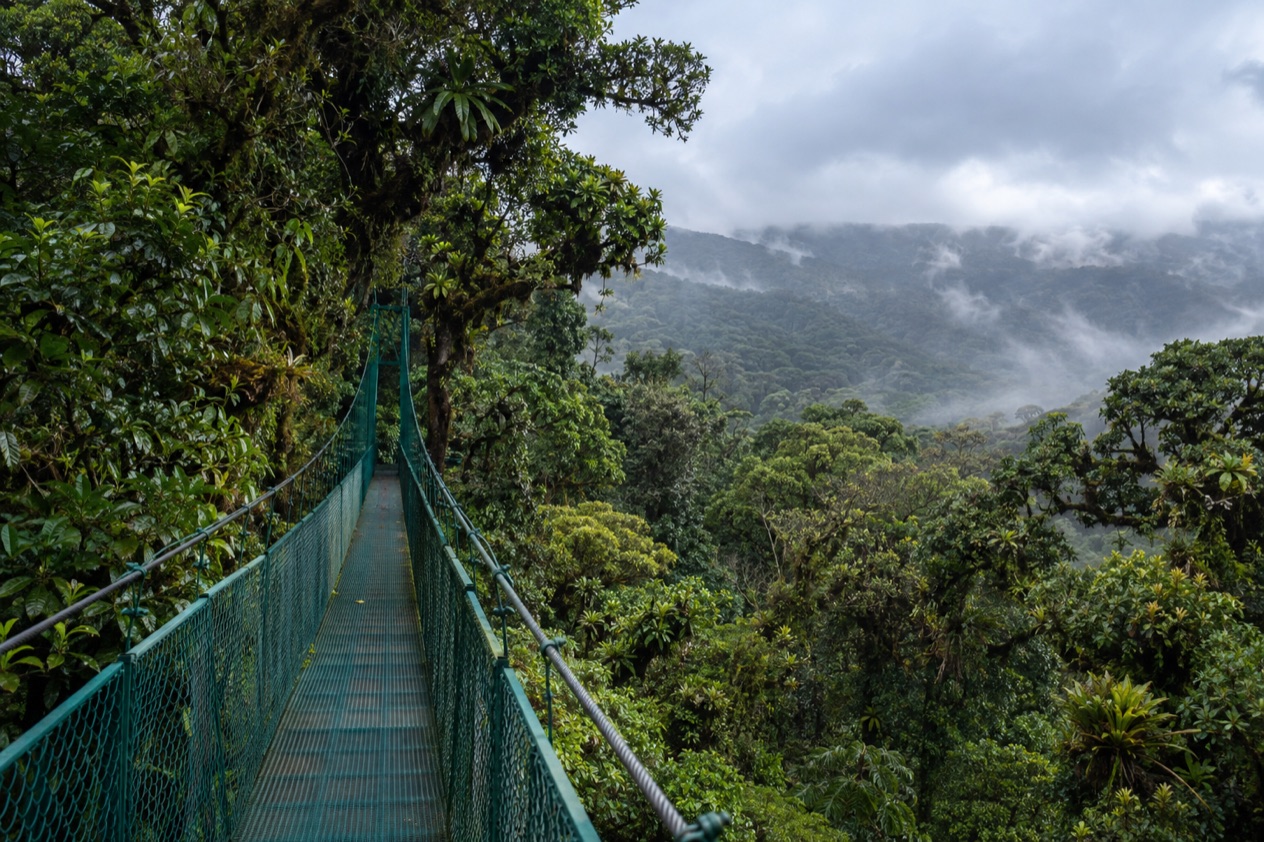
Mist is part of the appeal. Some days the canopy views open wide, and others the hanging bridges disappear into white, which is atmospheric in its own way. Treat any clear view as a bonus rather than something to count on, and keep your plans loose enough to shuffle outdoor activities around the weather.
What to do in Monteverde in October
October is for the forest itself. The moss is thick, the orchids and bromeliads are full of water, and the whole slope seems to hum. The green season also brings a quieter pace to the trails, with a slower rhythm in town and more room to linger over coffee while the afternoon rain passes.
The calendar for the month is light locally. October 12 is the Day of the Cultures, and the Caribbean port of Limon holds its Carnival around that date, with parades, music and Afro-Caribbean food. Dates can shift from year to year.
Walking the cloud forest reserve trails
Most visitors arrive for the reserve trails. Trails curve under massive trees covered in epiphytes, cross tiny creeks and pass open spots where hummingbirds linger by feeders. In October the forest is at its dampest and most vivid, and the sound of dripping water follows you everywhere. Moss-covered trunks, glistening leaves and curling fog make for photographs with real mood.
Go early. Mornings give you the best chance of drier ground and active birds, and you can be back under a roof when the afternoon cloud rolls in. Bring footwear that grips, since the trails get muddy and slick. While sloths, monkeys and quetzals may show themselves, nothing is guaranteed, so joining a guided walk gives most visitors their best shot at finding creatures that disappear into the leaves.
Before you set out, look at the reserve’s official page, since trail conditions and rules can shift.
Hanging bridges and zip lines in the canopy
At treetop level, hanging bridges carry you through the canopy, while zip lines let you fly across that same forest at speed. Both are among the signature activities here. On a misty October day the bridges feel like walking through a cloud, with trunks and branches appearing and vanishing in the white.
Morning is again the better bet, when the air is calmer and the chance of rain is lower. Zip lines can feel a little wild in a downpour, so if the afternoon turns stormy, switch to something indoors and try again the next day. The bridges suit anyone comfortable with heights, while zip lining suits those who want a jolt of adrenaline over the treetops.
Night walks for frogs, insects and sleeping birds
After dark, guided night walks reveal a different forest. Flashlight beams pick out frogs on leaves, giant insects, spiders and sleeping birds tucked into branches. The wet season suits this well, since amphibians and insects are generally most active when the air is damp, though sightings always depend on luck and the guide’s sharp eyes.
Bring a rain jacket and closed shoes, and keep your voice low. Sunset comes early, so plan your guided night walk for the evening. Night walks suit curious travelers, families with older children and anyone who enjoys the small, strange creatures that make cloud forests so rich.
Between outings, Santa Elena offers cafés serving local coffee, small restaurants plating casado (the classic plate of rice, beans, plantain and a protein) and gallo pinto at breakfast. On a wet afternoon, a warm drink and a window seat watching the mist drift past is a perfectly good way to spend an hour.
A two-day itinerary for Monteverde in October
Day 1 begins in the early morning at the reserve gate, when the trails are at their quietest and the air is still. Walk a loop through the forest, stopping at the hummingbird feeders and listening for birds.
By late morning the cloud begins to thicken, so head into Santa Elena for a long casado lunch at a small family restaurant. If the afternoon rain sets in, a café with a view of the misty hills makes a pleasant refuge.
As the light fades, daylight lasts only a little under twelve hours, so dinner comes early. Afterward, join a guided night walk to search for frogs, insects and sleeping birds. Dress in layers and bring a rain jacket, since the forest is wet after dark.
Day 2 belongs to the canopy. Start on the hanging bridges during the calmest part of the morning, and afterward head to the zip lines, where you get a rush of speed over the treetops. Both feel most comfortable before the afternoon clouds close in.
Spend the afternoon on the town side of the mountain. Browse craft shops, sip local coffee and linger over a late lunch. If heavy rain arrives, treat it as part of the program: a long café stop, some shopping and an early, unhurried dinner round out the trip well.
Is Monteverde busy in October?
October sits in the middle of the green season, when rain scares off a lot of travelers, so yes, it ranks among the calmer months in Monteverde.
Trails feel less crowded, restaurant tables are easy to find and rooms are generally easier to come by than in the dry months. Dates can shift from year to year.
Even so, it pays to book the activities you care about, like a night walk or a canopy tour, a little ahead, since small groups fill up on any given evening.
Rental cars are a smaller question here, since many visitors arrive by shuttle or tour. Check the park’s official page for any reservation rules for the reserve before you go.
What to pack for Monteverde in October
Think layers and waterproofing. The air is cool and damp, and the afternoon rain is the rule rather than the exception.
- A light, breathable rain jacket, because showers arrive most afternoons
- Waterproof hiking shoes with good grip for muddy, slick trails
- A warm layer or fleece for cool evenings and misty mornings
- Quick-drying pants and socks, since damp clothes dry slowly here
- To keep a camera and phone safe, bring a compact dry bag or a rain cover.
- A flashlight or headlamp for night walks
Good to know before you go
The U.S. State Department rates Costa Rica Level 2, ‘Exercise increased caution,’ due to crime; it says petty crime is common throughout Costa Rica and that violent crime also affects tourists, including armed robbery, homicide and sexual assault.
Book the activities you care about first, then let the weather guide the rest of your days.
Monteverde in October vs September and November
Moving the trip a month earlier, to September, gives you very similar conditions. The forest is just as green, the rain falls on nearly as many days and the crowds stay thin. The difference is subtle, and for most travelers the experience would feel almost the same.
Moving a month later, to November, changes the picture more. Rain days drop sharply and the green season starts to loosen its grip, so there are more chances for drier mornings and clearer views, while the forest still holds its lush look. The tradeoff is that visitor numbers begin to climb as the drier season approaches, while October can still bring steady rain or hard downpours.
Travelers who love the quiet, the moody mist and the deep green of a wet forest should stay with October or September. Those who want better odds of dry walks and open views should shift toward November.
Is October a good time to visit Monteverde?
Yes, October is a good time to visit for travelers who want a lush, quiet cloud forest and are happy to plan around the rain.
It suits birders, photographers, night-walk fans and anyone who likes moody, atmospheric landscapes. It is less ideal for those who need sunny skies and long open views, who would be happier in the drier months or in November.
On arrival, book your night walk and your canopy outing first, since those are the activities most worth securing, and leave the rest of the days flexible. October in Monteverde is the forest at its wettest and greenest, where the moss glows, the frogs sing after dark and the mist turns every trail into something close to a dream.
Sources
- Open-Meteo / ECMWF ERA5, normals 1991-2020 computed for the grid cell at 10.3009N 84.8248W, checked October 8, 2026
- sunrise-sunset.org, sunrise and sunset calculated for the 15th of the month, checked October 8, 2026
- U.S. Department of State, Costa Rica Travel Advisory, issued April 1, 2026 (https://travel.state.gov/content/travel/en/traveladvisories/traveladvisories/costa-rica-travel-advisory.html), read via the State Department open data API on October 8, 2026
To plan your stay
- Things to Do in Monteverde: Cloud Forest Walks, Hanging Bridges, Night Walks and Day Trips
- Where to Stay in Monteverde: Santa Elena, Cerro Plano, Forest Lodges and How to Choose
- Monteverde Cloud Forest: Quetzals, Trails, Weather and How to Visit
- Best Time to Visit Monteverde: Dry Season, Green Season, Weather by Month and Holiday Crowds