
The road up to Monteverde gives out its last bit of pavement, the air cools, and the clouds begin to drift between the trees instead of above them. Inside the reserve, every trunk wears a coat of moss, ferns and orchids, and hummingbirds flick through the damp light. This is a day for walking slowly, listening hard and looking up, and it suits anyone curious about a mountain forest that lives in the mist.
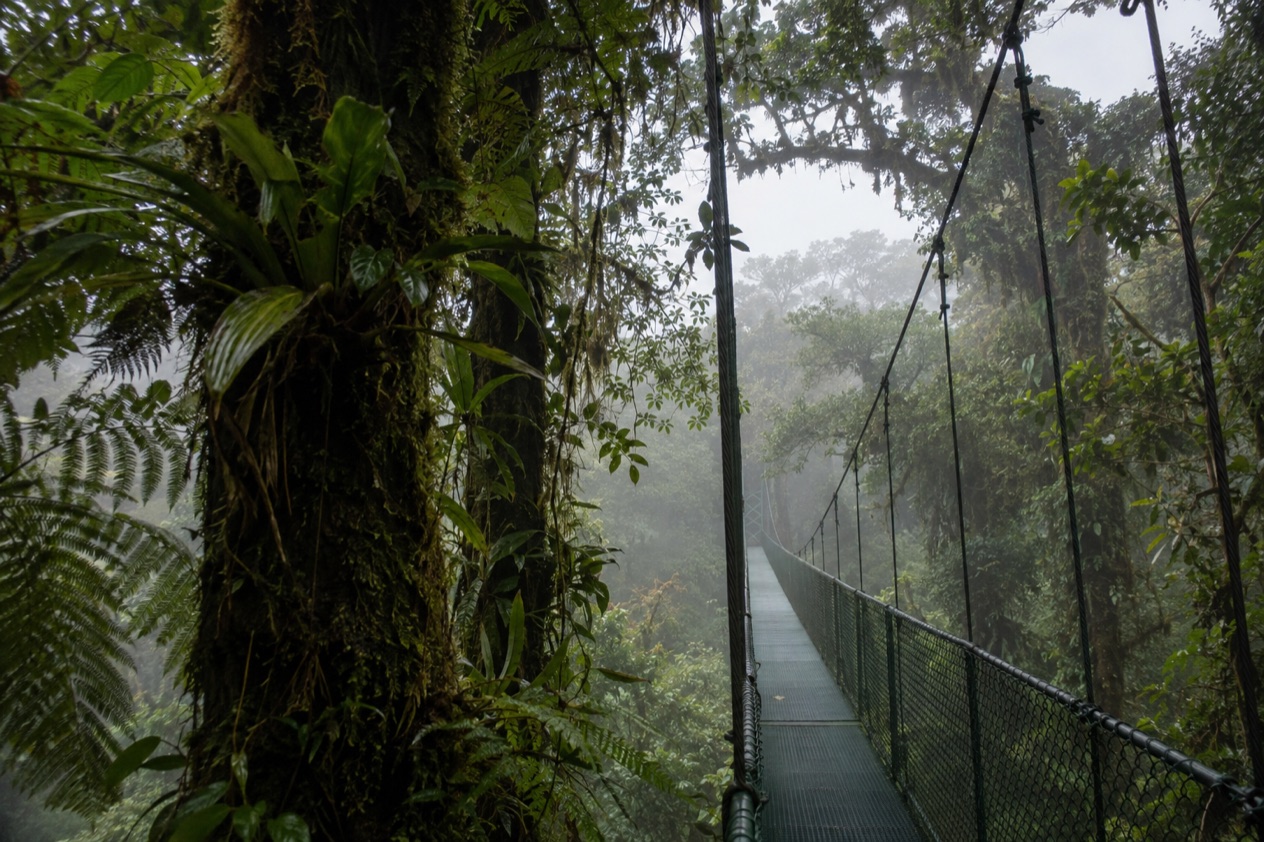
Is visiting the Monteverde Cloud Forest worth it?
Yes, especially if you like your nature quiet, green and a little mysterious, and you are happy to trade big views for close detail. Walkers, bird lovers, photographers of tiny things and families with curious older kids tend to leave happiest. If you want sweeping beaches or a guaranteed sighting of a famous animal, set your expectations accordingly.
What sets this reserve apart from the other forests and parks you may visit in Costa Rica is the cloud itself. The mountains of Tilarán catch moisture-laden air, so the forest is bathed in mist for much of the year, and plants have found every possible perch.
Branches become gardens of epiphytes, plants that grow on other plants and drink straight from the air. Down on the hot Pacific coast you meet monkeys and big-leafed rainforest. Here the cast is smaller and stranger: hummingbirds at the feeders, insects with improbable shapes, frogs calling after dark, and the resplendent quetzal, the bird everyone hopes to catch a glimpse of.
The setting also shapes the whole trip. The village of Santa Elena and the surrounding hills offer a cool, breezy base where a sweater feels right in the evening.
Beyond the reserve you can cross hanging bridges through the canopy, zip-line over the treetops or join a night walk, so a stay can fill several days without repeating itself. The long, slow drive up is part of the deal, and it keeps the place feeling remote.
What to see at the Monteverde Cloud Forest
The cloud forest and its trails
The heart of the visit is simply walking the reserve trails. Paths wind through dense, damp woods where the light turns green and silvery, and where the mist can thicken within minutes and then thin again. Tree trunks vanish under cushions of moss, and roots and ferns spill across the ground.
Go at a slow pace and stop often. The pleasure here is in small things: a bromeliad holding a pool of water high on a limb, a bright orchid the size of a thumbnail, the sound of drips and distant birdsong. Waterproof layers matter, because the forest is wet even when the sun is out somewhere else.
Epiphytes, orchids and mosses
Epiphytes are the signature of a cloud forest. Ferns, orchids, mosses and bromeliads cling to branches and trunks, taking moisture from the fog rather than from the soil. Many layers of them can crowd a single limb, so a tree looks more like a hanging garden than a plant.
Look up, then look closer. Orchids tend to be small and easy to miss, while mosses and ferns give the forest its soft, stitched texture. A macro setting on a camera or phone pays off here far more than a wide lens.
Hummingbirds and the resplendent quetzal
Hummingbirds are the easy wins of Monteverde. They hover at flowers and feeders with a whir of wings and flashes of purple, green and blue, and watching them for a few minutes is a small joy. They make a good first taste of the area’s birdlife.
The resplendent quetzal is the star, with its iridescent green plumage and long trailing tail feathers. Visitors hope to see it with a guide in the early morning, which is when the forest is quietest and birds are most active. It is a chance, never a promise, but a guide who knows the habits of local birds greatly improves the odds.
Night walks and the canopy
After dark, the forest changes character. Guided night walks look for frogs, insects and sleeping birds, with flashlights picking out eyes, wings and shapes that daytime walkers pass by. The sounds alone, from calling frogs to rustling leaves, make it worth doing once.
For a different angle, the area also has hanging bridges through the canopy and zip-lines over the treetops. Bridges let you walk at the height where the epiphytes and birds live, which makes them a gentle companion to the trails on the ground.
Hours, tickets and rules
Check the reserve’s official page for current opening hours, admission prices, booking requirements and visitor rules before you go. For the reserve’s own entry and hiking rules, check its official page before you go.
| Visit | What is required |
|---|---|
| Hiking in national parks | Register with the park |
| Hiking in national parks | Hold an entry permit |
| Hiking in national parks | Use a certified tour operator |
| Finding a guide | The Costa Rica Tourism Institute (ICT) lists Certified Tour Guides |
If you want a guide for quetzal watching, the ICT list is a sound starting point. The Costa Rica Tourism Institute keeps its list of Certified Tour Guides, which is a sound starting point for choosing someone.
How to get to the Monteverde Cloud Forest
Santa Elena is the usual base for visiting the reserve, but check the reserve’s official directions and transportation options before setting out. Most travelers sleep in or near Santa Elena and head to the reserve from there, which saves a long day trip and lets you be on the trail early.
The important thing to know is the last stretch of road. It is steep, bumpy and partly unpaved, so the drive takes longer than the distance on the map suggests. Build in generous time and avoid planning anything tight on arrival day.
Because the road is slow, the journey becomes part of the experience. You leave the heat of the lowlands behind, watch the vegetation change, and feel the temperature drop as you climb. Fog may sit on the road in places, so a driver who is patient and unhurried makes for a better trip.
Once you are in Santa Elena, you are close to everything the area offers, from the reserve trails to the canopy bridges and zip-lines. Settle in, then plan the early-morning guided walk for the day after you arrive, when you are rested and the road is behind you.
When to visit the Monteverde Cloud Forest
Morning is the best time of day. Birds are most active early, which is exactly when guides take visitors out to look for the quetzal, and the forest feels hushed before the day’s cloud settles in. Afternoons are often mistier and wetter, though the cloud forest is atmospheric in any weather.
| Month | Average high (°F) | Average low (°F) | Precipitation (in) | Days with 0.10 in or more |
|---|---|---|---|---|
| January | 76.3 | 63.1 | 1.10 | 2.6 |
| April | 81.2 | 64.9 | 1.74 | 4.2 |
| July | 75.7 | 65.8 | 8.28 | 17.1 |
| October | 74.3 | 65.2 | 15.69 | 23.9 |
You can feel how different the seasons are. January and April are the drier choices, with only a few wet days, so trails are easier and the odds of clear stretches are better. April is also the warmest of the four. January brings more wind and cooler air, especially from December to February, so a jacket is welcome.
July is greener and wetter, with rain on most days. October is the wettest of the four, with rain on nearly every day and some heavy falls. A visit then means a rain jacket, patience and a willingness to enjoy a dripping, glowing forest. The mist is there in every month, so the reserve never loses its character.
Tips for your visit
Dress in layers. Monteverde is cooler and windier than the coast, and a light jacket is useful in the evening in any month. Add a waterproof shell, shoes with good grip for wet paths, and a small daypack to keep your camera dry.
Bring binoculars if you have them, since the birds and many of the epiphytes sit high above the path. A guide can point out what you would otherwise walk past, from a well-camouflaged insect to a quetzal perched in a fruiting tree. If you hire a guide, the ICT list is a useful place to start.
Plan the area as a mix rather than a single outing. A morning on the reserve trails pairs well with an afternoon on the hanging bridges, and a guided night walk fills the evening. Zip-lining over the treetops adds a more energetic day for those who want it, so you can match the pace to your group.
Families with older children usually enjoy the night walk and the bridges, where there is always something to point at. Anyone with limited mobility should ask the reserve directly about current trail conditions and suitable routes before booking. Because the road up is slow, give young children plenty of snacks and breaks on the journey.
Good to know before you go
The U.S. State Department rates Costa Rica Level 2, ‘Exercise increased caution,’ due to crime; it says petty crime is common throughout Costa Rica and that violent crime also affects tourists, including armed robbery, homicide and sexual assault.
Monteverde sits high in the mountains, so expect cooler, mistier and breezier days than on the coast, and pack for changing weather within the same hour. Keep the usual travel habits of watching your belongings in busy places and in parked cars, since petty crime is common throughout Costa Rica. Allow extra time on the final climb to Santa Elena, and treat the slow road as part of arriving somewhere that still feels apart.
Sources
- Open-Meteo / ECMWF ERA5, normals 1991-2020 computed for the grid cell at 10.3009N 84.8248W, checked October 8, 2026
- U.S. Department of State, Costa Rica Travel Information, Safety and security (https://travel.state.gov/content/travel/en/international-travel/International-Travel-Country-Information-Pages/CostaRica.html), checked October 8, 2026
- U.S. Department of State, Costa Rica Travel Advisory, issued April 1, 2026 (https://travel.state.gov/content/travel/en/traveladvisories/traveladvisories/costa-rica-travel-advisory.html), read via the State Department open data API on October 8, 2026
To plan your stay
- Best Time to Visit Monteverde: Dry Season, Green Season, Weather by Month and Holiday Crowds
- Where to Stay in Monteverde: Santa Elena, Cerro Plano, Forest Lodges and How to Choose
- Monteverde in January: Cloud Forest Weather, Hanging Bridges and Night Walks
- Monteverde in February: Dry-Season Weather, Cloud Forest Walks and a Two-Day Plan