
In January, the mist in Monteverde comes and goes in slow ribbons between the trees, and the first hour after sunrise is loud with birds in the ferns and mosses. High in the Tilarán mountains near Santa Elena lies the cloud forest, and no other time of year makes it so easy to take in. It is a good month for walking the reserve trails, crossing canopy bridges and looking for frogs on a night walk, with cool air and fewer wet afternoons.
What is the weather like in Monteverde in January?
January in Monteverde is cool, fresh and mostly dry, with mild afternoons and chilly mornings and evenings, and rain that is much lighter than in the green months.
| Month | Average high (°F) | Average low (°F) | Rain days |
|---|---|---|---|
| December | 74.8 | 63.9 | 5.0 |
| January | 76.3 | 63.1 | 2.6 |
| February | 78.4 | 63.0 | 1.7 |
Mornings are the time for the forest. The air is cool and often misty, the trails are quiet, and the light filters down through the canopy in pale shafts. By midday the sun usually warms things up enough to walk in a light shirt, though the shade under the trees always feels cooler than the clearings. Mist can still roll in without warning, so a view from a lookout is a chance, never a promise.
Rain is a small part of the month. When it comes, it tends to be a brief shower or a passing drizzle rather than the long afternoon downpours of the wetter season, and most days go by without any. The trails are still damp underfoot, since a cloud forest never fully dries, so shoes with grip matter more than an umbrella.
Evenings cool off quickly once the sun drops, and a sweater or light jacket feels right at dinner and on a night walk. Daylight lasts a little under twelve hours, so the day starts early and ends early, and you will want your outdoor plans finished by late afternoon. Winds can be brisk on exposed ridges, which is part of why the area feels cooler than the lowlands.
What to do in Monteverde in January
January is the start of the drier stretch, and that shapes the month: more clear mornings, firmer trails and a better chance of seeing birds, orchids and the canopy from the bridges. There is no big local festival to organize a trip around.
The national holiday on New Year’s Day opens the month, and Costa Rican schools are on their long summer break from December into early February, so families fill the lodges and tour buses in the first weeks. The Fiestas Civicas of Santa Cruz, with bull-riding, parades and street food, take over that Guanacaste town in mid-January, and they sit on the lowland side of the mountains, away from the cloud forest.
Food in Monteverde is simple and warming at this altitude. Look for a casado, the plate of rice, beans, plantain, salad and a choice of meat or fish, and for gallo pinto, the rice and beans mixed together that appears at breakfast. A cup of locally grown coffee in a café in Santa Elena suits the cool morning air, and many farms around town offer tastings of coffee, chocolate and sugarcane.
Walking the cloud forest reserve trails
The reserve trails are the reason most people come. Paths wind through thick forest hung with ferns, orchids and mosses, and the air feels damp and cool even when the sun is out.
You hear more than you see at first: the calls of birds, the rustle of something in the leaves, the drip of mist from branches. Among the animals visitors hope to spot are quetzals, hummingbirds and monkeys, but they are chances, and a guided walk is how most people find them.
Start early. The first hours of the day are the quietest on the trails and the birds are most active, and the mist often lifts by mid-morning.
Choose a shorter loop if you want time for the bridges and lunch, or a longer route if you like to walk slowly and stop often. The ground is slick in places, so closed shoes with a good sole are a must on every trail. Because rules and hours can shift, visit the reserve’s official page before you set out.
Hanging bridges and zip lines in the canopy
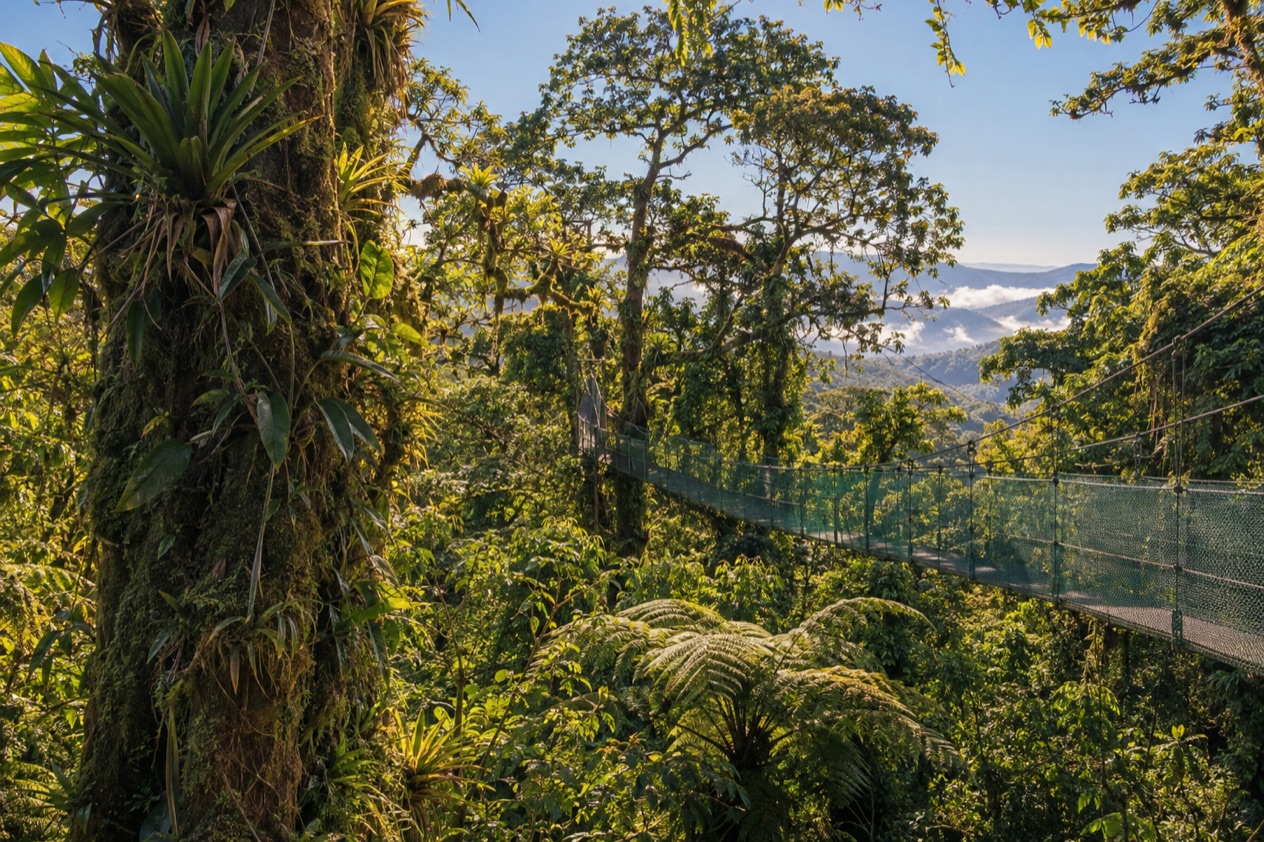
Hanging bridges carry you through the canopy at treetop height, and from them you see the forest from a different angle: epiphytes blooming on high branches, birds passing at eye level, mist drifting below your feet. The walk is slow and quiet, and it suits families and anyone who wants the forest without long climbs. Zip lines cover the same ground at speed, flying over the treetops for those who like a rush.
January’s lighter rain makes this a comfortable month for both. Go in the morning, when the air is still and the forest wakes up, and keep a layer in your bag since it is cooler up on the bridges than on the ground.
If you want to do both, a bridge walk first and the zip line after is an easy pairing. Wind can make the bridges sway, which adds to the fun for some and is a reason to choose a zip line instead for others.
Night walks for frogs, insects and sleeping birds
After dark the forest changes. With flashlights in hand, guided night walks head out to seek frogs, insects and birds at rest, and that beam reveals what daylight hides: a glass frog perched on a leaf, a stick insect along a branch, a bird nestled in a hollow. What you see varies, so think of it as a hunt with good odds rather than a guarantee.
January evenings are cool, so dress warmer than you think you need and wear shoes that handle mud. The walks suit curious adults and older children who can stay quiet and still. Plan dinner either before or after, and book the walk for your first or second evening so that if the weather turns, you have another night to try.
A two-day itinerary for Monteverde in January
Day 1 belongs to the canopy. Be at a reserve entrance soon after sunrise, when the mist is thin and the birds are loud, and walk one of the trails slowly with a guide if you can. Return to Santa Elena for a late breakfast or early lunch at a small local restaurant serving casados, then spend the early afternoon on the hanging bridges, while the day is still bright.
As the light fades, have a coffee in town and a short rest, because the cool evening air arrives quickly. Dinner comes early, and a guided night walk after dark finishes the day with frogs, insects and sleeping birds. Bring a jacket and a flashlight only if your guide asks for one.
Day 2 is for the other side of Monteverde. Spend the morning on a zip-line course over the treetops, when the wind is usually calmer, then visit a coffee or chocolate farm for a tasting and a walk among the plants. Eat lunch at a farm café or a simple soda in Santa Elena, and use the afternoon to browse craft shops and cafés in town.
If a rare shower or heavy mist settles in, a farm tour, a café with a book or a visit to a small museum or gallery keeps the plan alive. With sunrise early and daylight a little under twelve hours, aim to have your last outdoor stop wrapped up before dusk.
Is Monteverde busy in January?
Yes, January is a busy month in Monteverde, especially in the first two weeks, when the holiday season and the Costa Rican school break overlap.
Many families travel at this time, and the lodges, tour operators and restaurants in Santa Elena feel it. Trails and bridges are most crowded in the middle of the morning, and popular activities such as zip lines and night walks fill earlier than in quieter months. Rooms, rental cars and tables at the most sought-after restaurants are easier to find if you plan ahead, and the holiday weeks call for booking early.
Later in the month, as the school break winds toward its end in early February, the pace eases a little. You will still share the forest with other visitors, but the feeling is less rushed, and a late booking becomes more realistic.
A habit that works in any busy month is to book a night walk and a guided reserve visit as soon as your dates are set, and to keep the rest flexible. Beaches are the part of the country that fill the most during the school break, so the mountains can feel calmer than the coast, even in peak weeks.
What to pack for Monteverde in January
Pack for cool, damp mornings, mild afternoons and trails that stay wet underfoot even in the drier season.
- Closed shoes with good grip, because forest paths stay muddy and slick.
- A light rain jacket, for passing showers and drifting mist.
- A warm layer or sweater, since mornings and evenings feel cool.
- Binoculars, for birds in the canopy that are far above you.
- A small flashlight or headlamp, for evenings and night walks.
- Sunscreen and a hat, as the sun can be strong between clouds.
Good to know before you go
The U.S. State Department rates Costa Rica Level 2, ‘Exercise increased caution,’ due to crime; it says petty crime is common throughout Costa Rica and that violent crime also affects tourists, including armed robbery, homicide and sexual assault.
January falls in the busy school-break season, so the first things to book are your lodging, a guided reserve visit and a night walk. Roads up to the mountains can be slower than the map suggests, so allow extra time on arrival day.
A valid passport for the length of your stay is required, and you must have a return ticket or proof of onward travel to another country. Authorities may allow visitors to stay up to 180 days without a visa, but this is not guaranteed.
Monteverde in January vs December and February
Moving a month earlier brings you to December, when the forest is greener and wetter and showers are more frequent. The holiday crowds are at their heaviest around the end of the year, so rooms and activities are tighter. If you want a lush, misty forest and don’t mind a few more damp afternoons, December has its own charm.
Moving a month later puts you in February, which is the driest of the three months here, with the warmest afternoons and the fewest rain days. Families are still on break in early February, but the rush softens as the month goes on, and clearer skies help the lookouts. The forest is drier underfoot, though the mist never fully disappears.
If you want the best balance, January sits in the middle: cooler and fresher than February, drier than December, with the busiest holiday days behind you after the first week. Travelers who dislike crowds should aim for late January or February, and those who love a very green forest can choose December.
Is January a good time to visit Monteverde?
Yes, January is a very good time for Monteverde, especially for walkers, bird lovers and families who want a cool escape from the lowland heat.
You will love it if you like early starts, crisp air and trails that are mostly free of heavy rain. It suits first-time visitors who want to see bridges, zip lines and a night walk in one short stay. Those who dislike crowds, or who want a lush, soggy forest, may prefer another month. On arrival, book your night walk and guided reserve visit first, then fill in the rest around them.
What makes January special here is the mix of cool mist, early birdsong and a forest that is still green from the wet months but easier to walk. The cloud forest feels alive and approachable at once, and the evenings end with the sound of frogs in the dark.
Sources
- Open-Meteo / ECMWF ERA5, normals 1991-2020 computed for the grid cell at 10.3009N 84.8248W, checked October 8, 2026
- sunrise-sunset.org, sunrise and sunset calculated for the 15th of the month, checked October 8, 2026
- U.S. Department of State, Costa Rica Travel Advisory, issued April 1, 2026 (https://travel.state.gov/content/travel/en/traveladvisories/traveladvisories/costa-rica-travel-advisory.html), read via the State Department open data API on October 8, 2026
- U.S. Department of State, Costa Rica Travel Information, Entry and exit requirements (https://travel.state.gov/content/travel/en/international-travel/International-Travel-Country-Information-Pages/CostaRica.html), checked October 8, 2026
To plan your stay
- Things to Do in Monteverde: Cloud Forest Walks, Hanging Bridges, Night Walks and Day Trips
- Where to Stay in Monteverde: Santa Elena, Cerro Plano, Forest Lodges and How to Choose
- Monteverde Cloud Forest: Quetzals, Trails, Weather and How to Visit
- Best Time to Visit Monteverde: Dry Season, Green Season, Weather by Month and Holiday Crowds