
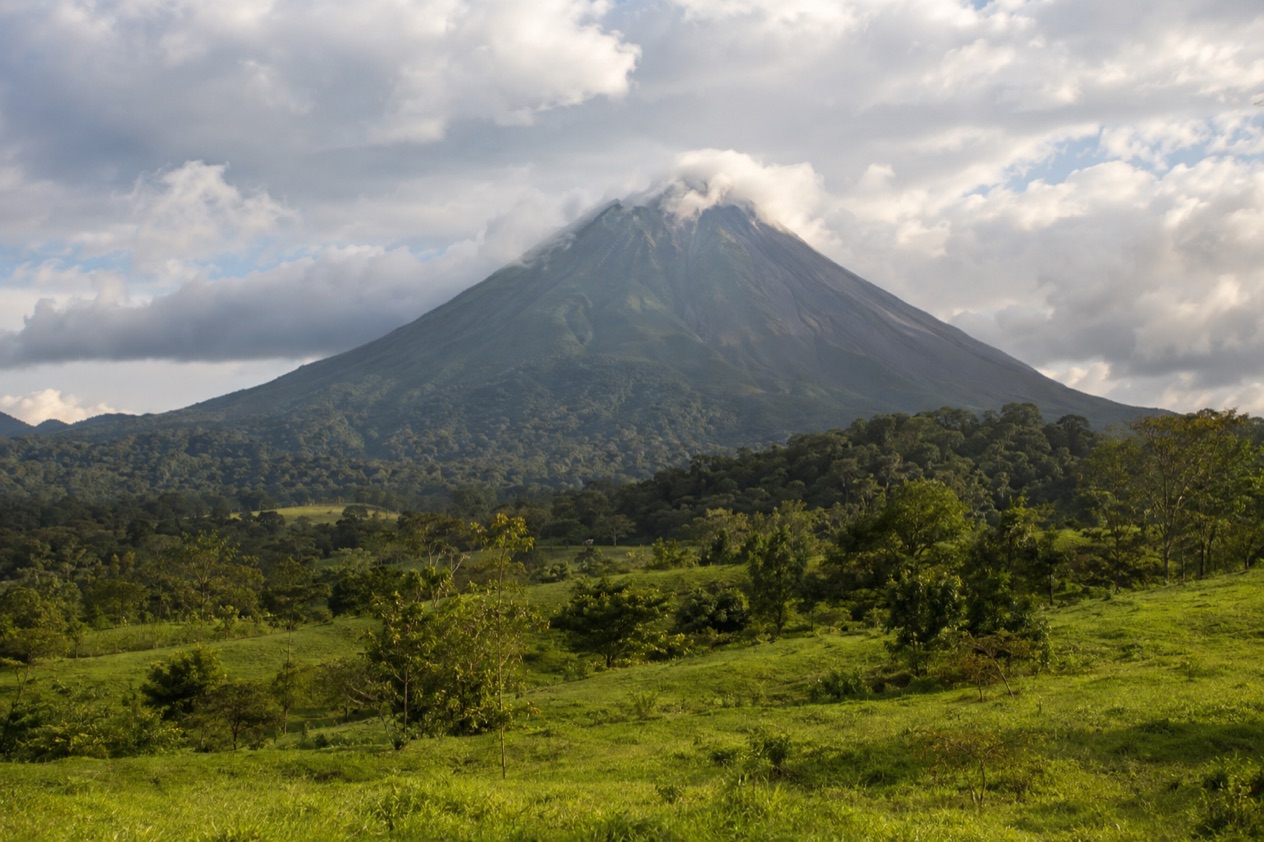
Morning in La Fortuna starts with roosters, the smell of fresh coffee and a cone of green rising behind the church steeple, usually with a cap of cloud on top. By evening, the park in the center fills with families, the taxis line up along the main street, and out on the hot springs road the pools glow under lanterns while steam drifts into the dark.
The town is small, but the places to sleep are spread over very different settings: right in town, along the volcano road, beside the springs, or farther out by the lake. Choosing among them shapes your trip more than any single hotel does.
What is the best area to stay in La Fortuna?
For a first visit, the town center is the best base, because you can walk to dinner, book tours at the door and still reach the waterfall, the national park and the hot springs by a short ride. Families who want pools and a built-in day of activity do better in a resort on the hot springs road, while travelers who want quiet and a view do better on the volcano road.
Budget travelers will find the most guesthouses, hostels and simple rooms in town. Lake Arenal suits people who want a slower, cooler stay and are happy to drive.
La Fortuna has no beach. It sits in the northern lowlands at the foot of Arenal, and travelers come for the pool beneath the waterfall and the area’s hot springs.
If a beach is part of your plan, treat La Fortuna as a mountain and volcano stop and add a coastal base on a separate leg of the trip. What you gain here is green: rain forest, a lake, a cone that dominates the horizon and warm water heated by the volcano.
Nightlife is modest everywhere. The center has the most life after dark, with restaurants, small bars and a few places for music, and it stays friendly and low-key rather than loud.
If your idea of an evening is a late club, this is not the place. If it is a long dinner, a soak in a warm pool and an early night before a morning hike, any of the areas below works, and the center gives you the most choice.
The areas differ mostly in how much you will move around. In town, you leave the hotel on foot and meet other travelers over breakfast.
Along the volcano road, the draw is the landscape: rooms with a porch, birdsong at dawn, and short drives to the park trails across old lava flows. Along the hot springs strip, the resort is the destination, and many guests spend entire afternoons without leaving the grounds. Out at the lake, the days are slower still, with water views, cooler air and fewer people.
Think about the season too. Rain in this part of Costa Rica is a regular visitor. January brings a fair number of wet days, April is the drier stretch, and July and October are very rainy, often with long gray spells and heavy afternoon downpours.
A good view of the cone is a matter of luck at any time of year, and clear mornings are the best bet. In the rainy months, a hotel with covered terraces, a pool you can use in drizzle and a restaurant on site makes the days easier, and that tilts the choice toward the center or a resort.
Who you travel with matters as well. Couples looking for a romantic stay often pick a small lodge on the volcano road or a boutique hotel near the springs.
Groups of friends and solo travelers tend to prefer the center, where hostels and guesthouses make it easy to meet people and split a ride to the waterfall. Families with small children usually want pools and a restaurant close at hand, which points to a resort or an apartment-style rental with a kitchen.
Finally, think about your wheels. If you will not rent a car, compare each hotel’s available pickups and nearby services before booking. If you do drive, the volcano road and the lake open up, and the extra distance becomes part of the scenery rather than a chore.
The best areas to stay in La Fortuna
The town center
The center of La Fortuna wraps around a leafy central park facing the church, with the volcano rising right behind it on a clear morning. Sodas, which are little local eateries that dish up a casado (rice, beans, salad and meat or fish on a plate), fill the sidewalks alongside bakeries, ice cream parlors, souvenir stalls and tour desks. It is the most practical base for a first visit and the easiest for anyone arriving without a car.
Lodging here is mostly guesthouses, hostels, small family-run hotels, apartments and a handful of mid-size hotels with a pool and garden. Boutique places tuck into side streets a few blocks from the park.
You will not find huge all-inclusive resorts in the middle of town, but you will find the widest range of room types and the easiest comparison shopping. Traffic and early tour vans can make some rooms on the main street noisy, so a room set back from the road is worth asking for.
You can walk to most restaurants and shops, and taxis or tour shuttles take you to the waterfall, the national park and the springs. Tip: try at least one dinner at a side-street soda, and choose excursion times according to the day’s forecast.
The volcano road
West of town, the road toward Arenal Volcano National Park leaves the shops behind and climbs through pasture, forest edge and small farms. This is where La Fortuna feels like a mountain stay.
Mornings bring birdsong, mist in the hollows and, on a lucky day, a clean view of the cone. Short paths cross ancient lava flows and woodland inside the national park, and on clear mornings a few overlooks give you views out across Lake Arenal.
Lodging along this stretch leans toward eco-lodges, boutique hotels, cabins with porches and a few larger hotels with grounds, gardens and a pool. It suits couples, birders, hikers and anyone who values a quiet night more than a short walk to dinner. Rooms with a volcano-facing terrace are the draw, though cloud decides what you see, so do not book on the promise of a view alone.
You will want a car or a reliable taxi arrangement, because the town is a ride away and evenings are spent mostly at the lodge. Tip: choose a place with its own restaurant if you do not plan to drive after dark, and bring a light rain jacket, since this side of the volcano catches showers more often than the town.
The hot springs road
Northwest of town, the road along the base of the volcano is lined with the area’s best-known hot springs. These go from basic community pools to big resort spreads with lots of pools at varying temperatures, all warmed by the volcano.
Staying here means the water is on your doorstep. After a day of hiking, you can slip into a warm pool at dusk with the forest humming around you, and then be back in your room within minutes.
This is the home of the larger resorts and all-inclusive properties, along with a few quiet boutique hotels and spa lodges. Families, honeymooners and groups who want everything in one place do well here. Many resorts offer buffets, swim-up bars, gardens and nature walks on their own grounds, so a stay can be built around the property rather than the town.
Getting around means a car, a taxi or the resort’s own shuttle, as the center is a drive away and the grounds are spread out. Tip: if you stay elsewhere and just want a soak, a local pool open to day visitors can be a simpler and gentler choice than a full resort, and an evening visit often feels calmer than the middle of the day.
Lake Arenal
Lake Arenal lies beyond the volcano, a wide stretch of water ringed by hills, with breezes that feel cooler than in town. Staying on its shores is a different trip: rooms with lake views, kayaks and paddleboards, and long drives on winding roads with farm stands and lookout spots along the way. The mood is slow, and the number of other travelers drops sharply compared with the town.
Lodging is mostly small hotels, cabins, vacation rentals and family-run guesthouses, many with a garden or a deck over the water. It suits repeat visitors, remote workers, bird lovers, windsurfers and anyone who wants the volcano as a backdrop rather than a checklist. It is the least convenient base for people who want to hop between tours each morning, so it works best as a second stop after a few days in town.
Before booking by the lake, ask the property how you will reach the places you plan to visit. Tip: stock up on groceries and fill the tank before you head out, and expect the weather to turn quickly, because wind and cloud over the lake can change a morning in minutes.
La Fortuna areas compared
| Area | Best for | Feel | Getting around |
|---|---|---|---|
| Town center | First visits, budget stays, travelers without a car | Lively, walkable, small-town | On foot, with taxis and tour pickups for excursions |
| Volcano road | Couples, hikers, birders | Quiet, green, close to the park trails | Car or taxi, with dinner often at the lodge |
| Hot springs road | Families, honeymooners, all-inclusive stays | Resort-style, relaxed, built around the pools | Resort shuttle, taxi or car |
| Lake Arenal | Slow trips, remote workers, repeat visitors | Remote, breezy, scenic | A car is the practical choice |
The trade-off in La Fortuna is not beach against local life, since there is no beach, but town against landscape. The center gives you restaurants, people and easy bookings, with some street noise and a short ride to anything natural.
The volcano road and the lake give you silence and views, at the cost of dinner choices and a daily reliance on wheels. The hot springs strip sits in between: scenic and comfortable, but organized around the resort rather than the community.
Quiet against nightlife is the other balance. The center is the only area with any evening buzz, and even there it means a lit park, music from a restaurant and a late ice cream. Everywhere else, evenings are about stars, frogs and warm water. Many travelers split their stay, with a couple of nights in town for the waterfall, the park and the tours, followed by a night or two at a resort or lodge to enjoy the springs without a schedule.
In the rainy months, the center is the more forgiving base, because covered restaurants, shops and tour desks are within a short walk and a gray day does not strand you. In the drier stretch of the year, the lodges on the volcano road and the lake come into their own, with open terraces, morning light and more chances of a clear cone. Whichever you choose, give yourself at least one night near the volcano itself rather than only a day trip.
How to choose your hotel in La Fortuna
Start with the question of all-inclusive or not. At a hot springs resort, check whether the rate includes the meals, drinks and pool access you want.
It is less useful if you plan to head out every morning for the waterfall, the national park and a hanging bridge walk, because you will pay for meals you do not eat. In town, a hotel with breakfast and a nearby choice of sodas and restaurants usually gives more variety.
Choose between a volcano view and the lake according to which setting matters more to you. A room facing the volcano is lovely when the sky cooperates, but the cone is often wrapped in cloud, so a hotel with a good pool, a covered terrace or a spa matters more than a view you cannot count on. If the lake draws you, look for a place that sits on the shore itself, not just in the district, and ask whether the deck or the rooms face the water.
Think about the weather when you read hotel descriptions. October and July are very wet, with rain on most days, often in the afternoon but sometimes through the morning too. January has a good share of wet days as well, and April is drier.
Look for rooms with a roof over the terrace, a restaurant on site, good drainage on the paths and a place to dry boots and rain jackets. These small details make a rainy day pleasant rather than a washout.
Noise is worth checking before you book. Rooms on the main street of town can hear early tour vans and late motorbikes, and rooms near a resort’s main pool or bar can hear music in the evening.
Read recent guest comments for mentions of road noise, roosters and construction, and ask for a room at the back or on an upper floor. A quiet garden room is often a better choice than a view over a busy road.
Families should look at the layout of the property as much as the amenities. Pools with shallow areas, grounds that are easy to walk with a stroller, a restaurant with simple dishes and rooms that sleep four without feeling cramped make a real difference.
Apartments with a kitchen are handy for breakfasts and snacks. Hot spring resorts often have separate pools suited to children, and the waterfall and some trails involve long staircases or uneven ground, so plan rests along the way.
If anyone in your group has limited mobility, ask hotels directly about steps, ramps, the distance from parking to the room and whether paths are paved. Many lodges are built on slopes, with rooms spread over a garden, and a ground-floor room near the lobby can be much easier. The waterfall’s long staircase down to the pool is demanding, so a stay that offers a gentler outing, such as a soak at a nearby spring, is a good alternative.
Finally, think about transfers and timing. Most visitors arrive from San Jose or from the airport at Liberia, and the road to La Fortuna is part of the trip. Ask your hotel whether it can arrange a shuttle or a taxi, and plan to reach town in daylight if you can. Around Christmas, Holy Week when it falls in the spring, and other busy vacation stretches, rooms in the center and at the resorts fill early, so book those weeks well ahead, while quieter weeks leave more room to choose.
Last, match your lodging to your excursions. Should you set your sights on Rio Celeste in the Tenorio Volcano area, the turquoise river whose trail passes a waterfall on the way to the place where the color shifts, keep in mind that it sits in another area, so a long day trip or a night nearer to it might work better than a stay in La Fortuna. For Arenal and the springs, the town and the roads around it are all you need.
Good to know before you go
The U.S. State Department rates Costa Rica Level 2, ‘Exercise increased caution,’ due to crime; it says petty crime is common throughout Costa Rica and that violent crime also affects tourists, including armed robbery, homicide and sexual assault.
Ask your hotel about transfer options before you land. Rooms near the volcano can feel damp and cool at night, so bring a light layer and a rain jacket whatever the month.
Sources
- Costa Rica Tourism Board (ICT), Tenorio Volcano National Park (https://visitcostarica.com/where-to-go/protected-areas/tenorio-volcano-national-park), checked October 8, 2026
- Open-Meteo / ECMWF ERA5, normals 1991-2020 computed for the grid cell at 10.4679N 84.6427W, checked October 8, 2026
- U.S. Department of State, Costa Rica Travel Advisory, issued April 1, 2026 (https://travel.state.gov/content/travel/en/traveladvisories/traveladvisories/costa-rica-travel-advisory.html), read via the State Department open data API on October 8, 2026
To plan your stay
- Best Time to Visit La Fortuna: Dry Months, Rainy Season, Arenal Volcano and Festivals
- Things to Do in La Fortuna: Arenal Volcano, Hot Springs, the Waterfall and Day Trips
- La Fortuna vs Monteverde: Hot Springs, Cloud Forest, Weather and Which to Choose
- La Fortuna in January: Weather, Hot Springs and What to Do Near Arenal