
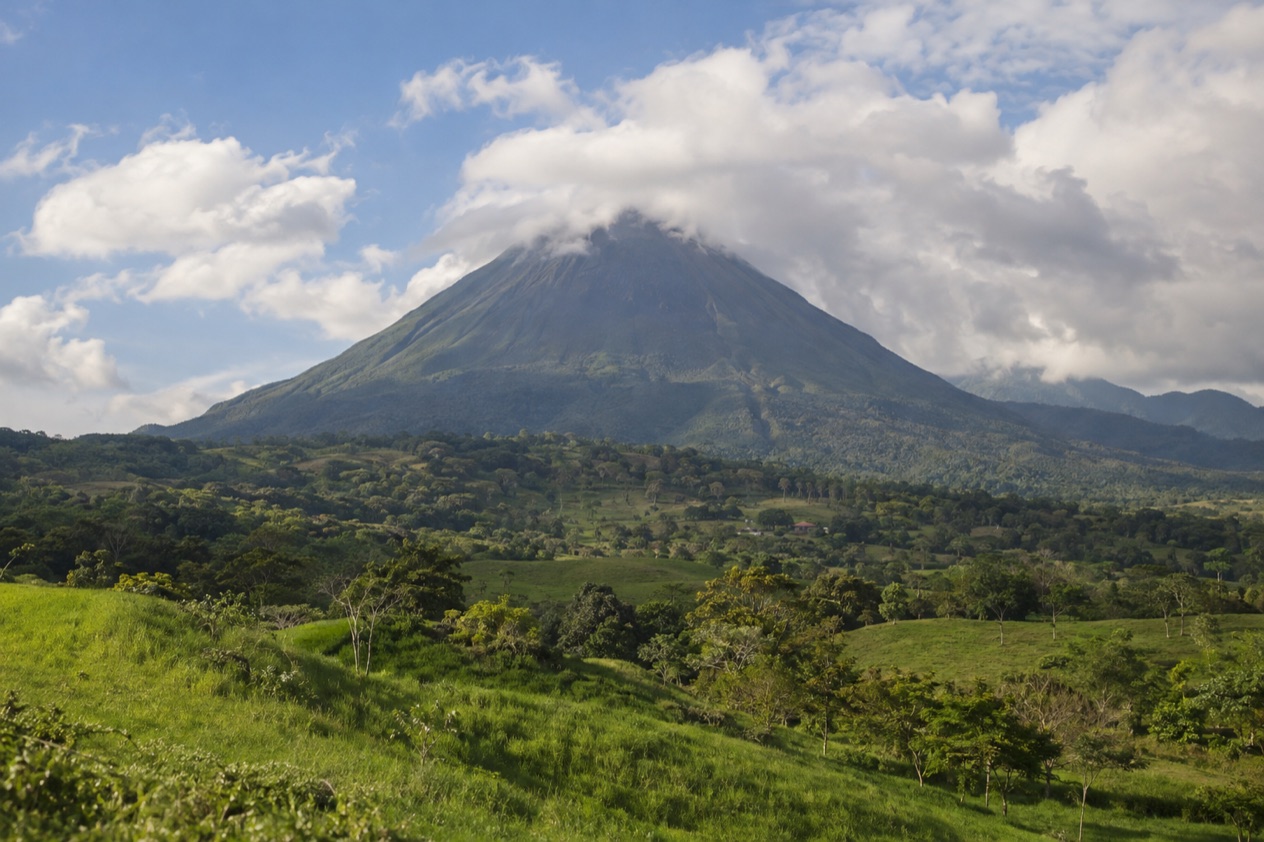
On a clear February morning, the cone of Arenal stands sharp against the sky above the cattle pastures, and the town square fills with the smell of coffee and fried plantain. A few months later the same slopes disappear into cloud by lunchtime, the rivers run brown and the rainforest turns loud with frogs after dark. La Fortuna has a bright, busy dry season and a green, showery one, and the hot springs, the waterfall and the hanging bridges are worth visiting in both.
When is the best time to visit La Fortuna?
The best time to visit La Fortuna is from February through April for most travelers, while May and early December suit those willing to trade more showers for fewer people. Those first months bring the most sunshine, the best odds of seeing the volcano’s cone, and the easiest days for walking and waterfall stairs.
For sightseeing, February through April is the sweet spot. Mornings are often bright, the hanging bridges and the lava-flow trails around Arenal are most pleasant, and the volcano and the lake have their best chance of showing themselves.
Rain still falls on some days, since this is a northern lowland town and not a desert, but it tends to be short and easy to plan around. Start early, because clouds often build over the summit as the day goes on.
If you care about budget and quiet, the green months from May through November are the answer. Rain arrives most days, often in the afternoon, yet the mornings can be pleasant and the forest is at its lushest.
The hot springs are arguably even better in a downpour, with steam rising off the pools. October and November are the wettest stretch, so they suit travelers who are happy to be flexible and spend a lot of time in warm water.
Families should know that March is loud. Spring break brings crowds of American groups to the springs, the waterfall stairs and the zip lines, and the pools can feel more like a party than a retreat.
If your children are small, travel outside the Christmas, New Year, spring break and Easter rushes. There is no real beach here, since La Fortuna sits inland by a lake and a volcano, so beach and sea plans belong to a coast stay before or after.
La Fortuna weather by month
Temperatures barely change through the year, and what separates one month from another is how often it rains.
| Month | Average high (°F) | Average low (°F) | Rain days |
|---|---|---|---|
| January | 77.6 | 67.1 | 12.9 |
| February | 79.4 | 66.9 | 8.1 |
| March | 81.7 | 67.7 | 6.8 |
| April | 83.8 | 69.5 | 7.2 |
| May | 82.0 | 70.8 | 20.1 |
| June | 80.5 | 70.8 | 25.9 |
| July | 79.4 | 70.2 | 25.2 |
| August | 80.3 | 70.3 | 24.6 |
| September | 81.0 | 70.2 | 25.8 |
| October | 79.9 | 70.1 | 26.0 |
| November | 77.9 | 69.2 | 22.2 |
| December | 77.3 | 68.2 | 17.5 |
The year splits into a drier half and a wet half. From February to April rain falls on fewer days than during the rest of the year, and April is the warmest month, with afternoons that feel properly hot.
In May the showers return in force, and from June through October it rains on nearly every day, often as a heavy afternoon downpour after a bright morning. November and December ease off a little but still bring plenty of wet days, and January is mixed, with some gray, drizzly spells. Evenings are mild all year, so a light rain jacket matters more than a sweater.
What is there to do in La Fortuna in each season?
Dry months: February to April
This is the time for the long outdoor days. Dry steps make the descent to the La Fortuna Waterfall less taxing, and swimming in the pool at the bottom is a popular stop. Walk the old lava flows at the foot of Arenal in the morning, when the cone is most likely to be clear, and cross the hanging bridges when the forest is full of birdsong.
Evenings belong to the hot springs. Pick from basic neighborhood pools or the large resort spreads offering pools of varying warmth, then take a sunset soak while the volcano looms dark overhead. Kayaking or paddleboarding on the lake is also at their most pleasant in these mornings.
Green months: May to November
The landscape is vivid, the crowds are thinner and the rivers run high. Plan outdoor activities for the morning, then spend the afternoon in a spring, a chocolate or coffee tour, or a long lunch of casado, the plate of rice, beans, salad and a main dish. Frog and insect tours after dark are more rewarding in wet weather, and birdwatching is good when it is overcast.
Do not expect to see the volcano every day, especially in October and November, when cloud can hang over the summit for days. Treat any clear view as a gift. Bring a rain jacket and quick-dry shoes, and keep a day loose so that a washed-out one costs you nothing.
Winter holidays and the turn of the year
December and January are a shoulder between the wet and dry seasons. Showers still come, and some days are gray, but there are lovely bright spells, and the town is lively with visitors from the north.
The days are the shortest of the year, so start early to fit in an outing before dusk. It is a good time to pair a couple of nights in the springs with a stay on the Pacific coast, where the dry season is just getting started.
When is La Fortuna cheapest and least crowded?
La Fortuna is quietest and easiest on the wallet in the green months, especially from September through November, when it rains most days and many visitors stay away. Rooms are easy to find, the springs have space to stretch out in, and tour operators are glad to see you.
The busy weeks follow the northern calendar. Christmas and New Year fill the lodges, and the days after New Year are still full of families.
Spring break in March is the loudest stretch, and Easter week, when Costa Ricans themselves travel, is another time when rooms go early and the springs are packed. Another wave comes in July and August, when school vacations in the United States and elsewhere bring travelers during the middle of the wet season.
If you want sunshine without the worst of the crowds, aim for the weeks just outside these peaks: late January, February before spring break, and the last weeks of April. Weekdays are calmer than weekends at the busiest springs and the waterfall, and an early start helps everywhere. Book early for the holiday weeks and for any resort with a reputation for its pools.
Which months should you avoid in La Fortuna?
No month is a bad idea, but October and November are the hardest for visitors who want views, since they bring the most rain and the best odds of a cloud-covered volcano. They also bring the heaviest downpours, with a few days that can be fully gray and wet. If your trip centers on the cone of Arenal and long hikes, these are the months to skip.
Still, tropical systems in the region can add to the already heavy rain in these months, so leave some slack in your plans. During the wettest months, leave some slack in your plans.
Heat is not the problem here, since highs stay in a comfortable range all year, and April afternoons are the warmest you will meet. Sargassum is a coastal worry, not a La Fortuna one, so it matters only if you pair your stay with a beach. March is the other month to think about, not for weather but for noise and crowds, if you want a calm soak.
Festivals and events in La Fortuna through the year
Winter holidays and the dry-season fiestas
Christmas in Costa Rica is warm and family-centered, with lights in the square, nativity scenes in homes and tamales shared among neighbors. In La Fortuna the season mixes local celebrations with the arrival of travelers, and the lodges decorate their gardens. New Year is celebrated on December 31 with fireworks and parties in town, and many people head to the springs on the first day of the year to start it in warm water.
Dates move from year to year, so ask at your lodge once you arrive. Holy Week, which falls in March or April depending on the year, is a time when Costa Ricans travel, and the springs and the lake fill with local families.
Nature seasons around Arenal
The green months have their own show. Frogs, including the red-eyed tree frog, are most active on wet nights, and guided evening walks are the way most visitors see them. Birds are active all year, and toucans, oropendolas and hummingbirds are regular sights around the lodges and trails. Sloths and monkeys are chances, never promises, and a guide greatly improves the odds.
From 1968 on, Arenal was nearly always erupting, and it has stayed silent since 2010, which is why people arrive to take in the sight and to walk over former lava flows. Whale sharks and nesting turtles belong to the coasts, not to this lake and volcano country, so if you want those, plan a separate stay on the Pacific or Caribbean side.
Independence Day and the wet-season calendar
Costa Rica celebrates its independence on September 15, and in the days before it schoolchildren carry lanterns through towns at dusk in a parade known as the faroles. In La Fortuna you may see bands practicing and children marching in the evenings, a pleasing local scene in the middle of the rainy season. It is a small, homegrown celebration and not a tourist event, so it suits travelers who like watching a town go about its business.
Later in the year, the build-up to Christmas begins in November and early December, with markets, music and decorated storefronts. These are quieter weeks for visitors, and you may find the town warm and unhurried, with locals starting their own holiday season before the northern crowds arrive.
Sources
- Open-Meteo / ECMWF ERA5, normals 1991-2020 computed for the grid cell at 10.4679N 84.6427W, checked October 8, 2026
- sunrise-sunset.org, sunrise and sunset calculated for the 15th of the month, checked October 8, 2026
- U.S. Department of State, Costa Rica Travel Advisory, issued April 1, 2026 (https://travel.state.gov/content/travel/en/traveladvisories/traveladvisories/costa-rica-travel-advisory.html), read via the State Department open data API on October 8, 2026
To plan your stay
- Things to Do in La Fortuna: Arenal Volcano, Hot Springs, the Waterfall and Day Trips
- Where to Stay in La Fortuna: Town Center, Volcano Road, Hot Springs Strip and Lake Arenal
- La Fortuna vs Monteverde: Hot Springs, Cloud Forest, Weather and Which to Choose
- Day Trips from La Fortuna: Rio Celeste, Arenal Volcano Park, Monteverde and Hot Springs