
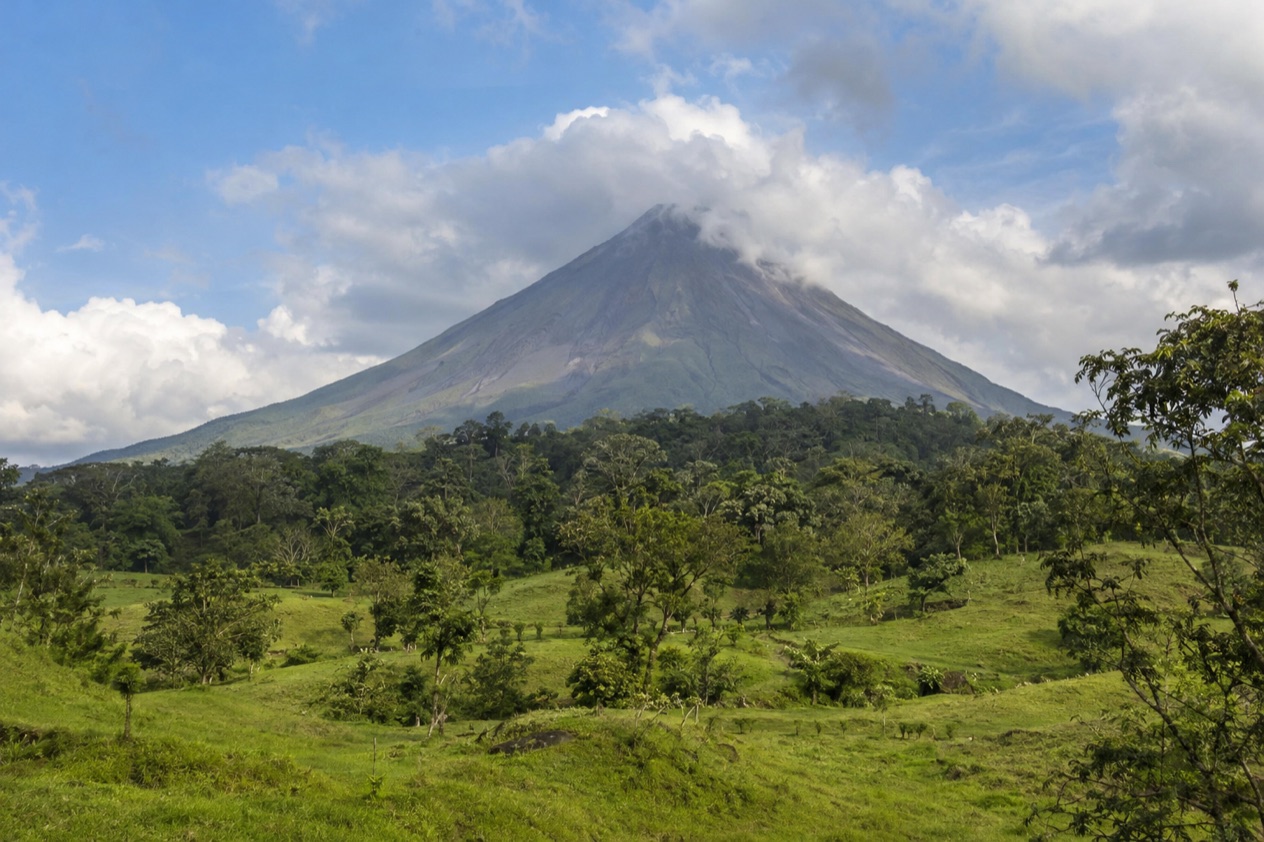
Early in the morning, La Fortuna wakes to the sound of tour vans idling by the central park and the smell of coffee and fresh tortillas from the sodas on the side streets. Above the rooftops the cone of Arenal rises, sometimes sharp against the sky, sometimes wrapped to its shoulders in cloud.
This is a small northern lowland town built for people who want to be outside: soaking in volcano-heated water, walking through wet forest and crossing a lake by boat. It suits couples, families and friends who like to fill the day and finish it in warm water.
What are the best things to do in La Fortuna?
The best things to do in La Fortuna revolve around the volcano: soaking in its hot springs, walking its old lava flows, swimming at the foot of a waterfall and crossing the forest canopy on a bridge. Most visitors combine two or three of these a day and leave the evenings for a slow dinner. Here are the essentials.
- Soak in the hot springs, from simple local pools to big resort complexes with pools at different temperatures, because nothing else says Arenal so well after a day of walking.
- Go down the long staircase to the La Fortuna Waterfall, where a green basin and a swim at the bottom reward the climb back up.
- Walk the short trails of Arenal Volcano National Park across old lava flows for the view of the cone and the lake on a clear morning.
- Cross the hanging bridges, which put you at treetop height among birds, vines and the odd sloth that a guide spots for you.
- Spend time on Lake Arenal by kayak, paddleboard or boat, with the volcano as a backdrop.
- Take a day trip to Rio Celeste, where a river turns a milky turquoise at the meeting of two streams.
- Eat a proper casado at a local soda and finish with fresh fruit juice or a cup of regional coffee.
- Join a night walk to look for frogs and other creatures that only come out after dark.
None of these needs a rigid schedule. Rain tends to arrive in the afternoon in this part of the country, so mornings are the time for the trails and the volcano views, and the hot springs are a fine answer to a wet afternoon.
A word on guides: the Costa Rica Tourism Institute keeps a list of Certified Tour Guides, and it is worth using it for anything physical. U.S. citizens have died in Costa Rica doing adventure sports, so choose operators with care and follow the briefing.
Sights and landmarks in La Fortuna
The landmarks of La Fortuna are mostly natural, and the town itself is a modest grid of low buildings facing the central park. The park is the place to get your bearings.
A white church with a simple facade stands on one side, benches fill with families after school, and from the right angle the volcano fills the gap between the rooftops. Spend a quarter of an hour here before you head out, because everything else you see during the stay is framed by that cone.
Arenal Volcano National Park
Arenal is the classic volcano of a child’s drawing, a near-perfect cone. Since 1968 it erupted with few breaks, and it has stayed still since 2010, so people come for the sight of it and for hikes across ancient lava flows, not for eruptions. The park lies close to town and its short trails run across the dark, rough lava and into forest.
The best moment is early, when the summit and Lake Arenal are most likely to show themselves. Clouds build later and can swallow the cone entirely, so never count on a view. The walking is gentle enough for most people with sturdy shoes, and the forest edges are good for birds and monkeys. Rules and access in the park change, so check the park’s official page before you go.
La Fortuna Waterfall
Just beyond town, a long forest staircase leads down to where the waterfall spills into a green basin. You hear it before you see it, a steady roar that gets louder with every landing. At the bottom, mist drifts across the rocks and the pool churns white where the water lands.
A dip in the pool below is a favorite thing to do, but the water by the falls may run fast, so keep to the gentler side and obey all signs posted there. The hard part is the climb back up, which is long and humid. Go in the morning when it is cooler, bring water and a dry shirt, and allow a slow pace on the stairs. It suits anyone who is comfortable on many steps.
The hot springs
Hot springs warmed by the volcano are what put the Arenal area on the map. At one end are simple local pools, often with a river running alongside, a cheap and friendly way to try them. The opposite extreme brings sprawling resort compounds featuring countless pools kept at varying degrees of warmth, bars you can swim up to, water slides, and manicured grounds that light up once night falls.
Pick by mood. The big complexes are an event in themselves, good for groups and families who want everything in one place. The smaller pools feel more like a local Sunday outing, with a quieter crowd and a simple restaurant nearby. Either way, drink plenty of water, because the hotter pools make you tired fast, and take a moment to rest between soaks.
Smaller stops around town
Beyond the headline sights, a few smaller stops fill a spare hour. Small chocolate farms offer a walk through cacao trees and a taste of the bean at each stage, from the sweet pulp to the bitter nibs.
Butterfly gardens and frog gardens put the region’s small wildlife behind glass, which is a handy plan when the clouds come down. Coffee and sugarcane tours show how the surrounding farmland works, and a market stall or two sells local crafts carved from wood.
Outdoor things to do in La Fortuna
The outdoor menu around La Fortuna is long, and it rewards an early start. Mornings are the time for forest and lake, when birds are active and the air is cooler. Afternoons are for the water, either the river or the pools. The terrain here is wet lowland forest sloping up to volcano, so expect mud on trails and a lot of green wherever you go.
Hanging bridges and canopy walks
The hanging bridges are one of the area’s signature outings. A series of suspension bridges and forest paths lets you cross ravines at treetop level, with ferns, bromeliads and vines at eye height. The sway underfoot is gentle, and the real attraction is looking at the forest from the middle rather than from the floor.
Early morning is the best time, because birds such as toucans and trogons are more active and the paths are quieter. A guide makes a real difference, since trained eyes spot sloths, frogs and snakes that most walkers pass. Wildlife is always a chance, never a promise. Wear shoes with grip, carry a light rain jacket and expect a walk of a couple of leisurely hours.
Lake Arenal on the water
Lake Arenal is the largest in the country, a long reservoir ringed by green hills with the volcano standing at one end. Kayaking and stand-up paddleboarding are the quiet ways to see it, often at the calmer hours of the morning when the wind has not yet picked up. Boat trips drift along the shoreline for birds and the changing light on the cone.
The lake gets windy later in the day, which is why the water sports are best early. Anglers go after guapote and other freshwater fish, and the wind also draws kite and windsurfers to the western end. It suits travelers who want a day that is less crowded than the headline attractions and who like to watch the volcano change moods.
Rivers, canyons and canopy adventures
For a more energetic day, the area offers white-water rafting on nearby rivers, canyoning down waterfalls with ropes and zip lines through the forest canopy. These are run by licensed operators who supply the gear and a briefing. Because U.S. citizens have died in Costa Rica doing adventure sports, take the safety talk seriously, ask about guide training and skip anything that feels rushed.
Horseback rides through farmland and up toward the volcano’s lower slopes are a gentler option. Birdwatchers can simply walk the quiet roads around town at dawn, where tanagers, motmots and oropendolas are common sights. Binoculars are the best purchase you can make for the trip.
Day trips from La Fortuna
La Fortuna is a natural base for day trips because the region around it is so varied. Within reach are cloud forest, wetlands, a famous turquoise river and a dairy-farm mountain town. Most day trips are sold through hotels and tour offices in town, and many include pickup from your lodging. Use a guide from the Tourism Institute’s certified list where you can.
Rio Celeste and Tenorio Volcano
Rio Celeste lies in the Tenorio Volcano area, in the volcanic range of Guanacaste, and it is one of the most photographed rivers in the country. Two clear streams meet and the water turns a milky turquoise, a color that looks edited until you see it in person. You can follow a path that winds through the park’s rain forest and goes by a waterfall until you reach the place where the color shifts.
The color is strongest in clear weather and can dull after heavy rain, so treat the turquoise as a hope, not a guarantee. Check the park’s official page for current rules, including where visitors may and may not enter the water.
Monteverde by lake and road
The cloud forest of Monteverde is a favorite excursion, and from La Fortuna the classic way there is a combination of vehicle, boat across Lake Arenal and vehicle again. The crossing gives you the lake views in the middle, and the road climbs into hill country of coffee farms and misty ridgelines.
The forest at the end is a different world from the lowlands, cool and dripping, full of moss, orchids and hummingbirds. Suspension bridges, guided walks and night tours are the usual activities. It suits travelers who are moving on toward the Pacific side anyway, since the route doubles as a transfer, and it makes a long but rewarding day if you are returning to La Fortuna.
Cano Negro wetlands
Cano Negro is a wildlife refuge of rivers and flooded forest near the Nicaraguan border, and it is a boat day. You glide slowly along quiet channels looking for caimans, monkeys, iguanas, herons, kingfishers and sometimes a sloth hanging over the water. The pace is the point, with a guide who points and a captain who cuts the engine.
It suits birders and anyone who likes patient, low-key wildlife watching more than adrenaline. Bring binoculars, sun protection and insect repellent, because the wetland is hot and buzzy. Animals are never guaranteed, but the density of birdlife makes it a rewarding outing even on a slow day.
Shorter outings nearby
Smaller options fill a half day. The Venado caves are a dripping network of limestone passages explored with a headlamp, bats overhead and shallow water underfoot. Farm visits in the lowlands show pineapple, cacao and sugarcane at work, and a village stroll can end with lunch at a rural family kitchen. These are good when the weather rules out a long drive.
What to eat in La Fortuna
Eating in La Fortuna means the everyday food of rural Costa Rica, built on rice, beans, plantains and whatever fruit is ripe. The best meals are often at a soda, the small family-run restaurant with a handful of tables, a cooler of fruit drinks and a blackboard of the day’s plates. They are friendly, quick and filling, and they suit anyone arriving hungry after a morning on the trail.
The plates that define the region
The anchor is the casado, a plate that arranges rice, black beans, a salad, fried plantain and a choice of chicken, fish, pork or beef. The name means married, a nod to the way it pairs everything on one plate. Gallo pinto, rice and beans fried together with onion, pepper and cilantro, shows up at breakfast with eggs, a slice of fresh cheese and sometimes sour cream.
Look also for olla de carne, a hearty beef soup with cassava, corn and squash, and for arroz con pollo, the comfort dish of family gatherings. Patacones, flattened and fried green plantain, come with black bean dip or avocado, and chicharrones are crisp fried pork often shared as a starter. Near the lake and rivers, tilapia is fried whole and served with patacones and salad.
Drinks, sweets and coffee
The drinks are half the pleasure. Refrescos naturales are fresh fruit blended with water or milk, in flavors such as pineapple, watermelon, blackberry, cas (a tart local guava) and tamarind. Agua dulce, hot water with raw cane sugar, is the countryside’s warming drink, and the local beer, Imperial, is the usual accompaniment to dinner.
Costa Rican coffee is strong and rich, poured through a cloth filter called a chorreador in many homes and cafes. For something sweet, try tres leches cake, rice pudding, or chorreadas, soft corn pancakes served with cream. Local chocolate, made from cacao grown nearby, is a good thing to take home, and tasting it fresh from a farm is a simple pleasure.
Where to sit down
A few kinds of places cover most meals. Sodas serve the casado and the juice. Bakeries open early with empanadas, sweet bread and strong coffee for a walk to the park.
Open-air restaurants along the main road serve grilled meats and fish with a view of the volcano on clear days. Hotel and hot-spring restaurants often offer a buffet, a convenient way to eat after a soak, and fruit stands by the roadside sell pineapple, mango and papaya by the bag.
Things to do in La Fortuna at night
Nights in La Fortuna are calm, warm and mostly built around water, food and sleep. The town is not a party destination, and that is part of its charm. Most visitors rise early for the trails, so by late evening the main street is down to a few lit restaurants, a handful of bars and the glow of the central park.
Hot springs after dark
The favorite evening plan is a hot spring at night, when the pools are lit and the air has cooled. The larger complexes stay lively with music and a bar, while smaller places feel hushed, with steam rising and the forest sounds filling the pauses. Sitting in warm water with the black outline of the volcano overhead is among the most memorable parts of a stay.
It is also the easiest way to end a hard day, since muscles that ached on the waterfall stairs loosen quickly. Many people pair an evening soak with dinner at the same complex. Bring a towel, sandals and a light layer for the walk back to your vehicle, and keep an eye on your belongings, since petty crime is common throughout the country.
Night walks and the central park
A guided night walk is the other signature evening outing. With a flashlight and a naturalist, you look for red-eyed tree frogs, sleeping birds, insects, snakes and sometimes a kinkajou or other nocturnal mammals in the dark. It is thrilling in a quiet way, and children who like creatures often love it. Sightings vary, and a good guide makes even a slow night interesting.
For something simpler, stroll the central park after dinner. Families sit on benches, teenagers gather near the church and vendors sell ice cream and snacks. It is a window into everyday local life, easy and free, and a good way to end a day without spending anything more.
Dinner, drinks and live music
Evening dining runs from simple sodas that close early to open-air restaurants serving grilled meat and cocktails. A few bars around the center play music, sometimes live, and sports on television draw a friendly crowd. Expect a relaxed scene where a couple of drinks and an early night are the norm.
If you want to stargaze, step away from the town lights on a clear evening, since the surrounding countryside is dark and the sky can be surprisingly full. Clouds often gather over the volcano, so treat a starry night as a pleasant surprise. Choose the walk back with care, and prefer a taxi or a ride from your lodging to wandering unlit roads.
Things to do in La Fortuna with kids
La Fortuna works well with children because so much of it is water, animals and short, varied outings. Kids who like to swim, spot creatures or ride something that moves will be busy from morning to evening. The main things to plan around are heat, sun and the physical demands of a few attractions.
Water, pools and gentle nature
The big hot-spring resorts are the easiest family day, with cooler pools for younger children, slides, shallow areas and restaurants on site. Children usually enjoy moving between pools at different temperatures, and the setting is among gardens and trees. Supervise them closely around the hotter pools and take breaks, since hot water tires small bodies quickly.
The waterfall is a thrill for older children who can handle the long staircase, and the swim at the bottom is a highlight. The climb back is demanding in the humidity, so pace it with rests and water. For younger kids, a calmer plan is a short walk on the lava-flow trails in the national park, where the views and the rough black rock hold their attention.
Animals and hands-on stops
Wildlife is the great draw for children. Butterfly gardens, frog gardens and small wildlife centers let them see creatures up close with a guide explaining what they are. On the hanging bridges, a guide with a scope can turn a sloth into a story, and a night walk to find frogs feels like a treasure hunt, although sightings are always a chance.
Chocolate farms are a happy stop, where children handle cacao pods, taste the sweet pulp and watch chocolate being made. Farm visits with sugarcane pressing or a ride on a horse add variety. These smaller, slower activities are especially good on a day when the afternoon rain interrupts bigger plans.
What to keep in mind
Heat and sun are the first considerations. Bring hats, sunscreen and plenty of water, and plan the active outings for the morning. Rain is common in this region, so pack light rain jackets and shoes that can get wet. Distances between attractions are short on the map but roads can be slow, so avoid cramming a day.
Choose activities that suit your children’s age and temperament, and ask operators about their rules for young participants rather than assuming. Keep an eye on children near water, where currents and slippery rock can surprise, and pick licensed guides for anything adventurous. Slow days with a long lunch and a pool are as valuable here as the headline sights.
Good to know before you go
The U.S. State Department rates Costa Rica Level 2, ‘Exercise increased caution,’ due to crime; it says petty crime is common throughout Costa Rica and that violent crime also affects tourists, including armed robbery, homicide and sexual assault.
La Fortuna is easy to get around on foot in the center, while the main sights sit a short ride away, so most visitors use tours with pickup, taxis or a vehicle of their own. The town has banks, cash machines and shops, and many tour operators and restaurants accept cards, though small sodas and local pools may prefer cash. The Arenal area lies in the northern lowlands, which follow the Atlantic hurricane season, so check forecasts if you travel in that period.
Rain is a regular feature in these lowlands, falling most often in the afternoon, so pack a light rain jacket, shoes with grip and a dry change of clothes. Because petty crime is common throughout Costa Rica, keep valuables out of sight in vehicles and at the pools. Use certified guides for physical activities, and check park pages for current rules before heading out.
Sources
- Costa Rica Tourism Board (ICT), Tenorio Volcano National Park (https://visitcostarica.com/where-to-go/protected-areas/tenorio-volcano-national-park), checked October 8, 2026
- Open-Meteo / ECMWF ERA5, normals 1991-2020 computed for the grid cell at 10.4679N 84.6427W, checked October 8, 2026
- U.S. Department of State, Costa Rica Travel Information, Safety and security (https://travel.state.gov/content/travel/en/international-travel/International-Travel-Country-Information-Pages/CostaRica.html), checked October 8, 2026
- U.S. Department of State, Costa Rica Travel Advisory, issued April 1, 2026 (https://travel.state.gov/content/travel/en/traveladvisories/traveladvisories/costa-rica-travel-advisory.html), read via the State Department open data API on October 8, 2026
To plan your stay
- Best Time to Visit La Fortuna: Dry Months, Rainy Season, Arenal Volcano and Festivals
- Where to Stay in La Fortuna: Town Center, Volcano Road, Hot Springs Strip and Lake Arenal
- La Fortuna vs Monteverde: Hot Springs, Cloud Forest, Weather and Which to Choose
- La Fortuna in January: Weather, Hot Springs and What to Do Near Arenal