
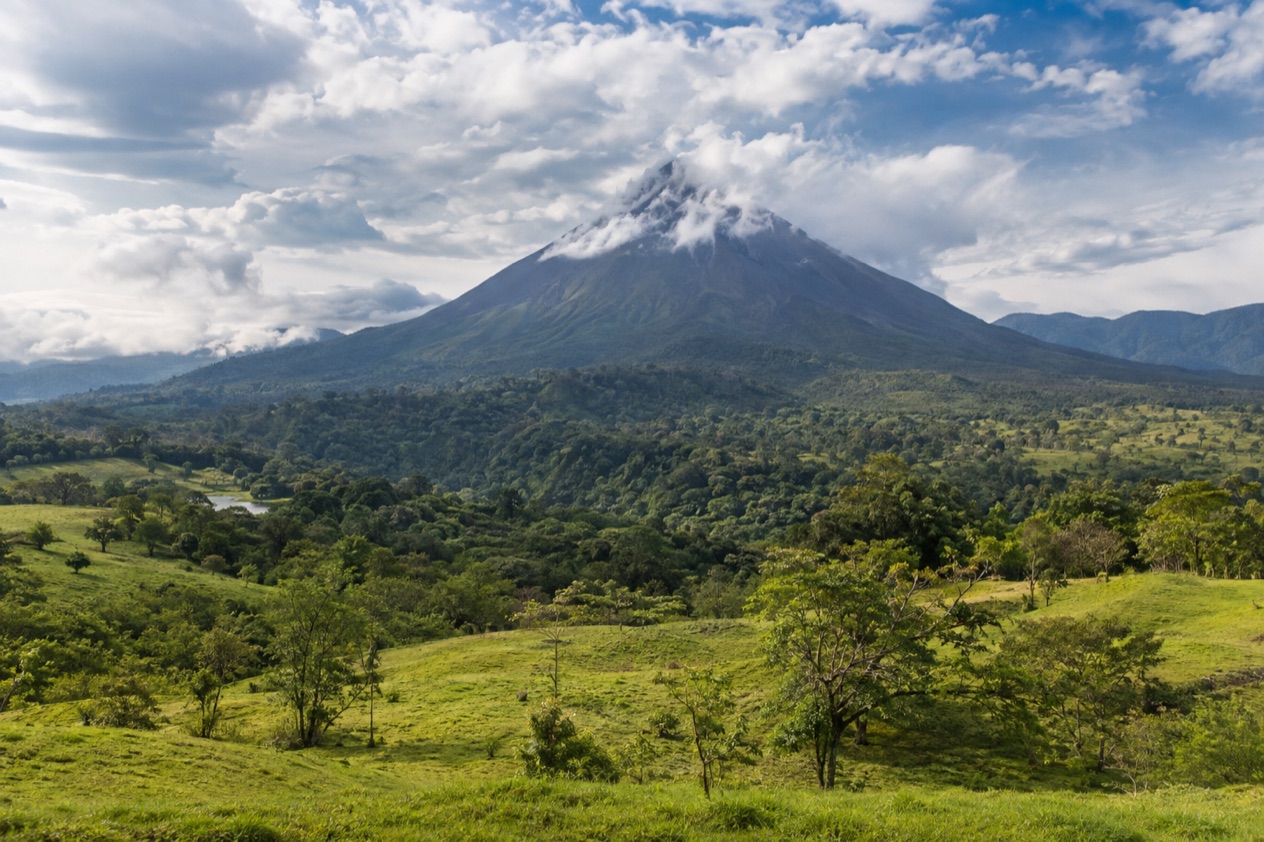
On a July morning in La Fortuna, the clouds lift off the cone of Arenal just long enough for the whole slope to show, and the pastures below it glow a wet, bright green. By midday the mist is back, the coffee shops smell of fresh casados, and the hot rivers steam in the rain. In the northern lowlands, July brings the green season, a month when the forest grows thick, the water stays warm, and Costa Rican families on school break fill the town.
What is the weather like in La Fortuna in July?
July in La Fortuna is warm, humid and wet, with rain on most days but rarely all day long.
| Month | Average high (°F) | Average low (°F) | Rain days |
|---|---|---|---|
| June | 80.5 | 70.8 | 25.9 |
| July | 79.4 | 70.2 | 25.2 |
| August | 80.3 | 70.3 | 24.6 |
Mornings are usually the best part of the day. Soft air and, most days, clear light greet the morning, and the volcano is most likely to reveal its summit before clouds gather. Plan the things you most want to see, the lake views, the hanging bridges and the waterfall trail, for the first half of the day.
Rain tends to arrive in the afternoon, sometimes as a steady shower and sometimes as a heavy downpour that drums on tin roofs for an hour or two. It can also settle in as a gray, drizzly day, and the wettest spells can fall at any hour.
Because the mountains here catch the moisture coming off the Caribbean side, the lowlands around Arenal stay green and damp all month. The sun sets a little after dinner time, with about twelve and a half hours of daylight.
Evenings are mild enough for a T-shirt, though a light layer helps after a soaking. A rain jacket matters more than a sweater, and quick-drying clothes beat cotton. Hot springs are especially pleasant in wet weather, when the steam rises off the pools against the cool air.
What to do in La Fortuna in July
July is a month for water in every form: warm springs, falling water and lake mist. The rain keeps the forest loud with frogs and birds, and the rivers run full.
The calendar adds the Annexation of the Partido de Nicoya on July 25, a national holiday celebrating Guanacaste joining Costa Rica. Parades and folk music belong mostly to Guanacaste itself, but in La Fortuna the long weekend means more Costa Rican families in town, with the school break keeping them traveling through the month.
People come for the view, for the walks over old lava flows, and for the way the volcano appears and disappears behind the clouds. In July, treat a clear summit as a bonus, not a plan.
Hot springs in the rain
The thermal rivers and pools around La Fortuna are the classic wet-weather outing. Water runs warm to hot through landscaped gardens, and the best part of a July visit is sitting in a pool under a light rain with the forest dripping around you. Some resorts are large and polished with swim-up bars and dinner buffets, while smaller places are quieter, with a few pools tucked into the trees.
Go late in the afternoon, when the day’s showers often start and the day trippers have left, and stay on into the evening when the lights come on along the paths. Couples, families with older children, and anyone eager to unwind following a morning on the trails will find it a good fit. Pack a towel plus sandals with tread for slick rock, and look at the park’s official page ahead of time, since hours and rules shift.
La Fortuna Waterfall
In July the waterfall pours full and loud into a deep green pool where a long forest staircase ends. The spray reaches you well before the bottom, and the rocks and steps are slick, so go slowly in sturdy shoes. Heading back up is what truly tests you, above all when the air is thick with moisture.
Set out at first light, while the trail is calmer and the glow is gentle, then save the later hours for an indoor plan. Visitors who want a swim at the base should look for the posted guidance on the day, as water conditions after heavy rain can change. It suits people comfortable with a long set of steps and a bit of mud.
Hanging bridges and the lake
The hanging bridges walk through rainforest canopy on a series of trails, and the green season is when the forest feels most alive. Birds call from the treetops, leaves drip, and in the mist the bridges feel more dramatic. Guided walks are how most visitors see animals, since sloths, toucans and monkeys are chances rather than promises.
Lake Arenal, a short drive from town, is the other half of this outing. Its shores give wide views of the volcano when the clouds part, and the lake and its roadside cafés are a good place to wait out a shower. Start early for the bridges and finish with a late lunch overlooking the water.
Food and the town in the rain
When rain falls in the afternoon, that is when you want a casado, the national lunch plate of rice, beans, plantain, salad and either meat or fish. Gallo pinto, the rice and bean mix, comes with eggs at breakfast, and fresh fruit juices and strong local coffee fill the small sodas, the family-run cafés around the central park. Corn-based sweets and warm tortillas are common comfort food when the sky turns gray.
The central park, with the volcano rising behind the church, is where the town gathers in the evening, and on holiday weekends it is busy with families. Craft shops, chocolate tastings and small museums fill gaps in the day when the rain closes in.
A two-day itinerary for La Fortuna in July
Day 1 starts early with the waterfall, because the morning is your best chance for clear air and a lighter crowd. Start down the steps soon after sunrise, then return to town for gallo pinto and fruit at a family soda, a late breakfast.
Spend the middle of the day on a short walk or shop visit in town, then settle into a long lunch before the afternoon rain. As evening approaches, head to the hot springs and remain past nightfall, the time when the pools feel most peaceful. You can have dinner at the springs, or return to town for a grill or an easygoing restaurant by the central park.
Day 2 belongs to the canopy. Reach the hanging bridges as early as you can, with a guide if you want to spot wildlife, and give the walk a couple of unhurried hours while the forest is still waking up. After that, head out along Lake Arenal’s edge to eat lunch at a café by the water, where the volcano frames the view when the clouds permit.
If the rain turns heavy, the rain card is simple: a chocolate tasting, a coffee stop, a craft browse in town, or another long soak in a thermal pool. Finish with dinner in town and an early night, since sunset comes in the early evening and the roads are better in daylight.
Is La Fortuna busy in July?
La Fortuna is moderately busy in July, mostly because of Costa Rican families on their two-week mid-year school break.
The crowds are domestic more than international, so the busiest places are the hot springs, the waterfall and the lakeside restaurants on weekends. The long weekend around July 25 pulls even more visitors toward the north, so rooms and rental cars go quickly around that date. Weekdays outside the school break are noticeably calmer, and the early hours at any attraction are quieter than midday.
As a habit, book rooms and rental cars early for the holiday weeks and the July 25 weekend, and book later for the quieter stretches. Restaurant tables rarely need planning in town, but the larger resort dinners and any guided walk fill more easily on weekends. If you want a particular hot springs evening or a guided bridge walk, set it up before you arrive, and check the park’s official page for any reservation rules.
Because the rain is a given, the quiet times are often wet ones. Travelers who do not mind a shower get thinner crowds and a greener landscape, especially on weekday mornings.
What to pack for La Fortuna in July
Bring quick-drying layers and shoes with good traction for hot, rainy days and muddy paths.
- A light rain jacket, since showers come most days and often without warning.
- Shoes with good tread for the slick steps at the waterfall and the muddy bridge trails.
- Bring a swimsuit and a fast-drying towel for the hot springs, since rain just improves the soak.
- For mornings that dawn clear and bright, bring a hat and sunscreen, as the sun beats down hard.
- Pack bug spray for evening hours and treks through the woods.
- A waterproof bag for your phone and camera in sudden downpours.
Good to know before you go
The U.S. State Department rates Costa Rica Level 2, ‘Exercise increased caution,’ due to crime; it says petty crime is common throughout Costa Rica and that violent crime also affects tourists, including armed robbery, homicide and sexual assault.
July falls inside the Atlantic hurricane season, and while La Fortuna is not on the coast, tropical systems can still bring days of heavy rain to the northern lowlands. Roads around the volcano and the lake can be slow in wet weather, so leave extra time and drive in daylight. Book the hot springs and your room first, since those are what fill on holiday weekends, and keep the afternoon flexible for the rain.
La Fortuna in July vs June and August
Moving the trip to June gives you nearly identical weather, with a touch more warmth and rain, and the school break has not yet started, so the town is a little quieter. The green is just as deep, and the main difference is the lighter family traffic at the springs and the waterfall.
August is a shade drier, with slightly fewer rainy days, and the family rush from the mid-year break eases as schools reopen. The July 25 weekend is behind you, so rooms become easier to find and the trails feel less busy. The landscape stays lush and the afternoon showers keep their rhythm.
Choose July if you want the holiday atmosphere and do not mind sharing the pools with local families. Choose June or August if you prefer a calmer town and a slightly easier time finding a room. The differences are small, so the crowd level is what should decide.
Is July a good time to visit La Fortuna?
Yes, July is a good month for travelers who enjoy green landscapes, warm water and a lively town, and who accept that rain is part of the day.
It suits families, hot springs lovers, birders and walkers who like an early start and a slow afternoon. It is less ideal for anyone who wants guaranteed volcano views, dry trails or a quiet town on every weekend. If your plans depend on a clear summit, build in extra days or choose another month.
On arrival, settle the hot springs and the waterfall first, then fit the rest around the weather. What makes July special here is the combination of steaming pools, loud waterfalls and a volcano that appears through the mist, with Costa Rican families sharing the town for their own summer break.
Sources
- Open-Meteo / ECMWF ERA5, normals 1991-2020 computed for the grid cell at 10.4679N 84.6427W, checked October 8, 2026
- sunrise-sunset.org, sunrise and sunset calculated for the 15th of the month, checked October 8, 2026
- U.S. Department of State, Costa Rica Travel Advisory, issued April 1, 2026 (https://travel.state.gov/content/travel/en/traveladvisories/traveladvisories/costa-rica-travel-advisory.html), read via the State Department open data API on October 8, 2026
To plan your stay
- Things to Do in La Fortuna: Arenal Volcano, Hot Springs, the Waterfall and Day Trips
- Where to Stay in La Fortuna: Town Center, Volcano Road, Hot Springs Strip and Lake Arenal
- La Fortuna vs Monteverde: Hot Springs, Cloud Forest, Weather and Which to Choose
- Day Trips from La Fortuna: Rio Celeste, Arenal Volcano Park, Monteverde and Hot Springs