
On a January evening in Old San Juan, the plazas fill with the strum of cuatro guitars, fritters sizzle at a kiosk down the hill, and the trade wind carries the smell of salt over the blue-gray cobblestones. By August the same streets sit under a heavy, shining heat, and the afternoon sky builds up gray over the forts before it breaks. San Juan is warm every month of the year, so the choice is between a drier, livelier winter and spring and a hotter, greener, quieter summer and fall.
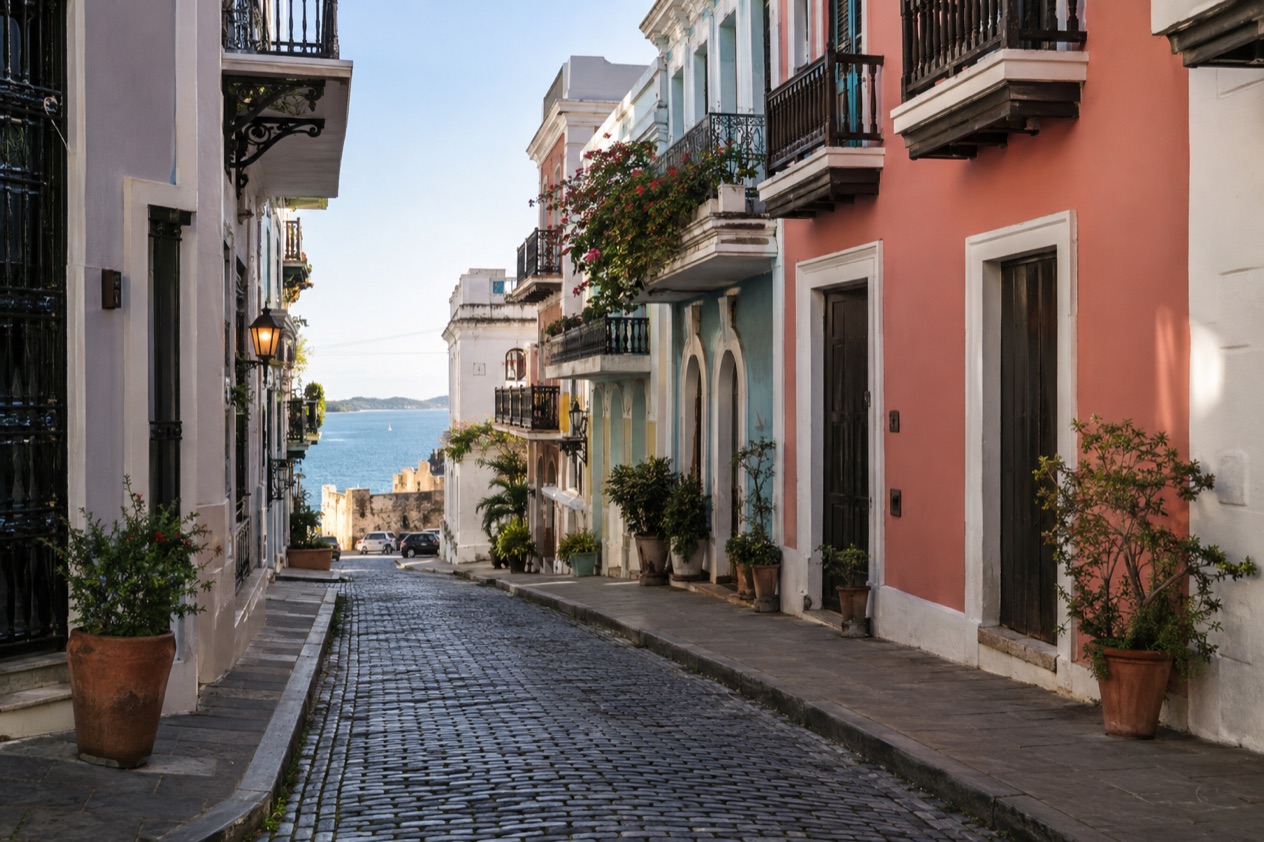
When is the best time to visit San Juan?
The best months for most travelers are December through April, when the air is a little less sticky, the showers are shorter and the city is at its liveliest, with late January to early April the sweet spot for sun and sightseeing. Summer and fall are still warm and perfectly workable, but they ask for more patience with heat, rain and storm forecasts.
For beaches and the sea, the stretch from late spring through early fall gives the warmest water, and the Atlantic side tends to be less rowdy in summer than in winter. Winter swells roll onto the north coast, so the city beaches of Condado and Isla Verde can be rough on some days, while the reef-protected Balneario de Escambron is where people head when the surf is up.
If you want to swim in bathwater-warm sea, aim for early summer. If you want sunny days and a dip when conditions allow, winter and spring work well.
For sightseeing, the cooler months make long walks on the walls of El Morro and San Cristobal far more pleasant, and you can wander the pastel streets of Old San Juan at midday without wilting. In the hot months, plan the forts and the old city for the morning, lunch somewhere with air conditioning, and keep the late afternoon free for the pool or a sudden downpour. Santurce, with its murals, bars and food stalls around Calle Loiza, works well in any month because so much of it is indoors at night.
For a quieter, easier trip, the weeks after school starts in the fall and the stretch between Easter and early summer are calmer than the holiday peak. Families should know that March is loud: spring break fills hotel pools, Isla Verde and the Condado strip with college groups and weekend crowds. If your kids need calm, go in late April or May, or pick the first half of December before the holiday rush begins.
San Juan weather by month
Step outside near the airport just east of Old San Juan, and you’ll feel why this stretch of the north coast is one of the island’s wetter spots.
| Month | Average high (°F) | Average low (°F) | Rain days | Sea (°F) |
|---|---|---|---|---|
| January | 83.2 | 71.9 | 9.9 | 80.8 |
| February | 83.8 | 71.8 | 6.6 | 80.0 |
| March | 84.7 | 72.4 | 5.3 | 80.1 |
| April | 86.2 | 74.0 | 7.5 | 80.8 |
| May | 87.4 | 75.7 | 8.8 | 83.4 |
| June | 89.0 | 77.2 | 8.0 | 84.8 |
| July | 88.7 | 77.6 | 10.7 | 84.9 |
| August | 89.1 | 77.8 | 11.0 | 85.6 |
| September | 89.2 | 77.5 | 10.8 | 86.5 |
| October | 88.6 | 76.7 | 10.6 | 87.0 |
| November | 86.1 | 74.9 | 12.4 | 84.8 |
| December | 84.2 | 73.3 | 10.6 | 82.5 |
The year runs from pleasantly warm to properly hot, with nights that never really cool off. February and March are the driest stretch, and the rain that does fall is usually a quick shower that passes before your coffee gets cold. January and December are showery too, partly because winter cold fronts reach the north coast now and then, bringing a gray day, a gusty breeze and bigger surf.
From May on, the heat builds and the rain changes character, arriving as heavy afternoon downpours and the occasional stormy spell. The rainy days stack up through late summer and fall, and November turns out to be the wettest month by count, even though the hurricane season is winding down. The south and west of the island are generally drier than the capital, so a forecast for San Juan is not a forecast for the whole island.
What is there to do in San Juan in each season?
Each season in San Juan has its own rhythm, and the city has enough indoor and outdoor options to work in all of them.
Winter and spring: the sunny months
From December to April, this is the time for walking everywhere. You can follow the old city walls at sunset, climb up to the grassy lawn in front of El Morro where kites fly in the trade wind, and spend long mornings in the plazas. Lunch is a plate of mofongo, the mashed fried plantain, or a paper-wrapped alcapurria at the beachside kiosks of Pinones.
Beach days are best planned around the sea. On calm days the strip at Condado and Isla Verde is a pleasure, and on rough ones Escambron is the better pick. Humpback whales pass the island from about January to March, but they are seen mainly off the west coast, so they are a reason for a trip out of town rather than something to expect from the capital.
Summer and early fall: hot, green and showery
From June to October, the day has a clear shape. Plan the forts, the Old San Juan streets and the markets for the morning, and keep the afternoon flexible for showers. Plan midday for a museum, a long lunch at a chinchorro or a slow coffee, and keep the evening for a stroll once the heat eases. A piragua, shaved ice with syrup from a street cart, becomes a daily habit.
The sea is at its warmest, so snorkeling and swimming are most inviting when conditions allow. Sea turtles nest on Puerto Rican beaches in spring and summer, a quiet nature season that is a chance rather than a promise. September, at the peak of the Atlantic hurricane season, is the month to leave flexibility in your plans and follow the National Hurricane Center and local alerts.
The shoulder months and the holidays
May and November sit at the edges. May is hot but still tends to feel lighter than July, with warm water, fewer visitors and the first of the green season. November is showery, yet the city begins to light up, because Puerto Rico’s Christmas season starts in late November and lasts well into January, with music, special foods and decorated plazas.
December is the one to book early if you want to be here for the lights and parrandas, groups of friends who go from house to house singing in the night. If you are after empty beaches and solitude, leave the holiday weeks for another time.
When is San Juan cheapest and least crowded?
The quietest stretch is the fall, from September through mid-November, and again the weeks between Easter and the start of summer vacation. Rooms are easier to find in those windows, restaurants rarely have a wait and the beaches belong to locals and a handful of visitors.
The busy weeks are easy to name. Christmas and New Year fill the hotels in Condado and Old San Juan, and the long weekend around Three Kings Day in early January keeps the energy going. February and March bring the winter escape crowd, with March the loudest because of spring break.
Holy Week, which moves every year, is another peak, since many Puerto Rican families travel and fill the beaches. Summer is busy in its own way, as U.S. school vacations send families to the island from June through August.
Cruise ships add another layer. On days when a few of them dock, Old San Juan fills by late morning, so the best trick is to see the forts and the main streets early and come back after the ships leave. In quiet months, even a Saturday in the old city can feel relaxed, with room at the café tables on Calle Fortaleza and a clear view from the walls.
Which months should you avoid in San Juan?
No month is off limits, but the peak of the hurricane season, from mid-August to mid-October, asks for the most caution, and the heat of late summer can be hard on anyone who wants to be outdoors all day. The Atlantic hurricane season runs from June 1 to November 30, with its peak in September. Still, you can spend less on a wonderful trip, but keep an eye on the National Hurricane Center and local official alerts, stay flexible with your bookings and expect forecasts to change quickly.
Rain is the second thing to weigh. November has the most rainy days, and fall rain can disrupt beach plans. They are usually short, though, and the mornings are often bright.
Heat matters from June to October, when nights stay warm and the humidity makes a noon walk through the old city tiring. Sargassum, the brown seaweed that drifts across the Atlantic, can reach the east and south coasts in some springs and summers, and may pile up on a beach you had pictured clear. It is a chance, not a rule, and it varies from beach to beach and week to week.
In winter, the matter is the sea rather than the temperature. A cold front can bring a gray day, gusty wind and big swells to the north coast, so a beach plan may shift to a museum, a market or a long lunch.
When can you swim in San Juan?
You can swim in San Juan in every month, because the sea stays warm all year, but how pleasant it is depends on the waves more than the temperature. In winter and early spring the water is comfortable and refreshing, and by early summer it is warm enough that you step in without a pause. The warmest water comes in late summer and early fall, when the sea feels almost like the air.
San Juan’s city beaches face the Atlantic and get waves all the time, so the water changes day to day and is not the same at any two patches of sand. Winter swells are the biggest, and a calm morning can turn rough by afternoon. If a flag, sign, or lifeguard is on hand, do what it says.
Families and casual swimmers usually head to the Balneario de Escambron, right outside Old San Juan, where a reef keeps the water calmer. Condado and Isla Verde are lively, with hotels, chairs and beach bars, and better for a stroll or a paddle when the waves are small. For snorkeling, summer is usually the more forgiving season, and the small islands off the east coast are calmer than the capital’s beaches.
Festivals and events in San Juan through the year
Winter holidays and street festivals
The Christmas season in Puerto Rico is long and loud, running from late November well into January. You hear parrandas, the neighborhood singing parties that move from door to door, and you eat pasteles, roast pork and tembleque, the coconut pudding.
Old San Juan strings lights over its streets and plazas, and Three Kings Day on January 6 (Dia de Reyes) is still a family day, with children leaving grass for the kings’ camels. The octavitas, the extra days of celebration that follow, stretch the season even further.
In mid to late January the Calle San Sebastian Street Festival takes over the old city for a few days, with crafts, bands, parades with big-head figures and crowds that fill the narrow streets. It is joyful and packed. If you want more space, visit the old city early the next morning.
Carnival, Holy Week and summer fiestas
In the weeks before Lent, Carnaval de Ponce, on the south coast, is the biggest party of the season, with masks and costumes in the streets. It is a day trip or an overnight from San Juan. Holy Week moves every year and has processions and a family-heavy beach crowd across the island, so book early if your trip lands in it.
On June 23, the Noche de San Juan Bautista is a favorite of the capital, when people gather on the beaches and fall backward into the sea at midnight for luck. It is a warm, festive night with food, music and families on the sand. In late July, the Santiago Apostol festival in Loiza, near San Juan, brings masks, drums and bomba music, a vivid look at the island’s Afro-Puerto Rican heritage.
Nature seasons: whales, turtles and glowing bays
Humpback whales are in the waters off the west coast from about January to March, which makes winter the time for a whale-watching outing from that side of the island. In spring and summer, sea turtles come ashore to nest on beaches around Puerto Rico, a quiet event that you are lucky to see and should leave undisturbed.
The bioluminescent bays glow all year and are best on moonless nights. Laguna Grande in Fajardo is the closest to San Juan for an evening trip, and Mosquito Bay in Vieques and La Parguera in Lajas are the others. Seeing the glow is a chance rather than a promise, as moonlight and rain can make it harder to see.
Sources
- NOAA NCEI, monthly normals 1991-2020, station RQW00011641 (San Juan L M Marin International Airport), checked October 8, 2026
- Open-Meteo Marine API, average 2015-2024, checked October 8, 2026
- sunrise-sunset.org, sunrise and sunset calculated for the 15th of the month, checked October 8, 2026
- NOAA National Hurricane Center, Climatology (https://www.nhc.noaa.gov/climo/), checked October 8, 2026
To plan your stay
- Things to Do in San Juan: Old San Juan Forts, City Beaches, Street Food and Nights Out
- Where to Stay in San Juan: Old San Juan, Condado, Isla Verde and Santurce
- San Juan Airport to City: Taxis, Buses and Getting to Condado and Old San Juan
- Know Before You Go to San Juan: Entry, Forts, Money and Getting Around