
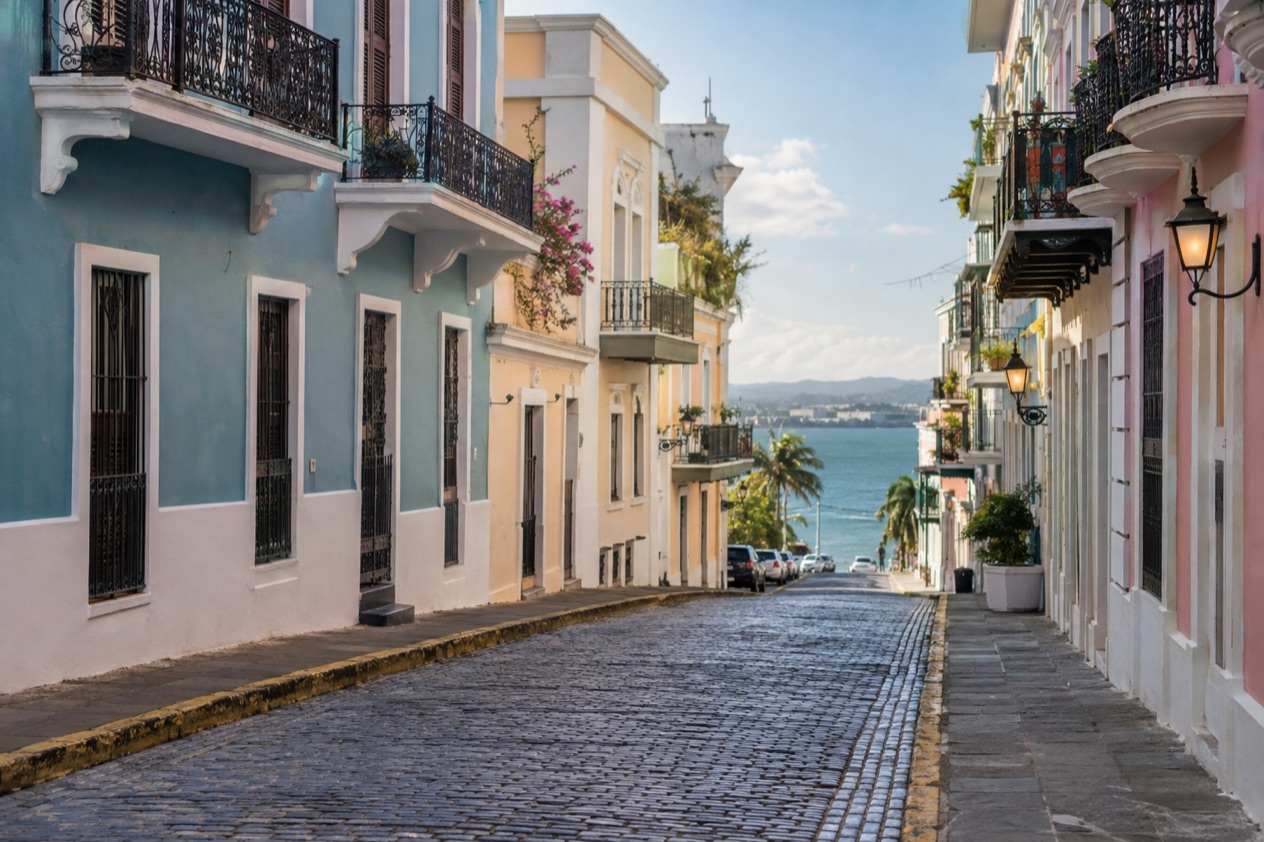
When the clock strikes eight in the morning, Old San Juan’s blue-gray cobblestones remain cool, the pastel townhouses are having their shutters raised, and the scent of robust coffee floats from a corner cafe. Pigeons cross the plazas, and the sea wind carries a faint salt smell up the narrow streets. Three days in San Juan give you the walled city, the food and murals of Santurce, a beach afternoon and one longer outing, at a pace that still leaves room for a long lunch.
Is three days enough in San Juan?
Three days is enough to see the best of San Juan without hurrying, especially if this is your first visit or you are adding the city to a longer trip around the island. The capital is compact. Because the old city, the beach strips, and the arts district are all clustered nearby, you can get to them easily even when time is tight, and that leaves more hours for meals and wandering rather than time behind the wheel.
In that time you can walk Old San Juan, visit the two Spanish forts that make up the UNESCO-listed San Juan National Historic Site, eat your way through Santurce, and spend an afternoon on a city beach. You can also fit in one slower day, whether that means an outing along the coast or a long stretch by the water.
What three days leave out is the rest of the island. El Yunque, the surf town of Rincon, the bioluminescent bays and the small islands of Culebra and Vieques each deserve their own days, and a rental car makes more sense for them than for the city.
Travelers who love museums, long dinners or lazy beach time will want a fourth and fifth day. If San Juan is only your arrival point, three days is a generous start.
Day 1 in San Juan
Start in Old San Juan early, before the heat and the cruise crowds build, with Castillo San Felipe del Morro, the fort at the tip of the islet and the best-known sight in the old city. The wide lawns in front are a favorite place for kite flying, and the walls look straight out over the Atlantic.
Since the park takes only cards, be ready to pay that way and check the current standard entrance fee before you go. Give the fort a slow morning, then walk back along the cobblestones toward San Cristobal.
The standard pass is valid for 24 hours and includes both fortifications, so visit El Morro in the cool of the morning and San Cristobal later the same day. Between the two, stop for lunch in a small cafe or a family restaurant in the old city. The go-to dish is mofongo, fried plantains that get mashed and usually come with garlic sauce plus shrimp or pork, while tostones make a solid side.
When evening light grows gentle, take a walk on the Paseo de la Princesa, the path beside the southern wall that looks out over San Juan Bay, and afterward go through Puerta de San Juan, the last remaining city gate. Dinner can be in the old city, where plazas fill with music and families after dark. Everything here is within walking distance, so the evening can end with a slow loop through the lit streets and a tembleque, the coconut pudding, to finish.
Day 2 in San Juan
Spend the second day outside the walls, starting with the Balneario de Escambron, the public beach park just beyond Old San Juan. The water there tends to be gentler thanks to a protecting reef, but since San Juan’s beaches meet the Atlantic and the ocean shifts daily, always heed the flags and whatever the lifeguards tell you. Head out early, take a dip or just relax in the shade, and grab a piragua from a cart, which is shaved ice with fruit syrup.
From there, move along the coast to Condado, the upscale beachfront strip along Ashford Avenue. It makes a pleasant afternoon walk, with the ocean on one side and hotels, cafes and shops on the other. The ride from the old city is short, and Condado is also served by two public bus routes if you prefer not to use a taxi or ride-hailing.
Wrap up your second day in Santurce, the neighborhood of art and cuisine that centers on Calle Loiza. Calle Loiza brings together casual restaurants, bars, street art and a younger crowd in the evening. Come hungry and graze: fritters, pork, plantains and something cold to drink. If you want a different flavor from the old city, this is it, and it makes the best contrast to Day 1.
Day 3 in San Juan
Day 3 suits a slower pace, and the east side of the metro area offers it. A strip of coastline beyond the airport, Pinones lines the shore with kiosks that sell alcapurrias (fried fritters of green banana and taro, usually filled with meat) and bacalaitos (salt cod fritters). You can eat standing at a counter with the sea breeze for company. It takes a modest ride from the city, and a late morning visit works well.
Combine it with Isla Verde, the beach strip beside the airport, for a long afternoon on the sand. Its beaches face the Atlantic, so surf varies and it pays to read the signs and flags before going in. Plenty of restaurants line the shore here if you want a seated lunch, and the hotels have casual bars with views of the water.
Return to the old city for your last evening. This is the time for the walk you skipped, perhaps La Perla, the colorful neighborhood outside the wall, seen from above along the edge of the old city rather than at night. A quiet stop awaits at San Jose Church, which returned in 2021 following years of renovation. Then settle into a table for a final dinner, perhaps lechon asado, the slow-roasted pork, and a last coffee.
Where to stay for three days in San Juan
For this plan, Old San Juan is the best base. You wake up inside the walls, reach El Morro on foot before the crowds, and come back to a quiet street after dinner. The cobblestones and narrow lanes are charming, but rooms are often in old buildings, and the area is lively in the evening, so light sleepers should ask about street noise.
Condado is the alternative if you want a beach in front of your hotel and a resort feel, with restaurants and shops along Ashford Avenue and the old city a short ride away. Isla Verde, closer to the airport, suits travelers who want long beach days, casinos and big resorts and do not mind being further from the historic quarter. Santurce is a good choice if food and nightlife matter most to you.
Pick Old San Juan for atmosphere and walking, Condado for a balance of sea and city, and Isla Verde for a beach vacation with a little sightseeing on the side.
What to skip if you only have three days in San Juan
Skip the far corners of the island. El Yunque, Rincon and the bioluminescent bays are wonderful, but each takes most of a day with travel time, and squeezing one into a three-day city stay means rushing everything else. Give them a separate trip with a rental car, and use the time here for a longer lunch or a second walk through the old city.
Skip trying to see every beach. The city beaches share the same Atlantic character, and one good afternoon at Escambron or Condado does the job. Moving between three or four of them adds little, and surf conditions change from day to day anyway.
Skip a rental car for the city itself. Parking is awkward in Old San Juan, and the old streets are best on foot. Finally, do not try to pack in every museum and church. Choose the forts, wander the plazas, and leave the rest for a return visit, when you can take things slowly.
Getting around San Juan in three days
On Day 1 you walk. Old San Juan covers little ground, and since the free trolley that used to serve it has stopped running, visitors get around on foot or in a car. Because the streets rise and the cobblestones sit unevenly, no item in your bag counts more than a pair of comfortable shoes.
On Days 2 and 3 you move between districts. Condado is about 2 to 6 miles away from the old city, while Isla Verde lies a little farther to the east, which means a taxi or ride-hailing ride tends to be quick, though traffic can change that.
Condado is reached by two public bus routes, T21 and D53, a good fit for travelers who have time on their hands.
A rental car is not needed for this plan. If you do rent one for a later part of your trip, pick it up when you leave San Juan rather than on arrival, so you are not paying to park while you walk the old city.
Good to know before you go
U.S. citizens do not need a visa or passport to travel to Puerto Rico, where the U.S. dollar is used. The fort park does not take cash, so bring a card. All year long, Puerto Rico remains on Atlantic Standard Time and never adjusts its clocks.
The Atlantic hurricane season runs from June 1 to November 30, with the peak in September. If your visit lands within those months, watch the National Hurricane Center and follow what local officials advise as your departure day gets closer.
| Pass | Amount | Who pays |
|---|---|---|
| San Juan National Historic Site annual pass | $35 | Visitors who want repeat entry (up to four adults, children 15 or under free) |
| America the Beautiful Annual Pass | $80 | U.S. citizens and residents |
| Senior Pass (annual) | $20 | U.S. citizens and residents aged 62 and over |
Sources
- National Park Service, San Juan National Historic Site, Fees & Passes (https://www.nps.gov/saju/planyourvisit/fees.htm), checked October 8, 2026
- National Park Service, San Juan National Historic Site, Hours & Operating Seasons (https://www.nps.gov/saju/planyourvisit/hours.htm), checked October 8, 2026
- Wikipedia, Old San Juan (https://en.wikipedia.org/wiki/Old_San_Juan), checked October 8, 2026
- Wikipedia, Condado (https://en.wikipedia.org/wiki/Condado,_Puerto_Rico), checked October 8, 2026
- Wikipedia, Isla Verde (https://en.wikipedia.org/wiki/Isla_Verde,_Puerto_Rico), checked October 8, 2026
- NOAA National Hurricane Center, Climatology (https://www.nhc.noaa.gov/climo/), checked October 8, 2026