
On the eve of Three Kings Day, children in Old San Juan set out boxes of grass under their beds for the camels, and the plazas still carry the lights and parrandas of a Christmas season that refuses to end. The days are warm and bright, the trade winds soften the afternoons, and the cobblestones fill with music as the big street festival arrives. January in San Juan suits travelers who want a Caribbean winter with real city life, good food and a sea that is still warm.
Few places keep Christmas going as long as Puerto Rico does. The weeks after the New Year are known as the octavitas, and you can still hear the guitars, cuatros and maracas of a parranda drifting out of a restaurant or a living room well into the month.
What is the weather like in San Juan in January?
January is warm, bright and a little breezy, with enough short showers to keep the island green but not enough to spoil a day. For travelers in the city and on its beaches, January feels like this, while the mountains inland feel cooler and wetter.
| Month | Average high (°F) | Average low (°F) | Rain days | Sea (°F) |
|---|---|---|---|---|
| December | 84.2 | 73.3 | 10.6 | 82.5 |
| January | 83.2 | 71.9 | 9.9 | 80.8 |
| February | 83.8 | 71.8 | 6.6 | 80.0 |
Mornings begin soft and pleasant, ideal for walking the walls of the old city before the sun climbs. By midday it is hot in the sun, though the trade winds keep it from feeling heavy, and afternoons are fine for a beach or a long lunch. Evenings cool just enough that a terrace dinner is comfortable in a short-sleeved shirt, and a light layer helps only if you are sensitive to air conditioning.
Rain in January can come as a passing shower carried in off the Atlantic. Heavy downpours are the exception, and a day of steady rain is uncommon. The light is low and golden in the late afternoon, which makes the pastel townhouses glow, and daylight lasts a little over eleven hours, so plan your sightseeing before dusk.
Pack as you would for a warm summer day at home, with a rain jacket you can stuff in a bag. The sea temperature in the table comes from marine records for the waters off the city, and it explains why a swim feels refreshing rather than cold.
Can you swim in San Juan in January?
Yes, the sea is warm enough for a long swim, a little cooler than in the fall but still comfortable for most people without a wetsuit. Water that sits in the low 80s feels refreshing on a hot afternoon rather than bracing.
The beaches inside San Juan look out on the Atlantic, and since waves never stop rolling in, the water is different each day and from one patch of sand to the next. Winter is the season for bigger swells on the north coast, which means some days are better for watching waves than for swimming.
A public beach park called Balneario de Escambron sits just past Old San Juan and is known for calmer water inside its reef. Condado and Isla Verde have broader, livelier beaches where the waves can be strong.
Wherever you go, remember that conditions change from day to day and from one stretch of sand to the next. Bring a hat, sunscreen and a mask if you want to look at the fish near the reef at Escambron. Surfers will find January the more exciting side of the north coast, while a quiet float is a matter of choosing the right morning.
What to do in San Juan in January
January’s main draw is the Calle San Sebastian Street Festival, which takes over Old San Juan. Streets around the plaza close to traffic and fill with artisans, food stands, bands, giant-headed costumed figures and crowds dancing from afternoon until late. It follows the long Christmas season and many locals treat it as the last great party before the year gets serious.
Three Kings Day on January 6 is the other date that shapes the month. Families gather, children get gifts, and restaurants serve roast pork and pasteles, the plantain-based parcels wrapped in leaves that are the heart of a Puerto Rican holiday table. In the days after, the octavitas keep the music going in homes and plazas.
Old San Juan and its forts
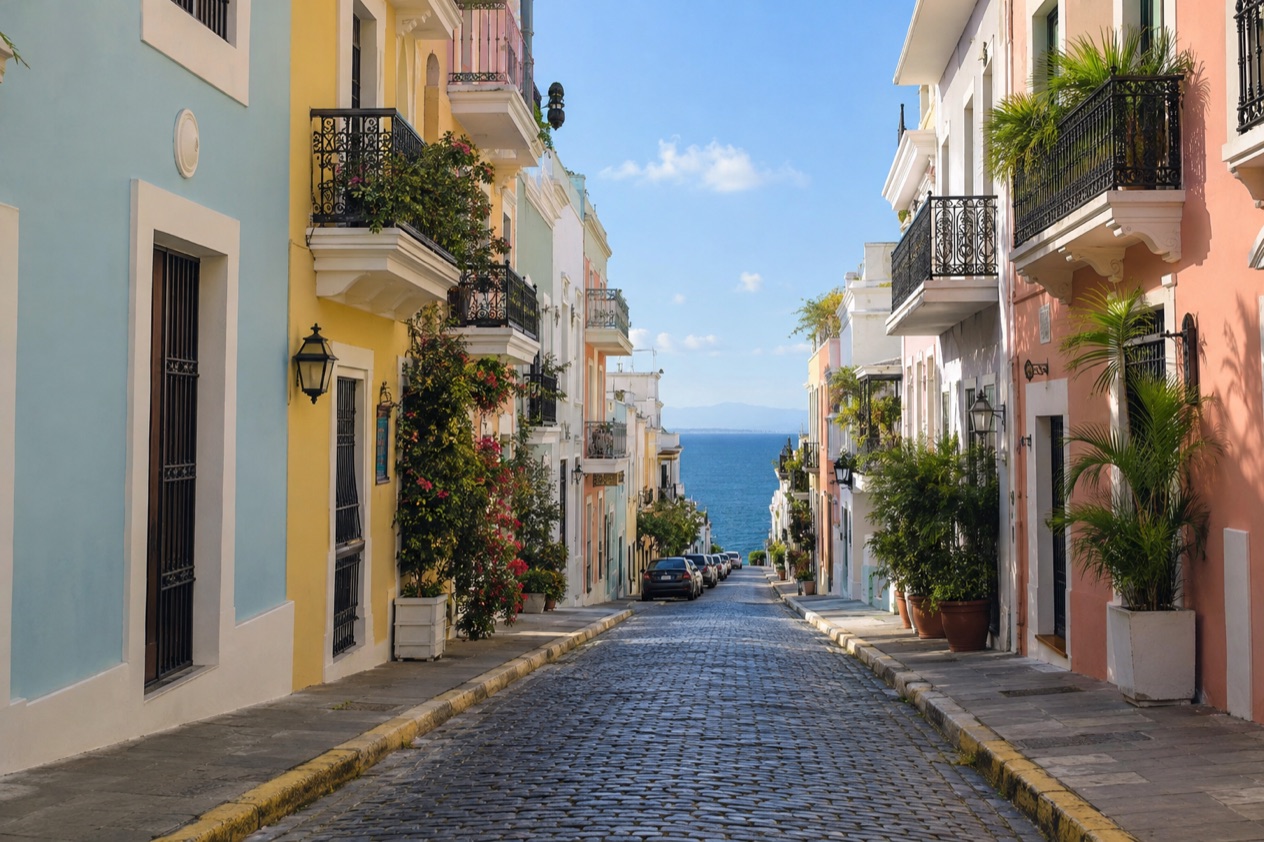
Set aside a whole morning for the old city, a colonial town behind walls on a little islet, where the cobblestone streets are blue-gray and the townhouses wear pastels. The San Juan National Historic Site consists of El Morro and San Cristobal, two Spanish forts, and it forms part of a UNESCO World Heritage Site. January’s mild air suits the long, shadeless walk across the lawns of El Morro, where kites rise in the sea breeze.
Wander down to the plazas, the cathedral and the narrow side streets with balconies and small galleries. The best light comes early, before tour groups arrive, and again toward sunset when the walls turn gold. Pause for a coffee or a piragua, fruit syrup poured over shaved ice, which carts sell under the midday sun.
Because the cobblestones turn uneven and slick once a shower passes through, comfortable shoes are what you want. The forts are open-air, so a hat and water are more useful than a jacket.
Eating your way through the city
Puerto Rican cooking is built on mofongo (mashed fried plantain), lechon asado (roast pork), tostones, alcapurrias, pasteles and tembleque, a soft coconut pudding. Casual roadside spots known as chinchorros, plus kiosks and cafes in and around San Juan, serve them. January is the month when pork and pasteles are still on every holiday menu.
East of the airport, Pinones stretches along the coast with beachside kiosks that sell fritters like alcapurrias and bacalaitos, and a cold drink with the sea in view makes for a lively afternoon. Around Calle Loiza, the Santurce arts and food district offers fresh kitchens, murals, and bars that remain lively well into the night. Old San Juan has the polished dining rooms, while Condado leans toward resort restaurants.
Beach days and the ocean
The two beach-and-hotel strips, Condado and Isla Verde, offer long sand, beach bars and water sports. Escambron is the gentler choice near the old city, with shade and a reef that breaks the waves. In winter the Atlantic can bring larger surf, so take a walk along the shore first and see what the sea is doing.
Afternoons are warm enough for the sand, and the lower sun makes the late hours the nicest for a stroll along the water. If a shower passes, wait it out under a beachside awning with a cold drink and carry on.
Evenings in January are for walking Old San Juan with music coming from open doors, then ending at a plaza bench or a rooftop bar. When it rains, the galleries of Santurce, the museums of the old city and long lunches at a chinchorro all make good shelter.
A two-day itinerary for San Juan in January
Day 1 is for the old city. Start early at El Morro while the air is soft and the lawns are nearly empty, then cross to San Cristobal and the plazas. Take a long lunch in a shaded courtyard, with mofongo or a plate of roast pork, and use the hottest hours for the cathedral, galleries and small shops where fans and trade winds make the interior pleasant.
In the late afternoon, walk along the sea wall as the stone turns gold. Sunset comes in the early evening, and the lanes fill with music afterward. If a shower sets in, duck into a museum or a café and wait for the cobblestones to dry.
Day 2 moves to the water. Spend the morning at Escambron, where the reef usually keeps the water gentler, then drive or take a ride to Pinones for fritters and a drink at the kiosks. Afternoon belongs to Condado or Isla Verde, with a long stretch of sand and a walk at golden hour.
For the evening, head to Santurce and Calle Loiza for a more local dinner, followed by a stop at a bar or gallery. If the day turns gray, skip the beach and spend it over a long lunch in Santurce.
Is San Juan busy in January?
Yes, January is a busy month, especially in its first week and again around the street festival. Visitors come for the winter escape, and the old city can feel crowded on weekends, with cruise passengers adding to the daytime bustle.
Hotels in Old San Juan, Condado and Isla Verde fill quickly around the holidays and the festival weekend, so book early for those dates, and plan a bit later for the quieter stretches at the end of the month. Rental cars are in demand, and good restaurants are easiest to get into if you reserve a table, particularly on weekends.
The festival days are lively but packed, with streets closing and walking the only way to get around. If you prefer calm, aim for the weekdays, early mornings at the forts and evenings away from the central plaza. Beaches are rarely empty, but Escambron and the quieter stretches of Isla Verde are easier at midweek.
What to pack for San Juan in January
Pack for warm days, a light breeze and the odd shower, with comfortable shoes for stone streets.
- Lightweight clothes that dry quickly, for hot afternoons and passing showers.
- Sturdy sandals or sneakers with grip, for wet cobblestones.
- A small rain jacket, for the short Atlantic showers.
- Sunscreen and a hat, for the shadeless forts and beaches.
- A swimsuit and a mask, for Escambron and the warm sea.
- A light layer, for air-conditioned restaurants and breezy evenings.
Good to know before you go
January falls outside the official Atlantic hurricane season, which runs from June 1 to November 30. Americans need neither a visa nor a passport here, and U.S. dollars cover every purchase.
San Juan in January vs December and February
Moving the trip to December gives you slightly warmer water, a bit more rain and the full Christmas season, with lights, parrandas and the busiest holiday weeks. It is the choice for travelers who want the festive peak and do not mind crowds and peak-season rates.
February has fewer rainy days, though the sea cools a touch. The street festival and the octavitas are behind you, the old city is calmer, and Carnaval season begins in some parts of the island. It suits beachgoers who care most about sunshine and a quieter pace.
Stay with January if you want the festival and a lingering holiday mood with warm water. Shift to December for lights and tradition, or to February for drier days and fewer people.
Is January a good time to visit San Juan?
Yes, January is a very good time, especially for travelers who want warm weather, a lively street culture and a swim without the summer heat. Food lovers, walkers and anyone who enjoys music in the street will feel at home.
It is less ideal for those who dislike crowds, or who need guaranteed calm water, since the Atlantic can be rough on some days. Surfers will be pleased, but nervous swimmers should lean on Escambron.
On arrival, walk the old city while the light is soft, then settle in for a plate of mofongo. What sets January apart is the mix of lingering Christmas songs, a street festival in the old town and a sea still warm enough to enjoy at the end of the day.
Sources
- NOAA NCEI, monthly normals 1991-2020, station RQW00011641 (San Juan L M Marin International Airport), checked October 8, 2026
- Open-Meteo Marine API, average 2015-2024, checked October 8, 2026
- sunrise-sunset.org, sunrise and sunset calculated for the 15th of the month, checked October 8, 2026
- NOAA National Hurricane Center, Climatology (https://www.nhc.noaa.gov/climo/), checked October 8, 2026
To plan your stay
- Things to Do in San Juan: Old San Juan Forts, City Beaches, Street Food and Nights Out
- Where to Stay in San Juan: Old San Juan, Condado, Isla Verde and Santurce
- San Juan Airport to City: Taxis, Buses and Getting to Condado and Old San Juan
- Know Before You Go to San Juan: Entry, Forts, Money and Getting Around