
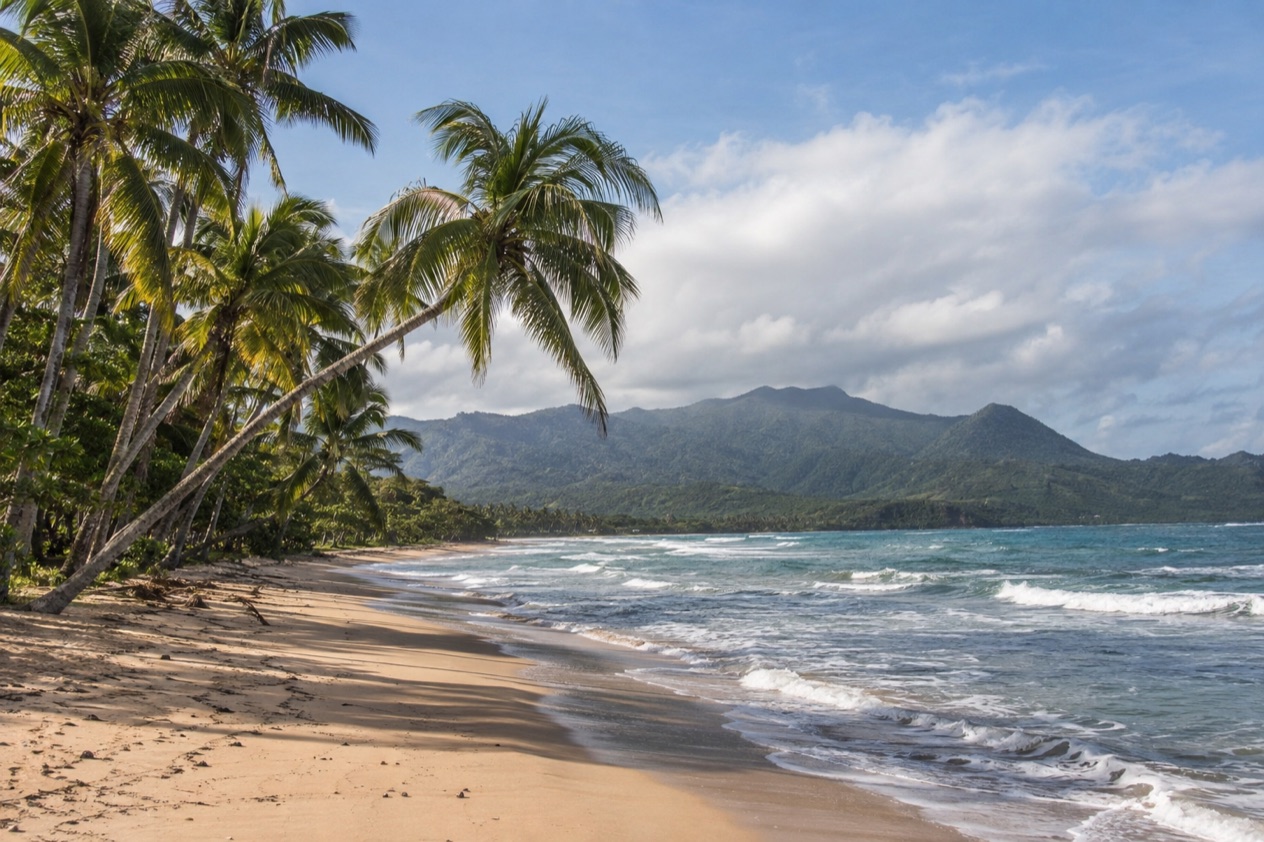
As afternoon stretches toward evening in Luquillo, the scent of dough frying floats from the roadside kioskos, blending with salty air and the whisper of coconut palms. Behind the town, the green ridge of El Yunque holds its own private cloud, and below it the Atlantic keeps rolling onto the sand.
This is a beach town on Puerto Rico’s northeast coast, easygoing and a little scruffy in the best way. Families fit right in here, and so do food lovers, along with anyone hoping to pair a rainforest with a coconut palm beach on a single day.
What are the best things to do in Luquillo?
The best things to do in Luquillo are to spend a slow afternoon on its palm-lined beach, eat your way along the kiosk strip, and take a morning in the rainforest of El Yunque, which sits right behind the town. Everything else is a variation on those three pleasures. The town is compact, the pace is unhurried, and the easiest days here have no schedule beyond a meal and a swim.
What gives Luquillo its character is the setting. The town sits between the ocean and a rainforest, so a single day can include a cold waterfall, a plate of fritters and a sunset with your feet in the sand.
- Settle under the coconut palms at Luquillo Beach, the town’s easy, family-friendly main beach with showers and a cafeteria.
- Eat at the kioskos, the row of open-air food stands where fritters, seafood and cold drinks come out of tiny kitchens.
- Spend a morning at El Portal in El Yunque National Forest, where you can see live Puerto Rican parrots.
- Watch the surf at La Pared, a famous break that is better admired from the sand than entered.
- Learn about leatherback turtles, which nest on this coast, and plan around the turtle festival if you can.
- Take a day trip to Fajardo for the bioluminescent bay, or head toward Ceiba for the ferries to Culebra and Vieques.
- Come for the March patron saint festival, with parades, rides, artisans and regional food.
Add a loose evening on the beach road with music in the air, and you have the whole rhythm of the town. Nothing here needs to be rushed, and the best plan is usually the one that leaves room for a second helping.
Sights and landmarks in Luquillo
The sights of Luquillo are mostly outdoors and mostly free of ceremony: a famous beach, a famous food strip, a quiet town center and a protected stretch of coast. Founded in 1797, the town carries the nickname La Capital del Sol, and a day on the sand makes the title easy to understand. It is also called La Riviera de Puerto Rico and, with affection, Los Come Cocos, the coconut eaters.
Luquillo Beach and the palm grove
Luquillo Beach, officially La Monserrate Beach, is the postcard of the town. It stretches for a mile along a shallow curve of sand, shaded by rows of coconut palms planted close to the shore. Locals call it Balneario de Luquillo, and on a weekend it fills with families who arrive with coolers, folding chairs and portable speakers.
The facilities make it an easy first stop. There are showers to rinse off the salt and a cafeteria for a quick bite, so you can go without much planning. The palm shade is the real draw, because it lets you stay out through the middle of the day when the sun is strongest. Early morning is quiet, with joggers and dog walkers, and by late afternoon the light turns gold behind the trees.
The kioskos along the beach road
A string of small, colorful food stands runs along the road beside the beach, and for many visitors it is the main reason to come to Luquillo at all. The kioskos are open-air counters, some with a few stools, some with plastic tables set out under awnings. Each has its own menu board and its own regulars, and walking the row before you choose is part of the fun.
Think of the kioskos as a landmark in the way a market is one. You come to see the town when it is most social, with grandparents ordering for the table, kids pointing at the fritters and a speaker somewhere playing salsa or reggaeton.
Go at an off hour if you want to talk to the cooks, and at a busy hour if you want the full atmosphere. The food is covered in its own section below.
The town center and its plaza
Away from the shore, Luquillo’s center is a small, calm grid with a plaza and a church, as in most Puerto Rican towns. It is a good place to see everyday life: older men playing dominoes, a bakery with a short line, a bench in the shade. PR-3, the main road, carries traffic past the town, but the plaza itself keeps a slower tempo.
This is also where the March patron saint festival gathers, with parades, games, amusement rides and artisans selling their work. Regional food stands and live entertainment fill the evenings. If your trip lines up with it, the festival shows a side of Luquillo that the beach alone does not.
The Northeast Ecological Corridor
The Northeast Ecological Corridor Nature Reserve begins at Luquillo, a protected coastal stretch extending all the way to Seven Seas Beach in Fajardo. The reserve is a mix of forest, wetland and shoreline, and it is the reason this part of the island still feels so green and so open. It is also nesting ground for rare species, including the leatherback turtle, which can sometimes be encountered here at certain times of the year.
Even if you never set foot in the reserve, it shapes your trip. The coast east of town stays undeveloped, the horizon looks wild, and the beaches have a rougher, less manicured feel than many resort stretches. Treat it as a landscape to appreciate and a good reason to follow local signs and rules wherever you go.
Beaches and outdoor things to do in Luquillo
The beaches of Luquillo range from a family-friendly palm grove to a wave-battered shore that is better left to experts, and the outdoors goes well beyond sand. Counting every cove and stretch of shoreline, there are 14 beaches in Luquillo, and they face the open Atlantic. Conditions change from one day to the next and from one beach to another, so follow the guidance of any flag, sign or lifeguard on duty.
A day at Luquillo Beach
The main beach is the easy choice for a first visit. The sand is broad, the palms give deep shade, and the water is often gentler here than on the more exposed shores nearby, though the Atlantic is never entirely predictable. Look at the flags and ask whoever is on duty before you go in, especially if the surf looks lively.
A good rhythm is a morning walk along the sand, a swim if conditions look right, lunch at a kiosko, then a long rest in the palm shade. Bring a hat and sunscreen, because the tropical sun is strong even on cloudy days. If you want something quieter, walk toward the far ends of the beach, where the crowds thin out.
La Pared and the surf
La Pared, which means The Wall, is one of the best-known beaches in town, and it is considered a dangerous beach. It earns its name from the way the waves stack up and break with force. Surfers know it as a serious spot, and that is the right spirit for visitors too: respect it.
For most travelers, the pleasure of La Pared is watching. Stand on the sand, look at the lines of swell coming in and enjoy the sound. If you surf, go with local knowledge and a realistic sense of your own level. If you do not, treat the water as scenery and take your swim at the main beach instead.
Leatherback turtles and coastal wildlife
The coast around Luquillo is part of the nesting range of the leatherback turtle, the largest of the sea turtles. At certain times of year, you may encounter a leatherback turtle, but sightings are never guaranteed. If you are lucky enough to see a turtle or its tracks, keep your distance and leave the beach dark and clear.
The town marks the animal each April with the Leatherback Turtle Festival, a good moment to learn about the conservation work along this stretch of coast. Nesting on Puerto Rican beaches is often a spring and summer story, so those seasons are the likeliest for signs of it. Even outside the festival, the idea that this shoreline still shelters giants is part of what makes the place feel special.
Other beaches and coastal walks
Beyond the main strand and La Pared, the town’s other beaches are smaller, more local and less equipped. They tend to have little in the way of services, so bring water, snacks and shade, and ask locals what the surf is doing that day.
The coastline here is a good place for unhurried walking, especially early in the morning, when the light is soft and the sand is cool. Look for sea grape trees, almond trees and the occasional shorebird picking along the tide line. Some years, when spring and summer arrive, sargassum seaweed may pile up on the eastern shore, which means the beach can change appearance between one trip and the next.
Day trips from Luquillo
The day trips from Luquillo go in two directions: up into the rainforest, and east along the coast toward Fajardo and the ferry port at Ceiba. The town makes an excellent base because so much of the northeast is close at hand. Luquillo has no public transportation, which means most visitors depend on taxis or rideshares, or set up their own way to get around.
El Yunque National Forest and El Portal
El Yunque is the obvious day trip, because the forest rises almost directly behind the town. The place to start is El Portal, the main visitor center, which was redesigned and reopened in January 2022.
Inside you can watch a short movie about the forest, shown in both Spanish and English, and you can see live Puerto Rican parrots, one of the rarest birds in the world. At the center, you will find a restaurant and a trail that is fully accessible, plus ranger walks and talks take place daily.
Tickets are tied to a date and are available 30 days in advance, so look ahead if you have a fixed schedule. You can come and go during the day with the same ticket, which makes it possible to explore in the morning and return to Luquillo for lunch. Federal fee-free days, such as Martin Luther King Jr. Day and Veterans Day, are scattered through the year.
| Site | Tickets valid | Booking window | Closed |
|---|---|---|---|
| El Portal visitor center | 8am to 4pm on the selected date, with re-entry allowed through the day | 30 days ahead, released at 9 a.m. ET | Thanksgiving Day, Christmas Day, New Year’s Day and Three Kings Day (closes at 2:00pm on Christmas Eve) |
The forest gets crowded, and the advice is simple: go early. Rain showers can pass through at any hour, which is part of what keeps the forest so lush, so a light rain layer is more useful than an umbrella. Leave your food and drinks at home since this isn’t a picnic spot, and with no trash cans around, take everything you bring back out with you.
La Mina Trail and the waterfall
La Mina Trail leads down to La Mina Falls, a waterfall that drops over 35 feet into a pool and is one of the best-known sights in the forest. You’ll find the trailhead at Palo Colorado Information Center, located at PR 119 miles 12.2, with parking in two paved lots next to each other plus marked spots beside the road. The trail is a standard dirt-surface path with several rain shelters along the way.
| Trail | Distance (miles) | Elevation change (feet) |
|---|---|---|
| La Mina Trail | 0.7 | 492 |
The trail is rated challenging because of several sets of winding concrete stairs that make the return trip arduous, so the climb back up is what you earn. The pool is cold, in the low 60s.
Since La Mina Trail is shut right now for repairs, start at El Portal and ask which forest trails are open. If it is closed, El Portal and its accessible trail make a good alternative.
Fajardo and the bioluminescent bay
Fajardo lies just southeast of Luquillo along the coast, and it is the base for much of the northeast’s boating. The Northeast Ecological Corridor that begins in Luquillo ends at Seven Seas Beach here, so the whole stretch between the two towns is a single green landscape. Seven Seas is a popular, family-oriented beach, and it is a natural place to end a coastal drive.
Fajardo is also home to Laguna Grande, one of Puerto Rico’s bioluminescent bays. The tiny organisms that make the water glow are there all year, and the glow is best on moonless nights, so treat it as a chance and never a guarantee. Ask the operator about the rules for the water before you book.
Ceiba, Culebra and Vieques
The public ferries to Culebra and Vieques leave from Ceiba. Culebra is known for its small, pale beaches, and Vieques for its wide open spaces and its famous Mosquito Bay. Both have sheltered coves and exposed shores, so conditions vary from one beach to another.
Either island is a full day or a good overnight, depending on how much you want to see. Starting from Luquillo, you head toward Ceiba early, spend the day on the water and the sand, and return in the evening. Ferries and flights have their own schedules and rules, so look those up directly before you decide.
If you prefer a city day, Old San Juan is also reachable from Luquillo, with its fortresses, blue cobblestones and plazas. It pairs well with a morning in town and an evening back on the coast.
What to eat in Luquillo
What you eat in Luquillo is fried, grilled and fresh from the sea, and most of it comes from the kioskos beside the beach. The menus read like a tour of Puerto Rican street food: crisp fritters, seafood plates, rice dishes and cold coconut drinks. Eating here is casual, shared and often eaten standing or at a plastic table within sight of the waves.
Fritters and fried snacks
Start with the frituras, the fried snacks that define roadside eating on the island. Alcapurrias are fritters of grated green banana and yautia filled with seasoned meat, and bacalaitos are thin, crisp discs of salt cod batter. Empanadillas, half-moon turnovers with beef, chicken or cheese, are the easiest thing to eat while walking.
Pinchos, skewers of grilled chicken or pork brushed with a sweet-savory sauce, are another staple of the strip. Order a few different things and share, because portions are generous and the fun is in the variety. A cold drink in your other hand finishes the picture.
Seafood, mofongo and plates of the day
For a sit-down meal, look to the seafood. Fried whole fish, shrimp in garlic sauce and octopus salad are common, usually served with tostones (twice-fried green plantains) or rice and beans. Mofongo, a mound of mashed fried plantain seasoned with garlic and pork cracklings, is the dish many visitors ask for first, often stuffed with shrimp or chicken.
Lechon asado, slow-roasted pork with crackling skin, appears on weekends and at festivals. If you see it, order it. Many kitchens also offer a plate of the day with rice, beans and meat, a good choice when you do not want to decide.
Coconuts, cold drinks and sweets
The town’s nickname, Los Come Cocos, is a nod to its coconuts, and you will find them everywhere. Vendors will crack open a green coconut and hand it over with a straw, and the cold water inside is the best answer to a hot afternoon. Coconut shows up again in the Coconut Festival each September, with food and crafts built around the fruit.
For something sweeter, look for piraguas, shaved ice with fruit syrup, and tembleque, a quivering coconut pudding dusted with cinnamon. Local cafes serve strong coffee, and a cup after lunch is a small ritual. Rum drinks and cold beer are easy to find at the kioskos, usually in plastic cups.
Things to do in Luquillo at night
Evenings in Luquillo are relaxed and social, centered on the food stands, the beach road and the plaza rather than on big clubs. The kioskos stay lively after the sun goes down, with music and groups of friends lingering over a last round. It is a town for sitting outside, not for a late night crawl.
Music and drinks at the kioskos
The strip turns into an informal party as the day cools. Speakers play salsa, reggaeton and the occasional bomba rhythm, and people sit with a cold drink and a plate of fritters. Many visitors simply pick a stand, order slowly and let the night come to them.
Weekends are busier and louder, and midweek evenings are calmer. Wherever you end up, expect conversation across tables and a friendly, unhurried mood. Once night falls, you will need a taxi or a rideshare to get around, because Luquillo has no public transportation, so arrange your trip back before you get comfortable.
Sunset, stars and quiet evenings
If you prefer quiet, the beach itself is the best evening plan. Walk along the sand as the light fades, watch the palms turn dark against the sky and listen to the waves. On clear nights the stars are bright away from the strongest lights, and the moon over the Atlantic is a show on its own.
Moonless nights also matter for something else: the bioluminescent bays glow best then. Laguna Grande in Fajardo is the nearest, so a dark night is a good moment to plan an evening tour. Treat the glow as a chance, since conditions vary.
Festival nights
If your trip falls in March, the patron saint festival turns the center of town into a fairground. There are parades, games, artisans, amusement rides and regional food, with live entertainment on stage. Families come out in force, and the evenings stay lively well after dark.
The April turtle festival and the September coconut festival add their own events on other dates. Check the local calendar close to your trip, because details change. Near Christmas the whole island has its own long season of music, and a night out with a parranda, a group of singing neighbors going house to house, is a Puerto Rican tradition worth catching if you can.
Things to do in Luquillo with kids
Luquillo is an easy town for children, because the beach, the food and the forest all work at a kid’s pace. The main beach has showers and a cafeteria, the palms give shade, and the kioskos serve fritters that most children eat happily. The key is to keep days short and flexible, with plenty of water and rest.
Beach days with little ones
A morning at Luquillo Beach is the simplest plan. Children can dig in the sand, collect shells and splash at the water’s edge while adults rest in the palm shade. Because conditions change from day to day, check the flags and any signs, and keep children close to you near the water.
Bring hats, sunscreen and a cooler with drinks, and take breaks in the shade through the middle of the day. The showers make rinsing off sand easy before lunch. Keep La Pared as a place to watch from afar, since it is considered a dangerous beach.
El Portal and the Jr Ranger program
El Portal in El Yunque is made for curious children. The Jr Ranger program is always available, so kids can work through activities and earn the recognition that comes with them. The live Puerto Rican parrots are a highlight, and the movie in the theater gives a good picture of the forest before you go out.
The visitor center has a fully accessible trail, a good option for strollers and short legs, and a full restaurant for a break. Ranger walks and talks happen every day, so you can fit one into your visit. The forest is damp and the rain comes and goes, so pack a light layer and shoes that can get wet.
Pacing the day
The rhythm that works best is a forest or beach outing in the morning, a long lunch at the kioskos, and a quiet afternoon. Heat and humidity are constant in Puerto Rico, so plan water stops and rest. Since Luquillo has no public transit, arrange for rides whenever you are transporting a group of exhausted kids.
Children enjoy the festivals too, especially the March patron saint festival with its amusement rides. The turtle festival in April is a fine chance to talk about wildlife. Save the long boat trips and island ferries for older children, and keep the nearby coast for the youngest.
Good to know before you go
Luquillo is a small town on the northeast coast, and the easiest way to get around is by rideshare or taxi, since there is no public transportation. PR-3 is the main road through town, and it connects Luquillo to Fajardo and Rio Grande.
U.S. citizens can leave their passport and visa at home, since the U.S. dollar serves as the currency here. The Atlantic hurricane season runs from June 1 to November 30, so follow the National Hurricane Center and local official alerts if you travel in that window.
Sources
- Wikipedia, Luquillo (https://en.wikipedia.org/wiki/Luquillo,_Puerto_Rico), checked October 8, 2026
- Recreation.gov, El Yunque National Forest tickets (https://www.recreation.gov/ticket/facility/10089811), checked October 8, 2026
- USDA Forest Service, El Yunque National Forest, La Mina Trail (https://www.fs.usda.gov/r08/elyunque/recreation/trails/la-mina-trail), checked October 8, 2026
- NOAA National Hurricane Center, Climatology (https://www.nhc.noaa.gov/climo/), checked October 8, 2026
To plan your stay
- Best Time to Visit Luquillo: Weather by Month, Beach Seasons and Local Festivals
- Where to Stay in Luquillo: Beachfront, Town Center, Rainforest Edge and Festival Weekends
- Luquillo in January: Beaches, Kiosks, Three Kings Day and El Yunque
- Luquillo in February: Beach Weather, El Yunque and a Two-Day Plan