
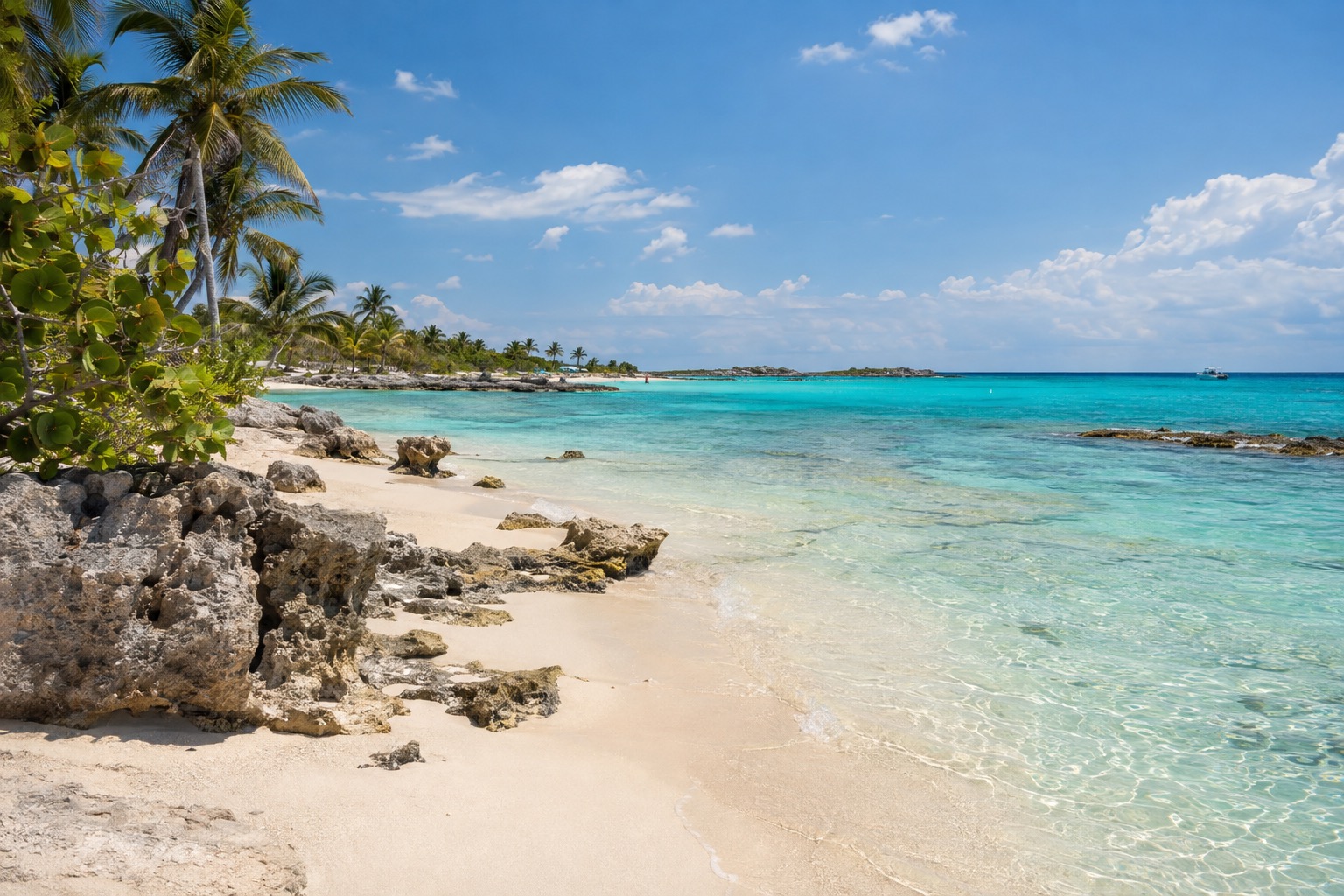
Early in the morning in Bacalar, the lagoon is flat as glass and the water shifts from pale turquoise to deep blue while a few kayaks slide out from the wooden docks. Behind the shore, a small town of quiet streets wakes up around its plaza and its old fort. This is a lakeside Pueblo Mágico for slow days on the water, swimming from a dock, and eating simply, and it suits couples, families, backpackers and nature lovers alike.
What are the best things to do in Bacalar?
The best thing to do in Bacalar is to get out on the lagoon itself, then fill the rest of the day with the fort, a cenote swim and a long, unhurried meal.
- Float, swim or paddle on the Lagoon of Seven Colors, where the blues change with the depth of the water.
- Visit the San Felipe Fort on the plaza for history and a view over the town.
- Swim at Cenote Azul, where the lagoon suddenly drops into deep blue.
- Look for the living stromatolites, some of the rare living examples of very early life on Earth.
- Walk or bike the Costera along the western shore and stop at the docks for sunset.
- Explore Los Rápidos, the shallow channel with a gentle current south of town.
- Take a day trip to the Maya ruins and jungle of southern Quintana Roo.
- Eat fresh fish, tacos and regional dishes in the small restaurants near the plaza.
Sights and landmarks in Bacalar
Bacalar is a town of small pleasures rather than big monuments. Everything gathers around a main plaza, a grid of streets and a fort, with the lagoon only a few blocks away.
San Felipe Fort and the plaza
The fort stands beside the main plaza, a low stone building with cannons on its walls and a moat, built to defend the town against pirates who raided this part of the coast. Inside, a small museum tells the story of those raids and of the region’s colonial past, and the ramparts look out toward the lagoon.
You reach it on foot from anywhere in the center, since the lagoonfront is only a 5 to 10 minute walk away. Come in the cooler hours of the morning or late in the afternoon, then sit on a plaza bench under the trees as the town comes alive. It suits everyone, and it takes an hour or so to see.
The Lagoon of Seven Colors and the stromatolites
The lagoon is the reason people come. Over a pale limestone bottom, the water forms bands of turquoise and blue that change with its depth, and the light is best when the sun is high and the sky is clear. Boat tours circle the lagoon and show you the main viewpoints from the water.
Along the shore live stromatolites, layered microbial formations that look like pale lumps of rock but are alive. Local rules limit motorized boat traffic and speed in parts of the lagoon to protect them and the clarity of the water, so the quieter ways of getting around, such as paddling, suit the place best. Look without touching.
Neighborhoods worth knowing
The center has a local Mexican feel, with guesthouses, hostels and simple hotels, plus bus stops and small eateries. It suits budget travelers and anyone who likes to walk everywhere. The Costera, the lakeside strip on the western shore, is quieter, lined with boutique hotels, cabañas and private piers.
South of town near Cenote Azul, the landscape opens up into mangrove edges and larger lots with eco-cabañas. In the north, the village of Xul-Ha is small and non-touristy, with few street lights and very few services. Each has a different pace, from sociable to almost silent.
Outdoor things to do in Bacalar
Outdoors in Bacalar means water: swimming off wooden docks, paddling the shallows and drifting where the lagoon meets the mangroves.
Cenote Azul
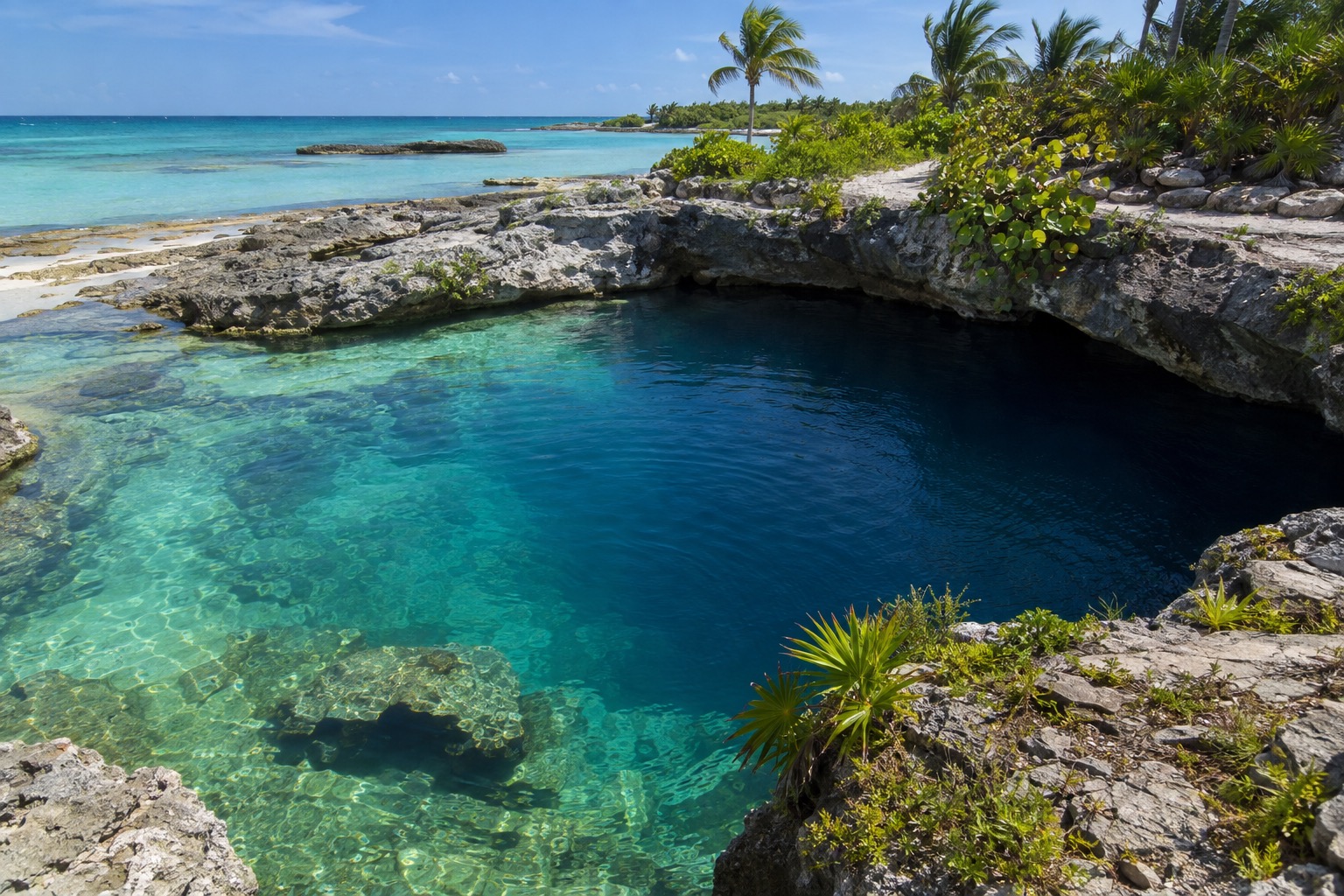
Cenote Azul opens into the southern part of the lagoon, and the water drops sharply from the pale shallows into a deep, intense blue. It is one of the few spots where a cenote is part of the lagoon itself. You can watch swimmers dive from a platform, and a restaurant above the water makes it easy to stay for lunch.
From central Bacalar it is roughly a 5 to 15 minute drive or taxi ride, and a bicycle also works if you are comfortable with the road. Go earlier in the day for a quieter swim. Bring strong insect repellent for dawn and dusk, especially near the mangroves.
Los Rápidos
Los Rápidos is a shallow channel south of town where the lagoon water moves in a gentle current over limestone and sand. People float along it, lounge on the edges and eat at casual spots on the banks. The color is a lighter turquoise here than at the cenote, and the scene is relaxed and sociable.
It sits in the same southern area as Cenote Azul, so the two combine easily in one outing. A rental car or bicycle is the most practical way to get there, since public buses do not run often along the southern shore. It suits nature lovers and families with older children who enjoy a lazy afternoon in the water.
Lakefront swimming, decks and paddling
The western shore has no ocean waves and no sandy beaches. Instead you find wooden docks and terraces where you step straight into calm, clear freshwater, then rent a kayak or paddleboard to cross the colors. Sunset from a dock is one of the best moments of the day.
Most properties along the Costera are a 5 to 15 minute walk or a short taxi ride from the center, and you can bike the strip as well. Some waterfront stretches are private, so confirm that your lodging has direct lagoon access if swimming from the property matters. It suits couples, families and anyone who wants to spend the day by the water.
Day trips from Bacalar
Bacalar works as a base for quiet outings, and most day trips stay close, since there is no airport in town and the roads lead to Chetumal in one direction and Cancun in the other.
Xul-Ha
Xul-Ha is a small village at the northern end of the lagoon, with a local, unhurried feel and a shoreline that is mostly vegetated, so public access points to the water are limited. It is a place to wander, see everyday village life and sit quietly rather than tick off sights.
From Bacalar it is about a 20 to 30 minute drive or colectivo ride. A taxi also works, and a bicycle is possible only for short local trips. Stock up on cash and groceries in Bacalar first, as shops and ATMs are scarce. It suits budget travelers and couples looking for solitude.
Chetumal
Chetumal is the regional capital on the bay, with a waterfront promenade, museums and a larger city’s range of shops and restaurants. It makes a change from the village pace of Bacalar, and it is also where the nearest airport sits, so many visitors pass through anyway.
From the airport to Bacalar is about a 30 to 40 minute drive or bus ride, so the same road works for a day out by bus or taxi. Go for a stroll along the water in the late afternoon and have dinner before heading back. It suits travelers who want a city day, a bit of shopping or a change of scene.
The southern shore and its smaller stops
Beyond Cenote Azul and Los Rápidos, the southern shore holds quiet stretches of mangrove, small lodges and open views of the lagoon. It is more spread out and natural than the center, with fewer buildings and almost no nightlife, so the day is about the water and the birds.
A rental car is the easiest way to move between stops, since buses are infrequent. Stop where the lagoon looks inviting, bring repellent and plan to be back before dusk. It suits nature lovers and travelers who like to follow their own pace.
What to eat in Bacalar
Eating in Bacalar is simple and local, built on fresh fish, tortillas and the flavors of the Yucatan Peninsula. Look for ceviche and grilled or fried fish served at tables by the water, along with shrimp cocktails and fish tacos. Around the plaza, small family places serve cochinita pibil, the slow-roasted pork marinated in achiote and bitter orange, and panuchos and salbutes, crisp tortillas topped with turkey, pickled onion and avocado.
Sopa de lima, a bright chicken soup with lime and crisp tortilla strips, is a good lunch on a warm day. To drink, order fresh aguas frescas, cold coconut water or a local beer, and finish with a coffee or a scoop of ice cream in the plaza. Many lakeside terraces make lunch a long affair, with the lagoon as the view.
Things to do in Bacalar at night
Nights in Bacalar are quiet, with a handful of restaurants and bars and no loud clubs or beach parties. The evening usually begins at a dock with a drink as the sky turns orange over the water, then moves to dinner in town. After dark the plaza near the fort is pleasant, with families on the benches and a few taco stands and bars still open. Live acoustic music sometimes plays at a bar or terrace.
Along the Costera, nightlife is very limited, and in the south it is nearly absent, with only the sounds of nature. On a clear night the stars over the lagoon are the main show, so bring a flashlight for the walk back along unlit stretches.
Things to do in Bacalar with kids
Children usually love Bacalar because the lagoon has no ocean waves, and the wooden docks make it easy to jump into calm freshwater under a parent’s watch. Families do well on the Costera, where docks and terraces give direct water access and a peaceful setting. Kids enjoy paddleboards and kayaks, a boat tour across the colors, the floating channel at Los Rápidos and the cannons and ramparts of the San Felipe Fort. Cenote Azul has a platform for older children who like to watch the divers.
Keep in mind the strong sun and the heat, so bring hats, sunscreen and plenty of water, plus insect repellent near the mangroves at dawn and dusk. Stay close to children near the docks and where the lagoon drops deeper, and check that your lodging has safe, direct access to the water.
Good to know before you go
The U.S. State Department rates Quintana Roo Level 2, ‘Exercise increased caution’.
Bacalar has no airport of its own, so most visitors arrive by road from Chetumal or on the longer drive north from Cancun. In town you can walk, bike or take taxis and colectivos, while the southern shore is easier with a rental car. The Atlantic hurricane season runs from June 1 to November 30, and book early for December to March, when the center fills quickly. Two charges apply to visitors in Quintana Roo.
| Fee | Amount | Who pays |
|---|---|---|
| Visitax (state visitor fee) | 2.50 UMA, about 293 pesos | Every foreign visitor entering Quintana Roo |
| Lodging tax (Impuesto Sobre Hospedaje) | 5% of the billed accommodation value, or 6% when a host or booking platform collects payment for a short-term rental | Guests staying in paid accommodation |
Sources
- APIQROO, "Empresa" (apiqroo.com.mx), checked September 29, 2026
- Congreso del Estado de Quintana Roo, Ley del Impuesto al Hospedaje del Estado de Quintana Roo, art. 8, congresoqroo.gob.mx, checked September 29, 2026
- Ley de Derechos del Estado de Quintana Roo, art. 51-Octies, congresoqroo.gob.mx, checked September 29, 2026
- U.S. Department of State, travel.state.gov, checked September 29, 2026
- NOAA National Hurricane Center, nhc.noaa.gov, checked September 29, 2026