
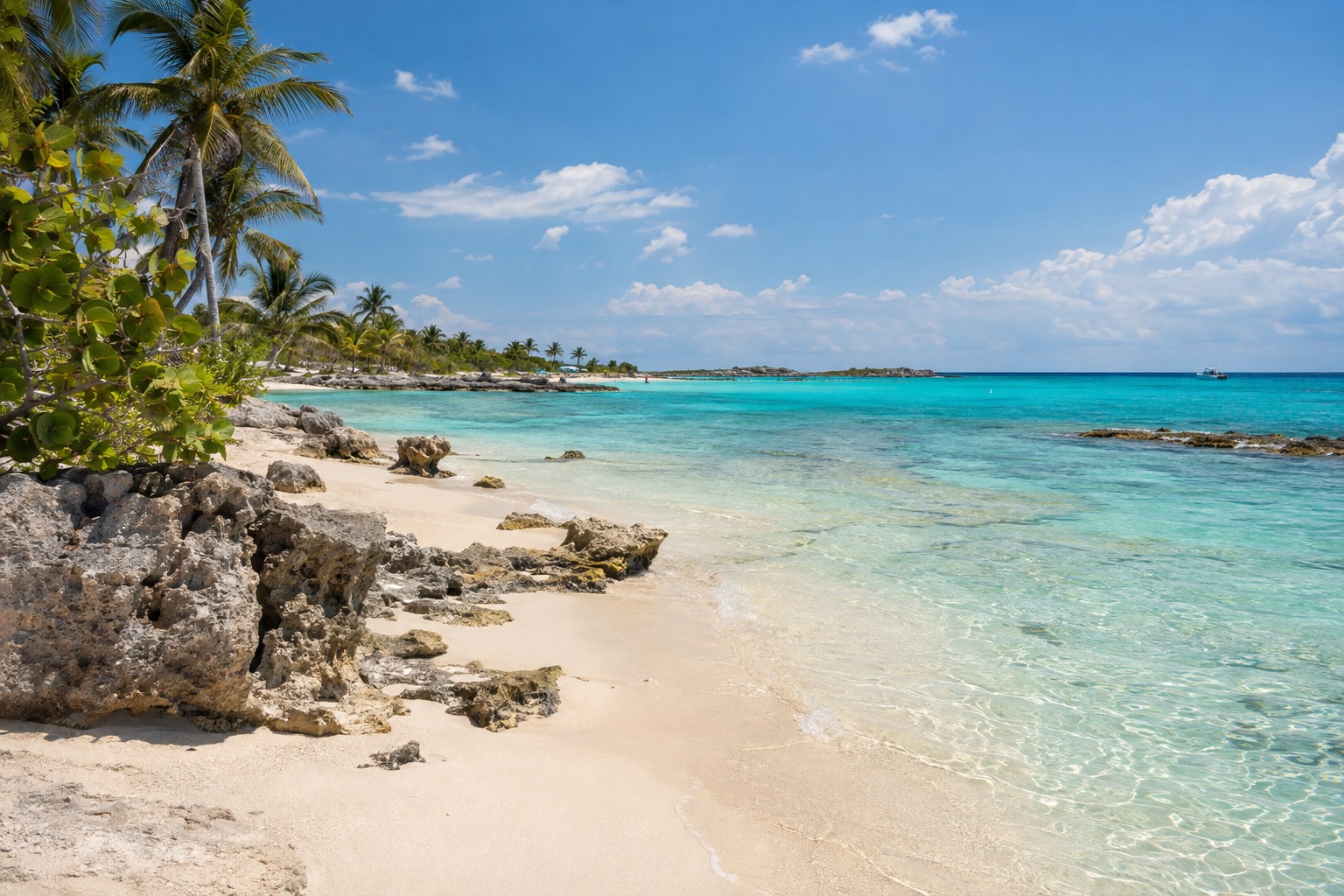
Early in the morning, the lagoon is flat and pale, and the only sound along the Costera is a screen door and someone sweeping a wooden dock. A few blocks inland, the plaza by the fort is already busy with bakery runs and schoolchildren. Bacalar spreads along the water in very different pockets, so the real choice is whether you want to wake up on a dock, in town, or somewhere with only mangroves for neighbors.
What is the best area to stay in Bacalar?
For a first visit, the lakeside Costera strip is the easiest answer, with the water at your door and the town a short walk away, while the town center suits budget travelers and anyone who likes eating where locals eat. Families and couples tend to do best on the Costera, nature lovers with a car head south toward Cenote Azul, and those wanting real solitude go to the village of Xul-Ha. Nightlife seekers should lower expectations everywhere, since the liveliest it gets is a handful of bars in town.
The areas differ less in looks than in rhythm. The center has streets, shops and buses. The Costera has docks, terraces and sunsets. The south is spread out and green, and Xul-Ha is a small village where evenings go dark early.
The best areas to stay in Bacalar
Bacalar town center
The center is a real Mexican town on a grid of streets around the main plaza and the San Felipe Fort, a few blocks back from the water. Taquerías, small restaurants and a low-key bar scene give evenings a local rhythm without clubs or beach parties. It suits backpackers, budget travelers and anyone who likes stepping out the door to find dinner and a bus stop.
Expect hostels, small guesthouses and simple hotels, mostly without their own lagoon access. The trip from Chetumal’s airport takes 30 to 40 minutes by car or bus, while the lagoonfront is just a 5- to 10-minute walk. Bicycles, taxis and colectivos fill in the gaps for nearby villages. Tip: the center fills fast from December to March, so reserve ahead if you travel in those months.
Avenida Costera
The Costera runs along the western shore, where calm, clear freshwater laps against wooden docks rather than sandy beaches. There are no ocean waves, just still water, sunset views and very little nightlife. Couples and families who want to swim off a dock and then lie in a hammock are the natural audience.
Boutique hotels, cabañas and eco-lodges dominate, with lakefront terraces and sometimes private piers. Most properties sit a 5- to 15-minute walk or a short taxi ride from the center, and the airport is about 35 to 45 minutes away. Walking or biking along the road works well, and taxis cover longer hops. Tip: confirm direct lagoon access if swimming from your own property matters, because some waterfront stretches are private.
Cenote Azul and the south shore
South of town the lagoon edge turns wilder, with mangroves, fewer buildings and nights that belong to frogs and insects. It pays off for nature lovers, longer stays, and travelers in a rental car who want the cenotes and the Los Rápidos site within easy reach.
You will find eco-cabañas, small lodges and a few guesthouses on larger lots, often lending kayaks or paddleboards. Central Bacalar is roughly a 5- to 15-minute drive or taxi ride, and the airport about 45 to 60 minutes. A car or bicycle is the practical choice, since buses are infrequent along this shore. Tip: bring strong insect repellent and use it at dawn and dusk, especially near the mangroves.
Xul-Ha
Xul-Ha is a village at the southern end of the lagoon, with a local, non-touristy feel and few street lights after dark. The water is calm and clear, though the shoreline is mostly vegetated and public access points are limited. Budget travelers, couples seeking solitude and anyone curious about everyday village life will feel at home.
Most places to stay are basic guesthouses, plus a few cabañas and homestay-style setups, and there are only a handful of restaurants or services nearby. Bacalar’s center is about 20 to 30 minutes by car or colectivo, and the airport roughly an hour to an hour and a quarter. Getting around takes a car, taxi or colectivo, though a bicycle handles short local trips. Tip: shops and ATMs are scarce here, so arrive with cash and groceries from town.
Bacalar areas compared
| Area | Best for | Feel | Getting around | Airport by car |
|---|---|---|---|---|
| Town center | Budget travelers, backpackers | Local town, low-key bars | Walking, bicycles, taxis, colectivos | 30 to 40 minutes |
| Avenida Costera | Couples, families | Quiet, docks and sunsets | Walking, biking, taxis | 35 to 45 minutes |
| Cenote Azul and south | Nature lovers, longer stays | Spread out, mangroves, silent nights | Rental car or bicycle | 45 to 60 minutes |
| Xul-Ha | Solitude seekers, budget travelers | Small village, few lights | Car, taxi or colectivo | 1 hour to 1 hour 15 minutes |
The main trade is between convenience and quiet. The center gives you local life and food within steps but little water access, while the Costera gives you the dock at the price of a short walk to dinner. The south and Xul-Ha go further into stillness and ask for a car or a stocked pantry. Nobody here is choosing between beach clubs and silence, only between degrees of calm.
How to choose your hotel in Bacalar
Skip the all-inclusive idea, since lodging here is small-scale: boutique hotels, cabañas, guesthouses and apartments, with meals usually found in town or at a lodge restaurant. Where there is no kitchen, plan to eat out, and in the south or Xul-Ha that means driving or bringing food.
Decide between a lagoon-side stay and a town stay. A property on the water offers a dock and sunrise, while one in the center offers restaurants and buses. Ask whether the lagoon access is truly private to the property, and whether a dock or a shared stretch is what you will be using.
Families do well on the Costera, where the water is right there, though docks and uneven paths may not suit every stroller or mobility need, so ask about steps and access. Before booking, check how noisy the street or neighbors are, how the road to the property looks at night, and how you will get from the airport, since transfers differ widely by area.
Your dates matter too. The winter high season brings the tightest availability, while the months of the Atlantic hurricane season, which stretches from June 1 to November 30, are worth pairing with flexible cancellation terms.
Good to know before you go
The U.S. State Department rates Quintana Roo Level 2, ‘Exercise increased caution’.
Most visitors arrive via Chetumal airport and continue by taxi, bus or rental car, with the drive varying by where you stay. Carry some pesos for small guesthouses, village shops and taxis, as card payment is not a given outside the main hotels. Two charges can show up on a trip here.
| Fee | Amount | Who pays |
|---|---|---|
| Lodging tax (Impuesto Sobre Hospedaje) | 5% of the billed accommodation value, or 6% when a host or booking platform collects payment for a short-term rental | Guests, added to the accommodation bill |
| Visitax | 2.50 UMA, about 293 pesos | Every foreign visitor entering Quintana Roo |
Sources
- Congreso del Estado de Quintana Roo, Ley del Impuesto al Hospedaje del Estado de Quintana Roo, art. 8, congresoqroo.gob.mx, checked September 29, 2026
- Ley de Derechos del Estado de Quintana Roo, art. 51-Octies, congresoqroo.gob.mx, checked September 29, 2026
- U.S. Department of State, travel.state.gov, checked September 29, 2026 (date issued May 29, 2026)
- NOAA National Hurricane Center, nhc.noaa.gov, checked September 29, 2026