
Late in the afternoon in La Crucecita, the zócalo fills with families, kids on scooters and vendors selling tlayudas and fresh juice, while the church bells carry over the rooftops. A few minutes away the Pacific folds into one small bay after another, each with its own beach and its own pace. Huatulco is a coast for people who want to swim, snorkel and eat well, with a laid-back town at the center of it.
What are the best things to do in Huatulco?
The best things to do here revolve around the water: boat trips between the bays, snorkeling, and long lazy beach days, with Oaxacan food in town to finish them off.
- Take a boat from the Santa Cruz marina to the quieter bays of the national park.
- Snorkel over the coral reefs, where the water is clear and the fish are close.
- Walk the zócalo in La Crucecita in the evening, when the whole town comes out.
- Spend a day at the wide, calm beach of Tangolunda.
- Look for humpback whales from the boats, a season that opens in October.
- Drive out to Bahía de Conejos for a long, often empty beach.
- Eat mole, tlayudas and fresh seafood at the local restaurants.
- Visit the Escobilla sea turtle coast, a short trip up the road.
Sights and landmarks in Huatulco
Huatulco is not a place of ruins and big museums. Its landmarks are a town square, a marina and a protected stretch of coast, and they are best taken at an easy pace.
La Crucecita and its zócalo
La Crucecita is the working heart of Huatulco, a compact, walkable town with a traditional zócalo shaded by trees and ringed by small restaurants, ice cream shops and craft stalls. On the square, the church of Our Lady of Guadalupe is famous for the huge Virgin mural on its ceiling, and a visit inside is worthwhile whether or not you attend church.
It is a five-minute taxi or bus ride from the Santa Cruz waterfront. Come in the late afternoon, when the heat eases and the square turns into a living room for the town. It suits solo travelers, budget visitors and anyone who wants to eat Oaxacan food among locals. Stay within a few blocks of the zócalo if you plan to walk back after dark, since the streets farther out are poorly lit.
The Santa Cruz marina and waterfront
Santa Cruz Huatulco is where the boats leave. The marina has a small beach, restaurants with tables near the water, handicraft shops and a small chapel by the shore. Fishing boats and tour launches line up side by side, and the scene is busiest in the morning when the day’s departures set off.
You can reach it on foot from the nearby hotels, or by local bus or taxi from other bays. Buy boat tickets at the official marina kiosks rather than from vendors on the beach. It is the natural starting point for anyone without a car.
Huatulco National Park
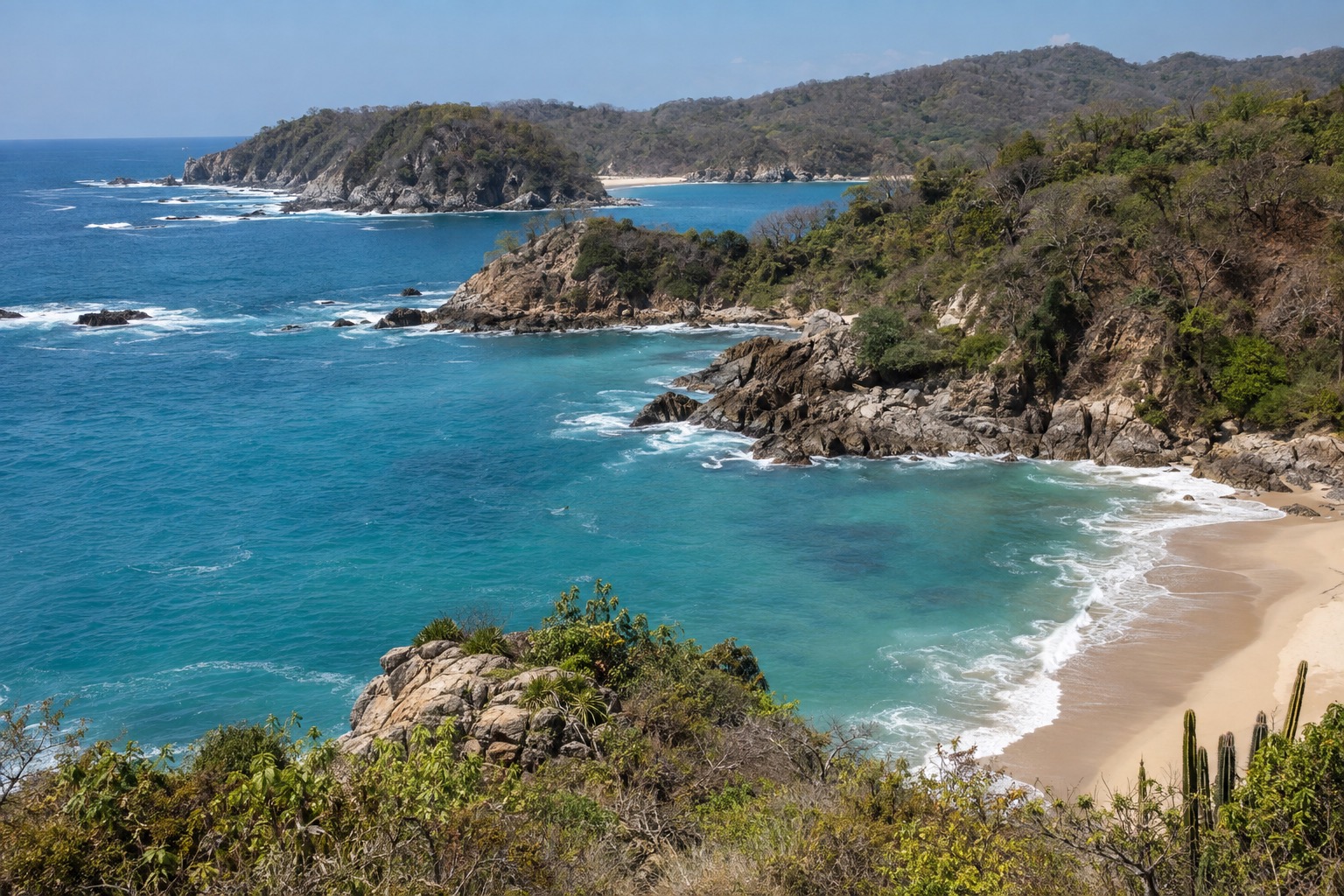
Much of the coast around town is protected. The park was decreed in 1998 and protects dry tropical forest, coral reefs and mangroves around five of the nine bays: San Agustín, Chachacual, Cacaluta, Maguey and Órgano. In total it covers nearly twelve thousand hectares of land and sea.
What you see is a coastline of rocky points, green hills and small coves, with a forest that is dry and tan for part of the year and bright green after the rains. The wider bays were also recognized as a Ramsar wetland and later as a UNESCO biosphere reserve, which is why the shoreline feels so unbuilt. It is the reason to take a boat rather than stay on one beach.
Tangolunda and Chahué
Tangolunda is the resort bay, with big all-inclusive hotels, a golf course and beach clubs, and it is ten minutes by car from La Crucecita. Chahué is quieter and more residential, with a small marina, condominiums and a beach that is good for a swim. Neither has sights in the usual sense, but both are pleasant for a stroll at sunset.
Beaches and outdoor things to do in Huatulco
The beaches are the main event in Huatulco, with a bay for almost every mood, from resort sand with beach service to coves you share with a few pelicans.
Tangolunda and Chahué for an easy beach day
Tangolunda has a wide, calm beach, backed by resorts and beach clubs where you can rent a lounge chair and order lunch. It suits couples and families who want comfort and quiet evenings. Taxis link the golf course and the beach clubs, so you rarely need your own car.
Chahué is the more local choice, with a swimmable beach, apartments within walking distance and a relaxed, less touristy feel. In both places, check the beach flags before going into the water, because the Pacific swell can change from day to day.
Boat days to the park bays
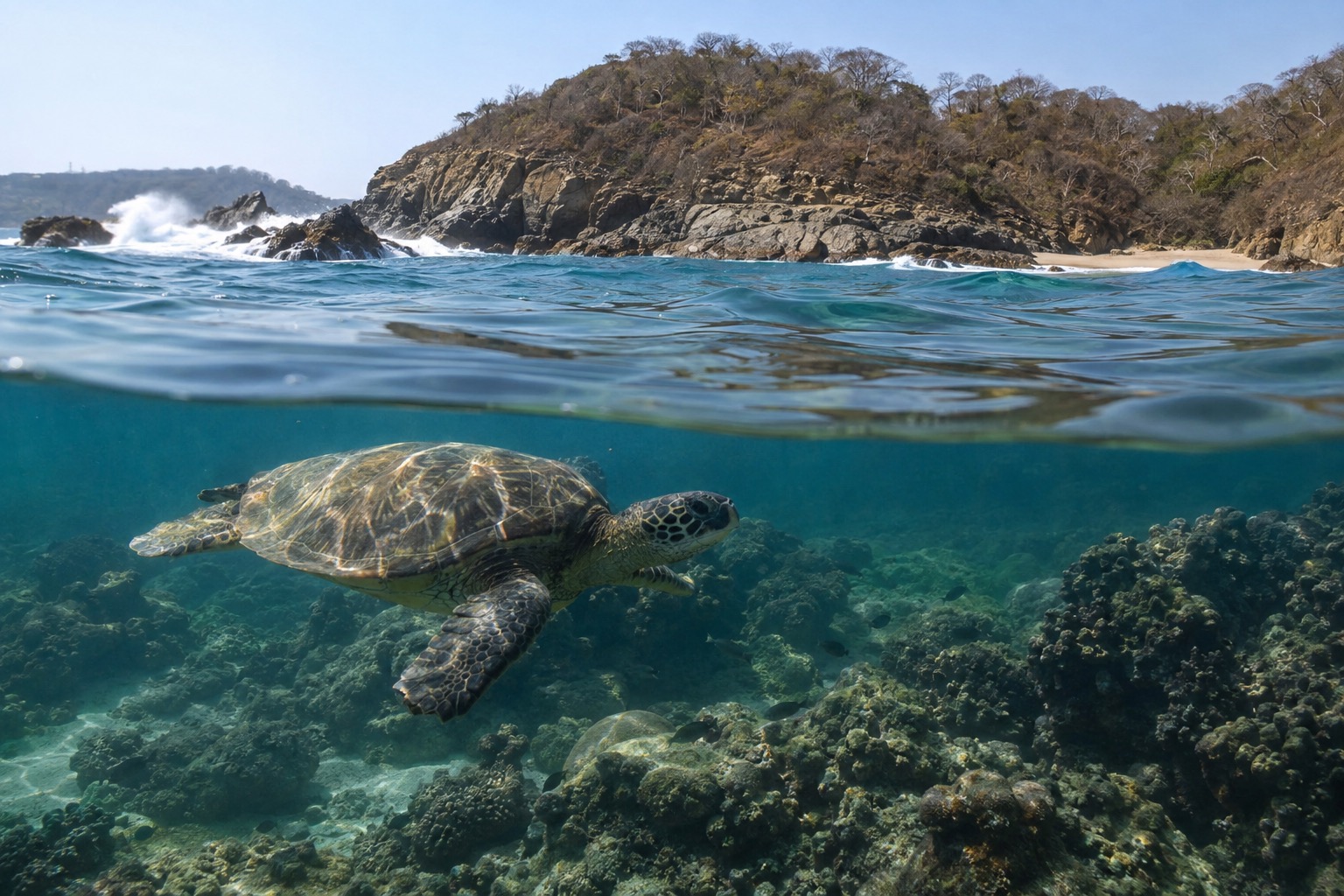
Boat tours from the Santa Cruz marina are the classic way to see the coast. Launches stop at several bays, among them Maguey and Órgano, with time for swimming and snorkeling over the reefs. Water taxis and private boats let you spend longer in a single cove if you prefer.
Set off in the morning, when the light tends to be crisp and the water is often at its calmest. Bring a hat, sunscreen and a water bottle, since shade is limited. The trip suits swimmers, snorkelers and anyone who likes to see a coastline from the water.
Whales, birds and turtles
The wildlife follows the calendar. Humpback whales pass along this coast from October to April, and boat trips in those months often include a stretch of open water to look for them. Migratory birds arrive from September to March, and sea turtles nest on the beaches from June to November.
None of these is guaranteed on any given outing, which is part of the pleasure of heading out. Early morning boats give the best chance of a calm sea and active birds.
Day trips from Huatulco
The best day trips from Huatulco go along the Oaxaca coast, to a wilder beach, a turtle sanctuary or a surfers’ village.
Bahía de Conejos
Conejos is a wild bay with a long, often empty beach and no nightlife. The drive from La Crucecita takes 20 to 25 minutes, and you need a rental car or a private taxi, since there is no public service to speak of. A few small eco-lodges and cabañas are scattered along the shore.
Come for a long walk on the sand, a seafood lunch and a swim, and plan to leave before dark. It suits nature lovers and couples looking for seclusion. Bring cash and basic supplies, because there are no ATMs or large supermarkets here.
The Escobilla turtle coast
Playa Escobilla, up the same stretch of Oaxaca coast, is a sanctuary for olive ridley sea turtles, which come ashore in great numbers to nest. The nesting season runs from June to November, so a visit now fits it well.
It makes a full day by road, usually combined with another beach on the way. The best hours for wildlife are early morning or evening, and it suits travelers who like their beaches with a story. Follow the guidance of the sanctuary staff on site.
Zipolite, Mazunte and the coast beyond
Farther up the coast lie Zipolite and Mazunte, two beach villages with a bohemian air, hammock hostels, yoga studios and seafood shacks. Zipolite is known for its strong surf and its relaxed, clothing-optional corner, and Mazunte for its turtle center and sunsets from the rocky point.
It is a long day on the road, best started early. It suits travelers who like a looser, more backpacker feel, and it is not a trip for small children, given the surf. Check the flags before swimming anywhere along this stretch.
What to eat in Huatulco
Eating in Huatulco means Oaxacan cooking with a Pacific accent: seafood from the bays and the seven moles from the mountains, often on the same table. At the beach restaurants, order pescado a la talla, a whole fish rubbed with chile and grilled over coals, or fresh ceviche and shrimp cooked in garlic. In La Crucecita, look for tlayudas, the big crisp tortillas folded around beans, quesillo and meat, and for mole negro and coloradito spooned over chicken.
Local drinks are worth a try. Agua de jamaica and horchata come cold from big glass jars, and mezcal is poured with orange slices and chile salt. The market and the small fondas around the zócalo serve breakfasts of chilaquiles and hot chocolate, which locals make with water or milk and whisk until frothy. Coffee from the Oaxacan sierra is also good here.
Things to do in Huatulco at night
Evenings in Huatulco are relaxed and social, built around the zócalo and a table with a view rather than around clubs. In La Crucecita, families gather on the square after dark, and the restaurants around it fill up with a mix of locals and visitors. Street vendors sell elotes, tamales and sweets, and now and then there is live music. Santa Cruz has dinners at the marina with boats lit up behind the tables.
Tangolunda is quiet at night, with evenings centered on the resorts. Nightlife is modest, with a few bars and beach spots where you can have a drink and listen to music. Bahía de Conejos has none at all.
Things to do in Huatulco with kids
Kids do well in Huatulco because the beaches are gentle and the boat rides feel like adventures. Tangolunda and Chahué have calm stretches of sand where children can play at the water’s edge, always with an eye on the flags. A boat trip to the bays is a highlight, with a chance to spot pelicans, fish and, in season, whales. In the evening, the zócalo is a safe-feeling place to run around, with ice cream and balloons.
Keep the sun in mind. Shade is limited on the boats and at the smaller bays, so bring hats, rash guards and plenty of water. Distances between bays are short, but build in rest time in the middle of the day.
Good to know before you go
The U.S. State Department’s Mexico travel advisory rates Oaxaca at Level 2, ‘Exercise increased caution’.
Huatulco is easy to get around: taxis and local buses link La Crucecita, Santa Cruz and the nearest bays, while a rental car helps for farther beaches such as Conejos. The airport is about 30 minutes from Tangolunda, and it is wise to book transfers in advance since airport taxis do not always serve that bay directly. Hurricane season in the Pacific stretches from mid-May through the end of November.
| Fee | Amount | Who pays |
|---|---|---|
| Oaxaca lodging tax (Impuesto Sobre Hospedaje) | 3% | Guests staying in hotels and other lodging |
Sources
- CONANP / Diario Oficial de la Federacion, decree cited by the official park page, checked September 29, 2026
- CONANP, programa de manejo, published in the Diario Oficial de la Federacion on December 2, 2002, checked September 29, 2026
- CONANP, page for Parque Nacional Huatulco (gob.mx), checked September 29, 2026
- CONANP, gob.mx, Parque Nacional Huatulco, publiee le 9 September 2019, checked September 29, 2026
- ASUR, asur.com.mx, pages “Nuestros Aeropuertos” and “Huatulco – Contactanos”, checked September 29, 2026
- El Contribuyente and J.A. del Rio, ISH tables by State 2026, read on September 29, 2026
- U.S. Department of State, Mexico Travel Advisory (travel.state.gov), checked September 29, 2026
- CONANP, official press releases on the Santuario Playa Escobilla, read on September 29, 2026
- NOAA National Hurricane Center, official Eastern Pacific season (nhc.noaa.gov), checked October 5, 2026