
On the first mornings of January, Tulum is slow to wake. Fishermen’s boats rest on the sand, a few early walkers cross the beach road in sweatshirts, and bakeries start selling the oval, fruit-studded rosca de Reyes. The jungle air is soft, the sea is still warm, and the ruins stand over the water in gentler light. This is Tulum in its comfortable season, for beach days, cenote swims and long lunches.
What is the weather like in Tulum in January?
January weather in Tulum is warm without being heavy: sunny days, mild evenings and only a little rain, which usually arrives as a brief shower.
| Month | Average high (°F) | Average low (°F) | Rain (in) | Rain days | Sea (°F) | Daylight on the 15th |
|---|---|---|---|---|---|---|
| December | 84.4 | 66.4 | 1.66 | 5.7 | 82.1 | 10 hours 57 minutes |
| January | 83.8 | 64.9 | 2.38 | 7.3 | 81.2 | 11 hours 5 minutes |
| February | 85.3 | 66.4 | 1.65 | 4.2 | 80.6 | 11 hours 32 minutes |
Afternoons are hot enough for the beach and the water, but the humidity of summer is gone, so walking around the ruins or cycling the road to the coast is easy. Mornings and nights can feel fresh, especially when a breeze comes off the sea, and a light layer is welcome at dinner.
Showers tend to pass quickly and rarely spoil a whole day. The sea stays warm enough for a long swim, though a passing cold front can bring wind, cloud and a choppier surface for a day or two.
What to do in Tulum in January
Three Kings Day and the rosca
The month’s big tradition is Día de Reyes on January 6, when Mexican families celebrate the arrival of the Three Kings. Bakeries and cafés in the town center fill with roscas de Reyes, sweet wreath-shaped breads decorated with candied fruit. Hidden inside are tiny figurines of the baby Jesus.
Whoever finds a figurine in their slice is expected to host a tamales party on Candelaria, in early February. Families gather on the plaza and in homes, and children get small gifts, so the town center feels festive and local. Order a slice with hot chocolate or coffee in the morning, when the bread is freshest.
Cenotes in the cool season
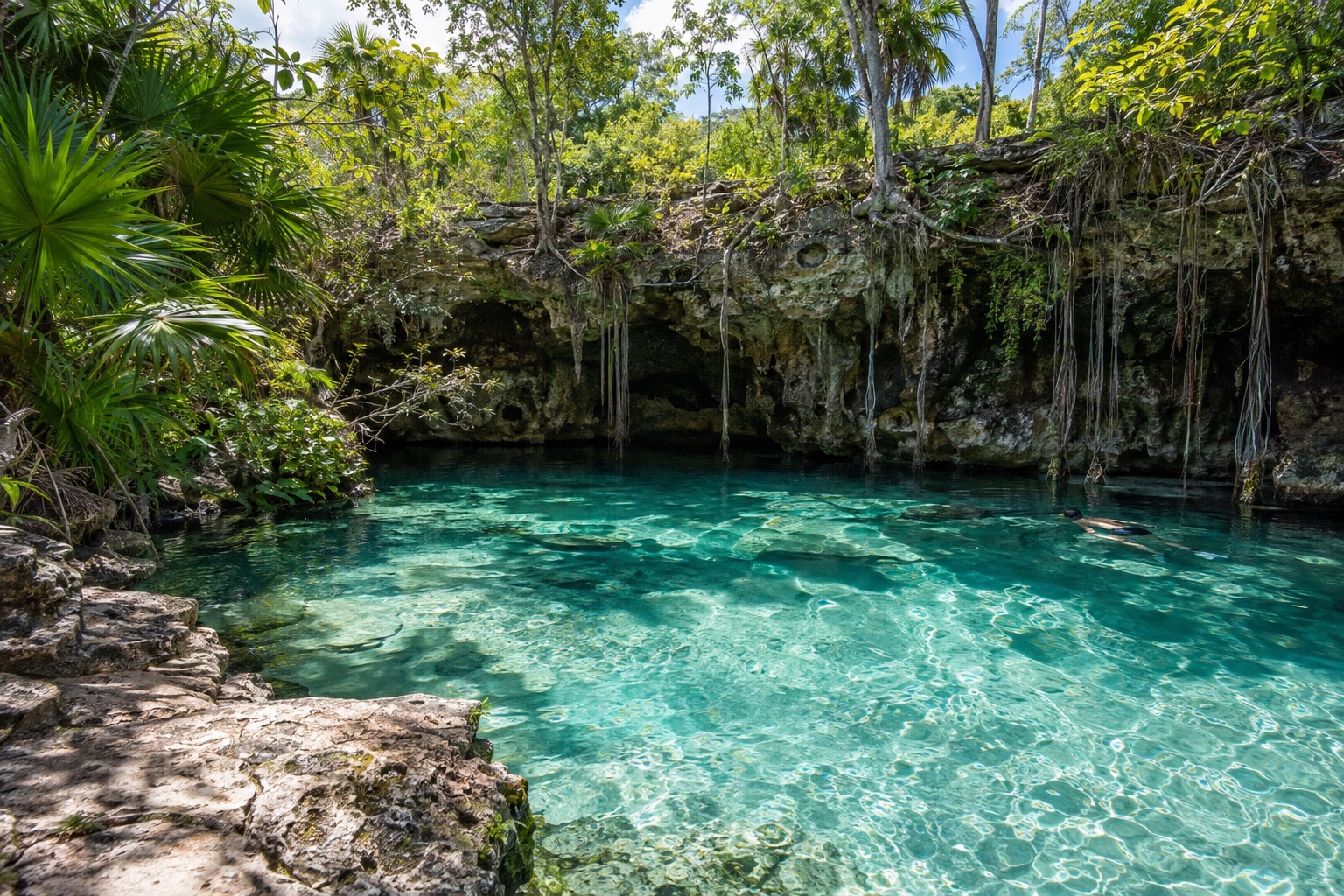
With the air less sticky, January suits the freshwater cenotes in the jungle behind the coast. Gran Cenote and the Dos Ojos system are among the best known, with clear water, limestone formations and turtles or small fish in the shallows. Each is run by its own operator, so the atmosphere differs from one to the next.
Go early, before tour groups arrive, when sunbeams cut through the openings in the rock. The water is cool in comparison with the sea, which feels refreshing after a hot afternoon but can be bracing first thing in the morning. Bring a snorkel mask if you have one.
Sian Ka’an and the quiet side of the coast
The Sian Ka’an biosphere reserve, just south of town, is a good January outing: mangrove channels, lagoons, long empty beaches and birdlife in comfortable temperatures. Excursions here run mostly by boat, and the unpaved interior makes a guided outing the natural way to see it.
Pick a morning departure, when the water is calm and the birds are active. Midday sun on open water is strong even in winter, so the early start also makes the trip more pleasant. It suits nature lovers and anyone who wants a break from the beach clubs.
Ruins, beaches and tables
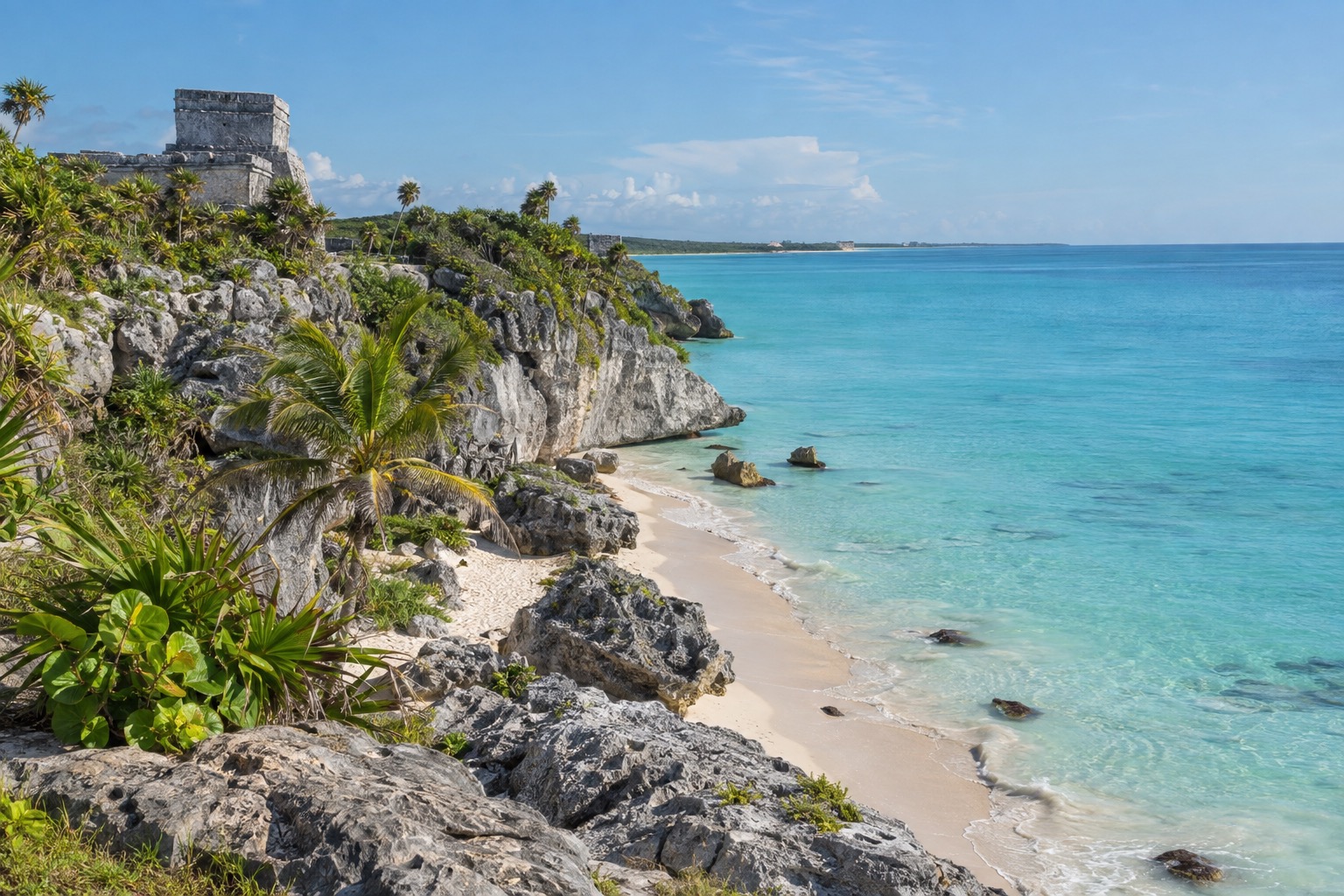
The clifftop Maya ruins of Tulum are most comfortable in the cooler morning light, and the beach below them is lovely for a swim afterward. Along the coast road, the beach clubs are lively in the afternoon, and in town the taquerías serve cochinita pibil, grilled octopus and agua de jamaica as the sun goes down.
Evenings are pleasant enough for outdoor tables, with candles in the sand and music drifting from the jungle restaurants. After dark, stick to the busier, well-lit parts of town.
Is Tulum busy in January?
Yes, especially in the first days of the month, when the holiday crowd from Mexico and the United States is still in town and the beach road is full.
After the first week or two, the pace eases. Restaurants and beach clubs are still lively on weekends, but a table at lunch is easier to find, and cenotes and the ruins feel less packed outside the middle of the day. Winter is a popular time to visit overall, so good rooms near the beach can go quickly, and it helps to reserve early for the week around New Year and Three Kings Day.
What to pack for Tulum in January
Pack for warm days and breezy evenings, with a layer for cooler nights and a few things for wet outings.
- Light cotton clothes for the heat of the afternoon
- A sweater or thin jacket for dinner by the sea
- Reef-safe sunscreen and a hat for the ruins
- Water shoes for rocky cenote entrances
- A light rain layer for the occasional shower
Good to know before you go
The U.S. State Department rates the state of Quintana Roo Level 2, ‘Exercise increased caution,’ due to terrorism and crime.
January falls outside the official Atlantic hurricane season, which runs June 1 to November 30, so tropical storms are less likely, though the weather can still change. The thing to watch is the occasional winter cold front, which can bring wind and rough water for a day. Public offices close for New Year’s Day and Three Kings Day, but visitor-facing businesses stay open.
Is January a good time to visit Tulum?
Yes, January is a very good time for beach lovers, swimmers and anyone who wants warm weather without summer’s stickiness.
Compared with December, it is a touch cooler at night and calmer once the holiday rush fades. February is a little warmer and drier, with a slightly cooler sea. January sits between them, with enough of the festive season left over to feel special. What stays in the memory is the early part of the month: a warm slice of rosca, a quiet cenote, and an evening on the sand under a cool breeze.
Sources
- Servicio Meteorologico Nacional (CONAGUA), normales climatologicas 1991-2020, estacion 23025 (Tulum, Tulum), checked September 29, 2026
- Open-Meteo Marine API, average 2015-2024, checked September 8, 2026
- sunrise-sunset.org, sunrise and sunset on the 15th of the month, checked September 8, 2026
- U.S. Department of State, Bureau of Consular Affairs, Mexico Travel Advisory, travel.state.gov, checked September 29, 2026
- NOAA National Hurricane Center, checked September 29, 2026