
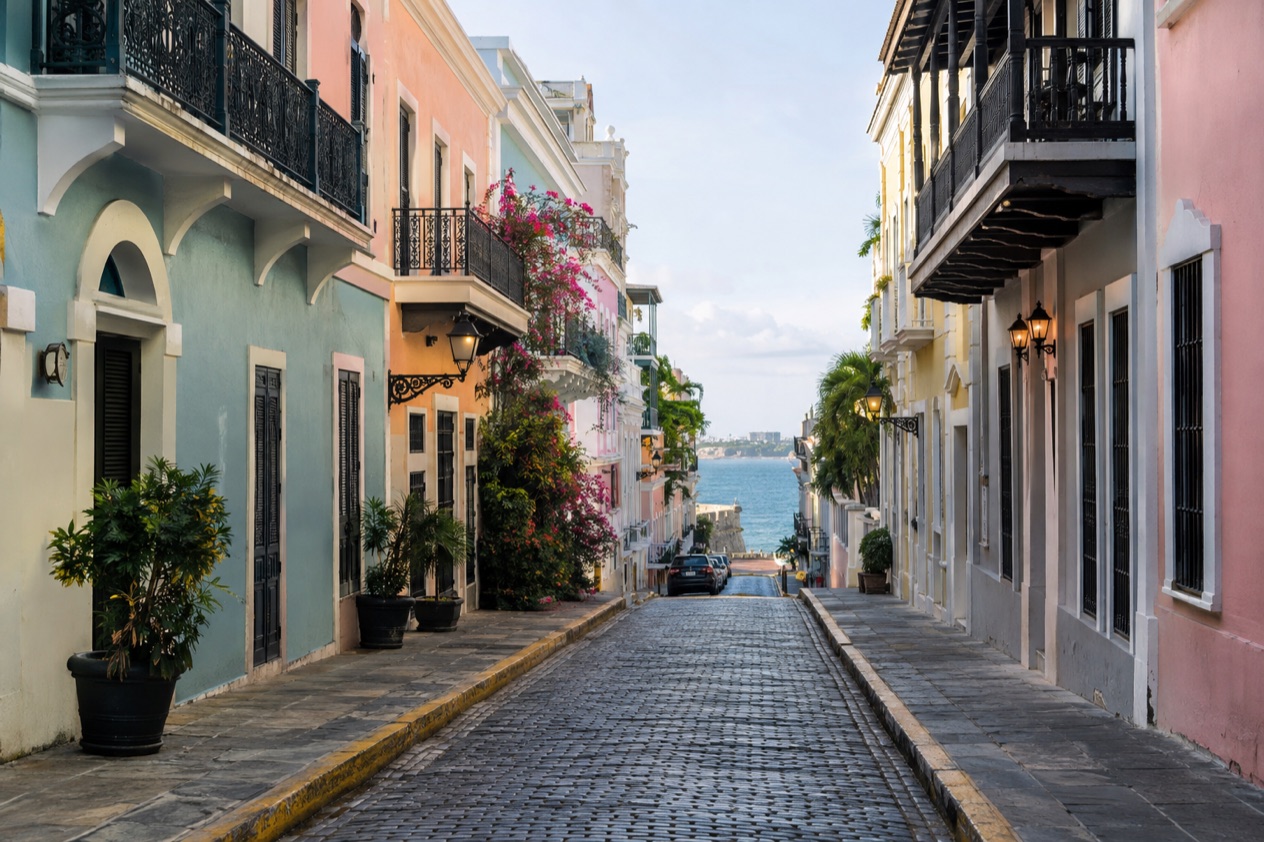
Early in the morning, Old San Juan belongs to the people who live there: shopkeepers rolling up metal shutters, a man hosing down the blue cobblestones, the smell of coffee drifting out of a café doorway. By evening the plazas fill with strollers, the pastel townhouses glow, and the beach strips to the east hum with dinner reservations. Most visits to the capital are easy and enjoyable, and a few sensible habits keep them that way.
Is San Juan safe to visit?
Millions of travelers visit San Juan and have an ordinary, happy vacation, but no city can promise a trip without a hitch, and this one is a large, busy capital where the usual urban care applies. For travelers from the United States, there is no passport or visa requirement, mainland flights count as domestic travel, and the dollar serves as the currency, which means the everyday hassles that give some places a risky feel are largely missing in San Juan.
Treat San Juan the way you would treat any big American city on a trip. The parts of town built for visitors, such as the walled streets of Old San Juan, the hotel rows of Condado and Isla Verde and the restaurant blocks of Santurce, are busy with people for much of the day and evening, and that crowd is part of what keeps them comfortable.
The habits that matter are the familiar ones. Keep phones and wallets out of sight on a crowded sidewalk, do not leave bags or valuables visible in a parked car, and carry only what you need to the beach. Hotel safes exist for passports, spare cards and anything you would hate to lose.
Choose your last stretch of the evening with the same care. A restaurant street with people still around is a better place to hail a ride than a dark side block, and a short ride is better than a long walk once the crowds thin. Ask your hotel front desk about the specific block you plan to wander, since they know how the neighborhood feels that week.
Beyond crime, the things most likely to spoil a day here are natural: strong sun, surf on Atlantic beaches and, in the right months, tropical weather. They are covered below, and they deserve as much attention as any street smarts.
Safety by area in San Juan
Old San Juan
The walled city sits on a small islet linked to the mainland by bridges, and it is the part of San Juan most visitors know first. During daylight hours, strolling is a delight, with its slender blue cobblestone lanes, plazas, El Morro and San Cristobal forts, and the Paseo de la Princesa walkway beside the southern wall. The footing is the main hazard, since the old stones are uneven and slick after rain, so wear shoes with grip.
At night the bars and restaurants keep the main streets lively, and the same advice applies as anywhere with a crowd and a drink in hand: watch your belongings and stay with your group. La Perla is a colorful neighborhood just beyond the wall that draws curious visitors. Parking inside the old city is tight, and people get around on foot, which suits the place.
Condado and Isla Verde
Many travelers bed down in these two strips of beach and hotels. Condado is an upscale, highly urbanized stretch along Ashford Avenue, with hotels, restaurants and shops within an easy walk of each other. The resort area of Isla Verde, in neighboring Carolina beside the airport, offers casinos, large hotels and beach restaurants.
Both feel comfortable by day, with joggers, beachgoers and families along the sand. After dark, stick to the lit main avenues and the hotel fronts rather than cutting through empty side streets or deserted stretches of beach. Do not leave towels with phones and wallets unattended while you swim, and use the hotel safe for anything valuable.
Santurce and Pinones
Around Calle Loiza lies Santurce, a district of arts and food where murals, galleries, bars and restaurants abound. It is a rewarding place to eat and wander in the evening, but it is a mixed, working city neighborhood, so move between venues by ride rather than on long walks through quiet blocks at night, and keep your phone tucked away on the street.
Pinones, east of the airport, is a seaside stretch of kiosks selling alcapurrias and bacalaitos, popular with locals on weekends. Keep the car locked and empty of visible bags, and treat the surf along that coast with respect.
Common scams and how to avoid them
San Juan is not known for elaborate schemes, and most of the trouble visitors meet is the ordinary kind that follows crowds and cameras anywhere. A little preparation covers nearly all of it.
A friendly offer of a photo, a bracelet or a shortcut can turn into a request for money. A calm no, thank you and a steady pace is enough, and you never owe anyone anything for an offer you did not ask for.
Taxis are a second place to be careful. Ride-hailing apps show the route and the price up front, which removes the haggling altogether.
ATMs are best used inside a bank or a hotel lobby rather than on a dark street, and you should cover the keypad as you type. Because the island uses the U.S. dollar, you do not need to exchange anything at the airport, which sidesteps the poor exchange counters that catch travelers elsewhere.
At the forts, buy passes only at the official park entrances. The National Historic Site does not accept cash, so have a card ready rather than being tempted by anyone offering a quicker way in. Pickpockets favor queues, crowded buses and packed bars, so a zipped bag worn in front of you is the simplest defense. Finally, never leave anything visible in a rental car, even for a quick photo stop.
Getting around safely
Old San Juan, Condado and Isla Verde are a short ride from one another. Condado sits a few miles from Old San Juan and from the airport, and Isla Verde is a few miles farther east, so a ride is short and straightforward between any two of them.
Ride-hailing apps give you a driver, a plate number and a route on your screen, which is useful at night. Check the car and plate before you get in, and wait inside a hotel lobby or restaurant rather than on the curb. If you use a street taxi, settle the fare method first.
Condado is served by two routes of the Metropolitan Bus Authority, T21 and D53, and during the day some travelers take them. They are an option for a short hop, but at night a ride is the more comfortable choice. The free trolley that once served Old San Juan is no longer running, so plan to walk the old city on foot, which is how it is meant to be seen.
If you drive, expect busy avenues, tight old streets and little parking near the forts. Lock the doors, keep bags out of sight and park in a staffed or well-lit lot rather than on a dark side street. In Old San Juan many visitors leave the car at the hotel and walk, since the narrow, cobbled streets are not made for cars.
On foot, the main hazards are mundane: uneven sidewalks, slippery stones after a shower, and traffic at crossings. Walking Ashford Avenue in daylight is pleasant, but after dark a short ride is wiser than a long stroll between hotels and restaurants.
Beach, water and weather safety
San Juan’s beaches look out on the Atlantic and receive constant waves, which means the water can differ daily and vary between one stretch of sand and another. Never assume the water is calm because it was yesterday, and never assume a lifeguard or a flag is there. Where a flag, sign or lifeguard is present, follow it, and if the waves look rough, stay on the sand or wade only to your knees.
A public beach park just past Old San Juan, the Balneario de Escambron draws plenty of families, since its reef is reputed to keep the water calmer. Even so, conditions vary, so watch the water for a few minutes before you go in, keep children within arm’s reach and swim near other people rather than alone.
Currents can pull swimmers away from shore without any warning, especially on open stretches such as those along Isla Verde and Pinones. Sargassum seaweed can also reach some beaches in certain springs and summers, which makes the shoreline messier and the water less pleasant.
The sun is strong all year in this latitude. Use sunscreen, wear a hat, drink water often and take a break in the shade in the middle of the day, since the humid heat can wear you out faster than you expect, especially while sightseeing in the stone streets.
The Atlantic hurricane season runs from June 1 to November 30, with the most activity from mid-August to mid-October and a peak in the second week of September. Visit outside those months and you are outside the official hurricane season, but forecasts can change fast at any time. During hurricane season, monitor updates from the National Hurricane Center along with guidance issued by local authorities, and remain willing to adjust your itinerary.
Good to know before you go
Carry a card and a little cash in dollars, since some places, including the forts, take cards only. Keep valuables in the hotel safe, stay aware in crowds and plan your evening rides ahead of time. Take the weather seriously, especially during hurricane season, and keep an eye on the surf before you swim. With those habits in place, San Juan is a city that rewards wandering, long meals and slow afternoons by the sea.
Sources
- National Park Service, San Juan National Historic Site, Fees & Passes (https://www.nps.gov/saju/planyourvisit/fees.htm), checked October 8, 2026
- National Park Service, San Juan National Historic Site, Hours & Operating Seasons (https://www.nps.gov/saju/planyourvisit/hours.htm), checked October 8, 2026
- Wikipedia, Old San Juan (https://en.wikipedia.org/wiki/Old_San_Juan), checked October 8, 2026
- Wikipedia, Condado (https://en.wikipedia.org/wiki/Condado,_Puerto_Rico), checked October 8, 2026
- Wikipedia, Isla Verde (https://en.wikipedia.org/wiki/Isla_Verde,_Puerto_Rico), checked October 8, 2026
- NOAA National Hurricane Center, Climatology (https://www.nhc.noaa.gov/climo/), checked October 8, 2026
To plan your stay
- Best Time to Visit San Juan: Weather, Beaches, Festivals and Hurricane Season
- Things to Do in San Juan: Old San Juan Forts, City Beaches, Street Food and Nights Out
- Where to Stay in San Juan: Old San Juan, Condado, Isla Verde and Santurce
- San Juan Airport to City: Taxis, Buses and Getting to Condado and Old San Juan