
On a March morning in Old San Juan, the blue cobblestones are still cool under the shade of the balconies, and the smell of coffee and frying dough drifts out of the doorways near the plazas. A few hours later, Rincon’s surfers are packing up their boards while the Ponce plaza fills with families, and a coffee farm in the mountains is quiet under a light haze. March is one of the easiest months on the island, dry, sunny and warm, with the sea inviting on every coast.
What is the weather like in Puerto Rico in March?
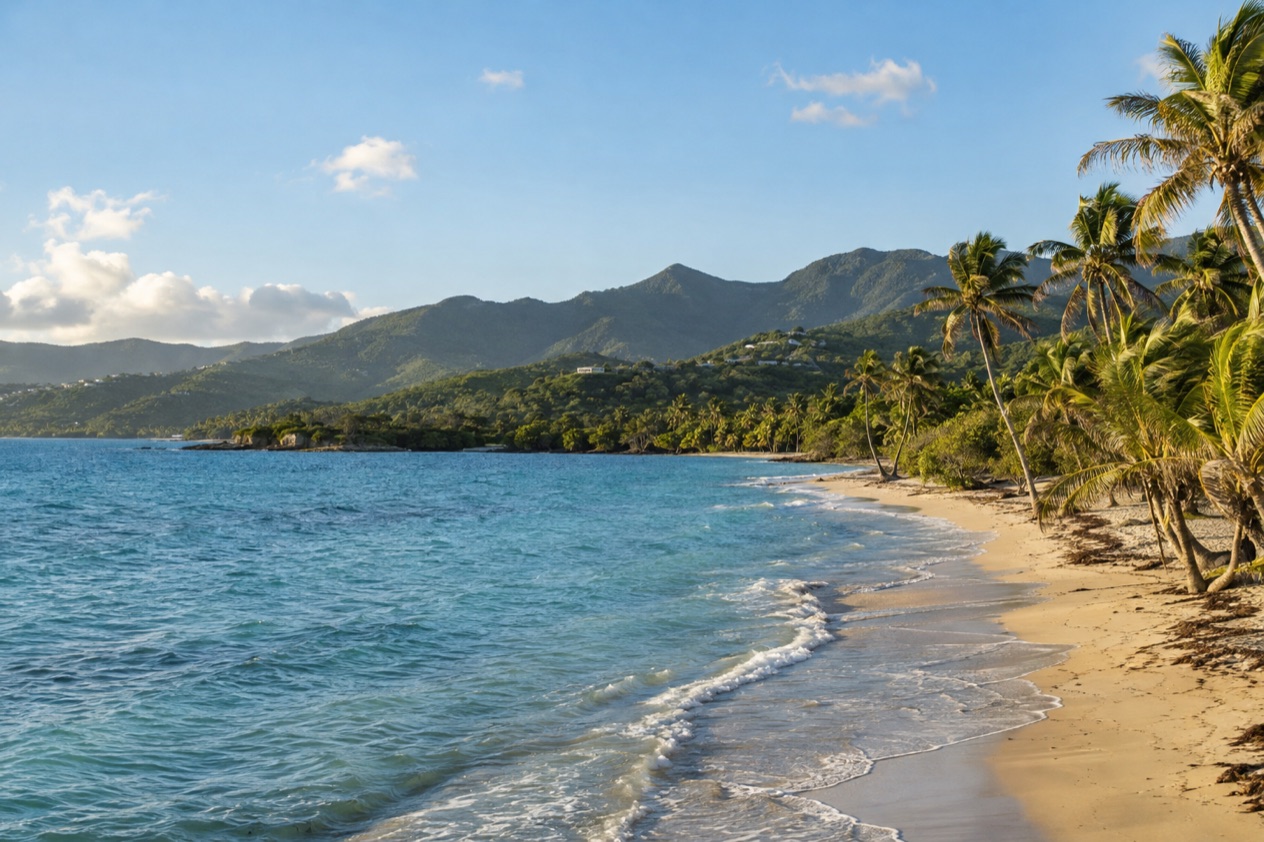
March is warm, sunny and mostly dry across the island, with the north and east coasts picking up the occasional passing shower and the south and west staying the driest and sunniest. The island is in the tail end of its drier season, and the sea is comfortable for swimming on every coast.
| Place | Region | Average high (°F) | Average low (°F) | Rain (in) | Rain days | Sea (°F) |
|---|---|---|---|---|---|---|
| San Juan | North coast | 84.7 | 72.4 | 2.18 | 5.3 | 80.1 |
| Fajardo (Ceiba) | Northeast | 84.2 | 71.9 | 1.84 | 5.5 | 80.8 |
| Culebra | East islands | 77.9 | 75.8 | 0.96 | 2.1 | 80.4 |
| Ponce | South coast | 83.5 | 71.0 | 1.44 | 3.3 | 81.2 |
| Rincon | West coast | 82.2 | 73.3 | 1.24 | 3.4 | 82.0 |
San Juan and the northeast are the wettest of the five places here, though that mostly means a brief shower that rolls in on the trade winds and leaves again, followed by sun. The northeast’s total comes from Ceiba, just a quick drive south of Fajardo, while San Juan’s count is recorded at the airport east of Old San Juan, so beach conditions may vary slightly.
Ponce and Rincon are drier, with clear days that suit long beach afternoons and open-air lunches. Culebra has the lowest rainfall of the group and hardly cools off at night, since its days are the mildest and its nights the warmest.
Rincon has the warmest sea of the five, and the water around the island stays warm on every side. The central mountains are cooler than the coast and wetter in the afternoons.
Where to go in Puerto Rico in March
San Juan and the northeast
San Juan is the natural starting point, and March suits it well: the sun is strong but the humidity has not yet built, so walking the walls of Old San Juan, the plazas and the old fort districts is pleasant in the morning and again at dusk. Mid-day is for the shade of a café, a plate of mofongo (mashed fried plantain, often with garlic and pork or shrimp), or the beach at Condado and Isla Verde.
From the city, El Yunque rainforest is the usual outing to the northeast. March is one of the friendlier months for the trails, the waterfalls and the lookouts, though it is a rainforest and a shower can arrive at any hour, so a light rain jacket is the right companion. The forest is greenest and loudest in the early morning, when the coquí frogs of the night are just quieting down.
Fajardo, Ceiba, Culebra and Vieques
The east coast is the launch point for the small islands. From Ceiba, public ferries set off for Culebra and Vieques, while Fajardo and Ceiba nearby offer marinas, seafood spots and guesthouses that make a fine base ahead of a stay on either island. March gives sunny crossings and the driest, most comfortable weather of the two islands.
On Culebra, Flamenco Beach is the famous crescent of pale sand, with the rusting tanks left from the old military days and calm-looking turquoise water, though conditions change from day to day and wherever a flag, sign or lifeguard is present you follow it. On Vieques, the wild horses wander the beaches and roads, and the quiet southern beaches reward a picnic and a snorkel mask. Moonless nights are the best chance for the glow of Mosquito Bay, as well as Laguna Grande near Fajardo.
Rincon and the west coast
Rincon is the surf town of Puerto Rico, and by March the big winter swells are easing, so the beaches around it are calmer than in the heart of winter, though some days still bring good waves. The mornings are for surf lessons, the beach walks and the coffee shops, and the evenings are for the sunset, which is the town’s real daily event.
The west coast stays among the sunniest and driest places in Puerto Rico this month, and the sea is the warmest in the group, which makes it a good snorkeling month at the quieter coves, with conditions varying by beach. Aguadilla’s beaches to the north have a wide choice of spots, and if you are chasing whales, this is the coast to watch in the early part of the year.
Ponce, the south and the central mountains
Ponce is drier than the capital, and March is the comfortable season for it. The town’s central plaza, with its red-and-black firehouse, the old streets of pastel colonial houses and the art museum make a full day, and the evenings are warm enough for a long dinner outside. The south coast is the Caribbean side, so the sea tends to be gentler than in the north, though that varies.
Above it, the central mountains hold the coffee towns, the winding roads and the cooler air. A day among coffee farms, with a tasting of the island’s mountain coffee and a lunch of roast pork or a stew in a roadside kitchen, balances out a beach-heavy trip. Mornings are clear and afternoons can bring cloud and a shower, so start early.
What to do in Puerto Rico in March
Carnaval, Holy Week and the March calendar
Held during the weeks leading up to Lent, the Carnaval de Ponce means its parades and the colorful vejigante masks (horned, spotted and painted) may land in late winter or the early part of March, depending on the year. If it does, Ponce is the place to be, with street parties, music and the sweet fritters sold along the route.
Each year Holy Week lands on different dates, and if it arrives in late March, Puerto Rico eases into a slower rhythm. There are processions in the old towns, and families head to the beaches.
Whales, turtles and the glowing bays
From roughly January through March, humpback whales move along the west coast, which puts March close to the finish of that stretch. Sightings are a chance, never a promise, and the best odds are from the headlands around Aguadilla and Rincon, or on a boat outing from the west coast.
Sea turtles begin nesting on some beaches in the spring, a quiet event that you may sometimes come across, and one best admired from a respectful distance. Bioluminescence lights up three Puerto Rican bays: Mosquito Bay on Vieques, Laguna Grande near Fajardo, and La Parguera in Lajas. Their glow lasts all twelve months, but the finest show comes on a moonless night, so check the lunar calendar before you pick your evening.
What to eat and drink
March is a good month to eat your way around the island. Alcapurrias (fritters of green banana and taro, stuffed with meat) and tostones come from the roadside kiosks, lechon asado (slow-roasted pork) from the mountain roadside restaurants, and pasteles from the family kitchens. When the afternoon turns hot, carts sell piraguas, shaved ice with fruit syrup, and tembleque, a coconut pudding, waits for dessert.
Mountain coffee and the island’s rum are the two drinks of the trip. A tasting at a coffee farm in the highlands and a rum cocktail at a beach bar in the evening make a natural pair, and in March the weather lets you drink both outside.
Is Puerto Rico busy in March?
Yes, March is one of the busier months, since it is the end of the high season and U.S. spring break brings a steady flow of visitors from the mainland. The drier, sunny weather and the easy flights add to the pull, and Easter weekends, when they fall in the month, bring island families to the beaches too.
San Juan, Condado and Isla Verde are the busiest, with the popular beaches and the Old San Juan streets filling up in the afternoon. Rincon and the west coast have a lively but relaxed crowd, and El Yunque and the ferry crossings to Culebra and Vieques feel the pressure on weekends and holidays, so plan ahead for the small islands in particular.
The quieter places are the mountain towns, the south coast around Ponce away from Carnaval, and the less famous beaches on the west and east coasts. A morning start, a weekday visit and a willingness to walk a little farther from the main beach parking usually buy you space. Evenings in Old San Juan are lively, but a side street away from the plazas is often noticeably calmer.
What to pack for Puerto Rico in March
Packing is light and mostly the same across the island: warm-weather clothes, with a small extra layer for the cooler mountains and the occasional breezy evening on the coast. Culebra and the south coast ask for the lightest fabrics, while the northeast and El Yunque ask for something that dries fast. No passport is needed for U.S. citizens.
- Pack light with airy, breathable clothing plus a swimsuit or two, because the water stays warm along all the coasts.
- A light rain jacket for El Yunque, San Juan showers and the mountain afternoons.
- Sunscreen, a hat and sunglasses for the strong sun on the beach and the old city streets.
- Sturdy sandals or water shoes, and closed shoes for the rainforest and coffee-farm trails.
- A light sweater or long-sleeve shirt for the highlands and breezy evenings by the water.
- A snorkel mask if you plan to spend time on the west coast or the small islands.
Good to know before you go
March falls outside the official Atlantic hurricane season, which runs from June 1 to November 30, but weather can change, so keep an eye on local forecasts. Sargassum seaweed can sometimes appear in spring and summer on the east and south coasts, and when it arrives, a beach in those areas might be impacted for several days. Since conditions in the water change from beach to beach and hour to hour, watch for any flag, sign or lifeguard on duty.
Is March a good time to visit Puerto Rico?
Yes, March is a very good time to visit, and the west coast around Rincon and the south around Ponce are the best bets for the driest, sunniest days, while the east islands of Culebra and Vieques are the best for beach time. The sea is warm and the island’s calendar is full.
Compared with February, March is a touch warmer and a little drier, with the winter surf easing on the west coast and the whale season nearing its end. Compared with April, it is busier with spring break crowds and a little cooler, and April starts to feel the early shift toward the wetter, hotter months, while the Easter crowds can come in either month depending on the year.
For a first trip, a good plan is to start in San Juan for the old city and El Yunque, then head to the west coast for the beaches, the sunsets and, with luck, a whale. A day in the coffee mountains and an evening in Ponce add the island’s quieter, older side. A trip to Culebra or Vieques crowns it, ideally on a moonless night when the water may glow.
What makes March special is the mix: the last of the humpback whales off the west coast, warm seas everywhere and the first nesting turtles of spring, all in the weeks before the heat and rain of summer arrive.
Sources
- NOAA NCEI, monthly normals 1991-2020, station RQW00011641 (San Juan L M Marin International Airport), checked October 8, 2026
- Open-Meteo Marine API, average 2015-2024, checked October 8, 2026
- Open-Meteo / ECMWF ERA5, 1991-2020 normals calculated on the grid cell 18.0111N 66.6141W, checked October 8, 2026
- Open-Meteo / ECMWF ERA5, 1991-2020 normals calculated on the grid cell 18.3403N 67.2499W, checked October 8, 2026
- NOAA NCEI, monthly normals 1991-2020, station RQW00011630 (Roosevelt Roads (Ceiba)), checked October 8, 2026
- Open-Meteo / ECMWF ERA5, 1991-2020 normals calculated on the grid cell 18.3N 65.28W, checked October 8, 2026
- NOAA National Hurricane Center, Climatology (https://www.nhc.noaa.gov/climo/), checked October 8, 2026
To plan your stay
- Things to Do in Puerto Rico: Old San Juan, Beaches, Bioluminescent Bays and Island Food
- Where to Stay in Puerto Rico: San Juan, Rincon, Vieques and the Best Areas for Your Trip
- Getting Around Puerto Rico: Rental Cars, Tolls, Carros Publicos and Ferries to Culebra and Vieques
- Know Before You Go to Puerto Rico: ID, Money, Getting Around and Local Customs