
Come January, when the Calle San Sebastian festival claims the old town of Old San Juan, its narrow streets of blue cobblestone brim with drums, plena rhythms and the aroma of fried alcapurrias after dark. The Christmas season has not quite let go, and the island still has parrandas, strings of lights and plates of pasteles on the table. January in Puerto Rico is dry-season weather, warm sea and a calendar of music and tradition, for travelers who want beaches, food and a lively island at once.
What is the weather like in Puerto Rico in January?
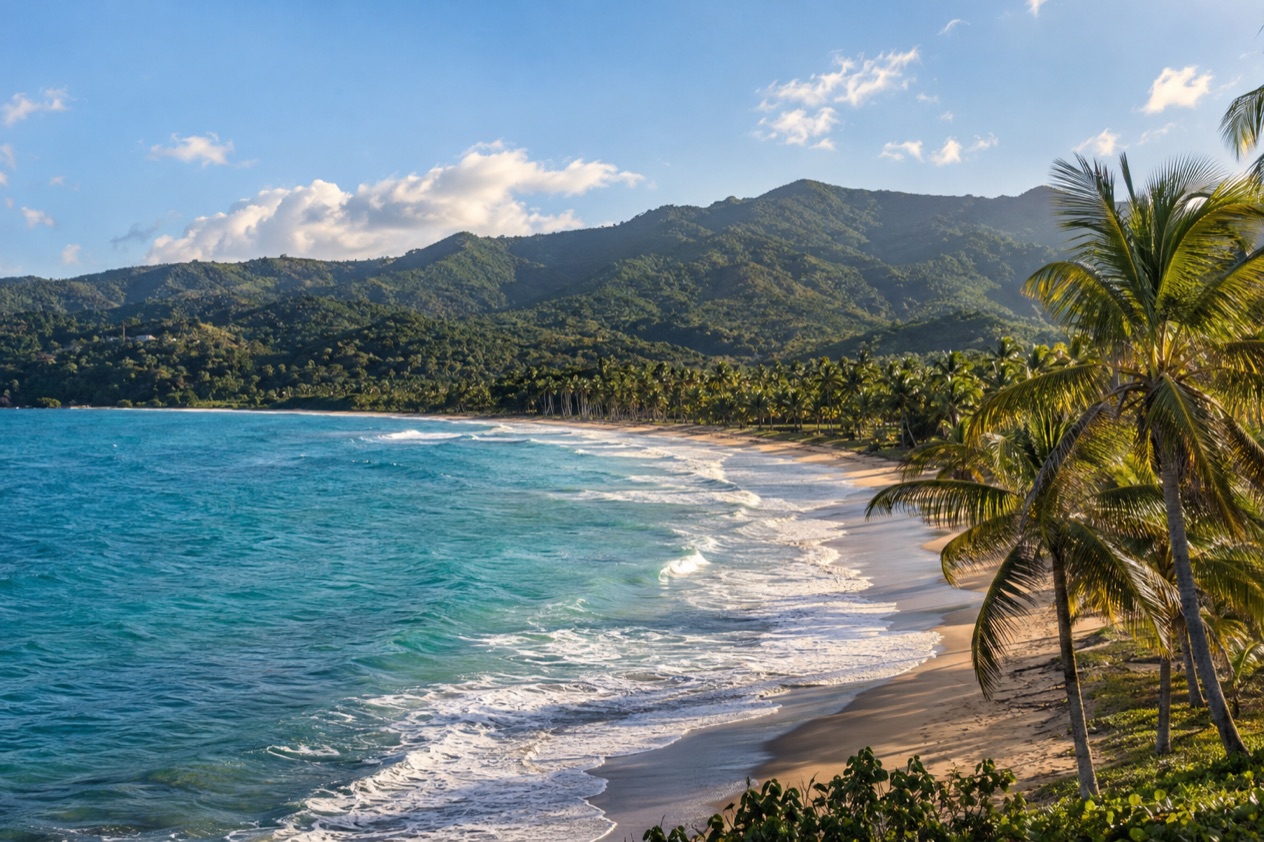
January is warm, breezy and relatively dry across Puerto Rico, with the driest weather on the south and west coasts, a few more showers on the north and east coasts, and the sea warm enough to swim everywhere.
| Place | Region | Average high (°F) | Average low (°F) | Rain (in) | Rain days | Sea (°F) |
|---|---|---|---|---|---|---|
| San Juan | North coast | 83.2 | 71.9 | 4.07 | 9.9 | 80.8 |
| Fajardo | Northeast | 82.9 | 71.4 | 2.62 | 6.5 | 80.4 |
| Culebra | East islands | 78.3 | 76.2 | 1.31 | 3.2 | 80.8 |
| Ponce | South coast | 82.3 | 70.9 | 0.88 | 1.7 | 80.6 |
| Rincon | West coast | 81.7 | 73.5 | 0.71 | 1.3 | 81.4 |
The contrast that matters is rain. San Juan, on the north coast, gets the most of any place in the table at just over four inches, with showers on about ten days, usually quick ones that pass through on the trade winds.
The San Juan figures come from Luis Munoz Marin International Airport, on the north coast just east of Old San Juan. The Fajardo figures come from Roosevelt Roads in Ceiba, about seven miles south of Fajardo.
Ponce and Rincon are the dry corners, each with under an inch of rain and only a day or two of showers. Culebra has the smallest gap between day and night, with highs near 78°F and lows in the mid-70s, so it never feels cool. Everywhere else, evenings drop into the low 70s, pleasant enough for dinner outside. The sea sits around 80°F on every coast.
Where to go in Puerto Rico in January
San Juan and the north coast
January is the month for Old San Juan on foot. The streets are warm but not oppressive, the forts of El Morro and San Cristobal catch the sea breeze, and the plazas fill with music in the evenings. The Calle San Sebastian street festival, usually in mid to late January, is the main reason to be here, with craft stalls, bands and crowds that move through the lanes late into the night.
Beaches such as Condado and Isla Verde are busy and pleasant by day. Conditions on this Atlantic-facing coast change from day to day, and winter swells can make the water rough, so look for a flag, sign or lifeguard where there is one and follow it. Bring a rain jacket for the odd shower, which is more likely here than elsewhere on the island.
The northeast, Fajardo, Culebra and Vieques
The northeast is where the island turns to rainforest and small islands. El Yunque catches showers in any month, so expect green, damp trails. From Fajardo, which is likewise the departure point for boat outings, you can get to Laguna Grande, one of three bioluminescent bays that shine throughout the year, and it looks finest on moonless nights and can never be promised.
You can catch the public ferries for Culebra and Vieques at Ceiba. Culebra is the driest and calmest-feeling of the group in January, good for snorkeling and for the beach days people picture when they think of the Caribbean. Mosquito Bay on Vieques is the second glowing bay, and a clear, dark night gives you the best chance.
The west coast and Rincon
Winter is surf season in Rincon, when Atlantic swells roll onto the west-facing beaches and the town fills with surfers and spectators at sunset. It is also one of the driest places on the island in January, so days are mostly sunny. Swimming can be difficult where the waves are big, so watch the water before you go in and follow any posted flags.
Humpback whales pass through the waters off the west coast during roughly January to March, and sometimes you can spot them from a boat or from land. Aguadilla and its beaches are close by, and the town has its own airport for easy arrival.
Ponce, the south and the central mountains
Ponce is dry and sunny in January, a good time for its plazas, its museums and the old firehouse in red and black stripes. The south coast is also home to La Parguera, the third bioluminescent bay, in Lajas on the southwest corner.
Up in the central mountains, coffee towns have cooler air than the coast, so mornings can feel fresh. It is the season to stop at a farm for coffee and a slow lunch on a veranda. Showers are more likely in the hills, so keep a light layer handy.
What to do in Puerto Rico in January
Three Kings Day and the end of the Christmas season
Christmas in Puerto Rico is one of the longest in the world, running from late November into mid-January. Three Kings Day on January 6 (Dia de Reyes) is the high point, when children leave grass or hay under the bed for the kings’ camels and wake to small gifts. Towns hold parades and masses, and families gather for roast pork and rice with pigeon peas.
The celebrations do not stop there. The weeks that follow are called the octavitas, with more parrandas, the traveling groups of singers who show up at a door late at night with guitars, cuatros and maracas. You may be invited to join one if you are in a small town.
Calle San Sebastian Street Festival
In Old San Juan, the Christmas season typically comes to a close with the festival in mid to late January. Artisans line the street with pottery, masks and paintings, while bands play salsa, bomba and plena on small stages. Processions with giant-headed figures called cabezudos wander through the crowd.
It gets busy in the evening, so go in the afternoon for the stalls and stay for the music. Grab bites along the way, including alcapurrias, pinchos and piraguas, the shaved ice with fruit syrup, which carts and stands around the plaza sell.
Whales, surf, and glowing bays
From roughly January through March, humpback whales may be seen off the west coast, but sightings are never guaranteed. Sightings are a chance, not a promise.
Surfing peaks around Rincon, and the bioluminescent bays are open all year. Pick a night with little moon for the best glow.
Is Puerto Rico busy in January?
January is one of the busier months in Puerto Rico, as mainland travelers escape the cold and the island is in its dry season.
The first days of the month overlap with the end of the winter holidays, so San Juan, Condado and the popular beaches feel full. Old San Juan can be crowded in the evenings, especially during the Calle San Sebastian weekend. Book rooms and rental cars ahead for those dates.
Rincon fills with surfers during winter swells, and the whale-watching boats attract visitors on the west coast. The ferries to Culebra and Vieques are popular, particularly on weekends, so plan for a line at the terminal in Ceiba. The central mountains and the south coast around Ponce stay calmer, and a weekday in a coffee town can feel almost private.
Mornings are the quiet hours almost everywhere. A beach at nine feels different from the same beach at noon, and El Yunque is calmer early in the day.
What to pack for Puerto Rico in January
Pack for warm days everywhere, with a bit more rain gear for the north coast, El Yunque and the mountains, and a light layer for cool mountain mornings and breezy evenings at the beach. The south and west are the driest, so there you mostly need sun protection.
- Lightweight, breathable clothing and a swimsuit, since the sea is warm on every coast.
- A light rain jacket or compact umbrella for showers in San Juan, El Yunque and the hills.
- Sunscreen, a hat and sunglasses for beach days.
- Sturdy sandals or water shoes, plus closed shoes for rainforest trails and the cobbles of Old San Juan.
- A sweater or thin jacket for mountain mornings and breezy evenings.
Good to know before you go
January falls well outside the official Atlantic hurricane season, which runs from June 1 to November 30, so the island is in its drier months. Anyone flying in from the mainland with U.S. citizenship needs no passport and no visa to visit. Beach conditions change from day to day, so keep an eye on each flag, sign or lifeguard on the sand.
Is January a good time to visit Puerto Rico?
Yes, January is a very good time to visit, especially the west and south coasts for dry sunshine, and Old San Juan for the festivals.
Compared with December, January keeps the music and the lights, but the main Christmas rush is over, and Three Kings Day and the street festival give the month its own rhythm. Compared with February, the island is similar in weather, though whales are still passing and the festival crowds have mostly gone home. Both neighbors are also in the drier season, so the weather difference is small.
For beaches, the west and south coasts give you the most reliable sun, while Rincon adds surf and sunsets. For culture and food, San Juan is especially lively, while Ponce offers mofongo, lechon asado, tostones and tembleque on menus, and coffee from the mountains to finish a meal. Rum is the drink for an evening on a plaza.
What is special about January is the overlap: you can watch a parranda at a doorway one night, swim in warm water the next morning, and end the week with a street festival where the whole old town dances in the cool of the evening.
Sources
- NOAA NCEI, monthly normals 1991-2020, station RQW00011641 (San Juan L M Marin International Airport), checked October 8, 2026
- Open-Meteo Marine API, average 2015-2024, checked October 8, 2026
- Open-Meteo / ECMWF ERA5, 1991-2020 normals calculated on the grid cell 18.0111N 66.6141W, checked October 8, 2026
- Open-Meteo / ECMWF ERA5, 1991-2020 normals calculated on the grid cell 18.3403N 67.2499W, checked October 8, 2026
- NOAA NCEI, monthly normals 1991-2020, station RQW00011630 (Roosevelt Roads (Ceiba)), checked October 8, 2026
- Open-Meteo / ECMWF ERA5, 1991-2020 normals calculated on the grid cell 18.3N 65.28W, checked October 8, 2026
- NOAA National Hurricane Center, Climatology (https://www.nhc.noaa.gov/climo/), checked October 8, 2026
To plan your stay
- Things to Do in Puerto Rico: Old San Juan, Beaches, Bioluminescent Bays and Island Food
- Where to Stay in Puerto Rico: San Juan, Rincon, Vieques and the Best Areas for Your Trip
- Getting Around Puerto Rico: Rental Cars, Tolls, Carros Publicos and Ferries to Culebra and Vieques
- Know Before You Go to Puerto Rico: ID, Money, Getting Around and Local Customs