
The road climbs out of Ponce into green hills, the air cools a little, and the old Vives country home appears among the trees, its shuttered windows facing a slope that once grew coffee. Water still runs through the stone channels, and the plantation buildings sit scattered across the grounds like a village. Hacienda Buena Vista is a farm museum in the mountains above the city, a visit for anyone curious about how Puerto Rico’s coffee, water and labor shaped the island’s south.
Is visiting Hacienda Buena Vista, Ponce worth it?
Yes, especially for travelers who like places where the story is told by the buildings themselves rather than by glass cases. It suits history lovers, anyone curious about coffee, families with children old enough to follow a guide, and people who want a quiet half day away from the heat of the coast. If your idea of Ponce is the plaza, the museums and the seaside boardwalk, this is the chapter that explains the countryside behind them.
What sets it apart from the other historic houses of the area is that it is a working picture of an entire plantation, not a single grand room. It is operated as a museum by the Puerto Rico Conservation Trust, and it is the only farm museum in Puerto Rico. The mansions of Ponce show how wealth was displayed in town, while here you see where that wealth came from: the drying grounds, the mill, the water system and the hillside itself.
There is also an engineering story that few visitors expect. The hacienda holds the only remaining example of the Barker hydraulic turbine, the first reaction type turbine ever made. Add a coffee reputation that once reached the tables of Europe, and the visit becomes more than a pretty country house. It earns its place beside the better-known sights of Ponce.
What to see at Hacienda Buena Vista, Ponce
The Vives country home
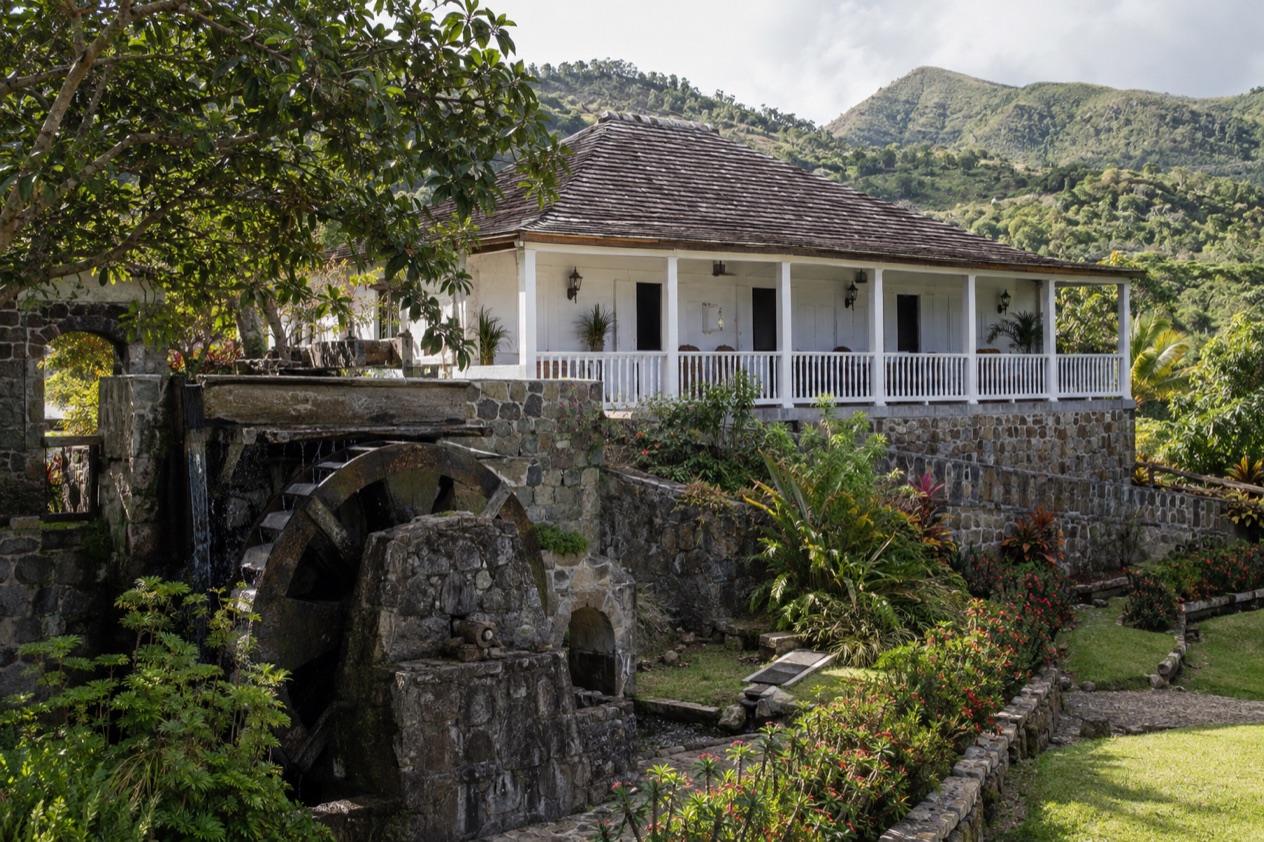
The main house is where most visits begin. It was the family residence of the Vives owners, and walking through it gives a sense of how a coffee planter lived in the hills: wide wooden floors, tall doors that catch the breeze, and rooms arranged to stay cool without any machinery. Guided tours take you through it, and the furniture and household objects explain daily life better than any date on a plaque.
Look at the way the house is oriented toward the view, which gives the hacienda its name. Step onto the gallery and you see the slopes rolling away toward the south. It is a good place to slow down and to picture the harvest seasons, when the whole property would have been busy from the house down to the drying floors.
The Barker hydraulic turbine
The turbine is the piece engineers come for. It is the only remaining example of the Barker hydraulic turbine, the first reaction type turbine ever made, and the American Society of Mechanical Engineers named it a National Historic Monument of Mechanical Engineering in July 1994.
You do not need a technical background to enjoy it. The guide explains how falling water, led along channels from the hillside, spun the machinery that did the work of the plantation.
What to look for is the logic of the whole system. Water is gathered high, directed through narrow stone channels, and put to work at the mill, so that the landscape itself is part of the machine. Children often like this part best, because following the water from channel to wheel is easy to understand and feels a little like a treasure hunt.
Plantation buildings and coffee grounds
Around the main house stand the working buildings of the plantation, and the visit is as much about these as about the home. A coffee hacienda needed places to dry the beans in the sun, to hull and sort them, and to store the harvest, and the layout shows how each step led to the next. In the late 19th century, Puerto Rican coffee, Hacienda Buena Vista’s among it, was counted among the finest in the world, and was even said to be a favorite at the Vatican.
Take your time with the drying surfaces and the mill rooms, where the smell of old wood and stone does a lot of the storytelling. If you drink coffee at all, it changes the next cup you order in Ponce. Ask the guide about the people who worked these slopes, because their story belongs to the hacienda too.
The protected natural area
The grounds are more than a backdrop. Guided tours may include portions of the protected natural area around the buildings, where the forest closes in and the sound changes to birds, insects and running water. Expect shade, humid air and damp ground in places, which is a pleasant contrast to the open sun of the drying grounds.
This part of the visit rewards walkers who like to look at plants and the lay of the land. You see how the original owners used the terrain, and why they chose these slopes for coffee, which likes shade, altitude and steady moisture. Closed shoes with some grip make the walk more comfortable.
Hours, tickets and rules
The hacienda is run as a museum by the Puerto Rico Conservation Trust, and the visit is organized around guided tours of the old Vives country home, the plantation buildings and the grounds. That format shapes the day: you move with a guide, at the pace of the group, and the stories come in the order the place was built to be understood. The site holds two official recognitions, a listing on the National Register of Historic Places in October 1994 and a designation as a Puerto Rico Historic Site in 2001.
Because the property is protected, treat it as you would any historic site. Stay with your group, keep to the paths and buildings the guide opens, and leave stones, plants and objects where they are. Tours can reach part of the natural area, which is a reminder that the hills around the buildings are protected too, not simply scenery.
Families will find the guided format easy to follow, since the guide does the explaining and the buildings do the showing. Photographs of the house, the turbine and the views are part of what most visitors come for, and the soft light under the trees makes them rewarding.
How to get to Hacienda Buena Vista, Ponce
Ponce is the base for nearly every visitor. The hacienda lies some 7 miles north of the city on Route PR-123, in Barrio Magueyes, and the address is given as Km 16.8 on that road. You leave the coastal plain behind and climb into the hills, so the setting changes quickly from city streets to curving mountain road and the cooler, greener air of the highlands.
Ponce itself sits on the south coast, and its historic center, around Plaza Las Delicias, lies a few miles inland from the Caribbean. Many travelers stay near the plaza and treat the hacienda as an outing from there. Anyone arriving from San Juan or elsewhere on the island will normally pass through or near Ponce first, so it makes sense to plan the hacienda as part of a Ponce stay rather than as a stop on its own.
Follow PR-123 north from the city and watch for the markers along the road, since the turnoff sits on a mountain route where signs matter more than a screen. Allow yourself time to drive without hurry, because the road is a pleasure in itself, with views back toward the coast and small rural homes among banana plants and flowering trees. Arriving early in your day leaves room to enjoy it.
When to visit Hacienda Buena Vista, Ponce
Go in the morning if you can. Puerto Rico is hot and humid all year, and the south coast is among the sunnier parts of the island, so the cooler hours make the walk between buildings and through the grounds far more pleasant. The hills are fresher than the city, but the sun is still strong in the middle of the day, and a morning start leaves the afternoon free for Ponce.
The drier months, roughly December through April, are the easiest for a visit that includes walking outdoors, with firmer ground and more reliable sky for photographs. The wetter season from about May to November brings afternoon downpours, which are often short but can make paths slick. Mornings usually give you the better odds on those days, and the green of the slopes is at its richest.
The Atlantic hurricane season runs from June 1 to November 30, with the peak on September 10 and most activity between mid-August and mid-October. During those months, follow the National Hurricane Center and local official alerts when you plan a trip into the hills. Outside the season, the main question is only whether you want sun or fresh green.
If your dates allow, think about the rhythm of Ponce too. Carnaval de Ponce takes place in the weeks before Lent, with parades of vejigantes in horned masks, and pairing a hacienda morning with that atmosphere makes for a rich trip. Coffee itself is harvested in the cooler part of the year in much of the island’s highlands, a season that adds meaning to the visit.
Tips for your visit
Bring water, a hat, sunscreen and comfortable closed shoes. The grounds mix open sunny areas with shaded paths and sometimes damp ground, and the guided walk means a fair amount of time on your feet. A light rain jacket is useful in the wetter months, and insect repellent is welcome if you plan to linger near the forest edges.
Plan a relaxed half day, leaving time to enjoy the house, the turbine and the buildings without checking your watch. Because the visit is led by guides, asking questions pays off: the stories of the family, the workers and the coffee trade are the heart of the place. Photographers should keep the camera ready for the view from the house and for the water channels.
Combine the hacienda with the rest of Ponce. Back in the city you can see Plaza Las Delicias, the red-and-black striped Parque de Bombas firehouse and the Ponce Museum of Art, all within the historic center. Castillo Serralles, a 1930s mansion on a hill above the city, tells a related story of sugar and rum wealth, and La Guancha, the boardwalk by the sea, is a good place to end the day.
Families with older children will do best, since the guided format asks for some patience and the paths can be uneven. Anyone with limited mobility should keep in mind that this is a historic hillside property with old buildings and grounds, and that the experience is designed around walking from one structure to the next.
Good to know before you go
Prices are in U.S. dollars, and U.S. citizens need no passport and no visa to visit Puerto Rico. A little Spanish is welcome, though English is also official and guides commonly work in both.
Ponce was founded in August 1692 and is often called La Perla del Sur, the Pearl of the South. Its municipality even reaches the highest peak on the island, Cerro de Punta, which gives a sense of how mountainous the country behind the city is, and why the hacienda’s cool hillside setting feels so far from the coast.
Sources
- Wikipedia, Hacienda Buena Vista (Ponce) (https://en.wikipedia.org/wiki/Hacienda_Buena_Vista), checked October 8, 2026
- Wikipedia, Ponce (https://en.wikipedia.org/wiki/Ponce,_Puerto_Rico), checked October 8, 2026
- NOAA National Hurricane Center, Climatology (https://www.nhc.noaa.gov/climo/), checked October 8, 2026
To plan your stay
- Best Time to Visit Puerto Rico: Dry Season, Hurricane Season, Beaches and Festivals
- Where to Stay in Puerto Rico: San Juan, Rincon, Vieques and the Best Areas for Your Trip
- Getting Around Puerto Rico: Rental Cars, Tolls, Carros Publicos and Ferries to Culebra and Vieques
- Know Before You Go to Puerto Rico: ID, Money, Getting Around and Local Customs