
On a Puerto Rican afternoon, the air carries the smell of garlic hitting hot oil, plantains frying until they turn golden, and pork roasting slowly over a fire. Someone is always shaking a bottle of hot sauce, and a radio is always playing somewhere nearby. The island eats with gusto, from kiosks by the sea to old dining rooms in San Juan, and this is a place where a meal can easily become the main event of the day.
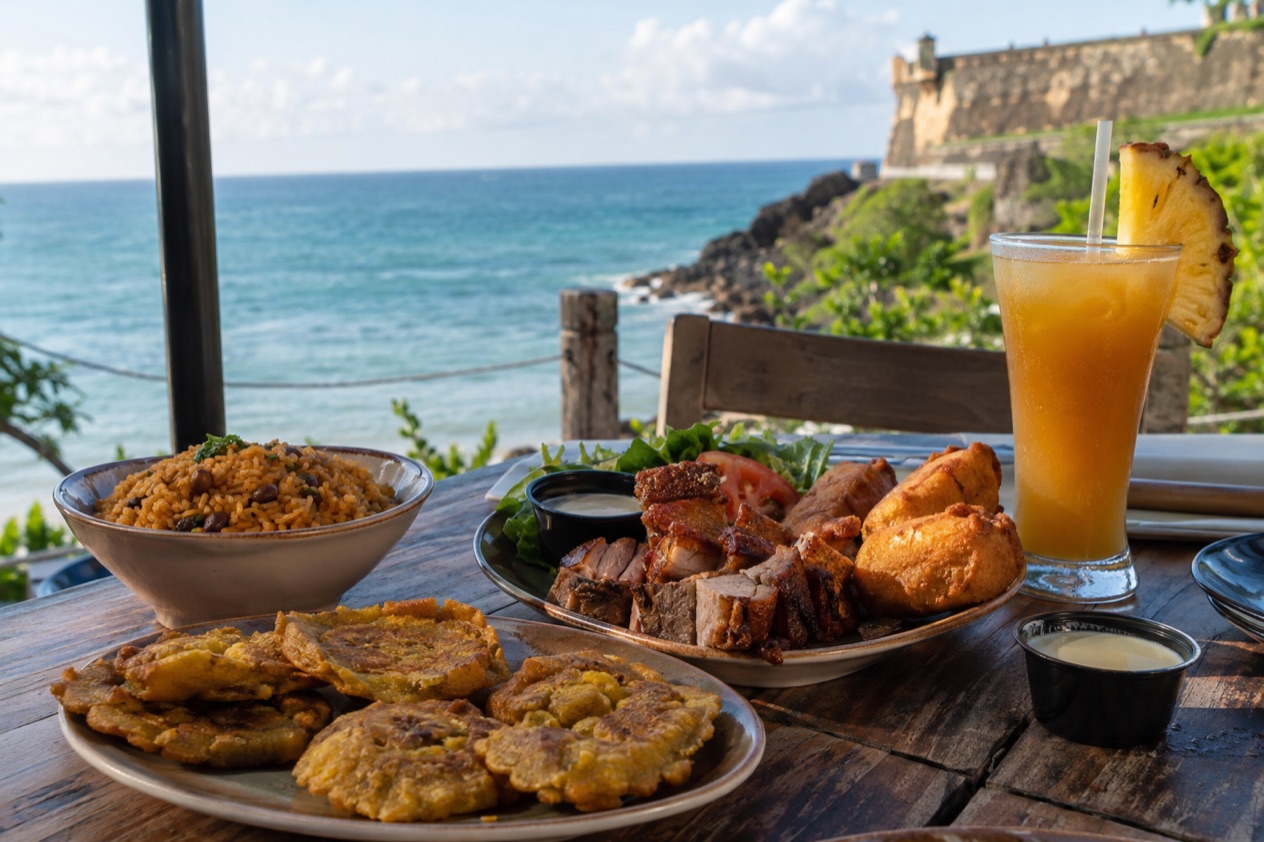
What is Puerto Rican food?
Puerto Rican cuisine blends Taíno, Spanish Criollo and sub-Saharan African influences. The result is comfort food, built on starchy roots, plantains, rice, beans and slow-cooked meat, seasoned with care rather than fire.
Many Puerto Rican main dishes start with sofrito, a sauté of garlic, onions, culantro, cilantro and peppers. The smell of it hitting the pan is the smell of a Puerto Rican kitchen, and it goes into rice, beans, stews and sauces. Once you know it, you start noticing it everywhere, from home cooking to a plate lunch counter.
Three roots on one plate
The Taíno left behind the habit of cooking over open fire, and the word barbecue may come from their barabicu, a sacred pit for roasting. Root vegetables and the use of cassava also trace back to them. The Spanish brought rice, garlic, olives and the idea of the slow stew, while the Africans gave the island a love of frying and of mashed, pounded starches.
That African influence shows up in dishes you will meet on almost every menu: mofongo, bacalaitos (salt cod fritters), funche (a cornmeal porridge) and pasteles (a dough of green banana and root vegetables, stuffed with meat and wrapped in leaves). Breadfruit, brought to the island in the late eighteenth century by Captain William Bligh, is now so naturalized that you will find it boiled, fried or mashed beside the meat.
The national plate and the old dining rooms
Arroz con gandules, rice cooked with pigeon peas, is widely regarded as the national dish. It turns up at family tables, at holiday gatherings and beside roast pork, and every cook has a view on how much sofrito it needs. Order it as a side and you will understand the island quickly.
Restaurant culture is older than you might expect. La Mallorquina, the first restaurant in Puerto Rico, opened in Old San Juan in 1848, and the old city still has a rhythm of long, unhurried lunches in dining rooms with tall ceilings. Sit down with no deadline and let the meal take its time.
Drinks and sweet things
Coquito is the drink of the holiday season: a spiced coconut beverage, similar to eggnog, usually served in a shot glass. It is creamy and cinnamon-scented, and families guard their recipes. Outside the holidays, you will find fresh coconut water sold at beaches and roadsides, and cold fruit drinks everywhere.
For something stranger, the Lares Ice Cream Parlor is famous for its codfish ice cream, along with a long list of tropical and unexpected flavors. It is the sort of stop people make for a story as much as for dessert, and it suits adventurous eaters and kids who like a dare.
What should you eat in Puerto Rico?
Start with mofongo, then work through fried snacks, roast pork and rice, and finish with something coconut. Mofongo is made by mashing fried green plantain with garlic and often pork cracklings in a wooden mortar, then shaping it into a mound and serving it with broth, shrimp, chicken or beef. It is filling, so share it the first time.
Fried things and street snacks
Bacalaitos are crisp, lacy fritters of salt cod, best eaten hot from the fryer with a cold drink. Alcapurrias are fritters made from grated root vegetables and green banana, filled with seasoned meat. Both are the island’s answer to a quick bite, found at roadside stands, festivals and kiosks.
If you are around Arecibo between July and December, look for cetí, a tiny transparent fish that is abundant there in those months. It is usually served fried or in fritters, and it is a seasonal treat that locals look forward to. Ask what is fresh, and let the kitchen guide you.
Holiday and Sunday tables
Pasteles are the soul of the Christmas table, though they appear at other times too. They arrive wrapped in a leaf, steaming, and you unwrap them like a gift. Lechón asado, whole pig roasted slowly until the skin turns shatteringly crisp, is the centerpiece of celebrations, and you can often find it sold by the pound at roadside spots.
With these come arroz con gandules, boiled root vegetables, and in season a glass of coquito. A weekend meal of this kind is slow and generous, and it suits groups and families more than anyone eating in a hurry.
A day of eating, in order
Begin with a strong coffee and something bready or fried at a local bakery, then plan a late, large lunch built around mofongo or roast pork. By the afternoon, a fritter or a cold fruit drink is enough to carry you to dinner.
In the evening, go lighter: a plate of rice and beans with a grilled fish, or a few small fried bites shared at the table. Save room for something coconut, whether a chilled sweet or a scoop of ice cream, and walk it off through the streets.
Where can you find the best food in Puerto Rico?
The best eating is spread across the island, from the old streets of San Juan to beach kiosks on the northeast coast and the seafood bars of the southwest. Quioscos, the little kiosks, are a much-frequented part of a day at the beach.
Old San Juan
Old San Juan sits on a small island on the north coast, with narrow blue cobblestone streets and brick and stone buildings from the sixteenth and seventeenth centuries. It is where the island’s first restaurant opened, and today it has everything from family dining rooms to modern kitchens reworking the classics. Walking here between meals is part of the pleasure.
Pair a long lunch with a stroll along the Paseo de la Princesa, the promenade beside the southern city wall, and the views toward San Juan Bay. The old city’s forts and gate make good pauses between courses. Plan to explore on foot, since the old free trolley no longer runs.
Santurce
Santurce is the part of San Juan where residents go out to eat. It lies east of Old San Juan and west of Isla Verde, and it includes Condado, Miramar and Ocean Park among its many subbarrios. That variety shows on the plate: neighborhood spots for rice and beans, polished places for tasting menus and cafés that fill at breakfast.
The beaches of Condado and Ocean Park are close, which makes it a convenient base for a mix of eating and swimming.
Luquillo kiosks
Luquillo sits on the northeast coast, with the Atlantic on one side and El Yunque rainforest on the other, and it is famous for both its beach and its food. Luquillo Beach, officially La Monserrate, stretches for a mile under coconut palms and has a cafeteria and showers. Nearby, the kiosks serve fritters, seafood and cold drinks, so a swim can slide into lunch without any planning.
There is no public transportation in town, so you rely on rideshares, taxis or your own wheels along PR-3, the main road. Come in March if you can, when the patron saint festival fills the town with parades, artisans, rides, regional food and live music. Beach conditions shift daily, so pay attention to whatever flag, sign or lifeguard you come across.
Boquerón
Boquerón, a village in Cabo Rojo on Boquerón Bay, is one of the main tourist attractions of the southwest. It is a place for seafood and a relaxed evening, where you wander from one open-air spot to the next with a cold drink in hand. The mood is easy and the pace is slow, which suits a long dinner by the water.
Other regions have their own specialties, like cetí near Arecibo in the second half of the year and the codfish ice cream of Lares. Driving between them lets you taste the island one town at a time.
Good to know before you go
Prices are in U.S. dollars, and eating is relaxed, so kiosks and roadside stands are as much a part of the trip as sit-down meals. Hurricane season runs from June 1 to November 30, with the peak in September, so follow the National Hurricane Center and local official alerts if you travel then. Spanish and English are both used, and a few words of Spanish, like a cheerful buen provecho, are always appreciated at the table.
Sources
- Wikipedia, Puerto Rican cuisine (https://en.wikipedia.org/wiki/Puerto_Rican_cuisine), checked October 8, 2026
- Wikipedia, Luquillo (https://en.wikipedia.org/wiki/Luquillo,_Puerto_Rico), checked October 8, 2026
- Wikipedia, Piñones (https://en.wikipedia.org/wiki/Piñones,_Puerto_Rico), checked October 8, 2026
- Wikipedia, Santurce (https://en.wikipedia.org/wiki/Santurce,_San_Juan,_Puerto_Rico), checked October 8, 2026
- Wikipedia, Old San Juan (https://en.wikipedia.org/wiki/Old_San_Juan), checked October 8, 2026
- Wikipedia, Boquerón (https://en.wikipedia.org/wiki/Boquerón,_Cabo_Rojo,_Puerto_Rico), checked October 8, 2026
- NOAA National Hurricane Center, Climatology (https://www.nhc.noaa.gov/climo/), checked October 8, 2026
To plan your stay
- Best Time to Visit Puerto Rico: Dry Season, Hurricane Season, Beaches and Festivals
- Where to Stay in Puerto Rico: San Juan, Rincon, Vieques and the Best Areas for Your Trip
- Getting Around Puerto Rico: Rental Cars, Tolls, Carros Publicos and Ferries to Culebra and Vieques
- Know Before You Go to Puerto Rico: ID, Money, Getting Around and Local Customs