
On a Sunday afternoon in Dorado, families carry coolers and folding chairs down to the sand while someone’s speaker plays salsa and the smell of fried fritters drifts from a roadside stand. Palm-lined streets lead to a plaza where retirees talk on benches, and a few minutes away the manicured grounds of old resort estates run down to the Atlantic. Dorado is a small north coast town that mixes a local beach culture with quiet luxury, and it suits travelers who want sand, golf and good meals within easy reach of San Juan.
What are the best things to do in Dorado?
The best things to do in Dorado are mostly outdoors: spend long hours on its Atlantic beaches, walk or bike through the old resort grounds, and then eat well in the evening. Perched on Puerto Rico’s northern shore, 15 miles west of San Juan, Dorado doubles as a peaceful home base for exploring the capital’s attractions.
- Spend a beach day on the public sand at Playa Sardinera, the town’s local favorite, where families set up for the whole afternoon.
- Walk the shaded paths around the old Dorado Beach estate, where palms, sea grapes and ocean views make a slow stroll.
- Play or simply admire the golf courses that made Dorado famous among visitors from the mainland.
- Stand beside the Ojo de Buey rock formation and listen to the ghost stories and pirate treasure legends told about it.
- Visit the town plaza and its church, which fill up around the patron saint celebrations in June.
- Take a day trip east to Old San Juan, with its forts, cobblestone streets and pastel townhouses.
- Eat fritters, mofongo and roast pork at casual kiosks and chinchorros, the roadside restaurants that Puerto Ricans love.
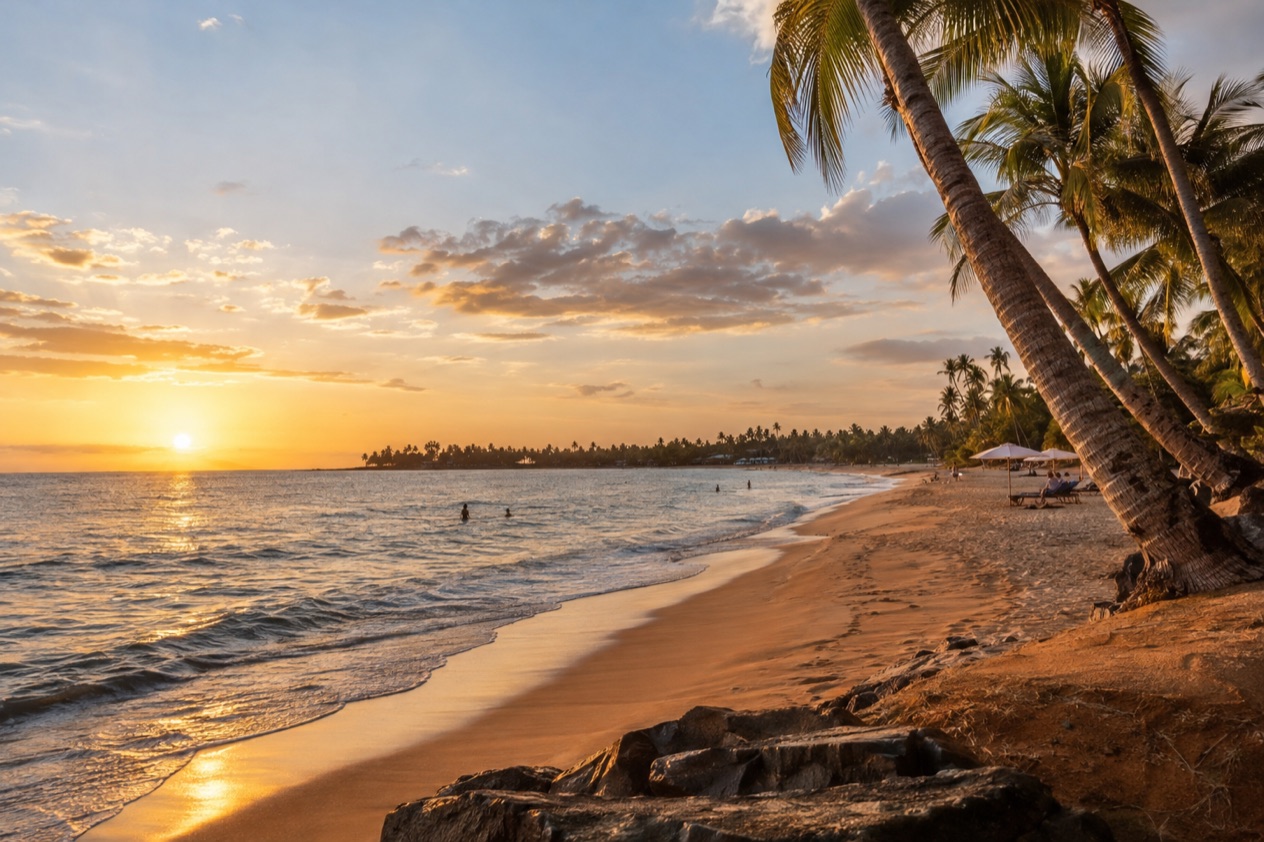
- Watch the sky turn orange over the Atlantic from a beach or a resort terrace at the end of the day.
None of this needs a tight schedule. Dorado rewards people who like to arrive at the beach late in the morning, stay through lunch and decide the evening plan over a cold drink. The sections below give each of these more room, along with the places nearby that pair well with them.
If you have only a short stay, put the beach and a sunset dinner first, then choose between a golf round and a day in the capital. If you have longer, the stretch of coast east and west of town, with its lagoons and cliffs, gives you reasons to keep a rental car for a few days.
Sights and landmarks in Dorado
Dorado is not a town of big museums or a walled colonial center. Its sights are quieter: a plaza with a church, a former resort estate with a famous guest list, a rock formation with a reputation for ghosts. Most can be seen on foot or by a short drive, and together they fill a relaxed half day between beach sessions.
The town plaza and church of San Antonio de Padua
The heart of Dorado is its plaza, laid out in the traditional Spanish way with the church on one side and municipal buildings around it. The town’s patron saint is Anthony of Padua, and every year on June 13 the plaza fills with a religious celebration, music, food stalls and neighbors who come back from all over the island.
On an ordinary day the plaza is calm. Older men play dominoes in the shade, schoolchildren cut through after class, and a few cafes and bakeries around the edges serve strong coffee and pastries filled with guava and cheese. It is a good first stop on arrival, because it shows you the everyday town behind the resort image.
Go in the morning when the heat is gentle and the light is soft on the church facade. Pair it with a coffee and a short walk along the nearby streets, then continue to the beach.
Dorado Beach and its resort history
The name of Dorado Beach carries more history than most Caribbean resorts. In the middle of the last century the coastal estate was turned into a luxury destination, and in 1976 it hosted the second G7 summit, where leaders of the largest industrial democracies met for two days at the end of June. The setting, a quiet stretch of palms and sea with the Atlantic just beyond, made it a natural place for private talks.
Today the property is a high-end resort and residential community, and the area around it has drawn wealthy newcomers, partly because of tax incentives passed for new residents. For a visitor, what that means is a well-kept landscape: tall palms, golf fairways that run beside the shore, and a feeling of space that is rare on a busy island.
You can see a good deal of the character of the area simply by driving slowly along the coastal roads and stopping where the ocean opens up. A meal or a drink at one of the resort restaurants is another way to get a look at the grounds.
Ojo de Buey and the pirate legends
Ojo de Buey, the Ox Eye, is a rock formation on the Dorado coast that has become a small attraction for the stories around it. People in town tell of spirits roaming by the rocks after dark, and of Roberto Cofresí, the pirate whose treasure, they say, lies buried somewhere nearby. Nobody has ever proved a coin was found, and that is part of the charm.
Visit for the setting more than for any single sight. The Atlantic works on the rocks and the shoreline, and the contrast between dark stone and bright water makes good photographs. Treat the waves with respect, since this is an open ocean coast, and stay back from the edge where the spray reaches.
Late afternoon is a pleasant time to go, when the light is warmer and the day’s heat has eased. It takes little time, so it fits easily before a dinner nearby.
Smaller things to see around town
Beyond those three, Dorado’s character comes from small details. Murals and painted houses brighten the older streets, and little neighborhood bakeries, the panaderias, open early with fresh bread. The Río de la Plata runs nearby and has long been known to flood the town in heavy rain, which is why a large flood control project was announced for it by the Army Corps of Engineers in 2018.
The town also carries the marks of Hurricane Maria in September 2017, when hundreds of homes were destroyed or lost their roofs. Take a slow drive past the older residential streets and you will see how the town mixes old concrete houses with new construction.
An old airstrip history also lingers here. The Dorado airport once served flights from the 1940s until the mid-1990s, first as a military strip and later as a small civilian field. The land no longer works as an airport, but locals still remember the planes that used to come in over the palms.
Beaches and outdoor things to do in Dorado
Dorado’s beaches face the open Atlantic, so the sand is broad and the water moves. Conditions change from day to day and from beach to beach, with some days gentle enough for wading and others with real surf. If you see a flag, a sign, or a lifeguard on duty, do what it says, and check with people who live there about the water before entering.
Playa Sardinera and the public beaches
Playa Sardinera is the town’s best-known public beach, a long strip of golden sand backed by palms and a car park that fills on weekends. Families spread out blankets, kids dig in the sand and vendors sell cold drinks and snacks. It has the easy, sociable atmosphere of a beach that belongs to the community rather than to a hotel.
The waves here can be lively, and the shore gives you a good look at the Atlantic at work. Choose your moment, and keep a close eye on children.
Go early on a weekend if you want a place near the road and some quiet, or on a weekday for more space. Bring sun protection and a hat, because shade is limited once you leave the palms.
Cerro Gordo and the coast toward Vega Alta
A little west of Dorado, the coast bends toward Vega Alta and the beach of Cerro Gordo. The area is known for a high bluff that gives it its name, and the sand below is a favorite with local families and surfers. Wide views along the shore make it a good place to walk even if you do not plan to swim.
As on most of the north coast, the surf can be strong and the currents are not always obvious. Treat each visit as new, read any signs and watch what the locals do. Many people come mainly for the picnic atmosphere and stay on the sand. It is an easy add-on to a Dorado day, and a roadside stand or kiosk near the beach is often the source of a good, simple lunch of fried fish or fritters.
Golf, walking and cycling
Golf courses are part of Dorado’s resort landscape. The area’s courses, laid out among palms and lagoons with the ocean beside several holes, have drawn players for decades, and many travelers plan a whole trip around a round or two. Even if you do not play, the landscape of green fairways beside blue water is worth a look.
For people who prefer walking, the quiet roads and paths near the old resort grounds are pleasant at the cooler ends of the day. Early morning brings joggers, cyclists and the sound of birds in the sea grapes, and the ocean breeze keeps the heat from feeling heavy. Bring water and a hat.
Other outdoor options nearby
A short drive along the coast leads to places where the north shore gets wilder. Laguna Tortuguero near Vega Baja is a large natural lagoon and nature reserve. Farther along, the beach at Mar Chiquita near Manati is known for a natural rock opening that the waves pass through, a favorite photo stop.
In spring and summer, sea turtles nest on beaches around the island, and you may see signs of nesting areas on quieter stretches. Sargassum seaweed can reach some Puerto Rico shores in certain springs and summers, though the north coast is less often affected than the east and south. Either way, conditions are never a promise.
Day trips from Dorado
Dorado works well as a base because the capital and several of the island’s best-known sights are within reach by car. Most day trips head east toward San Juan or along the north coast, and the main thing to plan is traffic around the metro area, which can slow the road at busy hours.
Old San Juan and the forts
Old San Juan is the obvious day trip, 15 miles east. This colonial town sits on a tiny islet, ringed by walls, and contains El Morro and San Cristobal, two Spanish forts, along with pastel townhouses, quiet plazas and lanes paved in blue-gray cobblestone. The forts and walls form the San Juan National Historic Site, part of a UNESCO World Heritage Site.
Walk the streets without a strict plan. Climb toward El Morro for the sea views and the wide lawn where kites fly, then wander down past the cathedral, small galleries and shops selling local crafts. Stop for coffee in a courtyard cafe when the sun gets strong, and finish with a drink or a meal as the light softens.
Leave early to have the forts and the narrow streets at their calmest. Wear comfortable shoes, because the cobblestones are uneven and the hills are steady.
The beaches and food of San Juan
If you want more than the old city, the metro area has plenty. Condado and Isla Verde are two beach-and-hotel strips, Santurce is the arts and food district around Calle Loiza, and Pinones is a coastal stretch of beachside kiosks east of the airport.
Just past Old San Juan sits Balneario de Escambron, a public beach park, where the reef keeps the water more calm, whereas beaches in the city usually meet the Atlantic and receive steady surf. Conditions change from day to day, so look at the water and follow any flags or lifeguards. A good combined day starts with Old San Juan in the morning, continues to Escambron for a swim or a rest, and ends with fritters at Pinones or dinner in Santurce.
The north coast: lagoons, caves and rock arches
Heading west instead, you follow a coast of long beaches, sugarcane history and small fishing towns. Vega Baja has Laguna Tortuguero, a nature reserve with mangroves and birds, and Manati has the Mar Chiquita beach with its famous rock arch. Farther west lies Arecibo, known for its caves and its radio-telescope history.
This is a slow, scenic outing rather than a sight-by-sight tour. Stop where the view invites you, eat at a roadside kiosk and let the day go at its own pace. Fried fish, cold coconut water and fresh juice are common along the road. It suits travelers who like open-air stops and small towns more than organized attractions, and it is best with a rental car and a loose schedule.
Other options: rum, rainforest and more
Across the bay from Old San Juan, the town of Catano is home to a famous rum distillery that many visitors tour. East of the capital, El Yunque rainforest rises in the mountains, with waterfalls, green trails and a cooler, wetter air than the coast. Both can fill a day, but they are farther afield, so choose one rather than trying to combine them with the capital.
The airport at San Juan is the island’s main gateway, and from there domestic flights connect to Culebra, Mayaguez and Vieques. Those islands are better as separate trips with an overnight stay than as day trips from Dorado.
What to eat in Dorado
Eating in Dorado means Puerto Rican food in a few different settings: a resort dining room with an ocean view, a casual chinchorro by the road, and a kiosk by the sand. Puerto Rican cooking is built on mofongo, pasteles, lechon asado, tostones, alcapurrias, piraguas and tembleque, and you can find versions of all of them in and around San Juan.
Mofongo, lechon and the classic plates
Mofongo is the dish to try first: green plantains fried and mashed with garlic and pork crackling, shaped into a mound and often filled or topped with shrimp, chicken or beef, with a bowl of broth beside it. It is rich, filling and deeply flavored, and each cook has a slightly different hand with the garlic.
Lechon asado, roast pork with crackling skin, is the centerpiece of celebrations and a regular on weekend menus. Served with rice and pigeon peas, plus tostones, the twice-fried green plantain slices, it makes a full meal. Pasteles, a kind of tamale made with grated green banana and filled with seasoned pork, are tied to the Christmas season but are sometimes available at other times.
Many travelers love the simple plates the most: rice and beans, fried fish with a squeeze of lime, a cold local beer. Ask for the daily special where you eat, and take a little time over lunch.
Fritters, kiosks and chinchorros
Fritters are the great snack here. Alcapurrias are fried dumplings of green banana and taro filled with seasoned meat, and bacalaitos are crisp, salty codfish fritters. Both are best eaten hot, standing near the stand with a napkin and a cold drink.
Chinchorros are casual roadside restaurants, often open to the air, with simple menus, cold beer and music playing. They are where locals go after the beach, and they tend to feel friendlier and less formal than restaurants. Along the coast near San Juan, Pinones has a famous stretch of kiosks that fry fritters all day.
Do not worry about finding the perfect spot. A stand that is busy with local families can be a useful place to start.
Sweets, drinks and the coffee habit
For something cold, piraguas are shaved ice with fruit syrup, sold from carts and trucks near beaches and plazas, in flavors like tamarind, coconut and passion fruit. Tembleque, a soft coconut pudding sprinkled with cinnamon, is a classic dessert that you will see in bakeries and restaurants.
Puerto Ricans take coffee seriously, and a small cup of strong coffee with warm milk, café con leche, is the usual start to the day. Rum is also part of island life, served in cocktails such as the pina colada, which many people associate with Puerto Rico. Sip one at sunset by the sea and you have the classic vacation scene.
Fresh coconut water, sold straight from the shell at roadside stands, is a good way to cool down on a hot day. Look for a vendor with a pile of green coconuts and a machete.
Things to do in Dorado at night
Dorado nights are quiet and unhurried, centered on dinner, drinks and the sound of the ocean. This is not a nightclub town. The pleasures are a terrace table, a walk after the heat has eased and the sight of stars over the water where the lights are low.
Sunset and dinner by the sea
The evening usually starts with the sunset. Because Dorado faces the north Atlantic, the sun sets off to one side, and the sky often glows orange and pink over the water before the light fades. Many people watch from the sand, a terrace bar or a resort lawn.
Dinner follows, either at a resort restaurant with a refined menu or at a local spot serving grilled fish, mofongo and roast pork. The mood is relaxed and most people dress casually, though resort restaurants tend to be a little dressier. A rum cocktail with the sound of waves makes a comfortable end to the day.
After dinner, a slow walk along a quiet road or beach front lets the sea breeze do its work. Keep to well-lit paths and watch your footing on uneven ground.
Music, plazas and local gatherings
Music is never far in Puerto Rico. A night out can be as simple as a beer, a plate of fritters and a band in a small open-air venue.
The town plaza comes alive for community events, especially the patron saint celebrations in mid June, when there is music, food and a festive crowd. At other times it is a gentle evening gathering place, with families strolling and children playing while adults chat on the benches.
Ask at your lodging about live music or a local event while you are in town. Small schedules change often and are easiest to learn from the people who live here.
A night in San Juan
If you want more energy, San Juan is close. Old San Juan has bars, music venues and restaurants set in lit-up colonial streets, and Santurce, the arts and food district around Calle Loiza, has a younger crowd with bars, galleries and late-night kitchens. Condado and Isla Verde offer hotel bars and beach lounges.
Plan your ride back before you go out, and keep an eye on the clock if you want to be in Dorado at a reasonable hour. Many travelers prefer to go to the capital for dinner and a stroll, then return to the quiet of the coast.
There is also a gentler option. A night with a book and a drink on a balcony, the sound of tree frogs in the dark and the ocean not far away, is a very Puerto Rican way to end a day.
Things to do in Dorado with kids
Dorado suits families because the beach is the main event and children need nothing more than sand, shells and time. The town is relaxed, the pace is slow, and many restaurants welcome kids with simple plates and plenty of space.
Beach days with children
Playa Sardinera is a natural choice for families, with a wide shore, a casual atmosphere and local children playing everywhere. Kids can build sandcastles, chase small waves at the edge and eat piraguas in the shade. It feels like a community beach, with grandparents, teenagers and toddlers all together.
The sea needs attention here, because the Atlantic can bring strong waves and currents. Never assume the water is gentle on any given day, and keep children within arm’s reach. Where a flag, a sign or a lifeguard is present, follow it.
Sun and heat are the other things to plan for. Use sunscreen, bring hats and water, and take breaks in the shade, especially in the middle of the day when the sun is strongest.
Nature, walks and gentle outings
Away from the sand, children enjoy easy nature outings. Laguna Tortuguero has birds, mangroves and quiet paths, and the coast near Manati has the Mar Chiquita rock arch, which often fascinates kids as waves rush through it. Sea turtles nest on some beaches in spring and summer, and children may spot the signs that mark protected areas.
In San Juan, the forts of El Morro and San Cristobal are a hit with imaginative children, with tunnels, cannons, grassy lawns and wide views over the sea. The big green field below El Morro is a famous kite-flying spot, and a kite is an easy souvenir to buy and enjoy.
Make the outings short and mix them with rest. A morning trip followed by lunch and a quiet afternoon back at the beach or pool keeps most children content.
Eating and resting with kids
Puerto Rican food is often kid-friendly. Rice and beans, tostones, grilled chicken and fried fritters are familiar to most children, and mild dishes are easy to find. Tembleque and piraguas make popular treats.
Plan for slower days than you would at home. Heat can tire small children quickly, so build in breaks, drink plenty of water and keep evenings flexible. Dinner earlier in the evening often suits families, and many restaurants are happy to accommodate it.
Good to know before you go
Dorado is on the north coast, 15 miles west of San Juan, and most visitors fly into Luis Munoz Marin International Airport, then continue by car. A car makes everything easier here, from beaches to day trips. Travelers from the United States can leave their passports and visas at home, the official languages are English and Spanish, and the local money is the U.S. dollar, so it never hurts to try a little Spanish.
The Atlantic hurricane season runs from June 1 to November 30, with the peak in September, so follow the National Hurricane Center and local official alerts if you travel in those months. Sargassum seaweed can reach some Puerto Rico shores in certain springs and summers, though it is a chance rather than a certainty.
Sources
- Wikipedia, Dorado (https://en.wikipedia.org/wiki/Dorado,_Puerto_Rico), checked October 8, 2026
- Wikipedia, Luis Muñoz Marín International Airport (https://en.wikipedia.org/wiki/Luis_Muñoz_Marín_International_Airport), checked October 8, 2026
- NOAA National Hurricane Center, Climatology (https://www.nhc.noaa.gov/climo/), checked October 8, 2026