
From the road, Cueva Ventana shows itself as a dark opening high in a limestone cliff, a natural window cut into the rock above the Río Grande de Arecibo valley. You start on a short boardwalk beside a gas station, which is an unlikely trailhead for one of the most photographed views in northern Puerto Rico. This is a guided cave visit on private land, with a limestone-cliff setting and a broad view over the Río Grande de Arecibo valley.
Is visiting Cueva Ventana, Arecibo worth it?
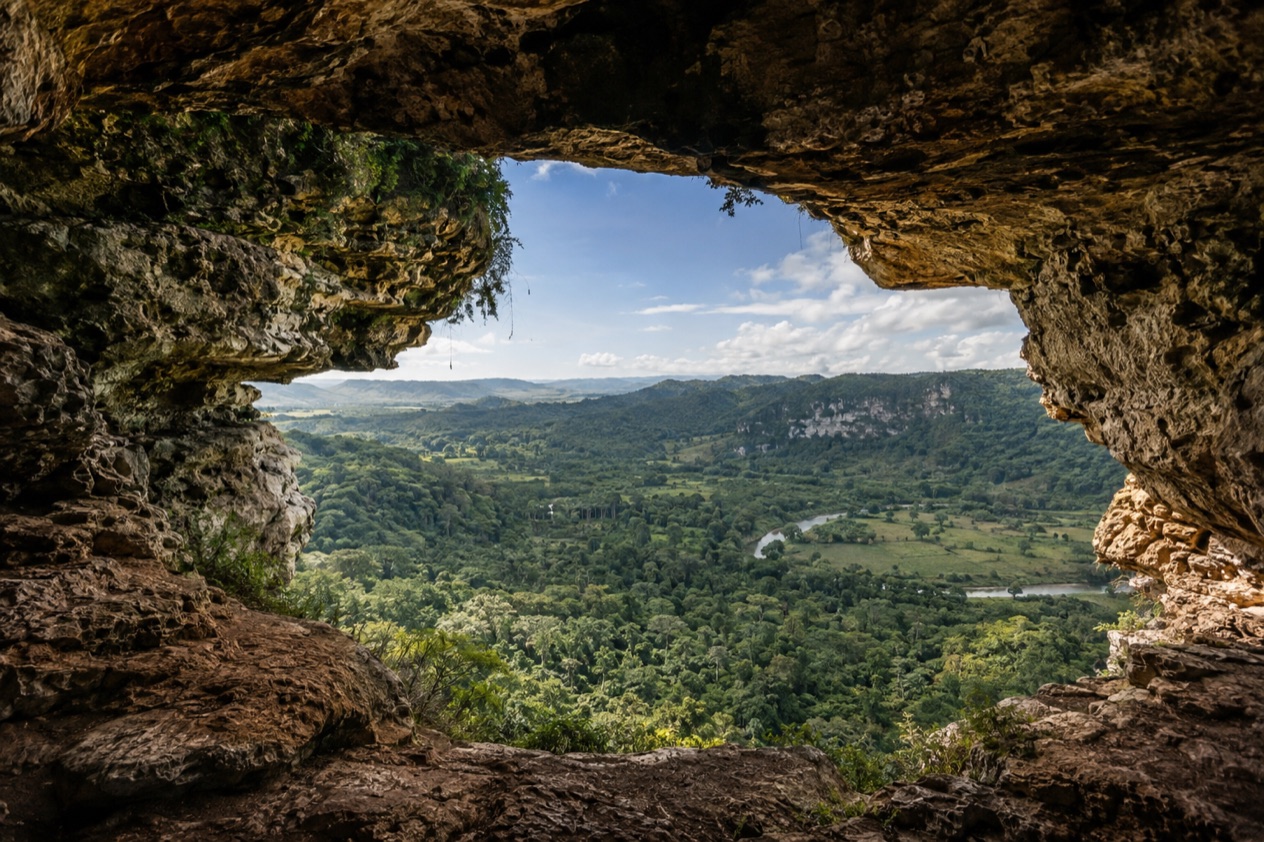
Yes, if you want a view that feels earned without committing a whole day, and it suits couples, friends and families with older children who enjoy a little adventure. The cave sits at the top of a cliff, and the reward is the opening itself: a wide stone frame looking out over the green valley of the Río Grande de Arecibo, with the hills rolling away behind it.
Part of what sets it apart is how personal the visit feels. Many caves in Puerto Rico are large, developed attractions. Here the cave and the land around it are privately owned, the visit is led by a guide, and the safety equipment is included with admission. You are not shuffling along a rail with a crowd. You walk along a trail, enter the cave and take in the view from its window.
It is also a place with some screen fame. Scenes for Wizards of Waverly Place: The Movie, Treasure Island and Runner, Runner were filmed inside the cave, so fans of those titles often recognize the shape of the opening. Puerto Ricans and visitors from elsewhere both come, which gives the spot a lively, local feel on weekends rather than the hush of a remote site.
Compared with other things to do in the Arecibo area, such as the lighthouse park on the coast or the Taíno drawings of Cueva del Indio, this is the one built around a climb and a view. If your idea of a good day on the north coast includes a bit of dirt on your shoes, it earns its place on the list.
What to see at Cueva Ventana, Arecibo
The trailhead and the boardwalk
The visit begins in an ordinary place: the trail starts next to a Puma Energy gas station on the highway, PR-10 at kilometer 75. A boardwalk was built from the station and runs around 200 feet into the trail, so the first stretch is easy underfoot, with vegetation closing in on both sides.
Past the boardwalk the path becomes a natural trail climbing toward the cliff. This is the part where the cave stops being a photo and becomes a destination. Look up now and then, because the opening is visible from the road PR-123 and you can watch it grow larger as you climb.
The cave and its window
Cueva Ventana is a large cave at the top of a limestone cliff, and its name, Window Cave, describes it exactly. Inside, the rock frames a broad opening, and the light that pours through changes the mood of the chamber by the hour. Stone like this is shaped slowly by water, which is why the walls look sculpted rather than cut.
The guided tour lasts 45 minutes, and the guide handles the safety equipment that comes with your admission. Take your time at the opening itself. The view across the valley is the moment most visitors remember, and it is the place for photographs, so keep a free hand and a secure grip on your phone or camera.
The valley view
From the cliff edge of the cave you look down over the Río Grande de Arecibo valley, a patchwork of greens that is typical of the karst country in this part of the island. On a clear day the layers of hills fade into one another. After a rain the colors deepen and low cloud can drift through the valley, which makes the view moodier and often prettier.
Later in the day the light turns warm and the cliff glows. If you visit on an evening tour, the experience changes character completely, with the valley darkening below you and the cave feeling more enclosed.
Hours, tickets and rules
Admission includes the safety equipment you need and a guided tour that runs about three quarters of an hour. Nightly tours are offered on Wednesdays and Thursdays.
| Site | Open | Admission |
|---|---|---|
| Cueva Ventana guided tour | Daily visits; nightly tours on Wednesdays and Thursdays | Includes safety equipment and a 45-minute guided tour |
The cave and the surrounding land are privately owned, so you visit on the terms of the owners rather than as in a public park. Entry is through the guided tour, which includes the safety equipment. Weekends are the busiest days, with visitor numbers highest from early morning until an hour before nightfall.
How to get to Cueva Ventana, Arecibo
The easiest way to find the cave is to head for the gas station. The trail begins adjacent to a Puma Energy station along PR-10 at kilometer 75, in the municipality of Arecibo. Arecibo is the largest municipality in Puerto Rico by area, so it helps to set your navigation to the trailhead rather than to the town itself.
There is a small parking lot on a plateau behind the gas station. Because it is small, arriving earlier in the day gives you a better chance of an easy spot, particularly on weekends when the cave draws its biggest crowds.
As a landmark, the cave is visible from PR-123, which can help you confirm you are in the right valley. The access, though, is from the trail behind the station and not from that road.
Arecibo has a small airport, Antonio (Nery) Juarbe Pol Airport, but it is noncommercial and has no airline flights. Travelers arriving by air will land elsewhere on the island and continue to Arecibo by road.
When to visit Cueva Ventana, Arecibo
For the quietest visit, aim for a weekday. Saturdays and Sundays bring the largest crowds, from early morning until an hour before nightfall, and the small parking lot and the trail feel it. On a weekday, the opening may be easier to photograph away from the heaviest weekend crowds.
Time of day shapes the experience too. Morning light is soft on the valley and the climb is cooler, which matters in Puerto Rico’s warm, humid climate. Later in the day the light turns golden. Wednesday and Thursday evenings add the nightly tours, which are worth planning around if you want to see the cave after dark.
The island has a drier season from about December to April and a wetter one from about May to November, so a trail like this is usually more pleasant, and less muddy, in the drier months. In the wetter months, showers can make the path slick, and the valley may be hazy or cloudy.
The Atlantic hurricane season runs from June 1 to November 30, with the peak on September 10 and most activity between mid-August and mid-October. If you travel in those months, follow the National Hurricane Center and local official alerts, and keep your plans flexible.
Tips for your visit
Wear shoes with real grip. The boardwalk is only the start, and the trail beyond is natural ground that climbs toward a limestone cliff. Bring water, a light layer of clothing you do not mind getting dirty and a small bag that sits close to the body so your hands stay free on the climb.
Plan on a short outing. The guided tour itself takes 45 minutes, so allow additional time for the walk and photos. A weekday arrival leaves breathing room, and the small parking lot is easier to manage when you are not competing with the weekend crowd.
Because Arecibo is large and varied, the cave pairs well with other stops. The Punta Los Morrillos Lighthouse, built in 1898 and still in use, sits in a small park by the sea. Cueva del Indio is an archeological site with Taíno drawings. The Arecibo Observatory, where the great telescope collapsed on December 1, 2020, still has a visitor center, the Ángel Ramos Foundation Visitor Center, which opened in 1997 and stayed operational afterward.
If you are thinking of a beach afterward, Arecibo has several, including Los Morillos, Los Negritos, Poza del Obispo and Las Tunas, but Pozo del Obispo Beach is considered dangerous. Conditions change from day to day and beach to beach, and where a flag, sign or lifeguard is present you follow it.
Families with older children who like adventure will enjoy it. Because the visit follows a trail to a cave at the top of a limestone cliff, consider whether that route suits your group.
Good to know before you go
U.S. citizens need no passport and no visa to visit Puerto Rico, and the currency is the U.S. dollar. Spanish and English are both official, and a few words of Spanish are always appreciated by guides and shopkeepers. Keep your valuables close on the trail and in the parking lot, as you would anywhere. If you come in May, the town celebrates its patron saint festival, Fiestas Patronales de San Felipe Apostol, with parades, games, artisans, amusement rides, regional food and live entertainment, a fun addition to a cave day.
Sources
- Wikipedia, Cueva Ventana (https://en.wikipedia.org/wiki/Cueva_Ventana), checked October 8, 2026
- Wikipedia, Arecibo (https://en.wikipedia.org/wiki/Arecibo,_Puerto_Rico), checked October 8, 2026
- Wikipedia, Río Camuy Cave Park (https://en.wikipedia.org/wiki/Camuy_Caves), checked October 8, 2026
- NOAA National Hurricane Center, Climatology (https://www.nhc.noaa.gov/climo/), checked October 8, 2026
To plan your stay
- Best Time to Visit Puerto Rico: Dry Season, Hurricane Season, Beaches and Festivals
- Where to Stay in Puerto Rico: San Juan, Rincon, Vieques and the Best Areas for Your Trip
- Getting Around Puerto Rico: Rental Cars, Tolls, Carros Publicos and Ferries to Culebra and Vieques
- Know Before You Go to Puerto Rico: ID, Money, Getting Around and Local Customs