
On Flamenco Beach the first ferry crowd walks across the pale sand toward two rusting Sherman tanks painted with graffiti, while pelicans drop into water the color of sea glass. Puerto Rico has hundreds of beaches, from palm-lined town strands on the north coast to empty crescents on the small islands off the east. The best of them reward a full day for swimmers, snorkelers, surfers and families.
Which are the best beaches in Puerto Rico?
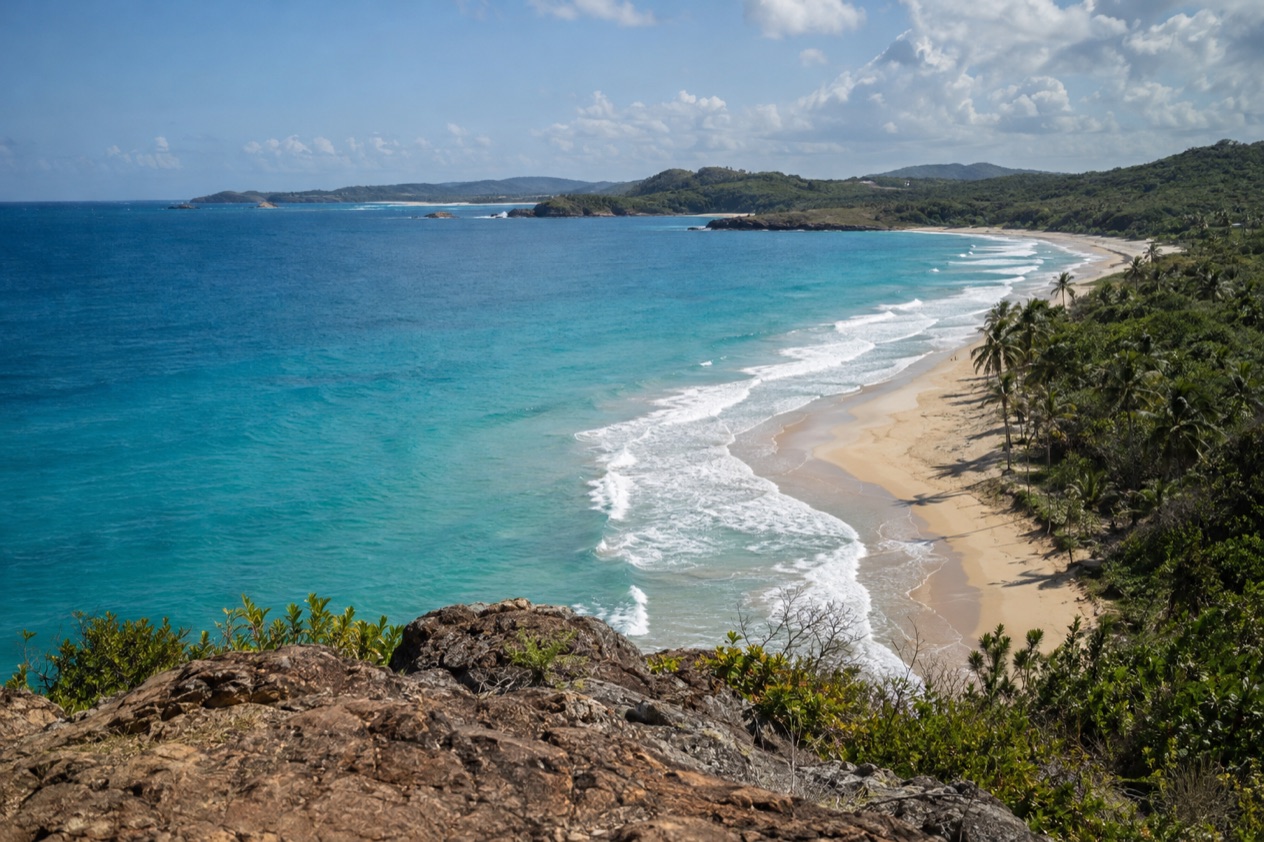
The best beaches in Puerto Rico are mostly on the small islands of Culebra and Vieques, with Flamenco Beach as the one almost everyone names first, though the main island has fine stretches of its own, especially around Luquillo. The island rewards anyone who is willing to take a ferry or a short flight, because the quieter sand tends to sit a little farther out.
Flamenco Beach, Culebra
Inside the Culebra National Wildlife Refuge lies Flamenco, a broad horseshoe of light-colored sand with transparent, knee-deep water. It is the beach that put Culebra on the map, and the old military tanks left on the sand give it a character no other Caribbean beach has. Hills of dry forest close the bay on both sides, so the view from the middle of the sand is almost a full circle of green and turquoise.
A short flight or the public ferry from Ceiba is how you get to Culebra, a small island off the northeast coast. Dewey is its only town, and you will find a quiet harbor there rather than any large resorts.
Travelers navigate the island by way of golf carts and bicycles for hire, a setup that matches its unhurried rhythm. Plan Flamenco as a full day, with a morning swim and a late walk to the tanks when the light turns gold.
As on any beach with open water, conditions change from day to day. Look for flags, signs or a lifeguard and follow them where they are present. Feral chickens wander much of the island and often turn up near the sand, which children usually find funny.
| Site | Open |
|---|---|
| Culebra National Wildlife Refuge (public areas and trails) | Daily, 6:00 AM to 6:00 PM |
Zoni and Tortuga, the quiet ends of the map
Zoni Beach lies at the eastern end of Culebra. It is a long, quiet stretch that sees far fewer visitors than Flamenco, so it suits anyone who wants to spread a towel and hear only the surf. Reaching it is part of the pleasure, since the road runs out along the island’s dry, scrubby east side.
Tortuga Beach on Culebrita, a small islet off Culebra, is protected by the wildlife refuge. It is the sort of place people mention years later, a remote beach reached by boat that feels far from everything. Leatherback, green and hawksbill turtles use the beaches of Culebra for nesting, so you may see signs of them, and a chance sighting is a gift rather than something to count on.
Vieques: Red, Blue and Caracas
Vieques is best known for its eastern beaches, including Caracas Beach and La Chiva. Much of the island belonged to the U.S. Navy until 2003, and those former lands are now a national wildlife refuge. Certain spots welcome visitors, yet large sections stay off limits, so keep to the beaches and trails that are accessible and obey all posted signs.
The island is about twenty miles long and promoted as a sleepy, unspoiled place with deserted beaches. It is reached by ferry from Ceiba, several times a day, or by a short flight from Ceiba, or from San Juan in about half an hour. Many visitors pair a beach day with a night on Mosquito Bay, where kayaking can be arranged through local vendors.
Luquillo on the main island
At Luquillo, Balneario La Monserrate is the main family beach, while La Pared draws surfers. It is the easy choice if you are staying near San Juan and do not want to cross to an island. Beyond town, the Northeast Ecological Corridor Nature Reserve begins and runs down the coast, a long stretch of wild shore where leatherback turtles can sometimes be encountered at certain times of year.
Which beaches are best for swimming, snorkeling and surfing?
For snorkeling, Culebra is the best place to start, with Tamarindo and Carlos Rosario beaches the usual picks, while surfing belongs to the Atlantic-facing north and west coasts, with Rincon as the surf town. Swimming depends on the day more than on the beach, so read the water before you go in.
Snorkeling on Culebra
Green sea turtles can often be spotted grazing on the seagrass at Tamarindo Beach, a snorkeling spot on the island’s west side. Float quietly and keep your distance, and the turtles tend to ignore you as they graze.
Carlos Rosario Beach is a short walk from Flamenco and has a coral reef close to shore. That makes it an easy add-on to a Flamenco day, since you can leave the crowd behind and drift over reef fish. Bring your own mask and fins, and wear sunscreen, because the sun is strong and the shade is thin.
Surfing: winter swells and Rincon
Winter brings large swells to the north and west coasts, which meet the Atlantic. Rincon, on the west side, is the island’s surf town, and winter is its surf season. Rincon has surf breaks for different ability levels, but conditions determine which are suitable on a given day. Summer is the opposite season, when the water usually flattens and snorkeling takes over.
Even on a good beach, surf and currents shift quickly in winter. Before you head into the waves, take some time to study the water, and when a flag, sign or lifeguard is there, do what it says. Spectators do well to sit back from the wash, since big sets can run higher up the sand than expected.
Swimming: reading the day
The sea stays warm all year, so swimming is a question of waves rather than temperature. The north coast is open to the Atlantic, the south coast faces the Caribbean, and Culebra and Vieques have both sheltered coves and exposed shores. No beach is calm every day, and conditions vary from morning to afternoon.
In certain years, when spring and summer arrive, sargassum seaweed may drift onto the east and south coasts, where it can gather on the sand and turn the water cloudy in spots. If it is there, check conditions at other beaches before changing plans.
Which Puerto Rico beaches are good for families?
Flamenco and Luquillo are the easy family choices, because both give you wide sand, shade nearby and something to look at besides the water. What a family needs most is a beach where the day does not hinge on the swimming, and these two deliver that.
Flamenco with kids
Two old Sherman tanks that once served as targets for practice and are now coated in paint usually win kids over. They climb into the story of the island faster than any museum label. The shallow, clear water at the edge of the bay also makes it easy to build a day of wading and sandcastles, with an adult always within arm’s reach.
Add the feral chickens strolling past towels and the pelicans diving offshore, and the beach entertains itself. Pack water, snacks and shade, and go to the food kiosks for a lunch of fried fish or empanadillas when the sun is highest.
Luquillo and the northeast coast
Luquillo is a good base for a family that wants the beach and the rainforest in the same day. The town sits between the Atlantic and El Yunque, so you can swim in the morning and drive toward the green mountains in the afternoon. Families also like the roadside food stands near town, a classic for fritters like alcapurrias, fried dough filled with meat.
The beaches along this coast face the Atlantic, so check the water first and follow any flags or lifeguard signs. On days when the surf looks heavy, a sand walk, shell hunt and shaded picnic are a better plan than wading in.
A calm-pace island day
Culebra’s pace suits families who like to wander. Dewey’s harbor stays peaceful, and close to the middle of July, boats parade there to honor the Virgen del Carmen, the fishermen’s patron saint, in a celebration held by the island. Watching it from the dock is an easy, memorable way to fill a late afternoon.
Good to know before you go
For U.S. citizens, neither a passport nor a visa is required, and the U.S. dollar serves as the currency. The Atlantic hurricane season runs from June 1 to November 30, with the peak around September 10, so follow the National Hurricane Center and local official alerts when you plan a trip in those months.
Fresh water is precious on Culebra, since the island has no rivers or streams, so use it sparingly. Bring sunscreen, a hat and your own snorkel gear, and check the ferry from Ceiba before you plan a day trip.
Sources
- U.S. Fish and Wildlife Service, Culebra National Wildlife Refuge (https://www.fws.gov/refuge/culebra), checked October 8, 2026
- Wikipedia, Culebra (https://en.wikipedia.org/wiki/Culebra,_Puerto_Rico), checked October 8, 2026
- Wikipedia, Vieques (https://en.wikipedia.org/wiki/Vieques,_Puerto_Rico), checked October 8, 2026
- Wikipedia, Luquillo Beach (https://en.wikipedia.org/wiki/Luquillo_Beach), checked October 8, 2026
- NOAA National Hurricane Center, Climatology (https://www.nhc.noaa.gov/climo/), checked October 8, 2026
To plan your stay
- Best Time to Visit Puerto Rico: Dry Season, Hurricane Season, Beaches and Festivals
- Where to Stay in Puerto Rico: San Juan, Rincon, Vieques and the Best Areas for Your Trip
- Getting Around Puerto Rico: Rental Cars, Tolls, Carros Publicos and Ferries to Culebra and Vieques
- Know Before You Go to Puerto Rico: ID, Money, Getting Around and Local Customs