
On an April evening in Old San Juan, the blue cobblestones hold the last of the day’s warmth, kids chase each other across Plaza de Armas, and somewhere a vendor is scraping ice for a piragua. Out west, surfers are packing up as the winter swells fade, while up in the coffee hills the air smells of blossom and roasting beans. April is the tail end of the drier season, and it gives the whole island a relaxed, sunny rhythm for beaches, rainforest walks and long meals.
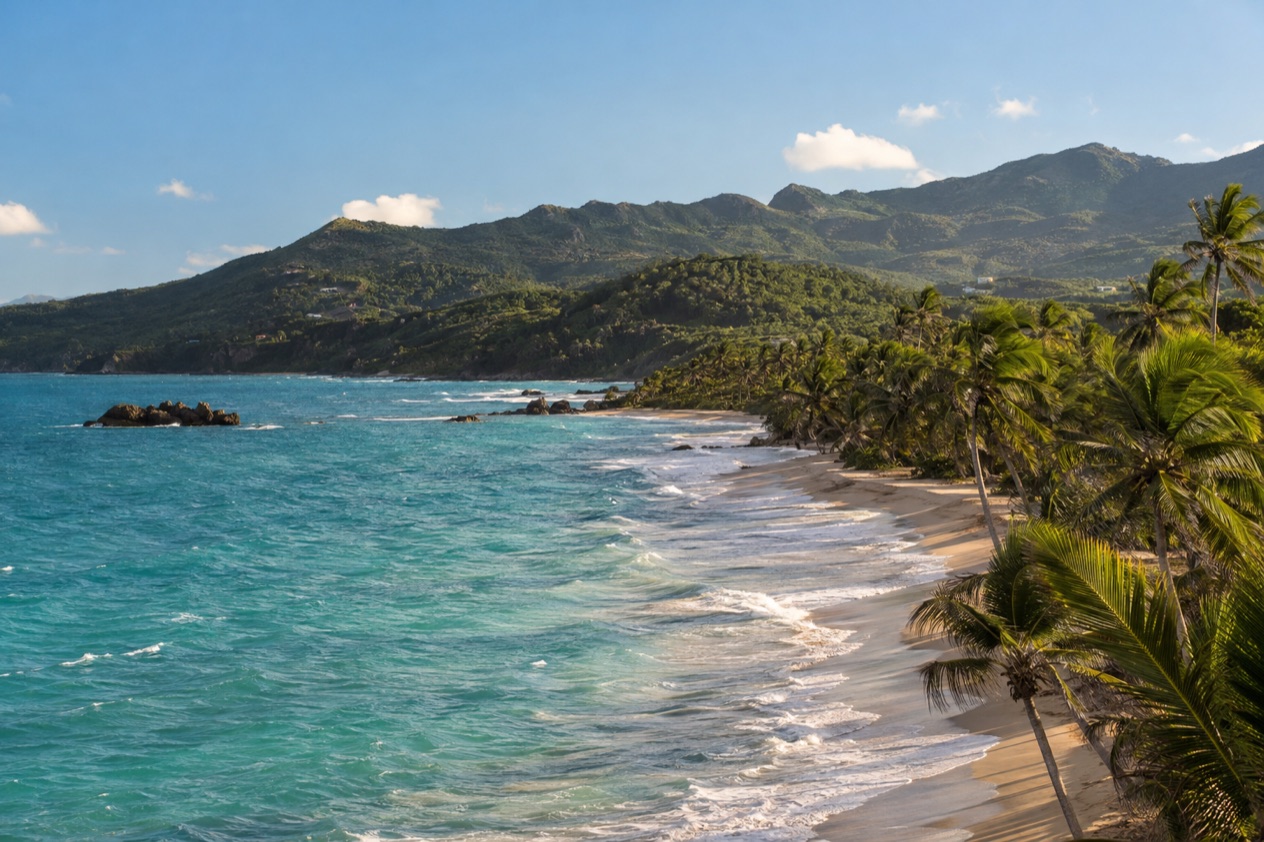
What is the weather like in Puerto Rico in April?
The north coast and the central mountains are the wettest parts of the island, while the south and west coasts are generally drier, though showers remain possible. The little island of Culebra is the mildest by day because the trade winds sweep it constantly.
| Place | Region | Average high (°F) | Average low (°F) | Rain (in) | Rain days | Sea (°F) |
|---|---|---|---|---|---|---|
| San Juan | North coast | 86.2 | 74.0 | 4.60 | 7.5 | 80.8 |
| Fajardo | Northeast | 85.9 | 73.3 | 2.99 | 6.3 | 82.2 |
| Culebra | East islands | 78.9 | 76.7 | 1.52 | 3.9 | 81.6 |
| Ponce | South coast | 83.6 | 72.2 | 2.15 | 5.3 | 82.5 |
| Rincon | West coast | 83.3 | 74.5 | 1.63 | 4.2 | 84.0 |
The contrasts are easiest to feel in the rain. San Juan, with the most rain of these places at 4.60 inches, still sees mostly sunshine, and the showers tend to arrive as short bursts that pass quickly.
Rincon in the west is drier, with only a handful of rainy days, and its sea is the warmest of the group. Ponce keeps the south hot and bright by day. On Culebra, the difference between daytime and nighttime temperatures is the narrowest, which keeps its evenings mild. Since the water sits in the low 80s, swimming and snorkeling stay comfortable everywhere, though every beach and every day comes with its own set of conditions.
Where to go in Puerto Rico in April
San Juan and the north coast
San Juan is the island’s gateway and a good place to start, with its forts, the colorful lanes of Old San Juan and the beaches of Condado and Isla Verde. Since April brings the heat, the smartest plan is to stroll the old walls in the morning, linger over a mofongo lunch (fried plantains mashed, usually with garlic and pork or seafood), then take a dip or find shade later in the day.
This is also the wettest part of the island among our places, so a passing shower is possible any day. It tends to cool the streets rather than ruin them, and the museums and cafés of the old city are close by. Evenings are lively, when the plazas fill with families and musicians.
The northeast and the islands: El Yunque, Fajardo, Culebra and Vieques
The northeast pairs El Yunque rainforest, where waterfalls and humid green trails mean sudden showers can come at any moment, with the marinas around Fajardo. From the port of Ceiba, the public ferries run to Culebra and Vieques, where the beaches are among the island’s most loved, including Flamenco on Culebra.
Fajardo’s Laguna Grande and Mosquito Bay on Vieques are bioluminescent bays. These bays shine throughout the year, and the darkest nights without a moon offer the finest display, which means a kayak paddle or a boat might set the water sparkling around you. Check the moon phase when planning, and follow whatever rules apply at each bay.
The west and south: Rincon, Aguadilla and Ponce
Rincon is the surf town, and by April the big winter swells have mostly eased, which makes it a good moment for sunsets, snorkeling and relaxed beach hopping around Aguadilla. The west coast is among the drier parts of the island and its sea is the warmest on our list. Conditions still vary, so follow any flag or sign at the beach.
Ponce, on the south coast, is hot and bright, with its plaza, the red-and-black firehouse and its museums making a good morning, and the afternoon best spent in the shade. In the south, La Parguera in Lajas has another bioluminescent bay.
The central mountains
The mountains hold the coffee towns and noticeably cooler air than the coast. April is a pleasant time for a drive through the hills, a stop at a coffee farm for a cup of the island’s own brew, and a roadside lunch of lechon asado, roast pork with crackling skin. Afternoon clouds and showers are common in the hills, so plan the views for the morning.
What to do in Puerto Rico in April
Holy Week and Easter traditions
Holy Week moves every year and sometimes falls in March, but when it lands in April it brings processions through town centers, church services and a quieter mood on the Good Friday stretch. Families gather for big meals, and many head to the beaches over the long weekend.
Seafood and sweets take over the table. You may see bacalao (salt cod) dishes and tembleque, a silky coconut pudding dusted with cinnamon.
Beaches, snorkeling and the bays at night
With the sea in the low 80s, April is a very good month for snorkeling at Culebra and Vieques, for swimming around Rincon and for a day on the beaches near Fajardo. On certain beaches, sea turtles lay their eggs during spring and summer, and there is a chance you will see one while you are in the water.
After dark, the bioluminescent bays come into their own on moonless nights.
Eating your way around the island
Kiosks along the roadside serve alcapurrias (fritters of taro and plantain filled with meat), tostones (twice-fried green plantain slices) and cold coconut water. Pasteles, a Christmas favorite, are also served in some places beyond the holidays. Finish with a piragua, shaved ice with fruit syrup, on a hot afternoon. Coffee from the mountains and the local rum are the island’s best-known drinks.
Is Puerto Rico busy in April?
April is moderately busy, with the crowds of the winter high season thinning out and a bump around Holy Week and Easter whenever they fall. Because Puerto Rico is a domestic trip for mainland Americans, spring breaks and the Easter weekend bring families from the mainland and from within the island.
Old San Juan, the popular beaches near the capital and the ferry port at Ceiba tend to feel it most on holiday weekends. Culebra and Vieques draw day-trippers and overnight guests.
The calmer corners are the central mountains, the south around Ponce and the quieter west coast beyond Rincon’s main strip. Midweek visits to El Yunque and the forts of San Juan feel more relaxed than weekends.
What to pack for Puerto Rico in April
On the coast, pack for sun and humidity with light, breathable clothes and swimwear, while the mountains and the rainforest call for an extra layer and shoes with grip. Evenings stay warm almost everywhere, so a heavy jacket is unnecessary.
- Light cotton or linen clothing, plus a swimsuit or two that dry quickly.
- Sunscreen, a hat and sunglasses for long beach days and strong sun.
- When rain hits fast near San Juan, El Yunque and the hills, pack a light rain jacket or a compact umbrella.
- Sturdy sandals or water shoes for rocky shores, and closed shoes for rainforest trails.
- A light sweater for cool mountain mornings and air-conditioned restaurants.
- Insect repellent for evenings near mangroves and the bioluminescent bays.
Good to know before you go
April falls outside the official Atlantic hurricane season, which runs from June 1 to November 30 and covers the Caribbean Sea, though the wetter months begin soon after. In certain springs, sargassum seaweed may arrive on east and south coasts, which means some beaches could see it. Traveling from the mainland to Puerto Rico requires no passport or visa for U.S. citizens.
Is April a good time to visit Puerto Rico?
Yes, April is a very good time, and the west and the east islands are especially pleasant, with Rincon, Culebra and Vieques offering sunny days, warm water and little rain. The south coast around Ponce is also dry and bright if you like heat.
Compared with March, April has less of the winter crowds and surf swells, and the sea has warmed a little more. March can feel busier with spring break, while April offers a calmer pace outside the Easter stretch. Compared with May, April is still in the drier season, whereas May tends to bring the first of the wetter months, with more frequent afternoon showers.
The north coast and the mountains see the most rain, while the south and west coasts are generally drier. The trade winds keep the heat bearable, particularly on the small eastern islands, and evenings are warm enough to eat outside.
What makes April stand out is how many things overlap: the last of the dry-season weather, the sea at a comfortable temperature, Holy Week processions in the old towns and bioluminescent bays glowing on moonless nights. It ends with a piragua in one hand on a warm plaza evening.
Sources
- NOAA NCEI, monthly normals 1991-2020, station RQW00011641 (San Juan L M Marin International Airport), checked October 8, 2026
- Open-Meteo Marine API, average 2015-2024, checked October 8, 2026
- Open-Meteo / ECMWF ERA5, 1991-2020 normals calculated on the grid cell 18.0111N 66.6141W, checked October 8, 2026
- Open-Meteo / ECMWF ERA5, 1991-2020 normals calculated on the grid cell 18.3403N 67.2499W, checked October 8, 2026
- NOAA NCEI, monthly normals 1991-2020, station RQW00011630 (Roosevelt Roads (Ceiba)), checked October 8, 2026
- Open-Meteo / ECMWF ERA5, 1991-2020 normals calculated on the grid cell 18.3N 65.28W, checked October 8, 2026
- NOAA National Hurricane Center, Climatology (https://www.nhc.noaa.gov/climo/), checked October 8, 2026
To plan your stay
- Things to Do in Puerto Rico: Old San Juan, Beaches, Bioluminescent Bays and Island Food
- Where to Stay in Puerto Rico: San Juan, Rincon, Vieques and the Best Areas for Your Trip
- Getting Around Puerto Rico: Rental Cars, Tolls, Carros Publicos and Ferries to Culebra and Vieques
- Know Before You Go to Puerto Rico: ID, Money, Getting Around and Local Customs