
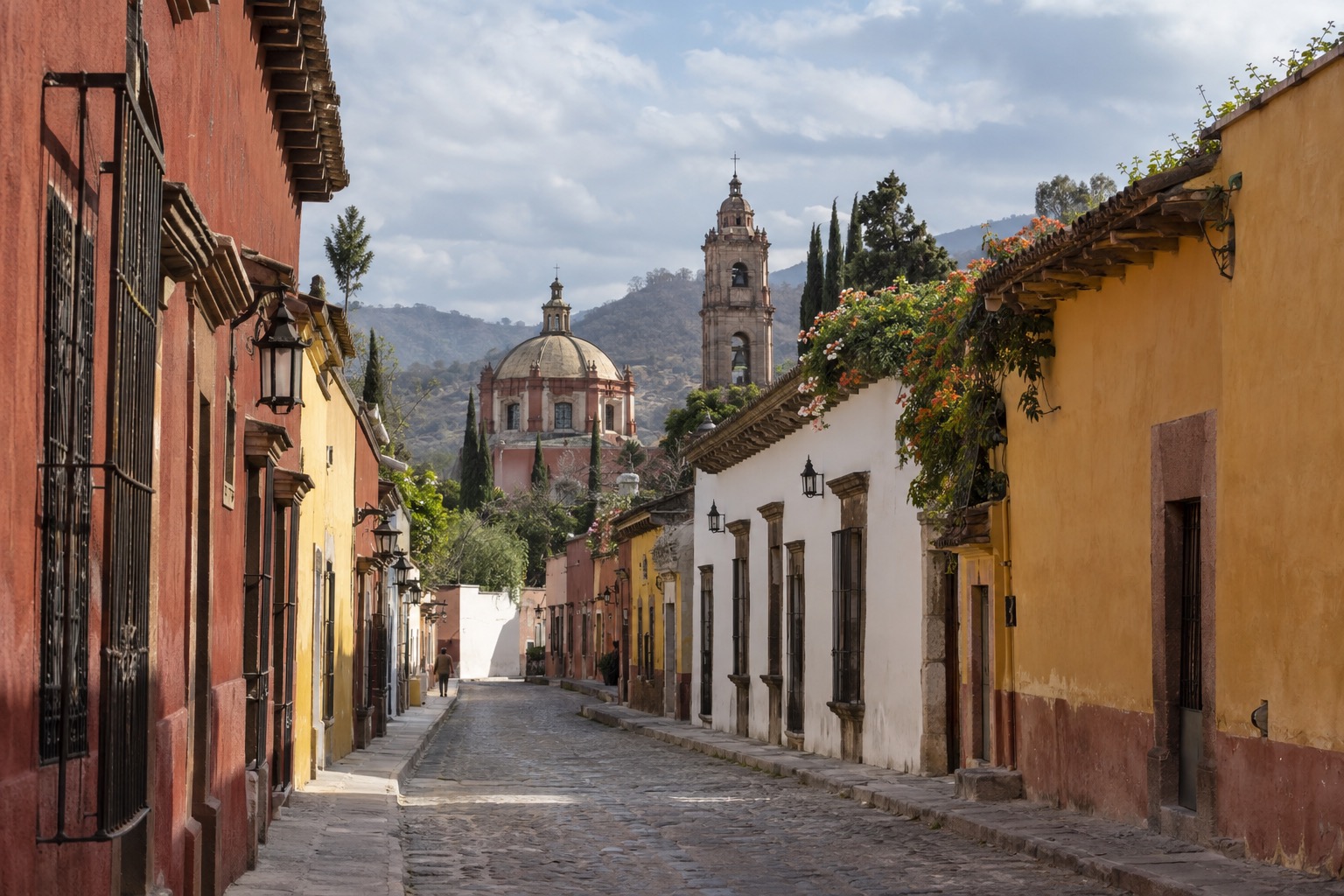
On a clear November evening, the pink stone of the Plaza de Armas turns the color of a ripe peach, and the smell of enchiladas potosinas drifts from the portales. The highland air is dry and cool after dark, and the city feels like its own place, far from any beach. Spring brings the Holy Week processions and the biggest crowds, summer turns the hills green under afternoon storms, and the fall and winter months are calm, sunny and made for long walks through the colonial center.
When is the best time to visit San Luis Potosi?
The best months are October through March for most travelers, with November and February the easiest to love: sunny days, cool evenings and very little rain. Early spring works too, before the heat of April and May settles in.
For sightseeing, the cooler months suit the city’s way of being seen on foot. You wander between the cathedral, the Plaza de Aranzazu and the Museo Regional Potosino, stop for a coffee under the arcades, and still have energy for the evening.
Beach and sea plans do not belong here, since San Luis Potosi sits in the high interior. The water you chase is in the Huasteca region to the east, where the rainy months from June to September keep the rivers and waterfalls full and the land startlingly green.
For budget and quiet, look at the weeks outside Holy Week, Christmas and the summer school vacation. Families will find the city easygoing at any time of year, with plazas where children can run, though midsummer afternoons often end in a downpour. Spring break in March is a loud affair on the coasts, and here it barely registers, which is a point in the city’s favor for families who want to avoid the noise.
San Luis Potosi weather by month
Days are warm nearly all year, nights are properly cool in winter, and the rain gathers into one clear season.
| Month | Average high (°F) | Average low (°F) | Rain (in) | Rain days |
|---|---|---|---|---|
| January | 76.1 | 44.8 | 0.46 | 2.5 |
| February | 81.0 | 47.8 | 0.43 | 1.6 |
| March | 86.4 | 52.0 | 0.52 | 2.3 |
| April | 92.1 | 57.2 | 1.24 | 2.6 |
| May | 93.9 | 61.3 | 1.75 | 5.1 |
| June | 90.7 | 63.3 | 3.41 | 8.6 |
| July | 87.1 | 61.7 | 3.19 | 7.7 |
| August | 87.4 | 61.7 | 3.00 | 7.9 |
| September | 84.2 | 61.2 | 3.77 | 9.9 |
| October | 82.6 | 55.8 | 1.55 | 5.3 |
| November | 79.2 | 50.4 | 0.64 | 2.8 |
| December | 78.8 | 45.9 | 0.31 | 1.5 |
Winter is the dry, sunny stretch, with chilly mornings and evenings that call for a jacket even when the afternoon feels like spring. Heat builds through April and May, the hottest part of the year, and then the rain arrives in earnest.
Summer rain tends to fall as stormy afternoon downpours that clear the air, while September is the wettest month and the rain becomes more frequent. By October the skies open up again and the city dries out quickly.
When is San Luis Potosi cheapest and least crowded?
The quietest stretches come in the weeks between the big holidays: much of January after the New Year rush, the months of late winter, and the fall once the summer vacation has ended. Rooms are easier to find in those weeks, and the plazas and museums feel unhurried.
The busiest times are Holy Week and Easter week, when families come from all over Mexico for the processions. Christmas and New Year bring visitors home to relatives, and the Mexican school vacation from about early July to late August fills hotels as well. Holiday weekends at any time of year tend to bring more people, and rooms in the center can be harder to find then.
Beaches are not part of this picture, so the crowd question is really about the historic center and the day trips to the Huasteca. Both get busier in the peak weeks, especially the waterfalls and river spots in summer, while the rest of the year they are calmer and easier to enjoy at your own pace.
Which months should you avoid in San Luis Potosi?
Avoid April and May if you dislike heat, and June through September if you dislike getting caught in rain. Neither is a reason to skip the city, only a reason to plan around it.
The late spring heat is dry and strong, best handled with long lunches indoors and sightseeing in the early morning or after sunset. From June the afternoons turn stormy, and September is the rainiest month, when umbrellas are part of the routine and some outdoor plans in the Huasteca can get washed out. Sargassum, the seaweed that troubles Caribbean beaches in spring and summer, has nothing to do with this inland city.
Winter has its own character. Cold fronts can drop nights well into the 40s and make early mornings sharp, something travelers who picture Mexico as always hot may not expect. Days stay sunny and pleasant, so a warm layer is all it takes. The U.S. State Department rates the state of San Luis Potosi at Level 2, Exercise Increased Caution, the same baseline level as most of the country.
Festivals and events in San Luis Potosi through the year
Holy Week and the Silent Procession
Holy Week is the city’s defining moment. On Good Friday evening the Procesión del Silencio winds through the historic center, with hooded brotherhood members walking slowly behind sacred images and the only sound the beat of a drum. It is solemn and striking, and the stone streets seem made for it.
Along the route and in the days before, the plazas fill with families, food stalls and church services. Come early to find a spot along the procession, and expect hotels in the center to be fully booked around Easter. The weather is hot and dry by then, so evening is the comfortable time to be out.
Summer fairs and rainy-season green
Summer brings regional fairs, and the Feria Nacional Potosina, usually held in August, is the big one. It fills fairgrounds with music, concerts, crafts and regional food, and draws families from across the state during school vacation.
This is also the season when the hills around the city turn green and the Huasteca rivers run full. Afternoon storms are part of the rhythm, so morning is the time for outings and the evening is for dinner indoors, perhaps with tacos rojos or a plate of enchiladas potosinas, the city’s best-known dishes.
Día de Muertos, Xantolo and the winter holidays
Día de Muertos, October 31 to November 2, is marked with altars, marigolds and cemetery visits across the state. In the Huasteca it takes the form of Xantolo, with costumed dancers, masks and music in the towns, one of the most colorful versions of the tradition in Mexico.
December brings posadas, lights in the plazas and warm drinks against the chilly evenings, leading up to Christmas on December 25 and New Year. The center is festive, and the weather is dry and sunny by day. It is a good time for a quiet, walkable visit, provided you book your room early.
Sources
- Servicio Meteorologico Nacional (CONAGUA), normales climatologicas 1991-2020, estacion 24070 (San Luis Potosi (Obs), San Luis Potosí), checked September 29, 2026
- sunrise-sunset.org, sunrise and sunset on the 15th of the month, checked September 8, 2026
- INAH, Museo Regional Potosino (inah.gob.mx/museos/museo-regional-potosino), checked September 29, 2026
- INAH, meme page, checked September 29, 2026
- INAH, Zona Arqueologica de Tamtoc (inah.gob.mx/zonas/115-zona-arqueologica-de-tamtoc), checked September 29, 2026
- US Department of State, Mexico Travel Advisory (travel.state.gov), advisory of May 29, 2026, checked September 29, 2026