
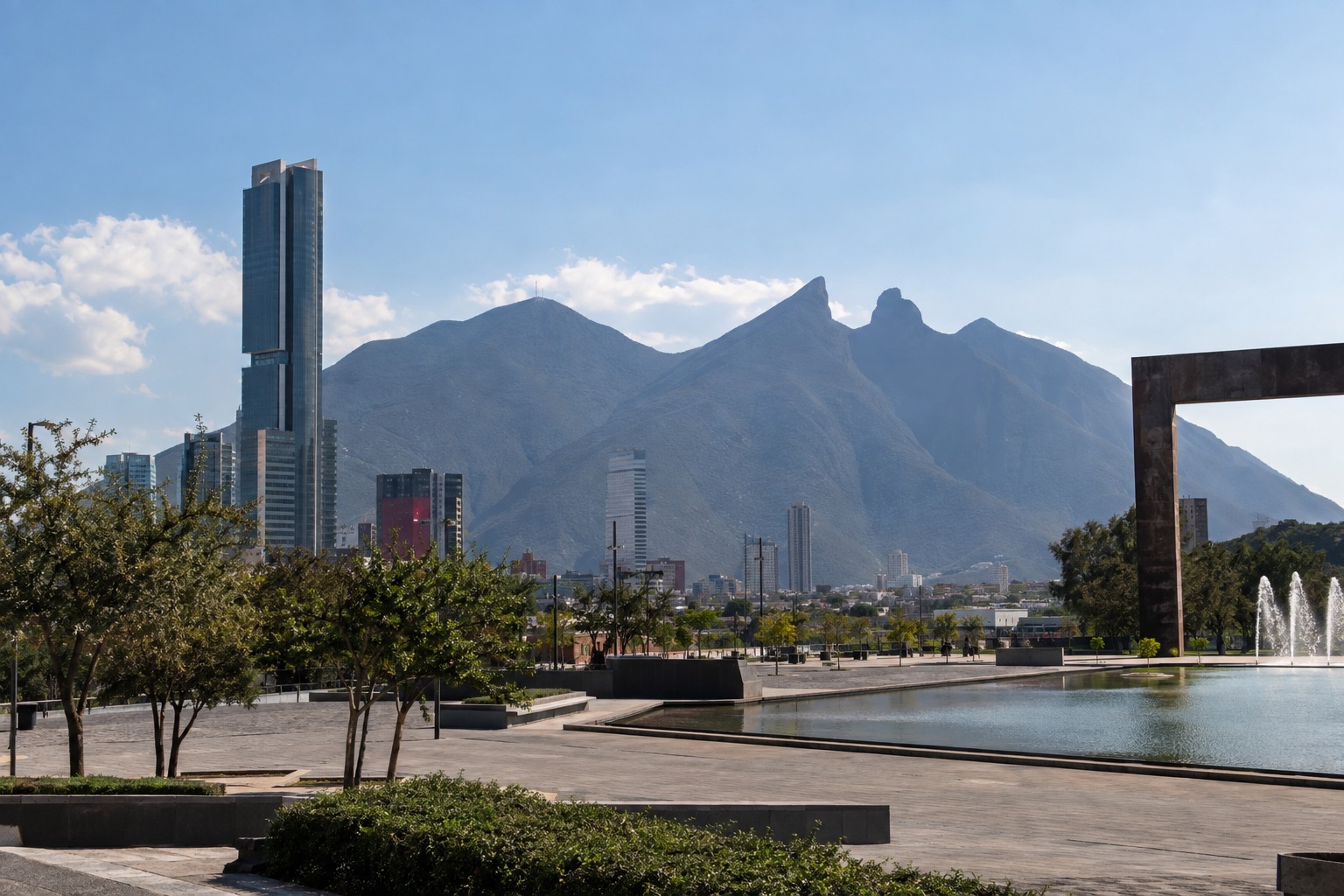
On a warm evening in Monterrey, families drift across the Macroplaza while the Cerro de la Silla, shaped like a saddle, turns violet behind the towers. Somewhere nearby a grill is turning cabrito over embers, and the smell follows you down the street. This is a northern Mexican city of mountains, steel heritage and serious appetites, made for travelers who like their sightseeing mixed with big meals and outdoor air.
What are the best things to do in Monterrey?
The best of Monterrey is a mix of a grand downtown plaza, a former steel mill turned park, mountain scenery at the edge of town and some of the best grilled meat in Mexico.
- Walk the Macroplaza, the vast heart of downtown lined with fountains, museums and the cathedral.
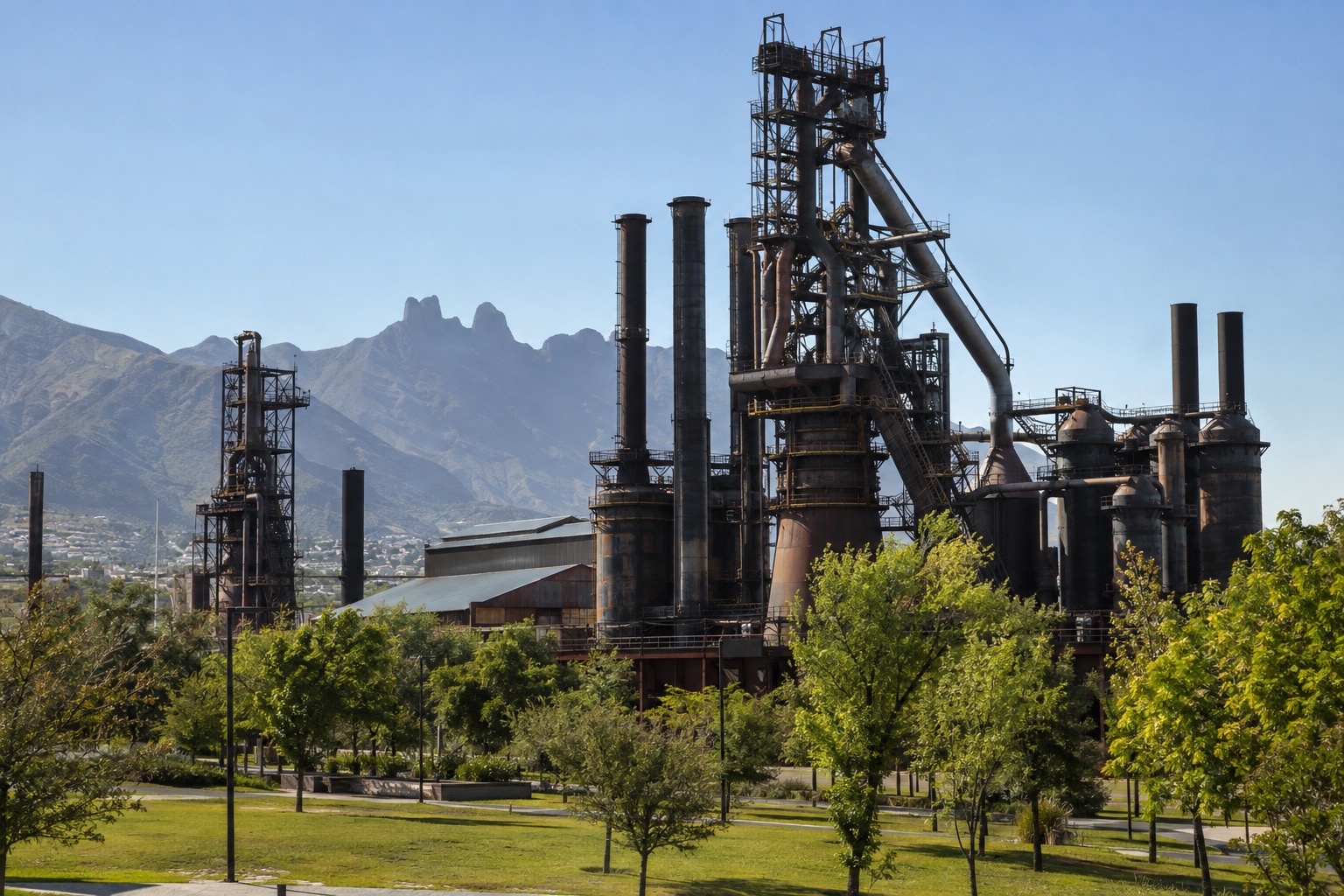
- Explore Parque Fundidora, where old blast furnaces rise over lawns, a lake and cultural venues.
- Stroll the Paseo Santa Lucía, a canal walk linking the park to downtown.
- Eat cabrito, machacado con huevo and carne asada at a local parrilla.
- Head to the Sierra Madre for canyons and hiking at Chipinque or Huasteca.
- Visit Grutas de García or the Cola de Caballo waterfall on a day trip.
- Spend an evening in Barrio Antiguo or around the Fundidora for music and drinks.
- Take the kids to the interactive museum and the park’s open spaces.
Sights and landmarks in Monterrey
The Macroplaza
Few Mexican cities have cleared such an enormous swath of their center for pedestrians. The Macroplaza, opened in the mid-1980s, strings together green lawns, fountains, sculptures and civic buildings, with the bright orange Faro del Comercio beaming a laser over the skyline at night. The old cathedral and the Museo de Historia Mexicana sit along its edges.
Walk it from end to end, ideally in the late afternoon when the heat softens and locals come out for ice cream. It is flat and easy, and a good first orientation to the city. From here Barrio Antiguo’s colorful streets are a few minutes on foot.
| Site | Detail |
|---|---|
| Macroplaza | About 40 hectares, inaugurated December 7, 1984 |
Parque Fundidora
The steel company lit its furnaces here at the turn of the twentieth century and kept them burning until the mid-1980s. Today the rusted giants stand as sculptures in a public park, and one of them holds a museum of steelmaking. Concert halls, an arena and a convention center fill the old industrial halls.
The park is large, so plan a slow loop on foot or by bike, pausing by the lake and under the furnaces at sunset, when the metal glows copper. Visitors reach it by ride-hailing or taxi from downtown. It suits history lovers, photographers and anyone who likes industrial architecture with a lawn at its feet.
Barrio Antiguo and the old center
Barrio Antiguo is the city’s oldest quarter, a grid of low colonial houses painted in bold colors, now home to galleries, bookshops, cafés and bars. Weekend afternoons bring art events, and the pace is relaxed compared with the glass towers a few blocks away.
Nearby, the Museo de Arte Contemporáneo (MARCO) is known for its striking building and rotating exhibitions, and the Plaza Zaragoza and cathedral anchor the historic core. Come in the afternoon to see the quarter wake up, and stay on for dinner.
Outdoor things to do in Monterrey
Paseo Santa Lucía
This artificial river walk runs from the Macroplaza toward Parque Fundidora, with shaded paths, bridges, murals and small plazas on the way. Boats glide along the water, and families stop for snacks at the stands that line the route.
It is at its liveliest toward evening, when the air cools and the lights come on. Walk it one way and take a boat back, or the reverse, for an easy way to link downtown with the park. It suits almost everyone, including those who want a gentle outing.
Parque Ecológico Chipinque and the Sierra Madre
Chipinque is the city’s nearest mountain escape, a nature reserve in the foothills above the wealthy San Pedro district. Pine and oak forest, lookouts over the valley and trails of different difficulty make it a favorite for early-morning hikers and cyclists.
Go in the morning, when the views are clearest and the climb is cooler. It is a short trip by car from the city, and the higher paths reward you with sweeping views toward the Cerro de la Silla. Bring water and sturdy shoes, as trails can be steep.
Parque La Huasteca
On the western edge of the metro area, Huasteca is a canyon of towering limestone walls beloved by climbers, picnickers and families. Rock faces rise sharply from the valley floor, and the light on them changes through the day.
It is best in the morning or late afternoon, when the walls glow and the air is gentler. Visitors come to walk, picnic or watch climbers work the cliffs. It suits those who want dramatic scenery without leaving the metropolitan area.
Day trips from Monterrey
Grutas de García
These caves in the mountains outside the city are a classic outing, reached by a cable car that climbs the slope before you step inside. Chambers of stalactites and stalagmites open one after another, lit to bring out their shapes and colors.
Go on a weekday morning to avoid weekend crowds, and expect a cool, damp interior that feels welcome on a hot day. It is a good choice for families and anyone curious about geology. Wear shoes with grip, as the paths can be slick.
Cola de Caballo and Santiago
South of the city, the small mountain town of Santiago is known as a Pueblo Mágico, with a pleasant plaza, local sweets and a relaxed pace. Nearby, the Cola de Caballo waterfall, whose name means horse’s tail, spills down a rocky face amid greenery.
Pair the two for a leisurely day, strolling the town in the morning and visiting the falls after lunch. It suits couples and families who want a change from the city. Local restaurants in Santiago are a good place for a long midday meal.
Smaller escapes
Beyond the big names, a few other outings fill a day nicely. Bustamante, a small town north of the city, has a cave and a quiet main square, while the lakes and dams around the metro area, such as La Boca near Santiago, offer calm views and lakeside meals.
These work best as unhurried half-day trips by car, ideally on a weekday morning when roads and viewpoints are quieter. They suit travelers who have already seen the main sights and want a slower look at the countryside, with a regional lunch to finish.
What to eat in Monterrey
Cabrito is the dish that defines Monterrey: young goat, slow-roasted over embers until the skin crackles and the meat turns tender, served with tortillas, salsa and beans. Many restaurants display the carcasses on spits in the window, a sign of how seriously the city takes it.
Breakfast brings machacado con huevo, dried shredded beef scrambled with eggs, eaten in flour tortillas. Carne asada is a weekend ritual, grilled with friends and family, and the city’s parrillas serve it with grilled onions, cheese and charred chiles. Flour tortillas are the norm here, a northern signature.
For something sweet, look for glorias, small candies of milk and pecans from nearby Linares, and for a drink, a cold local beer is the usual companion. Taquerías, from humble stands to busy family places, are the everyday option, especially late in the evening.
Things to do in Monterrey at night
Evenings in Monterrey center on Barrio Antiguo, where bars, live music and small clubs fill the old colonial streets, especially on weekends. Crowds are young, the music ranges from rock to norteño, and the mood is festive without being formal.
For something calmer, walk the Macroplaza as the Faro del Comercio lights up the skyline, or follow the Paseo Santa Lucía by the water. Around Parque Fundidora, concerts and events bring a more polished crowd. Late-night taquerías are the traditional finish to a night out.
Things to do in Monterrey with kids
Children do well in Monterrey’s open spaces. Parque Fundidora has wide lawns, bike paths and a lake, and a boat ride on the Paseo Santa Lucía is an easy hit. The Papalote Museo del Niño, an interactive science and play museum, sits right in the park and keeps younger visitors busy for hours.
The caves at Grutas de García offer a small adventure, with a cable car to start. Shade, water and sun protection matter, as the city can be hot, and distances between sights are best covered by car or ride-hailing rather than on foot. Plan outdoor time for mornings and evenings.
Good to know before you go
Monterrey is spread out, so most visitors rely on taxis and ride-hailing between districts, while the airport sits north of the city in Apodaca. The downtown core around the Macroplaza and Barrio Antiguo is the easiest part to explore on foot. Hotel stays carry a state lodging tax.
| Fee | Amount | Who pays |
|---|---|---|
| Lodging tax (Impuesto Sobre Hospedaje) | 3% | Hotel guests |
Sources
- Parque Fundidora, "Historia", parquefundidora.org / parquefundidora.mx, corroboree par Wikipedia "Parque Fundidora", checked September 29, 2026
- Macroplaza, official, macroplaza.mx; inauguration date corroborated by El Norte, "Macroplaza: icono regio cumple 40", 6 December 2024, elnorte.com, read on 29 September 2026
- OMA (Grupo Aeroportuario Centro Norte), "Informacion Tecnica Monterrey", oma.aero, checked September 29, 2026
- El Contribuyente, table "Tasas del ISH por entidad federativa 2026", elcontribuyente.mx; rate corroborated by the daily Reforma, "Se estanca recaudacion por hospedaje en NL", August 27, 2026, reforma.com, checked September 29, 2026
- U.S. Department of State, Mexico Travel Advisory (reissued May 29, 2026), section "Risks in specific areas" / State of Nuevo Leon, travel.state.gov, read live via browser on September 29, 2026