
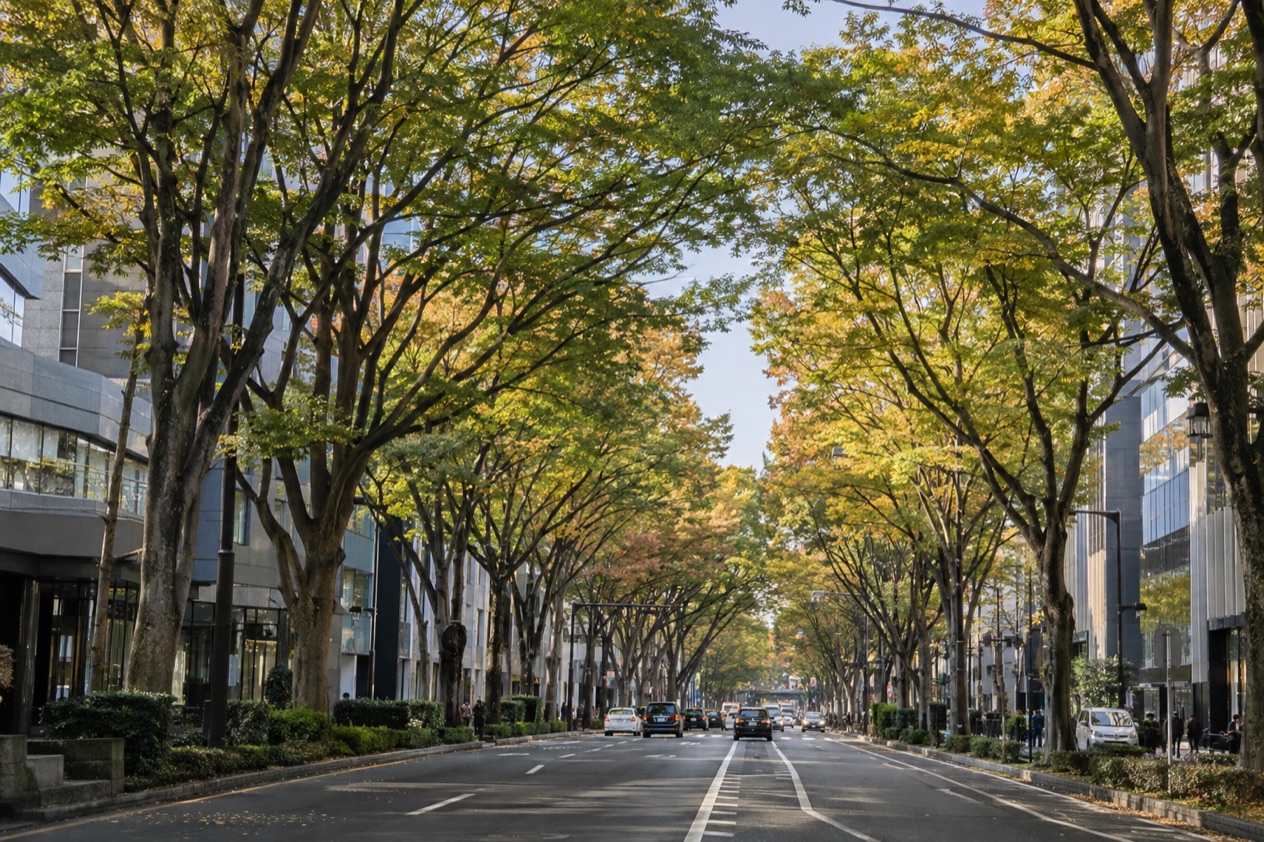
Along the side streets near the station, grills glow red and strips of beef tongue sizzle and curl, while overhead the zelkova trees of Jozenji-dori rustle in the wind. Sendai is known as the City of Trees, and the nickname fits the avenues, the river banks and the hills that rise behind the downtown towers. It is a city for travelers who want a samurai founder, a table of regional food and a base for the coast and the mountains of Tohoku.
What are the best things to do in Sendai?
The best things to do in Sendai start with the story of Date Masamune, the lord who founded the modern city in 1600, and then spread out to the tree-lined streets, the food and the bay of Matsushima.
Sendai also works as a hinge. The city is the largest in the Tohoku region, so trains and buses fan out from it toward islands, hot springs and mountain temples, and you can come back each evening to a proper dinner. The essentials, in the order visitors like to take them:
- Follow Date Masamune through the city, from the castle hill with his statue to the wooded mausoleum where he rests, because he explains why Sendai looks the way it does.
- Walk Jozenji-dori beneath the zelkova trees, the avenue that earns the city its nickname and turns into a river of lights in winter.
- Eat gyutan, grilled beef tongue served with barley rice and oxtail soup, a meal that Sendai has made its own.
- Take a boat among the pine-covered islands of Matsushima Bay, counted as one of the Three Views of Japan.
- Time a visit for Tanabata in early August, when paper streamers hang over the shopping arcades in the largest festival of its kind in Japan.
- Soak in a hot spring in the hills at the edge of the city, where the valleys have bathing towns of their own.
- Spend an evening in the bars and alleys of Kokubuncho, where izakaya and small counters stay lit well into the night.
- Ride the Loople tourist bus around the main sights if you would rather hop on and off than plan every transfer.
Rainy days are not a problem here. The covered shopping arcades run for blocks, the museums and shrines give you a full morning, and the food halls near the station can fill an afternoon without a single step in the open.
Sights and landmarks in Sendai
Sendai’s sights belong mostly to one man. Date Masamune chose the site, laid out the castle town and left behind a trail of shrines, temples and a mausoleum that still define the city. Beyond the samurai, the downtown has a handful of striking modern buildings and a university quarter that gives the streets a younger rhythm.
Aoba Castle ruins and the Date Masamune statue
Aoba Castle was the seat of the Date family, and what remains today is the great stone foundation on a wooded hill above the city. The walls are weathered and heavy, and the grounds give you a sense of how a lord could watch a river valley and the plain below from one spot.
The centerpiece for visitors is the bronze statue of Date Masamune on horseback, gazing out over the rooftops. Nearby, a small museum and a few reconstructed pieces tell the story of the clan.
People like to come when the weather is clear, as the outlook over the city is the point of the stop. The statue is also a popular place for photographs among Japanese school groups, and you will often hear teachers telling the story of the one-eyed warlord at its base.
Zuihoden, the mausoleum of Date Masamune
Zuihoden sits among tall cedars on a hillside, and the approach is half the experience. You climb a stone path through dark trunks and arrive at gates and halls decorated in red lacquer, gold leaf and elaborate carving, a style of the Momoyama period that stands out sharply against the forest green.
The mausoleum is the resting place of Date Masamune himself, and the sense of ceremony is real. Nearby you will find the tombs of later lords of the clan, with a quieter atmosphere under the trees. Go with time to wander, since the setting of the site is as much a draw as the buildings.
Osaki Hachimangu and Rinno-ji
Osaki Hachimangu is a Shinto shrine built for Date Masamune, with a main hall coated in black lacquer and decorated with gold ornament. The proportions are bold, and the approach is lined with old trees that soften the city around you.
Rinno-ji is a Zen temple with a pond garden and a hall that carries the feeling of the Date years. Together the two stops give you a look at the religious side of the samurai city, one Shinto and one Buddhist, and they make a good pairing in a single outing.
Modern Sendai and the university quarter
The Sendai Mediatheque is a glass-walled cultural building where the floors are held up by hollow tubes that look like tree trunks, a design that suits the City of Trees. It holds a library, galleries and gathering spaces, while its hollow-tube structure is itself part of the appeal.
Tohoku University, one of the former Imperial Universities, shapes the neighborhoods around it. The student cafés, used bookshops and small restaurants give parts of the city a lively feel. A walk through the streets near the campus shows a side of Sendai that the castle trail does not. A few of the bigger sights come together neatly through the Loople bus, which loops around the main tourist stops with multilingual announcements.
Outdoor things to do in Sendai
Sendai earns its nickname outdoors. Trees line the avenues, the river runs through town with paths along its banks, and the hills behind the city fold into valleys with waterfalls and hot springs.
Jozenji-dori and the city’s tree-lined streets
Jozenji-dori is the avenue that people think of when they picture the City of Trees. Zelkova trees arch over a wide boulevard, with a pedestrian strip in the middle where benches, sculptures and open-air cafés make a natural place to slow down.
The mood changes with the season. Leaves give shade in summer, turn gold and rust in autumn and stand bare in winter, when the avenue hosts a light display. Pair it with the downtown shopping arcades and you have a loop that mixes green space, coffee stops and browsing without needing any transport.
The Hirose River and the city parks
The Hirose River runs through the city, and the paths along its banks are used by joggers, families and people with a picnic lunch. In autumn, the riverside is the place for imoni parties, where groups gather around huge pots of taro and meat stew. It is an old Tohoku tradition and a good example of how people in the region eat outdoors together.
Nishi Park, with its lawns and trees, offers a gentler stop in the middle of the city. Aoba Castle’s hill adds a wooded walk with a view at the top. Spread across the city, the parks reward a casual afternoon with a sandwich from a bakery and a bench.
Akiu Falls and the hot spring valleys
In the hills at the edge of Sendai, the valleys hold two hot spring areas, Akiu and Sakunami, each with a cluster of inns and bathhouses along a river. Akiu is also the site of a tall waterfall that tumbles into a gorge, and the surrounding woods are green in summer and blazing in autumn.
A soak in an onsen, a hot spring bath, is the natural finish to a day among the trees. A soak in an onsen, a hot spring bath, is a natural finish to a day among the trees.
The valleys feel far from the city, and the sound of running water and the smell of woodsmoke set the scene. They suit anyone who wants the countryside without heading for the far reaches of Tohoku.
Day trips from Sendai
Sendai is the largest city in northeastern Japan, which makes it a base for exploring the Tohoku region. Trains and buses reach the coast, the neighboring prefectures and the mountains, so a day away and a night back in the city is a simple pattern to follow.
Matsushima Bay
Matsushima is a town on the east-central coast of Miyagi Prefecture, with the bay to its east, and the bay is counted among the Three Views of Japan, a traditional list of scenic sites. Hundreds of small islands, many topped with twisted pines, rise out of the water in all shapes, and the reputation of the place rests on that scatter of green against blue.
Boats thread through the islands, and a ride on the water gives you the best sense of the layout. On shore, you can stroll to Godaido, a small hall on a little islet reached by a bridge, and to Zuiganji, a Zen temple set among cedars with a long approach. Both give the visit a historical anchor beyond the scenery.
Matsushima also has a food side. Grilled oysters and seafood stalls are part of the outing, and small shops near the harbor sell fish cakes and sweets.
Shiogama and the Pacific coast
Shiogama is a port town known for its sushi and its seafood market, where tuna and local catches are sold and served over rice in small counters. The town also has a hilltop shrine with a long stone staircase, and the harbor is the departure point for boats toward Matsushima.
It suits anyone who plans a day around eating. Combined with Matsushima, it makes a loop that runs from market to bay to temple, with seafood at each end of the day.
Yamadera and the mountains of Yamagata
Yamadera is a mountain temple complex in neighboring Yamagata Prefecture, built into a steep, forested slope. A long stone staircase climbs through cedar trees past small halls, and at the top an open platform looks out over the valley and the rooftops below.
The poet Matsuo Basho wrote one of his best-known haiku here, and the quiet of the cliffs and moss is the draw. You climb in your own time, stopping at the little shrines on the way.
Other outings in the region
Naruko Gorge and its hot spring town offer deep ravines and steaming baths, with colorful leaves in autumn. Zao, on the border with Yamagata, is a mountain area with a crater lake, a fox village and winter snow monsters, the rime-covered trees that give the slopes their strange shapes. Hiraizumi, in neighboring Iwate, holds a temple complex tied to the rulers of northern Japan in the medieval era. Together, these outings show how varied Tohoku is beyond the city.
What to eat in Sendai
Beef tongue defines eating in Sendai, and the city has turned grilled gyutan into a full meal with a recognizable style. Beyond it, you find a range of regional dishes shaped by the nearby sea, the rice fields and the cold winters of Tohoku.
Gyutan, the beef tongue set meal
A gyutan teishoku, or set meal, arrives with thick slices of beef tongue grilled over charcoal until the outside is browned and the inside stays juicy. The meat is chewy and rich, seasoned with salt, and it sits next to a bowl of barley-mixed rice, a clear oxtail soup and pickles.
Specialty restaurants cluster around the station and downtown, and many of them show the grill in view so you can see the work. The salty, smoky flavor suits a cold evening, though it is just as good at lunch. Sendai miso and pickled vegetables often appear on the side, rounding out the plate.
Zunda mochi and the sweets of Miyagi
Zunda is a bright green paste made from mashed edamame, sweetened and spread over soft rice cake. The flavor is nutty and fresh, a taste that locals associate with the region, and you find it in many forms, from mochi to milkshakes to soft serve.
Sasakamaboko, a fish paste cake shaped like a bamboo leaf, is grilled on the spot in shops across the city and eaten warm. It has a springy texture and a slightly sweet seafood taste, and it makes a good snack on the walk between sights.
Seafood, oysters and sushi
The Pacific coast sends fish and shellfish into the city’s markets and counters. Oysters from the bay near Matsushima are served grilled, steamed or fried, and sushi shops rely on local catches, with tuna, sea urchin and seasonal fish on the menu.
Kaisendon, a bowl of rice topped with raw seafood, is a simple and filling way to sample many kinds in one sitting. The morning markets and station food halls are good places to browse what is on offer.
Rice, sake and winter dishes
Miyagi is a rice-growing prefecture, and the local rice and sake are served with pride. Sake bars and izakaya often offer tasting sets of regional bottles, a good way to learn how the cold climate shapes the flavor.
Hearty dishes such as imoni, a stew of taro and meat, and hot noodles warm the table in colder months. Fried tofu, known as aburaage, is a local specialty with a thick, meaty bite, and it shows up in soups and skewers alike.
Things to do in Sendai at night
Evenings in Sendai center on Kokubuncho, the entertainment district that the city’s students, office workers and visitors share. Beyond it you find the lit-up avenues, the covered arcades and a few quieter ways to end the day.
Kokubuncho and the izakaya alleys
Kokubuncho is a dense grid of bars, restaurants and small counters, with signs stacked high on narrow buildings. An izakaya is a Japanese pub where small plates come one after another to share, and the district has dozens, from smoky grill counters to places with sake lists.
Narrow alleys such as the yokocho, lanes of tiny bars, let you slip into a room with just a few stools. You can order a drink and a plate of grilled tongue or fish and listen to the chat of the regulars. Jazz bars and live music venues add another note, since Sendai has a following for the genre.
Lights and festivals after dark
In winter, the zelkova trees of Jozenji-dori are wrapped in lights, and the avenue becomes an evening walk. Crowds of couples and families drift along under the glow, and food stalls sell hot drinks and snacks at the edges.
Tanabata is the other great evening occasion. The festival begins with fireworks on August 5th, and the festival proper runs from August 6th to August 8th. Giant paper streamers hang over the arcades during Japan’s largest Tanabata festival.
Quieter ways to end the day
If you want a calmer night, an onsen in the hills is a real option. Staying at an inn in Akiu or Sakunami gives you an evening bath, a multicourse dinner and a night on a futon on tatami mats, the woven straw flooring of a traditional room. Some people change into a yukata, a light cotton robe, for the evening.
In the city, a cafe, a late bookstore or a quiet bar on a side street is another way to wind down. The shopping arcades stay bright into the evening, so a last browse before bed fits easily.
Things to do in Sendai with kids
Children in Sendai have green parks, animals and festivals to enjoy, and the city’s size means there is room for a mix of outings. Plan around a few anchors, and use the rest of the day for playground stops, snacks and rest.
Animals, aquariums and science
Yagiyama Zoological Park is a hillside zoo with animals from many parts of the world, and the paths wind through wooded slopes. Children can see big cats, monkeys and a range of birds, and there are small rides for younger visitors.
The Sendai Umino-Mori Aquarium shows the sea life of the Pacific, with tanks of fish, jellyfish and performing animals. The Sendai City Science Museum adds hands-on exhibits that let children try experiments and explore how things work.
Parks, festivals and everyday fun
Nishi Park and the riverside paths give children space to run and a place for a picnic. Aoba Castle’s hill adds a walk with a statue of a samurai on a horse, which tends to impress young visitors, and a short story about the one-eyed lord makes the visit stick.
At Tanabata, children enjoy the colorful streamers and the stalls with games and treats. A boat ride at Matsushima Bay is another outing that holds interest, since the islands slide past and the gulls follow the boat.
Keeping the day comfortable
Sendai is a large city, so distances between sights add up. The Loople tourist bus lets you hop on and off, which helps if small legs tire. Build in time for snack breaks, and consider pairing a big outing with a quiet afternoon.
Food is easy to share with children, since set meals come with rice and soup, and mochi and fish cakes work as snacks.
Good to know before you go
Sendai is the capital of Miyagi Prefecture and sits on Japan’s Honshu island, 220 miles from Tokyo. From Tokyo, the Tohoku or Akita Shinkansen lines reach Sendai Station in 1 hour 30 minutes, and long-distance buses from Tokyo Station and Shinjuku Station, by day and overnight, take between 5 and 7 hours. Once in the city, the Loople tourist bus offers hop-on, hop-off access to the main sights, with multilingual announcements and information.
| Service | Open |
|---|---|
| Loople tourist bus | 9 a.m. to 4 p.m. |
Sources
- Japan National Tourism Organization, Sendai (https://www.japan.travel/en/destinations/tohoku/miyagi/sendai-area/), checked October 11, 2026
- Wikipedia, Sendai (https://en.wikipedia.org/wiki/Sendai), checked October 11, 2026
- Wikivoyage, Sendai (https://en.wikivoyage.org/wiki/Sendai), checked October 11, 2026
- Wikipedia, Matsushima, Miyagi (https://en.wikipedia.org/wiki/Matsushima,_Miyagi), checked October 11, 2026