
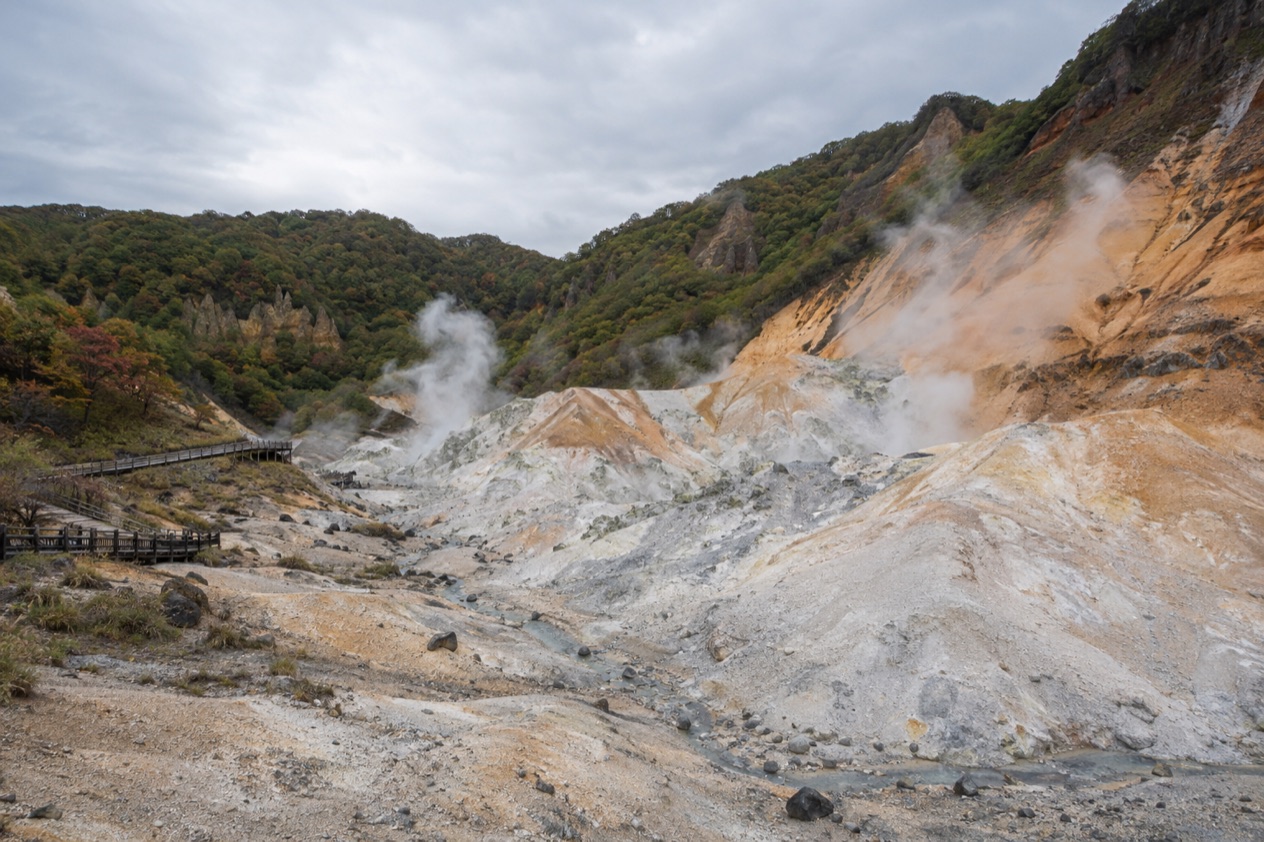
The first thing to reach you at Jigokudani is the smell, a sharp mineral note of sulfur drifting through the trees before the valley even comes into view. Then the ground opens into pale, bare slopes where steam rises from cracks in the rock and the hillside looks scorched and bubbling. This is Hell Valley, the main source of the Noboribetsu hot springs in Hokkaido, and it is a visit about watching the earth work, with a hot bath in the village nearby as the natural finish.
Is visiting Jigokudani at Noboribetsu worth it?
Yes, if you like landscapes that look unfinished and a little menacing, and especially if you plan to bathe in an onsen afterward, since the valley is the source of the water that fills the town’s baths. It suits travelers who enjoy volcanic scenery, curious teenagers, hot spring enthusiasts and anyone building a Hokkaido trip around the south of the island rather than only Sapporo.
What sets it apart from other hot spring areas is that you see the spring before it is tamed. Most onsen towns show you a steaming bath in a tiled room.
Here the water is still part of the hillside, hissing out of vents, collecting in pools and leaving yellow and gray stains across the rock. The name, Hell Valley, comes from that look, and local folklore fills the place with ogres, which you will notice in the town’s decoration and souvenirs.
It also comes with company. Noboribetsu-onsen is known for its bear park, the city has Noboribetsu Marine Park Nixe, the largest aquarium in Hokkaido, and the whole area belongs to Shikotsu-Toya National Park. The valley can fill a morning, but it works best as the anchor of a day that includes a bath, a meal in the village and perhaps one of those neighbors.
It is not a place for those who dislike strong smells, and it is not a swimming or bathing spot in itself. The bathing happens in the onsen of the village, where the range of mineral waters is the real draw.
What to see at Jigokudani at Noboribetsu
The steaming valley itself
The core of the visit is the valley floor and its slopes, where vents release steam and bubbling water collects in hollows. The rock is mostly bare, tinted in rust, sulfur yellow and gray, and almost nothing grows near the hottest spots, which is exactly why the place looks so different from the forest around it.
Look for the places where the steam is thickest, where the colors change from one patch of rock to the next, and where small streams of hot water run down toward the river. Hot spring water here is formed from different minerals, which is why the area offers so many types of baths and why the scenery varies from one corner of the valley to another.
Expect a mineral smell that hangs in the air and clings a little to your clothes. Photographers like the contrast between white steam and dark conifers, so bring a camera, and a lens cloth is useful when the vapor drifts across.
The ogres of Hell Valley
A valley called Hell needs its residents, and Noboribetsu supplies them in the form of oni, the horned ogres of Japanese folklore. Their figures appear around the onsen town, turning a geological curiosity into a story that children and adults both enjoy.
The legend gives the visit a second layer. You are looking at a real volcanic landscape, and the village has chosen to explain it with myth, in the same way many Japanese hot spring towns attach a guardian figure to their waters. Look for the ogre motifs on signs, in shop windows and in the souvenirs on sale in the village.
Noboribetsu-onsen, the village below
The valley belongs to Noboribetsu-onsen, a smaller town set in the river valley, with a range of onsen for bathing as well as other hot springs prized for scenic viewing. Visitors treat the two as one outing: the vents first, the bath afterward.
A bath in water that comes from this very ground gives the valley its payoff. You have seen where the heat and minerals begin, and then you feel them. Hot spring habits apply as always, with washing before you enter the bath and towels kept out of the water, and a ryokan stay turns the evening into a classic onsen night with a meal and a yukata, the light cotton robe worn around the inn.
The bear park and the aquarium
Noboribetsu-onsen is known for its bear park, a draw for families who want something living to look at after the mineral landscape. In the city itself, Noboribetsu Marine Park Nixe is the largest aquarium in Hokkaido, and it makes a change of mood on a day when the weather turns damp.
Both are extras rather than the reason to come. Treat them as ways to stretch a visit into a full day, particularly with children, and let the valley and the baths remain the center of the trip.
How to get to Jigokudani at Noboribetsu
You reach Jigokudani by first reaching the city of Noboribetsu, then continuing to the onsen town, which lies 3.7 miles inland from the city in the river valley. The valley is the source of the hot springs of that town, so the village is the base for the visit.
| From | Train | Journey time |
|---|---|---|
| Sapporo (JR Sapporo station) | Limited express Hokuto or Suzuran to Noboribetsu | 1 hour 20 minutes |
| Hakodate | Limited express Hokuto to Noboribetsu | 2 hours 30 minutes |
From Sapporo
From JR Sapporo station, the limited express Hokuto or Suzuran runs to Noboribetsu, and the ride covers the stretch between the island’s largest city and the volcanic south. Noboribetsu sits southwest of Sapporo on the map, so this is a trip toward the Pacific side of Hokkaido rather than across the island.
The city is also served by the Muroran Main Line, whose stations include Washibetsu, Horobetsu, Tomiura and Noboribetsu. That line is the local rail thread of the area, linking the city with its neighbors along the coast.
From Hakodate and the rest of Japan
From Hakodate, the limited express Hokuto goes straight to Noboribetsu. Travelers coming from Tohoku and the rest of Japan change for the Hokuto at Shin-Hakodate-Hokuto, which makes the southern gateway of Hokkaido the place where a long trip from Honshu turns into the last leg to the onsen.
Noboribetsu lies northeast of Hakodate and west of Tomakomai, so you can place it on a loop that includes either city. Once at Noboribetsu station, you continue inland to the onsen town and the valley.
By road
The Hokkaido Expressway serves the city, with interchanges at Noboribetsu-Muroran IC and Noboribetsu-Higashi IC, and a parking area at Tomiura PA along the way. Drivers use these exits for the city and then follow the valley inland to the onsen village.
When to visit Jigokudani at Noboribetsu
Jigokudani can be visited whenever you are in southern Hokkaido, because the appeal is the steam and the hot spring water, and those do not depend on a bloom or a festival. What changes from one season to the next is the setting around the vents and how you feel when you step out of the bath.
In colder months, steam tends to look thicker against chilled air, so the valley can seem more dramatic, and a hot bath afterward feels especially good. In warmer months the surrounding forest is green and the walk through the area feels lighter, though the valley’s smell and heat are unchanged. Autumn brings color to the trees around the village, and those who like that mix of red leaves and steaming rock often plan for it, although the exact timing varies from one year to the next.
Weather matters here more than the calendar. Rain softens the smell of sulfur and darkens the rock, which suits photographers, but a wet day on slopes is a reason to wear shoes with good grip. On a clear day the contrast between pale ground, white steam and sky is at its strongest.
Time of day is for you to shape around the bath. Visitors like to see the valley first and soak afterward, so the visit ends warm and relaxed. If you stay at a ryokan in the village, you can see the valley, return for a bath, and have the evening for dinner. For hours, check the signs on site, since opening times and any seasonal changes are not something to guess.
Tips for your visit
Wear shoes with a firm sole, since you will be on uneven ground near wet rock, and bring a layer you can add or remove, because standing in steam and walking in forest air are different temperatures. A small towel is useful for the baths, and a plastic bag for damp items keeps the smell from reaching the rest of your luggage.
Give yourself time to look at the colors, to listen to the vents and to take photographs without hurrying. Then leave room for an onsen, because the baths are the other half of why people come to Noboribetsu.
Combining it with nearby stops
The bear park in Noboribetsu-onsen and Noboribetsu Marine Park Nixe, the largest aquarium in Hokkaido, are the two additions that suit families. The aquarium is a good idea for a damp day, while the bear park fits a day when you are already in the village.
If you are exploring the area as a whole, Shikotsu-Toya National Park surrounds Noboribetsu, so the valley can sit within a wider loop of volcanic and lake scenery. Hakodate, Sapporo and Tomakomai all lie within the same region, which makes Noboribetsu a convenient pause on a route through Hokkaido.
Families and mobility
Children tend to enjoy the oni legend, the steam and the animals, and the mix of outdoor sights and a bath gives the day variety. Because the ground is rocky and wet in places, those with limited mobility or small children should look at the layout on site and decide how far to go.
Strong sulfur air bothers some people, so it helps to know how you react to it. If it is too much, the village and its baths remain a rewarding outing even if you shorten the time in the valley.
Good to know before you go
Carry some yen for small purchases in the onsen village, such as snacks, souvenirs and a bath, and keep a dry bag for wet towels. Follow the signs around the valley, which mark where visitors may go, and keep to those areas, since hot water, steam and slippery rock are part of the landscape. The valley belongs to a living volcanic area, so changes of weather or conditions can affect what is open on a given day.
Sources
- Wikipedia, Noboribetsu, Hokkaido (https://en.wikipedia.org/wiki/Noboribetsu,_Hokkaido), checked October 11, 2026
- Wikivoyage, Noboribetsu (https://en.wikivoyage.org/wiki/Noboribetsu), checked October 11, 2026
To plan your stay
- Best Time to Visit Japan: Cherry Blossoms, Autumn Colors, Weather and Festivals
- Where to Stay in Japan: Ryokan, Temple Stays, Capsule Hotels and the Best Cities to Base In
- Sending Luggage from the Airport in Japan: Hands-Free Travel, Hotel Delivery and Coin Lockers
- Know Before You Go to Japan: Entry, Money, Etiquette and Getting Around