
Steam rises from the slopes above Noboribetsu Onsen, and the smell of sulphur reaches you before the first bathhouse does. People in cotton yukata shuffle between lobbies and baths, and the water running through the valley is cloudy with minerals. Noboribetsu is a coastal city in Hokkaido with a hot spring town set back in its valley, and it suits travelers who want to spend their days soaking, walking among volcanic vents and eating well.
Where is Noboribetsu and what is it like?
Noboribetsu is a city in Iburi Subprefecture, on the southern side of Hokkaido, southwest of Sapporo, west of Tomakomai and northeast of Hakodate. Two places share the name, and it helps to keep them apart.
The city itself sits on the coast, with a station, a harbor side and everyday streets. The hot spring town of Noboribetsu Onsen lies 3.7 miles inland in a river valley, and that is where travelers actually spend their nights.
Hotels and ryokan (traditional inns with tatami rooms and set meals) line the slopes, and the town is organized around bathing.
Visitors move between the baths, the lobbies and the walking paths in yukata, and evenings follow a rhythm of soaking, dinner and another soak. The water comes from several different mineral sources, so a stay here is not one kind of bath repeated, but a series of different ones.
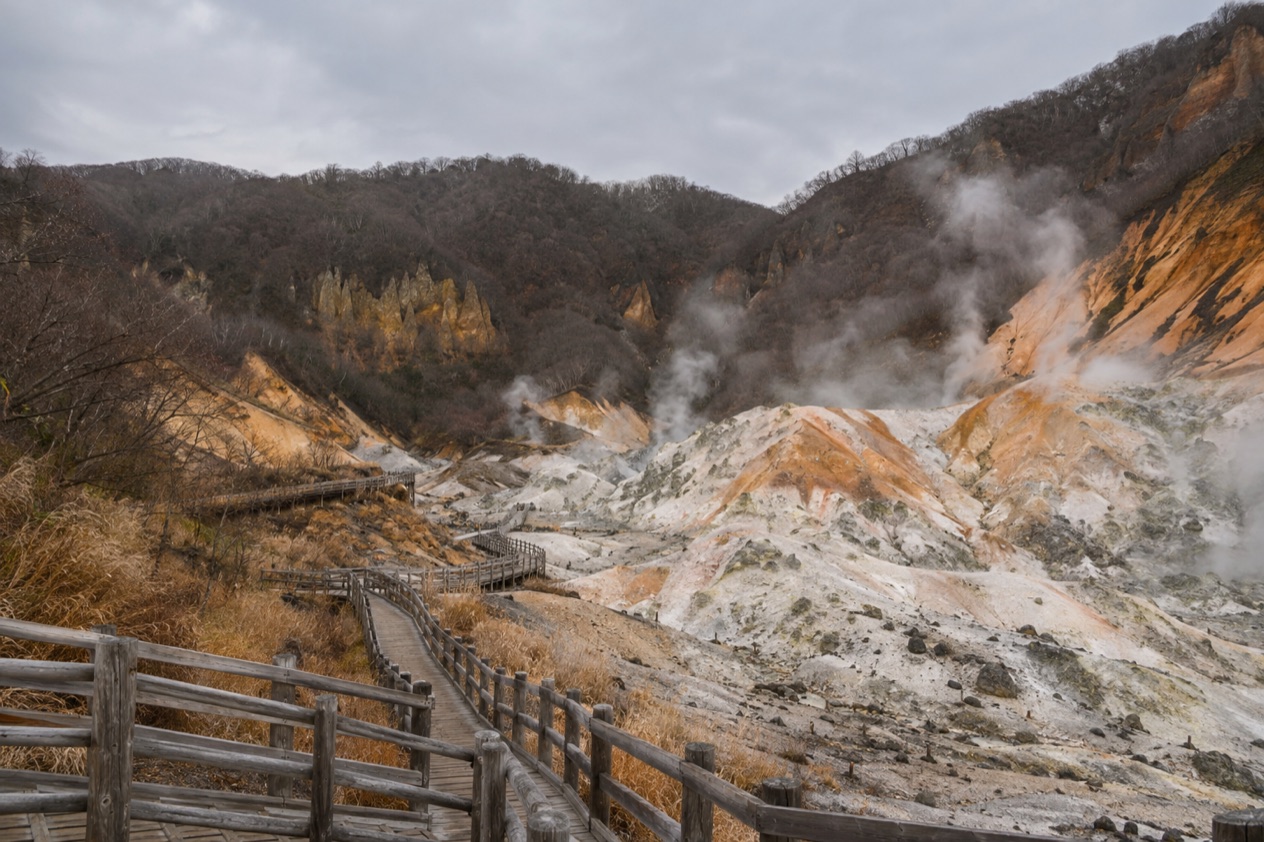
The setting is volcanic. Above the town, bare ground, steaming vents and pale rock mark the landscape, and the hot springs for scenic viewing are as much part of the visit as the baths you step into. Closer to the sea, the city adds a very different note, with an aquarium and the ordinary life of a Hokkaido port town.
The pace is unhurried and built around lodging. If you love onsen culture, long dinners and walking among geothermal scenery, Noboribetsu will feel complete.
If you want nightlife, a long list of museums or a dense big-city grid, it will feel narrow, and Sapporo or Hakodate will serve you better as a base for that kind of trip. Noboribetsu is best thought of as a place to stay a night or two and slow down.
What is there to do in Noboribetsu?
The reasons to come are the volcanic valley, the baths, the animals and the sea. Each sits in a different part of the area, and together they make Noboribetsu a place with more variety than a typical hot spring stop.
Hell Valley (Jigokudani)
Hell Valley is the sight that gives Noboribetsu Onsen its character. It features sulphurous volcanic pits and geysers, and the scene is one of steam, pale ground and the strong mineral smell that drifts into the town. The name comes from the look of the place, and you walk through it rather than view it from a distance.
It lies within the hot spring town, so it fits naturally into a day built around the baths. Travelers pair a walk here with a soak afterward, which makes sense because the water you bathe in comes from the same volcanic activity you have just seen. Wear shoes you do not mind getting a little dusty, and bring a light layer for the steam and the breeze.
The baths of Noboribetsu Onsen
Noboribetsu Onsen offers a range of onsen for bathing, formed from different minerals. That variety is the point of staying here: one bath can look and feel different from the next, with water that varies in color, smell and texture. Many of the larger hotels and ryokan have their own baths, so you can bathe without leaving your lodging.
Onsen etiquette follows well-known habits. You wash thoroughly at the seated shower stations before entering the shared bath, you enter without a swimsuit, and the small towel stays out of the water. Having a ryokan dinner after a bath, then another bath before bed, is the classic rhythm of a stay.
Bears, fish and the coast
Noboribetsu Onsen is also known for its bear park, which gives the resort a second attraction beyond water and steam. It is an outing that works for travelers who want a change from bathing, and for anyone traveling with someone who is less drawn to hot springs.
Down on the coast, Noboribetsu Marine Park Nixe is the largest aquarium in Hokkaido. It gives the city proper something to offer and rounds out a stay with a sea-themed visit. Together, the bear park and the aquarium mean that Noboribetsu holds up as a stop for several days, not only a one-night soak.
How many days do you need in Noboribetsu?
One night is enough to feel the place, and two nights let you enjoy it without rushing. Noboribetsu is built around staying overnight in a ryokan or hotel, so a day trip from Sapporo gives you the valley and a bath, but not the evening and morning rhythm that makes the resort worth visiting.
With one night, plan the day around arrival in the hot spring town. Reach the resort, walk through Hell Valley, return to your lodging for a bath, have dinner at the inn and bathe again before sleep. In the morning there is time for another soak before you move on. This shape works well as a stop between Sapporo and Hakodate, since the city sits between the two.
With two nights, the stay opens up. You can spend one day on the volcanic landscape and the baths, and the other on the bear park or a trip down to the coast and Noboribetsu Marine Park Nixe. A second night also means you can try a different bath and a different part of the town without feeling that you must fit everything into a single afternoon.
With more time, the surrounding region becomes part of the trip. Sapporo lies to the northeast of the area on the map, and Tomakomai and Hakodate are named neighbors as well, so Noboribetsu works as one anchor in a longer Hokkaido loop. Treat those cities as separate stays rather than day trips from the resort, and let Noboribetsu be the slow part of the journey.
Where to stay in Noboribetsu
Stay in Noboribetsu Onsen, the hot spring town in the valley. It is the largest hot spring town in Hokkaido, with many hotels and ryokan, and nearly everything that draws travelers here is within it. The sights, the baths and the evening routine all happen here, so the question is which kind of lodging suits you, not which area.
A ryokan suits travelers who want the full experience: tatami floors, a yukata to wear around the building, a multi-course dinner and a bath before bed. Shoes come off at the entrance, and the pace of the evening is set by the inn. This is the choice for couples, for anyone marking a special occasion and for first-time visitors to Japan who want to see how an overnight at a hot spring works.
A larger hotel suits travelers who want more flexibility, and with so many hotels in the resort, there is a range of styles. Many offer their own baths, so you can soak without leaving the building, and the lobbies tend to be set up for guests moving back and forth between rooms and baths. Families and groups often find this format comfortable.
Noboribetsu city on the coast is the other base. It is the place to stay if you want to be close to the station and the aquarium, or if you prefer an ordinary town to a resort. The trade-off is that you are 3.7 miles from the valley, so the hot spring atmosphere is a trip away rather than outside your door.
How do you get to Noboribetsu and get around?
You reach Noboribetsu by rail, on a limited express to Noboribetsu station on the coast, and then by local bus to the hot spring town. From JR Sapporo station, the limited express Hokuto or Suzuran runs to Noboribetsu, and the journey takes 1 hour 20 minutes.
From Hakodate, you take the limited express Hokuto to Noboribetsu, a journey of 2 hours 30 minutes. Travelers coming from Tohoku and the rest of Japan change for the Hokuto at Shin-Hakodate-Hokuto. That makes Noboribetsu a stop on the line between Hakodate and Sapporo, and one that fits into a longer Hokkaido itinerary.
From the station, local buses leave from in front of Noboribetsu JR station twice-hourly and take about 20 minutes to reach the Onsen. Once you are in the hot spring town, the baths, the lobbies and Hell Valley are the places you move between, and the town is arranged around them. Within the resort, much of the day is spent going between your lodging, the baths and the volcanic landscape.
The city and the hot spring town are two separate places, so keep in mind where your lodging is when you plan arrival. If you are staying in the valley, the bus from the station is the link described here, and your trip to the aquarium on the coast will mean returning toward the city.
When is the best time to visit Noboribetsu?
Noboribetsu is a hot spring destination, so the question is less about finding a perfect month and more about deciding what kind of bathing trip you want. Hokkaido has distinct seasons, and each gives the resort a different feel. Summer brings long days for walking the valley and the coast, and autumn can bring changing leaves to the hills around the resort. Winter puts a cold, snowy setting around the steam.
Travelers think of a hot spring in the colder months, because stepping from a cool outdoor space into mineral water is part of the appeal of an onsen. If that is your picture of the trip, plan around the cold season and bring warm layers for walking between buildings. If you would rather combine bathing with outdoor walking, the warmer seasons give you more comfortable time among the vents and paths of Hell Valley.
Because the resort is built around lodging, the choice of season also shapes the evenings. In the cold, you spend more time indoors, moving between your room, the baths and dinner. In warmer weather, the walks outside become a larger part of the day. Either way, the volcanic scenery and the mineral water are what you came for, and both are there in each season.
Good to know before you go
Yen is the currency in Noboribetsu, as everywhere in Japan, and the resort is organized around lodging, so many of your meals and baths happen inside your hotel or ryokan. Onsen have their own customs: you wash before you enter the shared bath, and you leave your shoes at the door of an inn.
The mineral smell around Hell Valley is part of the place, so do not be surprised when it reaches you in town. Keep your plans flexible around the bus from the station, since the hot spring town and the coastal city are two separate stops.
Sources
- Wikipedia, Noboribetsu (https://en.wikipedia.org/wiki/Noboribetsu), checked October 11, 2026
- Wikivoyage, Noboribetsu (https://en.wikivoyage.org/wiki/Noboribetsu), checked October 11, 2026
To plan your stay
- Best Time to Visit Japan: Cherry Blossoms, Autumn Colors, Weather and Festivals
- Where to Stay in Japan: Ryokan, Temple Stays, Capsule Hotels and the Best Cities to Base In
- Sending Luggage from the Airport in Japan: Hands-Free Travel, Hotel Delivery and Coin Lockers
- Know Before You Go to Japan: Entry, Money, Etiquette and Getting Around