
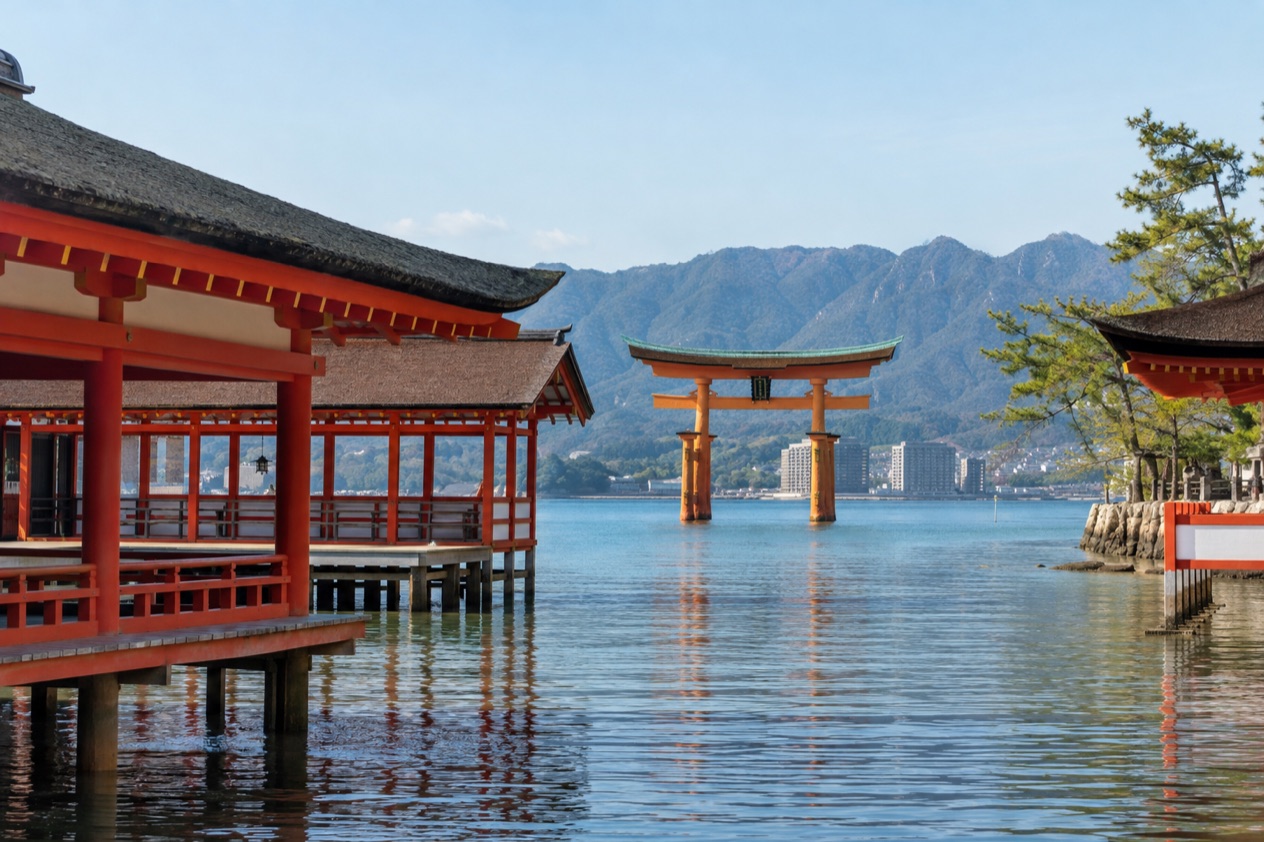
The ferry slows as it nears the island, and there it is, a vermilion gate standing in the water with green hills rising behind it. Itsukushima Shrine does not sit on the shore so much as in the sea, its halls raised at the water’s edge and its great gate set out in the bay. A visit here is a mix of boat ride, shrine walk and island afternoon, shaped by the tide as much as by the clock.
Is visiting Itsukushima Shrine worth it?
Yes, for anyone who wants a Japanese sight that combines architecture, religion and landscape in a single view, and especially for travelers already in Hiroshima Prefecture who can spare part of a day for an island. The shrine is a Shinto shrine, so you come as much for the atmosphere of a working place of worship as for the photograph, and the UNESCO World Heritage listing and the National Treasures held among its buildings and possessions give a sense of how seriously Japan treats it.
What sets it apart from other shrines and temples is the water. Here the approach is a boat crossing, and the sea is part of the design. The buildings and the gate were conceived to be seen with the tide around them, and the island behind, long treated as sacred, gives the whole scene a green backdrop that a city temple never has.
It also suits different kinds of travelers. Photographers come for the gate. People interested in religion and history come for the shrine and its festival.
Others simply come for the ferry, a stroll on Miyajima, and a meal of the island’s specialties, such as grilled oysters or momiji manju, the maple-leaf-shaped cakes sold around the island. If your trip is mostly big-city sightseeing, this is the change of pace that makes the itinerary feel balanced.
What to see at Itsukushima Shrine
The floating torii gate
The otorii, the great torii, is the image everyone knows. It stands 50 feet tall and is built of camphor wood, a timber that resists decay, which is a sensible choice for a structure that spends its life with its feet in salt water. Its vermilion color stands out against the sea, the sky and the dark hills of the island.
The gate appears to float only at high tide, when the water surrounds its pillars and the base disappears. At low tide the bay empties around it and you can approach it on foot from the island, so the same gate offers two very different visits. Look at it from the shore, from the shrine, and from the water if your ferry passes close, because the gate changes character with every angle and with the height of the sea.
The shrine buildings over the tidal flat
Itsukushima Shrine is a complex of halls and connecting structures, painted in the same vermilion as the gate and set at the water’s edge. Seen at high tide, they seem to rest on the sea.
At low tide, the pillars that hold them stand over wet sand and shallow pools, and the whole complex looks like a different place. Several of the buildings and possessions are designated National Treasures, which is why the shrine rewards slow looking at roofs, beams and the way the buildings face the gate.
As a Shinto shrine, it is dedicated to kami, the deities of the Shinto faith, and the layout was designed so that worshippers look out toward the gate over the water. Pay attention to the small details: lanterns, wooden railings, the sound of footsteps on boards, and the way the light changes on the lacquered surfaces as the day moves on.
Kangen-sai and the boat ritual
The shrine’s great annual event is the Kangen-sai, held on June 17 of the lunar calendar, which usually places it between late July and early August. It was initiated by Taira no Kiyomori in the 12th century, the warlord who patronized the shrine, and it counts among Japan’s three largest boat rituals.
The core of the festival is sacred music and a procession on the water, with boats carrying the shrine’s rites across the bay, tied to the tide and to the position of the gate. If your trip falls in that stretch of summer, it is worth checking the lunar date when planning, because the festival moves within those weeks from one year to the next. Outside that time, the shrine still carries the echo of the festival in its layout, a stage built for boats and water.
Miyajima, the shrine island
The island itself is part of the visit. Its real name is Itsukushima, and Miyajima is the popular nickname, meaning Shrine Island. It lies off the coast of Hiroshima, in the city of Hatsukaichi, and it has been treated as a sacred place for a very long time, which is part of why the shrine was built over the water instead of on the island’s land.
Around the shrine you will find a town of food stalls and souvenir shops, where grilled oysters and momiji manju are the things to look for.
How to get to Itsukushima Shrine
You reach the shrine by boat, because Itsukushima is an island. From the mainland, the ferry leaves from Miyajimaguchi Station, and two operators run frequent services: the JR West ferry (the JR Miyajima ferry) and the Miyajima Matsudai Tourist Ship. The crossing takes about ten minutes, which is just enough time to get on deck and watch the gate come into view.
There is a second way in, for those starting from the city. An express passenger ferry runs hourly between Hiroshima harbour and Itsukushima, so you can travel by water from Hiroshima all the way to the island, rather than going to Miyajimaguchi first. The choice between the two routes is a matter of where you are staying and how you like to travel.
The shrine is part of the island’s own town, so once you land you are already in Hatsukaichi’s Miyajima district, with the shrine and its gate as the focus. Because the whole visit is built around the ferry, the boat is not just transport but the opening scene, and travelers choose their crossing with the view of the gate in mind.
When to visit Itsukushima Shrine
The shrine opens early, at 6:30 in the morning all year, and closes at a time that depends on the month.
| Months | Open |
|---|---|
| March to October | 06:30 to 18:00 |
| November | 06:30 to 17:30 |
| December | 06:30 to 17:00 |
| January to February | 06:30 to 17:30 |
More than the month, the tide shapes the experience. The gate appears to float only at high tide, and at low tide you can approach it on foot from the island. Decide which of the two you want, the gate in the sea or the gate on the sand, and plan around it. Travelers who have time sometimes see both on one visit, by staying through a change of tide.
The one special date to know is the Kangen-sai, the boat ritual that falls in the weeks between late July and early August, following the lunar calendar. It is the moment when the shrine’s old role as a place of ceremony on the water is most visible. In winter, the shorter opening hours in December mean an earlier closing, so a visit in that month is best planned with the light and the ferry schedule in mind.
Tips for your visit
The shrine itself is the center, but the town, the food and the island hills are part of the experience, and the ferry crossing adds a frame at each end. Leave room to walk back to the shore for another look at the gate, because the view changes with the tide.
Combine the visit with Hiroshima. The hourly express ferry between Hiroshima harbour and the island makes it natural to link the city and the shrine in one trip, with the water route as part of the day. The mainland ferry from Miyajimaguchi Station offers the alternative if your route takes you that way.
Eat on the island. Grilled oysters and momiji manju are the local treats, and a stroll through the shopping streets is a pleasant way to fill the time while the tide turns. Because the shrine is a place of worship, visit it with the quiet respect you would bring to any shrine, and enjoy the details, from the lanterns to the vermilion halls.
For photographs, remember that the gate looks different at high and low tide, and that the shrine, the gate and the hills each make a different picture. For families and travelers who want a gentler pace, the island’s town gives places to stop, snack and rest between sights.
Good to know before you go
Plan around two things that change: the closing hour, which moves with the season, and the tide, which decides whether the gate floats or stands on sand. Keep the ferry in mind as part of the day, since it brings you to the island and takes you back to the mainland or to Hiroshima harbour.
The shrine is a working Shinto shrine and a World Heritage site, so treat the halls and the gate with the care you would show in any sacred place, and take your time. The island town around the shrine is where you will find meals and souvenirs before you cross back.
Sources
- Wikipedia, Itsukushima Shrine (https://en.wikipedia.org/wiki/Itsukushima_Shrine), checked October 11, 2026
- Wikivoyage, Miyajima (https://en.wikivoyage.org/wiki/Miyajima), checked October 11, 2026
To plan your stay
- Best Time to Visit Japan: Cherry Blossoms, Autumn Colors, Weather and Festivals
- Where to Stay in Japan: Ryokan, Temple Stays, Capsule Hotels and the Best Cities to Base In
- Sending Luggage from the Airport in Japan: Hands-Free Travel, Hotel Delivery and Coin Lockers
- Know Before You Go to Japan: Entry, Money, Etiquette and Getting Around