
You reach Hase-dera by walking up from a small street of the Hase district, past a pond and stone lanterns, and the temple opens out in levels on its hillside. Gold-leafed wood, incense smoke, rows of small stone figures in knitted caps and a cave lit by candles all wait along the way. It is a working Buddhist temple in Kamakura, and a visit is part garden stroll, part pilgrimage stop, part look at one very large wooden statue.
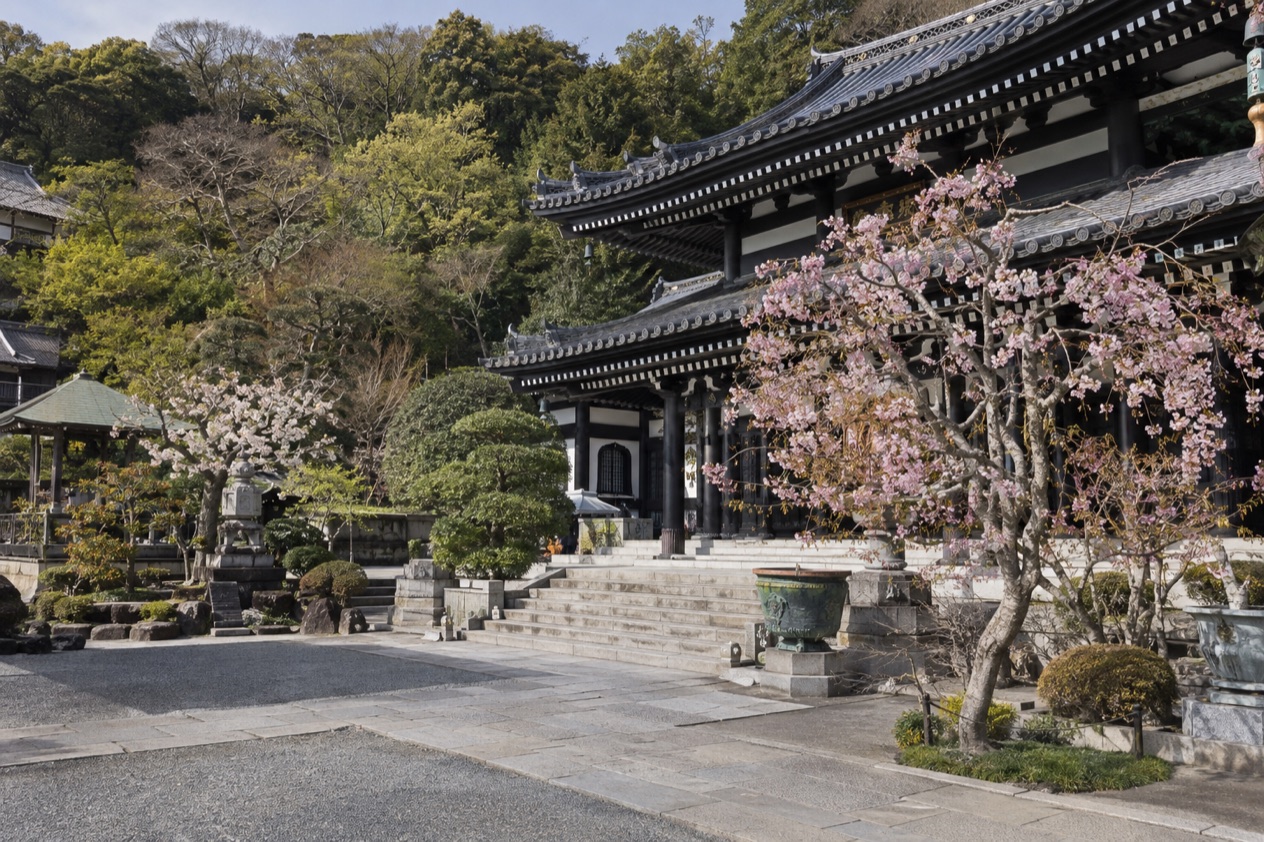
Is visiting Hase-dera worth it?
Yes, for anyone who likes temples with a lot to look at in one compound: a giant gilded statue, a garden, a cave, a hall of sutras and a terrace over the town. It suits travelers who enjoy details and stories more than a single monument to photograph, and it suits those building a day in Kamakura around its religious sites.
Kamakura has no shortage of temples and shrines, since it was the political capital of Japan during the Kamakura shogunate. What sets Hase-dera apart is how varied the grounds are. Many temples give you a gate, a main hall and a garden.
Here the visit moves from a pond to a hillside path, from a statue hall to a tunnel carved into rock, and then to a lookout. Each part has a different mood, and the temple’s link to the sea gives it a character of its own.
It also matters that this is a living place of devotion. Hase-dera, also called Hase-kannon, belongs to the Jōdo-shū sect, and it is the fourth station of the Bandō Sanjūsankasho pilgrimage circuit and of the Kamakura Kannon Pilgrimage. Pilgrims arrive with their own books to be stamped, and you see candles lit and coins offered beside visitors with cameras. In June and July the Hydrangea Path adds a seasonal reason to come.
One part of the temple asks for a different frame of mind. The small Jizō statues placed by grieving parents are a place of mourning, not a sight to treat lightly. Visitors who go with that awareness tend to find the temple more moving than a list of attractions suggests.
What to see at Hase-dera
The grounds climb in stages, so the visit unfolds in a natural order: garden and pond below, halls and statues in the middle, the cave and the view above. Each stage has its own subject.
The Kannon statue
The main hall holds the statue the temple is known for, a figure of Kannon, the bodhisattva of compassion, 30.1 feet tall. It is carved of camphor wood and covered in gold gilding, which gives the whole figure a warm glow under the lamps of the hall. It is counted among the largest wooden statues in Japan, and standing at its feet you look up a long way to the face.
A well-known legend says the statue was carved from a camphor tree and set adrift in the sea, then washed ashore at Kamakura. Whether or not you take that literally, it explains why the temple has such a close feeling for the water below it. Look for the crown of faces above the head and the staff held in one hand, then notice how worshippers approach to bow, light incense or leave an offering.
Benten Kutsu and the Jizō statues
Benten Kutsu is a cave cut into the hillside. Inside is a tunnel lined with statues and devotional carvings to Benzaiten, the goddess associated with water, music and good fortune. The passage feels like a different temple from the bright halls above it, and the carved figures reward a slow look along the walls.
Close by stand hundreds of small Jizō statues, placed by parents mourning children lost to miscarriage, stillbirth or abortion. The figures are often dressed in little bibs and caps, and they remain for about a year before being replaced. It is a tender sight, and visitors usually walk through it quietly and without taking joking photographs.
The Hydrangea Path
Hydrangeas bloom along the Hydrangea Path in June and July, and for those weeks the hillside is lined with blue, violet and pink blossoms. The flowers are tied to the rainy months in Japan in the popular imagination, and a temple setting suits them well, with wet stone, dark roof tiles and heavy blooms close to the path.
Outside those two months the same path is still a way up the slope, with greenery on either side, but the flower show is the reason to plan around it. Pair it with a visit to the main hall so the blossoms are part of a larger walk and not the only stop.
Ponds, halls and the lookout
Near the entrance a pond with koi and stone lanterns sets the tone for the garden. Higher up, a hall devoted to Amida Buddha and a sutra library with a revolving shelf add to the temple’s religious layers. At the top, a terrace lets you look out over Kamakura and the water beyond, a view that gives the hillside its purpose.
Along the way you may notice small votive objects, prayer plaques and stone statues tucked beside the paths. Each is a reminder that visitors come for many reasons, from sightseeing to prayer. Taking time at the terrace lets the visit end with open space after the denser halls and the cave.
How to get to Hase-dera
Hase-dera is a five minute walk from Hase Station on the Enoden railway line, and that station is the third one from Kamakura. The Enoden is a small private line that runs through the seaside part of Kamakura, and the stop at Hase puts you close to the temple’s entrance without any other transfer.
From Kamakura Station
Kamakura Station is the base from which the temple is reached. From there you take the Enoden line toward Hase, passing two stops before arriving at the third. The ride is part of the experience, since the Enoden is a local railway with its own character, and the station building at Hase is a modest one.
From the station exit, the walk to the temple is five minutes. The streets in this part of Kamakura are lined with small shops and cafés, so you pass a few things to look at before the temple gate comes into view. Kamakura sits in the Kantō region on Honshu, and Hase is one of its seaside neighborhoods.
From Shinjuku in Tokyo
One route from Shinjuku uses the private Odakyu line to Fujisawa, where you change onto the Enoden line to Kamakura. The travel time for that journey is about 90 minutes. Once on the Enoden, you continue to Hase Station as above and finish with the walk to the temple.
There is also the Enoshima-Kamakura Free Pass. It offers a roundtrip from Shinjuku and unlimited use of the Enoden line for one day, but it does not include fares on local buses. For a day that pairs Hase-dera with other stops along the Enoden, the pass covers the rail side of the plan.
When to visit Hase-dera
The clearest answer is June and July, when hydrangeas bloom along the Hydrangea Path and the hillside turns blue, violet and pink. That is the one season the temple itself is tied to, and it gives a visit a theme that other months do not have.
In those months the weather is part of the picture. Hydrangeas belong to the damp stretch of early summer, so an umbrella or a rain jacket suits the walk as well as a camera. Wet leaves and dark stone often make the path look richer, and the blooms stand out against the green slope.
At other times of year the temple still has its gilded statue, its cave, its Jizō statues, its pond and its lookout. Those do not depend on a flower season, so the visit holds together in any month you are in Kamakura. What changes is the garden: you trade the color of the Hydrangea Path for plain greenery and the light of the day.
As a pilgrimage stop, Hase-dera belongs to the Bandō Sanjūsankasho circuit and the Kamakura Kannon Pilgrimage, so the temple has visitors who come for devotion in every season. If you want to see the place as a station on a pilgrim’s route, any month works, and you will see people with stamp books alongside sightseers.
Think of the time of day in terms of your own plan. The temple sits in a district with other sites close by, so you can fit it before or after a lunch in town, or between other stops on the Enoden. Giving it its own stretch of the day, rather than squeezing it between trains, lets the grounds unfold at the pace they invite.
Tips for your visit
Wear comfortable shoes, since the grounds rise in levels and the paths between halls, the cave and the lookout are made for walking. Bring an umbrella in the hydrangea months, and a camera for the Kannon hall, the pond and the terrace view, remembering that some spaces call for restraint.
Shaping your time
Take the temple in the order it is laid out: the pond and garden first, then the main hall with the statue, then the cave and the Jizō statues, and finally the terrace. That sequence lets the mood shift from open garden to devotion to a wide view, and it avoids doubling back along the slope.
Give the main hall your full attention. The size and the gold of the Kannon statue are best taken in slowly, and the hall is also where you see how worshippers behave. Follow their lead with quiet voices and respectful distance, and let the carved details sink in before you head up the hill.
Combining Hase-dera with other stops
Hase-dera sits on the Enoden line, so the other stops along that railway are natural companions. Kamakura is full of temples and shrines from the era of the shogunate, and the city’s historical weight is part of why a day here feels layered. A Great Buddha of Kamakura sits in the same part of town, a seated bronze figure that makes a different kind of statue visit from the gilded wooden Kannon.
The Enoden also reaches Enoshima, and the Enoshima-Kamakura Free Pass includes unlimited use of the line for one day. A plan that links Hase-dera with a stop at Enoshima keeps the day on a single railway.
Families and mobility
The grounds are built on a hillside, with paths and steps that connect the levels, so people with limited mobility may want to consider what part of the temple they most want to reach. The lower garden and pond belong to the first stretch of the visit, while the cave, the upper halls and the lookout lie further along.
With children, the cave, the koi pond and the colorful hydrangeas in season give something to look at. The Jizō statues call for a word beforehand, because they mark a place of grief and families tend to pass through them with soft voices.
Good to know before you go
Hase-dera is a place of worship, so habits of respect apply: quiet voices in the halls, care around the candles and incense, and a light touch near the small Jizō statues, which belong to grieving families. In the hydrangea months, rain is part of the season in Japan, and a light rain layer fits a walk through the garden. Keep a little cash for offerings, as visitors leave a coin or light a candle at the main hall.
Sources
- Wikipedia, Hase-dera (Kamakura) (https://en.wikipedia.org/wiki/Hase-dera_(Kamakura)), checked October 11, 2026
- Wikipedia, Kamakura (https://en.wikipedia.org/wiki/Kamakura), checked October 11, 2026
- Wikivoyage, Kamakura (https://en.wikivoyage.org/wiki/Kamakura), checked October 11, 2026
To plan your stay
- Best Time to Visit Japan: Cherry Blossoms, Autumn Colors, Weather and Festivals
- Where to Stay in Japan: Ryokan, Temple Stays, Capsule Hotels and the Best Cities to Base In
- Sending Luggage from the Airport in Japan: Hands-Free Travel, Hotel Delivery and Coin Lockers
- Know Before You Go to Japan: Entry, Money, Etiquette and Getting Around