
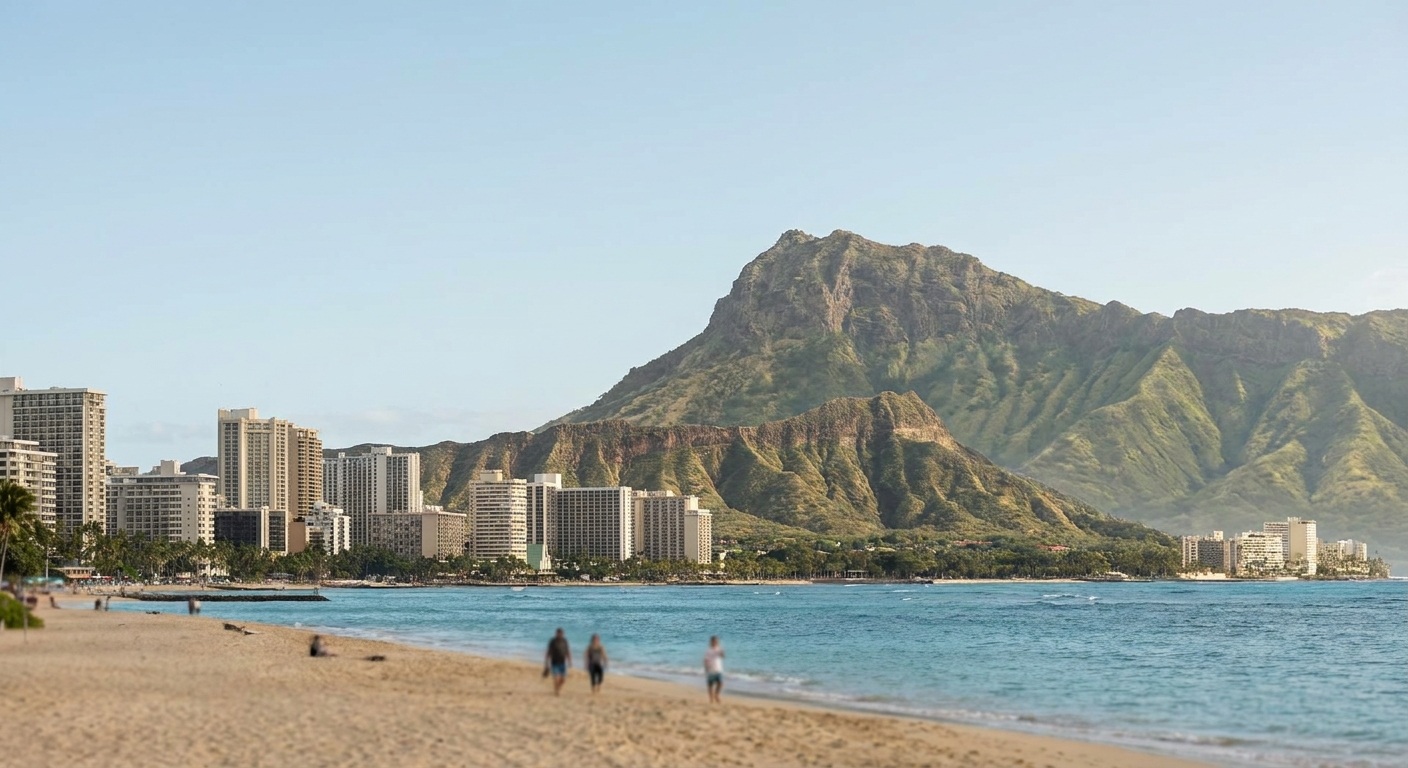
You step out of the airport into warm, soft air that smells faintly of plumeria and jet fuel, and within minutes the trade winds have undone the stiffness of the flight. Honolulu is a big, busy city that happens to sit beside some of the most famous beaches in the world. A few habits, from reserving a crater hike to reading the signs on the sand, make the visit run smoothly.
What should you know before visiting Honolulu?
Four things matter most here: several popular sights run on reservations, the bus system is better than you expect, the ocean decides your beach plans, and a few local rules protect the reef and the wildlife. Plan around those and the rest falls into place.
What surprises first-time visitors is how much of Honolulu is an ordinary American city. People commute, grab plate lunches, and park at the grocery store. Waikiki is only one corner of it, and the neighborhoods beyond, from Chinatown to Kailua, feel quite different.
Entry, fees and paperwork
Since Hawaii is one of the United States, if you fly in from the mainland, no passport or visa will be required. The charges you will meet are the taxes on your room and the fees at a few popular sights, where non-residents often pay more than Hawaii residents.
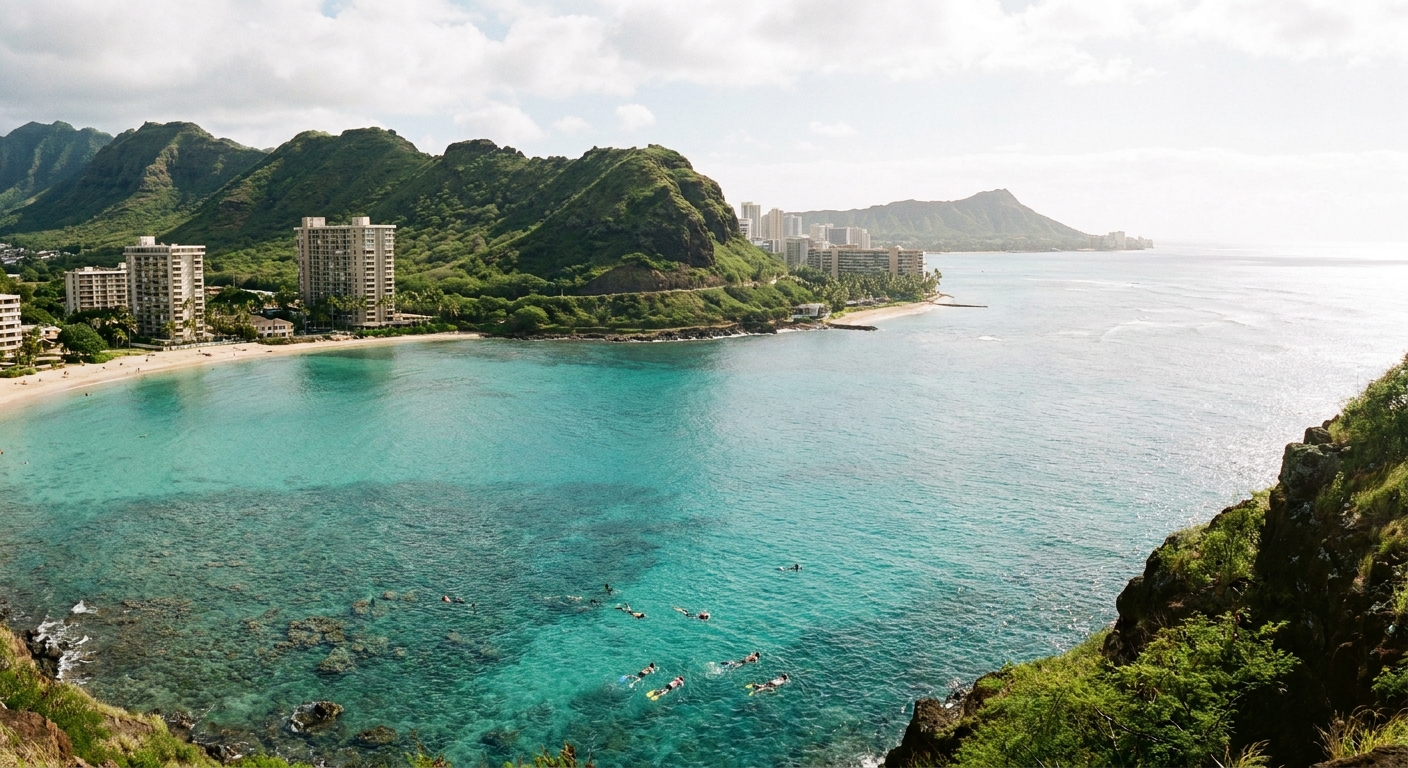
Lodging taxes stack up: the state rate and a separate city tax on Oahu both apply to your hotel or rental bill. Diamond Head and Hanauma Bay both ask non-residents to reserve ahead, while Pearl Harbor has no entrance fee but charges for parking.
| Fee | Amount | Who pays |
|---|---|---|
| State transient accommodations tax | 11% | Guests of hotels and rentals |
| Oahu transient accommodations tax | 3% | Guests of hotels and rentals |
| Diamond Head entry | $5 per person (children 3 and under free) | Non-residents |
| Diamond Head parking | $10 per vehicle | Non-residents |
| Hanauma Bay admission | $25 plus an online fee | Non-residents aged 13 and over |
| Hanauma Bay parking | $3 | Non-residents |
| Pearl Harbor parking | $7 per day | Drivers |
| USS Arizona Memorial reservation | $1 management fee, non-refundable | Visitors booking on Recreation.gov |
Money, cards and tipping
Everything is priced in U.S. dollars, and cards are taken almost everywhere, from food trucks in Haleiwa to the shops along Kalakaua Avenue. A little cash is handy for small purchases at stands and markets, such as the lei sellers in Chinatown.
Tipping follows mainland habits. Servers, bartenders, drivers, hotel housekeepers and surf instructors all expect a tip, and most visitors treat it as part of the cost of the meal or outing.
Getting around and staying connected
From the airport, the simplest way into Waikiki without a car is TheBus W Line, which passes through downtown and Ala Moana Center before ending in Waikiki. It runs every 10 to 30 minutes depending on the hour, and Route 42 covers the late-night hours. The ride is a cheap, scenic way to see the city, though luggage is limited to one medium suitcase and one smaller carry-on.
Adults pay $3.00 for a single fare, which comes with 2.5 hours of transfers and daily and monthly caps that help frequent riders save. Multi-day passes and the HOLO card, which costs $2, can be bought at machines in Skyline stations or at ABC Stores in Waikiki. The Skyline train requires a HOLO card.
Having a rental car proves worthwhile for Ko Olina, Kualoa Ranch, and the North Shore, because from Waikiki the airport, Pearl Harbor, and Hanauma Bay are about 30 minutes away, while Waimea Bay can take as long as an hour and a quarter. Traffic can stretch any of these. For Diamond Head, Hanauma Bay and Pearl Harbor, parking is part of the planning.
Health, water and the sun
The sun is strong all year, and even the cooler months bring afternoons in the low 80s. Hawaii prohibits the sale of sunscreen with oxybenzone or octinoxate unless you have a prescription, so pick a mineral formula that guards both your skin and the reef.
The ocean calls for attention. In winter, big surf rolls onto the North Shore and the water at beaches like Pupukea turns dangerous, while summer is gentler. Seasons change the ocean, the daily waves, and the currents, and on the south shore box jellyfish usually show up around 8 to 10 days following a full moon, so check the warnings that are posted before entering and swim near a lifeguard wherever one is on duty.
Wildlife gets space. Stay at least 10 feet from sea turtles and 50 feet from Hawaiian monk seals, never touch or feed them, and keep well back from a mother seal and her pup. From November through April, humpback whales add to the scene offshore, and boats and swimmers keep more than 100 yards away. When an emergency strikes, 911 is the number for police, fire, ambulance and ocean rescue.
Local customs and etiquette
Honolulu is relaxed and friendly, and a smile and a mahalo go a long way. Shoes come off at the door of a home, and people often do the same at a friend’s place, so expect a row of slippers on the step.
Dress is casual almost everywhere, from aloha shirts at dinner to sandals in town. Cover up when you leave the beach for a restaurant or shop. Places tied to history, such as Iolani Palace and Pearl Harbor, call for quiet voices and respectful clothing, and no bags at the memorial and visitor center.
Much of the land is sacred to Native Hawaiians, so stay off heiau stones and walls, keep to marked paths and leave lava rock and sand where they are. Drivers let each other merge with a friendly wave, and honking is rare.
Good to know before you go
The Central Pacific hurricane season runs from June 1 to November 30, so those months are the ones to keep your lodging and flight terms in mind. Keep your reservation confirmations on your phone, since Diamond Head, Hanauma Bay and the USS Arizona Memorial all ask for them. Last, slow down: the island rewards a relaxed pace, a long lunch and an early start.
Sources
- NPS, Pearl Harbor National Memorial, Fees & Passes (nps.gov/perl/planyourvisit/fees.htm), checked September 25, 2026
- NPS, Pearl Harbor National Memorial, Basic Information (nps.gov/perl/planyourvisit/basicinfo.htm), checked September 25, 2026
- Hawaii DLNR, Division of State Parks, Diamond Head State Monument (dlnr.hawaii.gov/dsp/parks/oahu/diamond-head-state-monument), checked September 25, 2026
- City and County of Honolulu, Department of Parks and Recreation, Hanauma Bay Nature Preserve (honolulu.gov/dpr/hanauma-bay-nature-preserve), checked September 25, 2026
- Iolani Palace, official site, Visit (iolanipalace.org/visit), checked September 25, 2026
- Hawaii DOT Airports, HNL, The Bus and Skyline (airports.hawaii.gov/hnl/the-bus-and-skyline), checked September 25, 2026
- TheBus, TheBus Fares effective January 7, 2024 (thebus.org/Fare/TheBusFares20240701.asp), checked September 25, 2026
- HOLO, For Visitors (holocard.net/for-visitors), checked September 25, 2026
- Hawaii Visitors and Convention Bureau, map Driving Times from Waikiki (gohawaii.com/sites/default/files/oahu_drive_map.pdf, edition 2010), checked September 25, 2026
- Hawaii Department of Taxation, Announcement 2025-03 (files.hawaii.gov/tax/news/announce/ann25-03.pdf) ; City and County of Honolulu, BFS, OTAT FAQ (honolulu.gov/bfs), checked September 25, 2026
- Waikiki Aquarium (Universite d'Hawaii), Box Jellyfish Calendar (waikikiaquarium.org/interact/box-jellyfish-calendar), checked September 25, 2026
- NOAA Fisheries, Viewing Marine Wildlife in Hawaii (fisheries.noaa.gov/pacific-islands/marine-life-viewing-guidelines), checked September 25, 2026
- Hawaii State Legislature, SLH 2018 Act 104 (data.capitol.hawaii.gov/sessions/sessionlaws/Years/SLH2018/SLH2018_Act104.pdf), checked September 25, 2026
- NOAA, Hawaiian Islands Humpback Whale National Marine Sanctuary, Responsible Recreation (hawaiihumpbackwhale.noaa.gov/visit/recreation.html), checked September 25, 2026
- 911.gov (National 911 Program, NHTSA), numero d urgence unique to the Etats-Unis, checked September 25, 2026
- Hawaii Tourism Authority, Go Hawaii, North Shore Oahu (gohawaii.com/islands/oahu/regions/north-shore), checked September 25, 2026
- Hawaii Tourism Authority, Go Hawaii ; HVCB, map Driving Times from Waikiki (edition 2010), checked September 25, 2026
- Hawaii DLNR, Division of Aquatic Resources, Oahu – Pupukea MLCD, checked September 25, 2026
- Waimea Valley, Tickets & Hours (waimeavalley.net/admission), checked September 25, 2026
- Waimea Valley, pages Waterfall and FAQ (waimeavalley.net), checked September 25, 2026
- Hawaii DLNR, Division of Forestry and Wildlife, Oahu Offshore Islet Seabird Sanctuaries (dlnr.hawaii.gov/wildlife/sanctuaries/oahuoffshoreislets), checked September 25, 2026
- U.S. Fish & Wildlife Service, « United States Celebrates World Wetlands Day », February 2005 (fws.gov/story/2005-02) ; Ramsar site 1460, checked September 25, 2026
- Ko Olina Resort, Lagoons (koolina.com/destination/lagoons), checked September 25, 2026
- Ko Olina Resort, press release « City and Ko Olina Partner To Launch New Public Access Plan for Lagoons », October 15, 2020, checked September 25, 2026
- Hawaii Tourism Authority, Go Hawaii, itineraire « 4 Days in Waikiki and 3 Days on the Leeward Coast » ; HVCB, map Driving Times from Waikiki (2010), checked September 25, 2026
- NOAA NCEI, monthly normals 1991-2020, station USW00022521, checked September 8, 2026
- Open-Meteo Marine API, average 2015-2024, checked September 8, 2026
- sunrise-sunset.org, sunrise and sunset calculated for the 15th of the month, checked September 8, 2026
- NWS Honolulu / Central Pacific Hurricane Center, « 2026 Central Pacific Hurricane Season Outlook », weather.gov/hfo/hurricaneOutlook2026, checked September 24, 2026
To plan your stay
- Best Time to Visit Honolulu: Weather by Month, Surf Seasons, Crowds and Events
- Things to Do in Honolulu: Diamond Head, Pearl Harbor, Hanauma Bay and Where to Eat
- Where to Stay in Honolulu: Waikiki, Downtown, Kailua, Ko Olina and the North Shore
- Honolulu Airport to City: TheBus W Line, Driving to Waikiki and Getting Around Town