
Olympia is where the ancient Olympic Games were held, first in 776 BC, and the sanctuary is now a UNESCO World Heritage site. The modern town is small and quiet, set in a green valley of olive groves and running water in the western Peloponnese. Some of the most significant ruins in Greece sit at its edge. Olympia is a small town, and the ancient stadium where athletes once raced is one of the first places visitors head to.
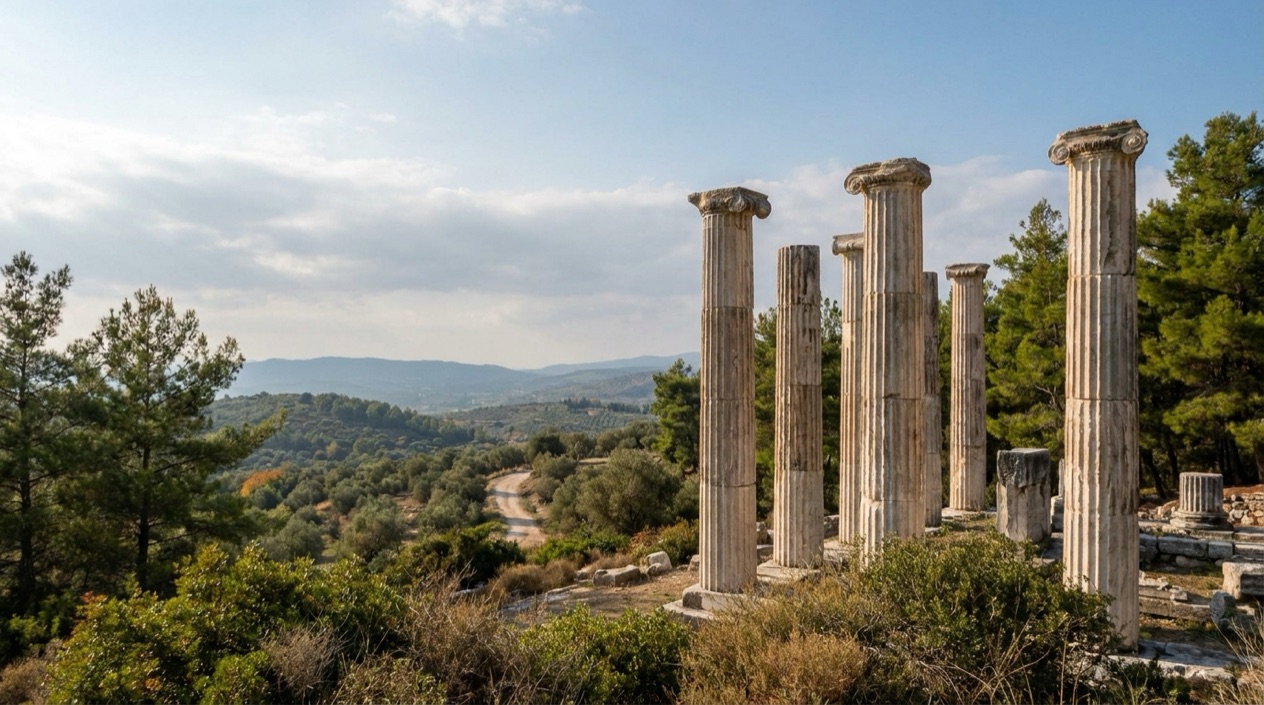
What are the best things to do in Olympia?
Start with the archaeological site, which spreads across the valley of the Alfeiós River. In ancient times it held more than 70 significant buildings, and ruins of many have survived. At Delphi the monuments were packed tightly inside a boundary wall. Olympia sprawls well beyond its wall, especially around the athletic grounds, so expect a lot of walking. Wear good shoes and bring water. In the Altis, the sacred grove of Zeus at the heart of the sanctuary, the same tree and plant species grow as in antiquity.
The stadium
The stadium is a rectangular field with sloping grass banks on its sides, and up to 45,000 spectators once crowded in to watch. The original packed-earth track, about 630 feet (192 meters) long, is still there, so you can walk where ancient athletes ran.
The Temple of Zeus and the Temple of Hera
The Temple of Zeus was once among the largest in Greece. Inside stood the famous statue of Zeus, made of gold and ivory by the sculptor Phidias and counted among the Seven Wonders of the Ancient World, though it has since vanished. Today the temple survives as massive column drums and stones lying on the ground, and their size alone tells you how big it was.
The Temple of Hera came first and is among the oldest Doric temples in Greece, with a calm, understated beauty. In front of it, the flame for the modern Olympic Games is lit with a parabolic mirror that focuses the sun's rays. Right beside it stands the Philippeion, a round monument built by Philip II of Macedon.
The Palaestra and Gymnasium
The Palaestra and Gymnasium were the training grounds. They're easy to skip when your feet are tired, so if time is short, see the stadium and both temples first and come here after.
The Archaeological Museum of Olympia
Don't miss this one. It sits right next to the site and holds the finds, including the Hermes of Praxiteles and the sculptures from the pediments of the Temple of Zeus. Visit before or just after the ruins, and the piles of stone turn into stories.
The Museum of the History of the Olympic Games of Antiquity
Housed apart from the main archaeological museum, this smaller one explains how the ancient Games were run, what athletes wore and what part women played.
The Olympic Botanical Garden
Near the site, this garden grows plants native to the area, chosen from the descriptions left by the ancient traveler Pausanias. It shows Olympia's history from another angle, through the plants the ancient visitors would have known.
When is Ancient Olympia open?
The site keeps longer hours in high season, which runs from April to October, and shorter hours the rest of the year. Whenever you go, last admission is 20 minutes before closing.
The Archaeological Museum is open every day except January 1, March 25, May 1, Easter Sunday and December 25 and 26.
Admission is free on certain days each year: March 6, in honor of Melina Mercouri; May 18, International Museums Day; the last weekend of September, for European Heritage Days; and the first Sunday of each month from November to March.
Where should you stay in Olympia?
The town is small with a handful of hotels, and they're pleasant and good value. Olympia has kept an air of authenticity despite the rock-star attraction on its doorstep. It's a town focused on tourism and history, so plan on a quiet dinner and an early night.
In the town of Olympia
Leonidaion is a charming, modernized guesthouse with great family service. Hotel Kronio is a good budget choice and probably the closest to the museum and the ancient site. Hotel Europa suits families and groups, and its huge swimming pool is a welcome reward after a day among the ruins.
What should you eat in Olympia?
The hills around Olympia are covered in olive groves, and local olive oil is one of the pleasures of the region. It goes nicely with bread at a meal. Some shore excursions pair the ruins with Greek mezes, music and folk dances.
Wine and honey are part of the picture too. Mercouri Estate Winery and Olympia Land Winery are both near Katakolon, and honey farms turn up on local tours.
For a rural meal, the villages of Krestena and Andritsaina have tavernas, local markets and handmade crafts. They're a rewarding detour if you have a car and a free half day.
What are the best beaches near Olympia?
Olympia sits inland, about 11 miles (18 km) from the Ionian Sea, so a swim means a short drive to the coast. Near the port of Katakolon, Kavouri and Spiantza are both good choices. One cruise shore excursion combines Ancient Olympia with Kourouta Beach, and another offers a simple transfer to Kourouta.
How many days do you need in Olympia?
Two days is ideal. It gives you a full morning at the ruins, an unhurried museum visit and an evening in a calm town. One long day works if you're coming from Athens or off a cruise ship, though it will feel rushed.
Day 1
Arrive in the morning, drop your bags at your hotel and head for the archaeological site as early as you can. Take a break under the trees at midday, then spend the afternoon in the Archaeological Museum, where the temple sculptures fill in what you saw that morning.
In the evening, stroll through town and keep dinner simple at a taverna.
Day 2
With a car, drive to Krestena or Andritsaina for a village lunch, or book a winery visit. If you're heading toward the coast, finish at Kavouri or Spiantza for a swim and a slow afternoon.
How do you get to Olympia from Athens?
Athens lies about 198 miles (320 km) east of Olympia, and no direct trains run between them, so you'll drive, take a bus or join a tour.
Plan on roughly 3.5 to 4 hours behind the wheel, depending on traffic and road conditions. Head west on the A8 highway past Corinth and Patras, exit at Pyrgos/Olympia and follow the signs.
KTEL buses run regularly from the Kifissou station in Athens and take about 4 to 4.5 hours. They drop you at Olympia's bus station, within walking distance of the site. KTEL also connects Olympia with Patras, about 2.5 to 3 hours away, and with Pyrgos and nearby towns. Check the timetable before you go.
Many visitors make Olympia a day trip from Kalamata. The drive takes about 90 minutes, and KTEL buses leave from Artemidos bus station.
Katakolon, a small port on the western coast, is where cruise ships dock so passengers can visit Olympia. The drive from the port takes just over 30 minutes and is well signed. Many passengers join the ship's excursion, but a pre-booked car or driver lets you add a winery, a beach or the Pirgos Museum in nearby Pirgos.
What should Americans know before going to Greece?
The U.S. State Department says U.S. citizens may enter Greece without a visa for stays of up to 90 days for tourism or business. Your passport should have at least three months of validity beyond your planned departure date, and you may be asked for proof of sufficient funds and a return or onward ticket. A passport you've reported lost or stolen won't get you in, even if you find it again.
Greece is a generally safe destination, though petty crime is common in popular tourist spots. Thieves seek out rental cars to steal passports, valuables and luggage, so take your valuables with you when you leave the car. Carry your passport or another photo ID at all times.
If you rent a car, Greek law requires a valid U.S. driver's license, and insurance companies may require an international driver’s permit. Greece has one of the highest traffic fatality rates in the European Union, so drive cautiously. Transportation strikes are common and can interrupt buses, taxis, seaports and airports, so build some slack into your plans. Forest fires are common in the dry summer months and occasionally close roads, and earthquakes occur regularly.
Many care providers in Greece accept only cash, and private hospitals often want proof of adequate insurance or cash before admitting a patient, so carry some euros and your insurance details.
Sources
- odysseytraveller.com (https://www.odysseytraveller.com/articles/olympia-greece/), checked October 18, 2026
- Visit Greece (GNTO) (https://www.visitgreece.gr/mainland/peloponnese/olympia), checked October 18, 2026
- UNESCO World Heritage Centre (https://whc.unesco.org/en/list/517/), checked October 18, 2026
- royalcaribbean.com (https://www.royalcaribbean.com/inspire/what-is-olympia-greece-known-for), checked October 18, 2026
- greecetravelsecrets.com (https://www.greecetravelsecrets.com/how-to-get-to-olympia/), checked October 18, 2026
- U.S. Department of State (https://travel.state.gov/content/travel/en/international-travel/International-Travel-Country-Information-Pages/Greece.html), checked October 15, 2026
- U.S. Department of State (https://travel.state.gov/content/tsg_aem/us/en/home/international-travel/travel-advisories/destination.grc.html), checked October 15, 2026