
Ancient Olympia, home of the original Olympic Games, lies in the western Peloponnese, and no direct train runs there from Athens. You arrive by rental car, by KTEL bus, on a multi-day tour, or by ship through the cruise port of Katakolon. Here is how each works, from Athens, from the port and from the nearby cities, along with what to expect once you're there.
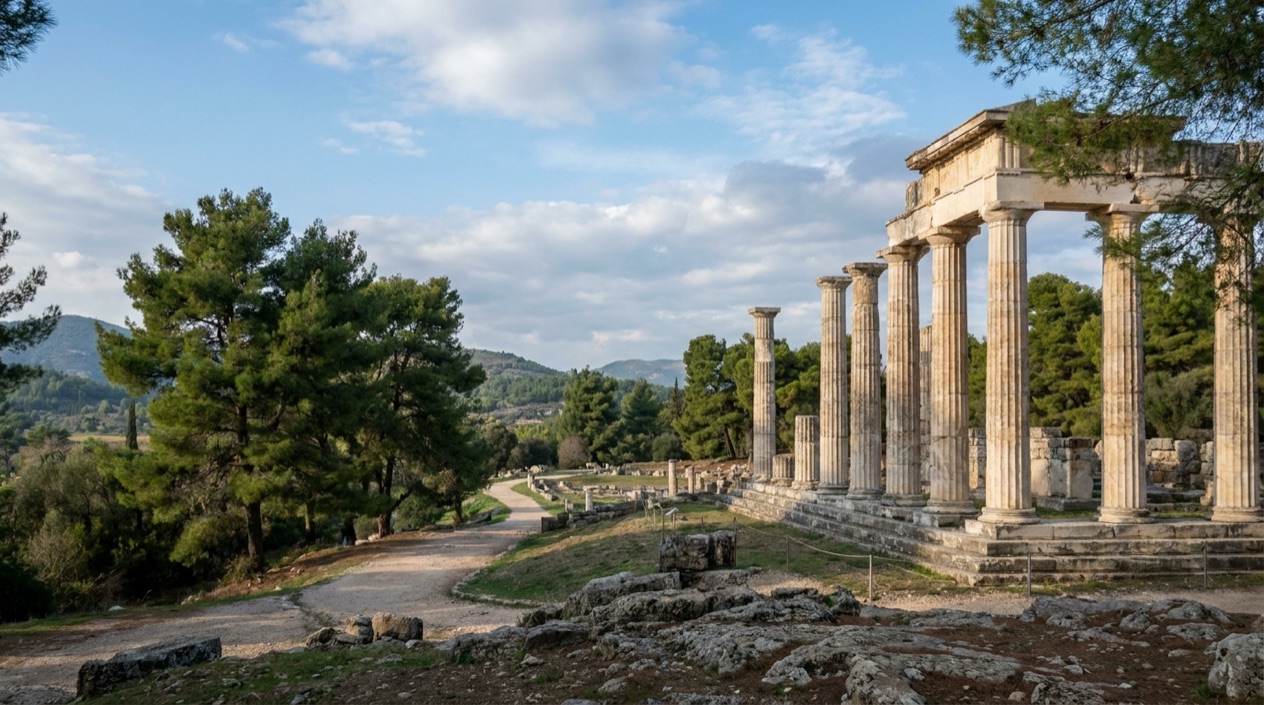
How do you get to Olympia from Athens?
Two roads lead west from Athens, and the buses and tours use them as well. The route through Corinth, Patras and Pyrgos covers about 217 miles (350 km), which is a longer distance, yet it is still the fastest way to reach Olympia from Athens, at roughly three and a half hours. The inland road through Tripoli is shorter, about 198 miles (320 km), but slower.
By car
Driving is the fastest way to reach Olympia, and it lets you stop at scenic parts of Greece along the way. The usual route is the highway through Corinth, Patras and Pyrgos, crossing the famous Isthmus of Corinth, then the exit for Pyrgos/Olympia and the signs into town. Plan on roughly 3.5 to 4 hours, longer with traffic.
The road is rougher, and the trip takes around five hours. It pays you back in scenery and in stops at Mycenae and Epidaurus. Choose it for a road-trip day with sights along the way. Choose the highway if you want to arrive with energy left for the ruins.
By bus
KTEL, Greece's main bus company, runs buses from Athens' Kifissos bus terminal (Terminal A, Kifissou 100), which you can reach by taxi or from the Agios Antonios metro stop. Buses to Pyrgos run more often, and from there a local bus covers the last stretch (details under Pyrgos below). Buy your return ticket in advance.
The bus is a relaxed choice if you'd prefer not to drive Greek highways. A change in Pyrgos adds time, so take a direct bus when the schedule allows.
By organized tour
Olympia is far enough from Athens that it usually gets folded into a multi-day circuit, and the 3-day and 4-day classic tours of Greece both include it along with other major sites. You give up flexibility and skip the driving, the parking and the planning. It suits travelers who want Olympia as one stop among several.
Which way should you go?
- First trip, comfortable driver: rent a car and take the highway through Patras. You set the pace, and the drive becomes part of the trip.
- Prefer not to drive: take the KTEL bus, ideally a direct one.
- If you would like to see more of Greece without planning each stop yourself, a 3-day or 4-day circuit takes care of the logistics for you.
How do you get to Olympia from Katakolon?
Katakolon is a small port on the western coast that became a busy cruise stop largely because passengers want to see Olympia. It was once a tiny fishing village, and the waterfront still feels that way, with fishing boats, a few cafes and boutiques, and a short main strip you can walk end to end in under an hour.
The ruins are a 30 to 40 minute ride from the port. You have three ways to get there:
- Ship excursion: a convenient choice, since the cruise line organizes the outing, though cruise lines often charge more because they take a cut. A tour you pre-book yourself or a local guide found in the port can cost less.
- Coach bus from the port: coaches have been found waiting right in the port with a "Bus to Olympia" sign in the window, and a round-trip seat costs far less than a guided tour.
- Taxi or private driver: pricey for two people, and flexible. A pre-booked driver can add the Mercouri Estate or Olympia Land wineries, a beach such as Kavouri or Spiantza, or the museum in Pyrgos.
If you drive yourself, head north from the port on the road toward Pyrgos, which becomes the Olympia road. The route is well signed.
Half a day is plenty for Olympia, and on a cruise it's all the time you'll have, so leave early and watch the clock for the return.
How do you get to Olympia from other cities?
From Pyrgos
Pyrgos is the capital of the Elis region, which includes Olympia. By car the site is about 20 minutes east along highway EO74.
From Patras
You can rent a car in Patras, book a private transfer, or take a KTEL bus to Pyrgos, which runs every few hours, and change there for Olympia. Drivers can go inland on the Patras to Tripoli road or follow the northwest coast on highway EO9. The coastal route is slightly faster and, with a small detour, leaves room for some beach time.
From Kalamata
Kalamata visitors often choose Olympia as a day trip, and the drive takes about 90 minutes. Take the E65 highway out of town, join the E55 at Kalivia, and follow the coastal road north. You'll pass the Peristerias archaeological site, worth a stop, then Kaiafas Lake and its thermal springs before the road turns inland and crosses the Alfeios River just ahead of Olympia town, with the site just beyond. KTEL buses also leave from Kalamata's Artemidos station, and organized tours make the trip too.
What should you expect once you arrive in Olympia?
The town is small and easy on foot. You can walk from the bus station to the archaeological site, and the museum is close by. Flags from around the world line the streets, and shops selling Olympics-themed souvenirs share them with cafes and restaurants.
Half a day covers Olympia, so an overnight stay is optional. The town is small, and its handful of hotels are described as pleasant and good value. Hotel Kronio is the budget pick and probably the closest to the museum and the site. Hotel Europa has a huge pool and suits families and groups. Leonidaion is a modernized guesthouse with warm, family-style service.
The ruins get direct sun with little shade, so wear a hat and carry plenty of water, especially in summer. The air-conditioned museum feels like a gift afterward.
The site keeps longer hours in high season, April to October, and shorter hours the rest of the year, when admission is cheaper. Entry is free on certain days, including the first Sunday of each month from November to March, and in winter there are typically no lines. Last admission is 20 minutes before closing. The museum closes on a few public holidays, including Christmas and Easter Sunday, so check the schedule if your trip falls near one.
What should Americans know before driving or riding?
Greek law requires visitors to carry a valid U.S. driver's license, and insurance companies may require an international driver’s permit. Greece has one of the highest traffic fatality rates in the European Union, and talking or texting on a phone while driving is illegal. Thieves seek out rental cars to steal passports, valuables and luggage, so it is wise to take your belongings with you whenever you park. On public transportation, riding without a ticket, with the wrong one, or without validating it can bring a fine of up to 60 times the basic fare. Transportation strikes can interrupt traffic, buses, taxis, seaports and airports, which matters if you're counting on a bus or a cruise connection. Forest fires are common in the dry summer months and occasionally close roads.
How do you book it?
Book tours and private transfers ahead. For a car, pick one up in Athens, where many major rental companies operate, or in Patras if you start there. Cruise passengers who want their own driver or guided tour should arrange it before the ship docks.
The day before you go, check the bus timetable or your driving route, confirm your return ticket, and look for strike announcements. Then bring some euros in cash, since cash is handy in many places around Greece.
Sources
- introducingathens.com (https://www.introducingathens.com/olympia), checked October 18, 2026
- olympia.co.uk (https://www.olympia.co.uk/getting-here), checked October 18, 2026
- greecetravelsecrets.com (https://www.greecetravelsecrets.com/how-to-get-to-olympia/), checked October 18, 2026
- kimkim.com (https://www.kimkim.com/ab/getting-to-olympia), checked October 18, 2026
- theabroadblog.com (https://www.theabroadblog.com/2023/03/04/hvisit-olympia-greece-like-a-pro/), checked October 18, 2026
- U.S. Department of State (https://travel.state.gov/content/travel/en/international-travel/International-Travel-Country-Information-Pages/Greece.html), checked October 15, 2026
- U.S. Department of State (https://travel.state.gov/content/tsg_aem/us/en/home/international-travel/travel-advisories/destination.grc.html), checked October 15, 2026