
Naxos has some of the best sand in the Cyclades, and most of its finest beaches line the west coast south of Naxos Town. The busy, well-equipped ones sit a short bus ride from town. The wild ones, around Kastraki and the Alyko peninsula, take more effort. Wind plays a big part in many beach days here, so it pays to plan around it.
What are the beaches of Naxos like?
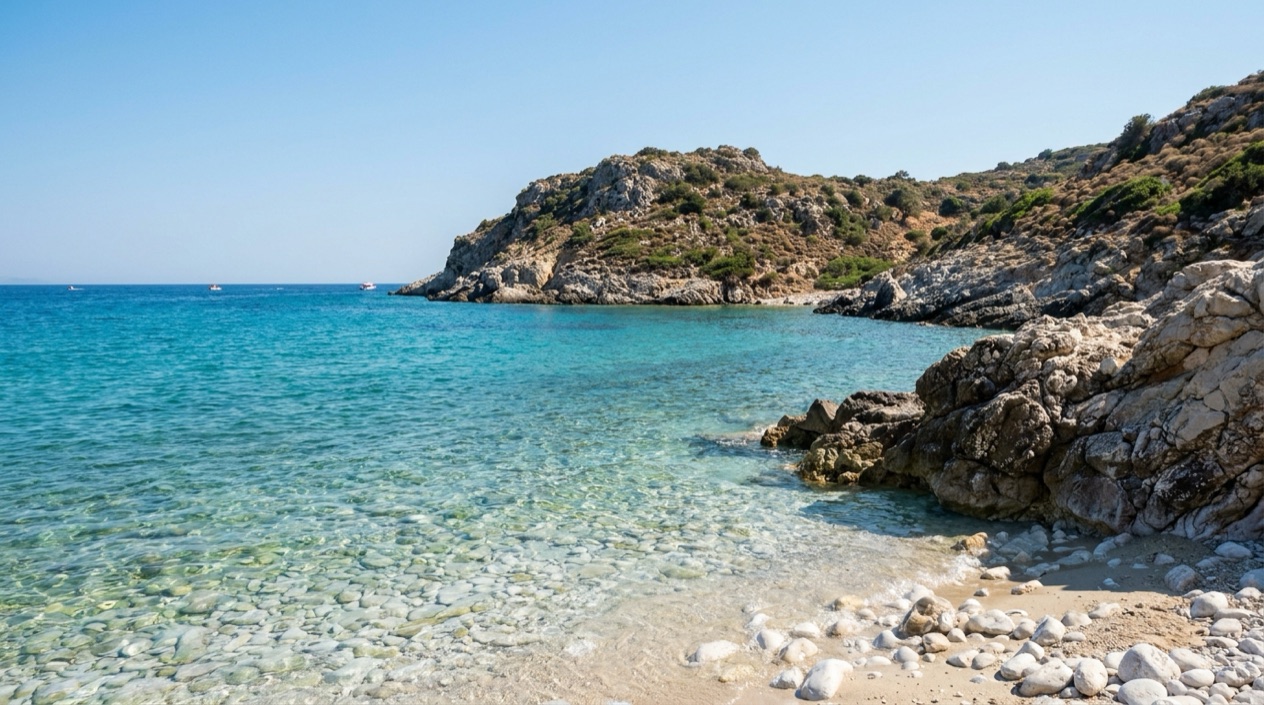
Picture long golden stretches, clear water that shifts from pale turquoise to deep blue, and real sand, a relief after the pebbles of so many Greek beaches. The east coast is mostly steep cliffs. The west coast is flat and lined with golden sand, and that's where most of the beaches below sit.
The coast follows a pattern from north to south. Near town come rows of sunbeds, tavernas and beach bars. Farther down, cedar trees, dunes and a few shacks take over. The farther south you go, the quieter the beaches and the better the sand, and also the windier and the longer the trip from town.
Naxos is a windy island, which is why windsurfers and kitesurfers love it, and conditions vary a lot from one beach to the next. For a lazy day on the sand, check the wind that morning and pick a sheltered spot. Each beach below notes how it handles the wind.
Which beaches are close to Naxos Town?
Agios Georgios
The town beach sits on the southern edge of Naxos Town, a walk from anywhere in the center. It's one of the busiest on the island, but it's long enough that finding a spot is easy. The water is shallow and calm, and Paros sits on the horizon across the sea.
The northern stretch, closer to town, is fully set up with sunbeds and umbrellas for rent. The southern end belongs to water sports, with gear rentals and a water sports center. The wind there is just strong enough to learn windsurfing and not strong enough to carry a beginner out to sea, which makes it a great place for a first lesson. Cafes and restaurants line the beach road, so lunch is easy, and it's the obvious choice for a quick swim before an afternoon trip.
Agios Prokopios
Agios Prokopios is among the most popular beaches on Naxos, and the water explains why: a deep turquoise so clear it looks like a swimming pool. The scene is lively. Sunbeds, umbrellas, water sports, bars and restaurants crowd the southern end, while the northwestern end near the chapel is calmer.
Sunbeds usually come as a set of two with an umbrella, and owners won't rent a single bed, so solo travelers end up paying for both. Some clubs add a lockable cabinet and food served to your chair, and masseurs roam the sand.
Behind the sand is a small settlement of casual restaurants, shops, mini-markets and affordable rooms. One of the island's main roads runs right behind the beach, so keep small kids close.
Agia Anna
Agia Anna picks up where Agios Prokopios ends, about 0.6 miles (1 km) farther along. The long sandy beach breaks into small bays, and a little fishing port at the south end holds tiny wooden boats. The cove beside the port is protected from the wind and usually calm, so it's the place to swim when the waves are up elsewhere.
It's fully organized, with tavernas, cafes, sunbeds and umbrellas along the main road. The mood is lively but more relaxed than next door, though the beach is shorter and fills up quickly. The nudist section lies behind the headland with the church of Saint Nicholas, south of the beach. The shore walk from Agios Prokopios through Agia Anna to Maragas is a lovely one.
Grotta
Grotta is a small bay of pebbles and some sand on the northern side of town, with a view of the Portara. Waves can be strong here. On calm days, strong swimmers can snorkel over ancient sunken ruins.
Where is the best sand for a long beach day?
Plaka
Plaka runs about 2.5 miles (4 km) and ranks among the island's favorites. The sand is fine and golden, the water shallow and clear, and there's so much room that a quiet patch turns up even in July and August. Some stretches have loungers for rent, and renting a single bed is no problem here; long stretches stay open for your own towel. Shallow water and space to play make it a family favorite, and in high season walking the shoreline is a pastime of its own.
The small cove at the south end is the quietest corner, though it catches the wind. Small hotels, studios and tavernas with views sit just behind the sand.
Maragas
Maragas sits right beside Plaka, with a simpler setup of beds and food and far fewer people. It's beautiful, but the wind can pick up fast and turn it into windsurfing territory, so save it for a calm day.
Mikri Vigla
Mikri Vigla is two beaches split by a sandy hill. One side takes the wind and belongs to kitesurfers and windsurfers. The other side stretches out in a long band of sand with deep blue water, and the southern end is protected from the north wind, which makes it a lovely place to swim and sunbathe while the kitesurfers perform nearby.
Which beaches are quiet and wild?
Kastraki
Kastraki is all peace and quiet, with water that runs from turquoise to emerald to deep blue and rugged mountains dotted with whitewashed houses behind. Some stretches are small coves, others a long trail of silvery sand. Just one small spot rents sunbeds and umbrellas, so bring what you need for your own comfort. Back toward the main road there are fairly priced tavernas, guesthouses and small shops.
Glyfada
Glyfada sits between Kastraki and Alyko, a long sandy beach backed by dunes and tall cedar trees. You come in through sand dunes, cedar trees and bushes to clear blue water with red rocks at the far end. Crowds are rarely a problem, and a pond sits between the beach and the road. The beach is exposed when the wind blows, which makes it popular with windsurfers and kitesurfers, but the swimming is great too. By car, park near the Faros hotel and walk across. By bus, get off at the Glyfada stop.
Alyko and the peninsula
Alyko is a small cedar-covered peninsula with several sandy beaches and coves. Kedros comes first, a white sand beach under dense cedars that's popular with naturists. Hawaii is next, reached by a path through the bushes to a cliff, then a scramble down the rocks, since there are no steps. Its soft sand and crystal-clear water give it a strong claim to the title of most beautiful beach on Naxos. Mikro Alyko is a small sandy cove, and Alyko itself is the spacious bay with the easiest access and the best-known name.
Facilities are minimal at Alyko, though a food truck is sometimes parked in the lot. Bring water, food and shade, and wear swim shoes with rough soles, since the shoreline rocks can be sharp. Families with small kids may want to skip this stretch.
Pyrgaki
Pyrgaki is a long sandy beach in a small cove, less than 10 minutes on foot from the Alyko peninsula. It's mostly left natural, with a few spots renting sunbeds and parasols, and it's a quiet place to tan and swim. A few eateries and a supermarket sit right next to the beach, handy for a cold drink after a day at Alyko.
Which beach suits your trip?
- Families: Agios Georgios and Plaka.
- A lively beach club day: Agios Prokopios.
- Snorkeling: Grotta, on a calm day.
When is the water warm enough?
The sea is warmest from July through September, averaging 76.7°F in July, 78.7°F in August and 77.2°F in September. June and October both average 73.7°F. May is brisker at 66.6°F, and the water cools again late in the year, to 68.5°F in November and 64.5°F in December. September water is warmer than June's, which makes early fall a fine time for a beach trip.
Do you need a car to reach the beaches?
Not if beach time is the plan. Stay in Naxos Town, Agios Georgios, Agios Prokopios, Agia Anna or Plaka and the bus covers the beaches. Naxos Town and Agios Georgios are the best bases for walking, and Agios Prokopios and Agia Anna are easy on foot within their own beach areas. Northern Plaka is reasonably walkable; southern Plaka is not.
KTEL buses are the public bus service on Naxos, and the bus station sits just outside the port, an easy walk from Naxos Town. Buy your ticket before boarding, at the main station opposite the port or at some shops and kiosks. From the port, Agios Prokopios is 3.7 miles (6 km), Agia Anna 4.3 miles (7 km) and Mikri Vigla 7.5 miles (12 km). The bus is cheap and useful, though it makes late dinners and spontaneous detours harder. Taxis wait at a rank by the port, but in high season expect a wait.
The south takes more planning. Line 3 heads south from the port through the inland villages, stopping at Mikri Vigla, Kastraki, Glyfada, Alyko and Pyrgaki. It runs far less often than Line 1, so check the timetable before you set out, especially outside high season. With so few buses, many beachgoers walk the shore from Kastraki to Alyko, about an hour and a half at an easy pace, with swim stops along the way.
A rental car opens up the quieter beaches and the inland villages, and driving on Naxos is easy. An ATV is fun for the beaches near town, but the island is big and hilly, so a car handles the distances better. Automatics are scarce, so expect a manual.
Sources
- crazytravelista.com (https://www.crazytravelista.com/best-beaches-in-naxos-4-day-itinerary/), checked October 18, 2026
- theblondeabroad.com (https://www.theblondeabroad.com/best-beaches-on-naxos-greece/), checked October 18, 2026
- naxos.net (https://www.naxos.net/beaches-map.php), checked October 18, 2026
- byemyself.com (https://byemyself.com/most-beautiful-beaches-naxos/), checked October 18, 2026
- rtwin30days.com (https://rtwin30days.com/best-naxos-beaches/), checked October 18, 2026
- hellenicseaways.gr (https://www.hellenicseaways.gr/en-gb/hellenic-highspeed/ferry-tickets-to-naxos), checked October 15, 2026
- archaeologicalmuseums.gr (https://archaeologicalmuseums.gr/en/museum/5df34af3deca5e2d79e8c19a), checked October 15, 2026
- cyclades.culture.gov.gr (https://cyclades.culture.gov.gr/en/location/the-archaeological-collection-and-the-archaeological-site-of-sangri-naxos/), checked October 15, 2026
To plan your stay
- Best Time to Visit Greece: September and Late May to Early June
- Arachova: Parnassus Mountain Town, Formaela Cheese, Ski Season and Saint George's Day
- American Airlines Flights to Greece: U.S. Cities, Athens Arrivals and Onward Island Flights
- Greece on a Budget: Cash Machines, Cards, Beaches and Ferries