
Arriving on Naxos, you notice the island before you notice any single beach: the smell of thyme on the warm air, the heavy shapes of the mountains, the cafés along the harbor in Chora. Plaka Beach belongs to the string of shores on the western side of the island, and it is a place to lay out a towel, walk the water’s edge and let a day go slowly. It suits a traveler who wants the sea at the center of the day and the island’s food and old stones around it.
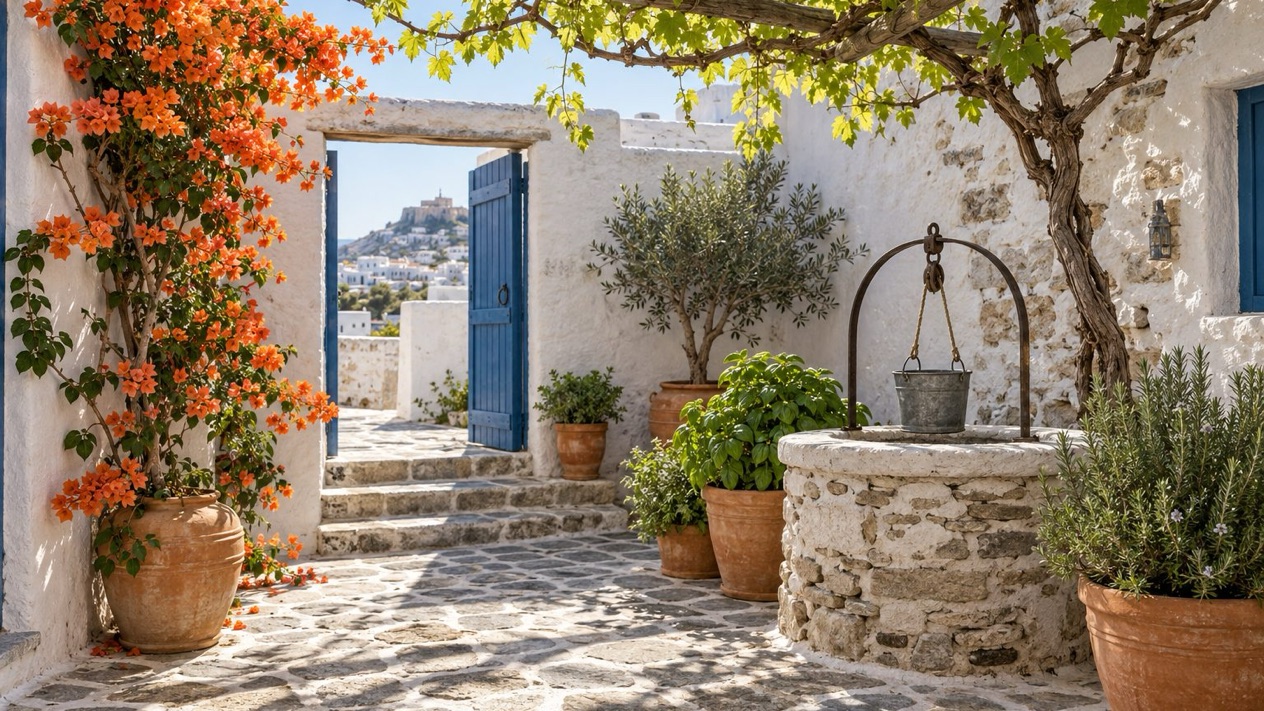
Is visiting Plaka Beach worth it?
Yes, if what you want from Naxos is time by the water on the island’s western coast, with the town of Chora and its ancient sites within reach of the same trip.
That line of names is the real answer to what sets Plaka apart: it is one choice among several, so you can treat the western shore as a menu. Some travelers pick a single beach and stay put. Others move along the coast from one to the next over several days, comparing the feel of each stretch for themselves, and Plaka is a natural place to start that comparison.
Naxos itself adds weight to the choice. It is the largest and most fertile island of the Cyclades, and that fertility shows up at the table: potatoes, cheese, honey and a lemon-citrus spirit all come from the island. A beach day here can end with a plate of local cheese and a glass of something cold, which is not true of every island in the group.
A word of caution for expectations. Plaka is a beach for the sea, the sky and the long view, and the rest of the island supplies the culture. If you want a day built around ruins, museums or mountain villages, you will do those on other days and come back to the shore to rest. If you want only a seaside stay, the western coast offers many days of it without repeating yourself.
The island’s scale also matters. Naxos is big for a Cycladic island, with a high mountain, inland villages and a capital town, so it rewards a stay of several nights rather than a single stop. Plaka fits into that kind of stay as the days at the water that balance the days on the move.
What to see at Plaka Beach
Around it, you pick up the island in layers, from the coast to the ancient sites in Chora to the villages in the hills.
The western shore and its neighbors
Plaka is one of a chain of beaches along the western side of the island. Neighbors on the same coast include Agios Prokopios, Agia Anna, Aliko, Kastraki, Mikri Vigla and Agios Georgios, and together they make up the part of Naxos most associated with swimming and sunbathing. Seeing the shoreline as a sequence rather than a single stop helps you plan.
What you do on the beach itself is simple and unhurried: arrange your towel, look out over the Aegean, wade in, read, watch the light change over the water.
If one beach feels right and another does not, the others are all on the same side of the island. That freedom to hop along the coast is part of the pleasure of staying on Naxos rather than a smaller island with one shore.
The Portara and the old town of Chora
Chora, also called Naxos City, is the capital and the largest town on the island. As a stop between beach days, the town gives the island its sense of history.
The Portara is the great doorway of an unfinished temple, and people come to stand in it and look out at the water. The Castle of Naxos sits among the town’s streets and gives you a way to read the town’s layers, a place where lanes, houses and old fortification walls meet.
Because Chora lies near the western beaches, combining a shore day with a town evening is natural. The harbor is lined with cafés and tavernas, and an evening walk there rounds out a day that began on the sand.
The Archaeological Museum of Naxos
For the deepest look at the island’s past, the Archaeological Museum of Naxos displays Neolithic finds from the Zas cave, including jewelry, pottery and tools. These are everyday objects, the things people made and wore on this island long before the temples, and seeing them gives the ruins around Chora some context.
The cave takes its name from Zas, the mountain that is the highest in the Cyclades. Knowing that the same mountain looms over the island gives you something to look for when you glance inland from the beach: the high ground that shaped the life of the people whose tools are in the cases.
A museum visit suits a day when the weather turns, or when you simply want a change from the sun. It pairs well with the Portara and a walk through the old streets.
The tastes of Naxos
Food is one of the best reasons to organize a day around the island rather than the beach alone. Naxos is known within Greece for its Arseniko Naxou cheese, its potatoes, Kitron and its honey, which is largely derived from the nectar of thyme. Kitron is a local lemon-citrus spirit, and you will see it offered as a drink after a meal.
Potatoes show up fried, roasted and in stews, cheese arrives at the table with bread and olives, and honey goes over yogurt or into pastries. Any taverna meal on the island is a way of tasting what grows on the slopes you can see from the coast.
Plan a lunch or dinner as part of the beach day and let the menu tell you what is in season. Ask what is local, and order a plate of the island’s cheese to share.
When to visit Plaka Beach
For swimming and beach days, the warm months are the clear choice, and the weather figures for the island show why. At Mykonos, close to Naxos, highs average 83.3°F in July with almost no rain, and the rain days at Naxos itself drop to none in that month. The table gives the full picture for four months across the year.
| Month | Average high (°F) | Average low (°F) | Precipitation (inches) | Days with rain (1 mm or more) |
|---|---|---|---|---|
| January | 55.2 | 47.7 | 3.01 | 11.2 |
| April | 64.0 | 54.7 | 0.78 | 3.9 |
| July | 83.3 | 72.7 | 0.01 | 0.0 |
| October | 71.2 | 63.0 | 1.08 | 3.6 |
In words: July is the month of warm days and dry skies, a time for beaches without a second thought about showers. Sun protection belongs in your bag, since the highs run well into the 80s and a beach has little cover of its own.
October is a different kind of month. It is a good month for mixing shore time with the sites and villages of the island, and for eating outside in the evening.
April sits at the other end of the same stretch. January is the wet month of the four, with rain on a good share of its days, so a rain jacket and the museum in Chora earn their place on the plan.
The meltemi in summer
One feature of the Aegean summer deserves a mention. The meltemi is a strong, dry north wind of the Aegean Sea that blows periodically from about mid-May to mid-September. It overlaps with the warmest weeks, so it is part of what a summer beach trip to Naxos can include.
Because the wind comes and goes, a trip in those months can include both still days and windy ones. Keep your plans loose enough to move a beach day around, and use the windier days for Chora, the museum and the villages.
Choosing your month
If the sea is your goal, aim for the dry heart of summer and accept the meltemi as part of the Aegean. If you want a gentler mix of beach, food and history, the shoulder months on either side of it give you mild air and a few rainy days. For a trip built mainly on the island’s sites and villages, the cooler, wetter months still leave you plenty to see, though the shore is then a place for a walk.
Whatever month you choose, the western beaches stay where they are, so the question is only what else you want from your days on Naxos.
Tips for your visit
Pack for sun first. In the warm months, the table points to hats, sunscreen and plenty of water, and a light cover-up for the walk from the sea to a taverna. In the wetter months, a rain jacket belongs in the bag instead, with a warm layer for the evening.
Bring what you need for the water: swimwear, a towel, sandals you can wear on and off the beach. Beyond that, take the beach as it comes and pick up what you want when you arrive.
Combining the beach with the island
Chora is the natural partner for a beach day because the western beaches are near it. The Temple of Demeter and the Archaeological Museum add more reasons to come into town.
For a day away from the coast, the main villages are Filoti, Apiranthos, Vivlos, Agios Arsenios, Koronos and Glynado. They sit in the hills and give a different side of the island, with the mountain Zas rising behind them. A day in the villages with lunch at a taverna is a good balance for several days at the sea.
Families and getting around
Families can fit the museum, the Portara and an evening at the harbor into a beach stay, which gives children variety between swims. The tastes of the island, from potatoes to honey, are easy to share at a family table.
Getting to Naxos usually means a boat. The island is about 5 1/2 hours by regular ferries from Piraeus, so plan your arrival day around the crossing rather than expecting to be at the beach by lunch. The port at Chora is too small for cruise ships.
What to eat after the beach
End the day with the island’s own flavors. A plate of Arseniko Naxou cheese with bread, potatoes from the island’s fields, and a small glass of Kitron make a meal that tastes like Naxos. If you like sweets, look for honey over thick yogurt.
Ask the server what is local that day, and share a few plates, which is the usual way to eat in a taverna. A walk along the harbor afterward is a pleasant way to close the evening.
Good to know before you go
In the summer months, the meltemi can shape a beach day, so keep one day in the plan loose. The sun is strong when the highs climb, and the west coast has the warm season of the Aegean to itself. Naxos is large enough that a single beach day is only one piece of the stay, so give the island several nights and let the shore, the town and the hill villages each have their turn.
Sources
- Wikipedia, Naxos (https://en.wikipedia.org/wiki/Naxos), checked October 12, 2026
- Visit Greece (GNTO), Naxos (https://www.visitgreece.gr/islands/cyclades/naxos/), checked October 12, 2026
- Wikivoyage, Naxos (https://en.wikivoyage.org/wiki/Naxos), checked October 12, 2026
- Hellenic National Meteorological Service (HNMS), climatological normals 1991-2020 for Mykonos station (https://www.emy.gr/climatic-data), monthly mean daily maximum and minimum; rain from the ECMWF ERA5 reanalysis, 1991-2020, grid cell of Naxos (Open-Meteo), checked October 12, 2026
- ECMWF ERA5 reanalysis 1991-2020, grid cell of Naxos (Open-Meteo), checked October 12, 2026
- Wikipedia, Blue Flag beach (https://en.wikipedia.org/wiki/Blue_Flag_beach), checked October 12, 2026
- Wikipedia, Meltemi (https://en.wikipedia.org/wiki/Meltemi), checked October 12, 2026
To plan your stay
- Agia Marina Beach near Chania: Setting, Seasons and the Old Town Next Door
- The Beaches of Antiparos: Sandy Shores, Nudist Coves, the Cave and Despotiko
- Agios Gordios Beach on Corfu: Ai Gordis Village, the Pink Palace, Weather by Season and Tips
- Agios Prokopios Beach: Naxos Setting, Seasons, Food and Nearby Sights