
July in Athens is hot, bright and busy, and it rewards people who plan around the sun. It suits a short city stay built around early mornings, long dinners and afternoons at the beach, ideally before or after the islands. June is a little easier on the legs. In August many locals leave town and some neighborhood shops close.
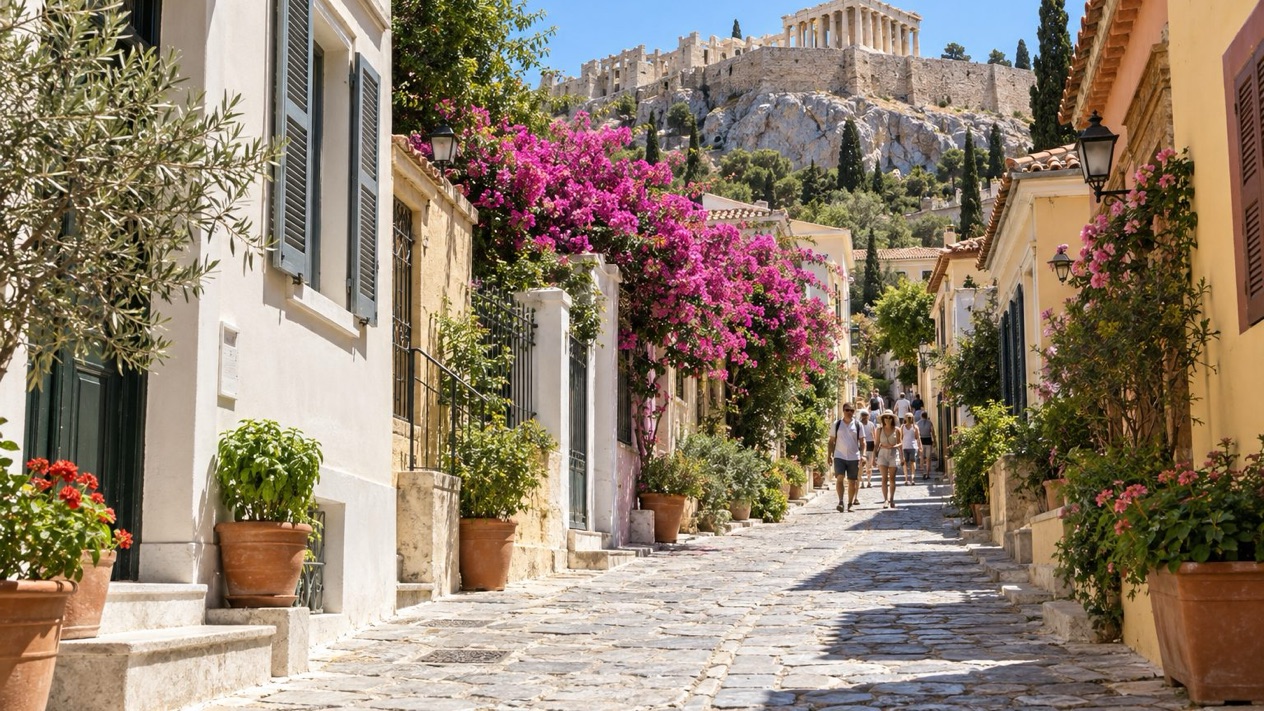
What is the weather like in Athens in July?
| Month | Average high | Average low | Rainfall | Sunshine per day |
|---|---|---|---|---|
| June | 89°F (32°C) | 70°F (21°C) | 0.3 in (7 mm) | 11.8 h |
| July | 94°F (34°C) | 75°F (24°C) | 0.3 in (7 mm) | 12.4 h |
| August | 94°F (34°C) | 76°F (24°C) | 0.2 in (6 mm) | 11.7 h |
July is one of the hottest months of the Athens year, with long, cloudless days and a sun that offers little respite. The air is dry, so the heat feels less sticky than in many summer cities, and rain is rare enough to leave out of your plans. Evenings cool off just a touch, and that is part of why dinners outdoors and late strolls feel so natural in Athens.
The ruins feel hotter than the forecast suggests, because bare stone, strong sun and scarce shade add up. Heatwaves happen, and a bad spell can push temperatures well past the usual highs. In a severe heatwave, the Acropolis and other archaeological sites may shut for a while around midday, so look up opening hours and any closure notices before you head out.
Is July a good time to visit Athens?
Yes, if you come for energy, nightlife, rooftop dinners and the sea, and keep the stay short. Two or three nights in a central hotel with good air conditioning is a comfortable plan for many first-time visitors. Long sightseeing days are hard work, because the heat limits outdoor walking after late morning. Families tend to enjoy July with an easy itinerary and a hotel that has a pool. With toddlers or children who struggle in the heat, June or September is kinder.
This is peak season. Expect crowds at the Acropolis, Plaka and Monastiraki, tour buses lined up at the major sights and lines at popular museums. Hotels switch to high-season rates, and central rooms with pools or Acropolis views go first and cost the most. July is not necessarily the most expensive month of the year, but a flexible budget helps.
Book the essentials before you fly: a central hotel, a timed-entry Acropolis ticket or guided tour for the first slot of the morning, and any fixed-date ferries or flights. Reserve popular rooftop restaurants too, since tables with an Acropolis view fill up fast around sunset.
How does July compare with other months?
June is warm and lively and easier for sightseeing. July is hotter, with more intense midday heat.
August is just as hot, but the feel changes. Many Athenians leave for the islands, so more independent shops and restaurants close for holidays. Major sights and hotels stay open. July keeps more local life in the streets and bars, while August, with the locals away, is a fine month to explore the Athens Riviera.
September is a great alternative for many Athens trips, with gentler heat, warm seawater and plenty of island connections. May and October are friendlier months for walking, visiting archaeological sites and spending long days sightseeing. July is the month for hot summer weather, swimming and the busiest stretch of island-hopping season.
Where should you stay in Athens in July?
Stay central, close to the major sights. Summer heat can turn long walks, steep climbs and hotels far from the center into a bigger effort than the map suggests.
Plaka suits first-timers, with easy walks to the Acropolis, the Acropolis Museum and Anafiotika. It is touristy, and pedestrian streets can complicate luggage drop-offs. Syntagma is a very practical base, with a direct metro line to the airport. Koukaki is calmer, with local restaurants and quick access to the Acropolis Museum and early Acropolis visits. Monastiraki and Psiri put you in the middle of the nightlife, and noise near the busiest streets comes with the territory. Kolonaki is upscale and quieter, though much of it is uphill.
Choose a hotel with strong air conditioning, and a pool if you can get one. A location that makes it easy to come back for an afternoon shower, nap or swim works well. Consider the Athens Riviera as a base if beach time matters more to you than being close to the Acropolis and the historic center.
What is there to do in Athens in July?
Start early. The Acropolis and the Ancient Agora are at their best in the first hours of the day, so carry plenty of water and wear a hat. One major outdoor sight per morning is plenty, and by late morning it is time to head indoors. The air-conditioned Acropolis Museum pairs naturally with the Acropolis. The National Archaeological Museum, one of the city's best, is ideal for a hot afternoon. A long lunch or the hotel pool covers the rest of the hottest hours.
When the sun drops, the city changes gear. A rooftop table under the illuminated Acropolis is the classic Athenian evening. Cine Paris in Plaka is a favorite outdoor cinema, loved for its rooftop setting and Acropolis views. Check the schedule and book popular screenings ahead. The Megaron Concert Hall stages outdoor concerts in its grassy gardens, and the Athens and Epidaurus Festival runs from June to late August with theater, music and dance. The Ejekt Music Festival, a seaside event with an international line-up, is usually held on various July dates. For bars and late nights, start in Psiri and Monastiraki.
The sea is warm in July, and the Athens Riviera has organized beaches, restaurants and beach clubs around Glyfada, Voula and Vouliagmeni. Vouliagmeni is a favorite for swimming, upscale restaurants and resort hotels. Nearby Lake Vouliagmeni is a separate, paid swimming spot with mineral-rich water. Voula has good organized beaches, is quieter than Glyfada and suits families. Glyfada mixes beach time with shopping and nightlife. Prices and weekend crowds are high, so many visitors who stay in the city find that one afternoon at the beach and dinner on the coast is plenty. The tram serves Glyfada and Voula but moves slowly from central Athens and stops short of Vouliagmeni, so a taxi is usually the easiest way there.
For a change of scene, Delphi makes a strong day trip for history, with its Sanctuary of Apollo. Saronic islands such as Aegina and Hydra are easy escapes by ferry.
Between sights, wander the Central Market, ideally on a food tour that passes through it. Then cool down with an iced frappe or freddo cappuccino.
How do you get from Athens to the Greek islands in July?
July has frequent ferry and flight connections, and the islands are at their best for swimming. Book ahead when your dates are fixed, especially high-speed ferries and weekend departures, which can sell out. Large conventional ferries usually have more room. Flying saves considerable time to Crete and Santorini.
Piraeus is the main port and the usual departure point for the Cyclades and Crete. Rafina is a smaller port closer to the airport, with summer sailings to Mykonos, Andros, Tinos and other islands. Check which port your ferry uses before arranging a transfer. Avoid tight flight-to-ferry connections, since delays, baggage claim and traffic can cost you the boat. Plan to sleep in Athens the night before an international flight, and avoid counting on a same-day ferry to get you back in time.
Transportation strikes are common in Greece and can interrupt public transportation, taxis, seaports and airports. Demonstrations can also flare with little notice. Check the news and the current timetable before any fixed-date ferry or flight day.
What should you pack for Athens in July?
Pack light, breathable clothes: shorts, tank tops, a swimsuit and a light jacket for the evenings. Add a hat, sunglasses, sunscreen and a refillable water bottle. Shoes with good grip matter at the ruins, where some marble and stone is slippery even when dry. Carrying some cash is handy in Athens, so you are not hunting for an ATM when you need it.
What do U.S. travelers need to know about entry and safety in Greece?
U.S. citizens can visit Greece without a visa for stays of up to 90 days for tourism or business. Your passport should have at least three months of validity beyond your planned departure date. A passport previously reported lost or stolen will not be accepted for entry. Be ready to show proof of sufficient funds and a return ticket or other evidence of departure if asked.
Greece is generally safe for travelers. Petty crime is common in popular tourist spots, and pickpockets work public transportation, especially the metro. Many care providers in Greece accept only cash, and private hospitals usually ask for proof of adequate insurance or cash before admitting a patient, so keep your insurance details with you. Forest fires are common in the dry summer months and occasionally close roads, so check conditions before any drive out of the city.
Sources
- santorinidave.com (https://santorinidave.com/athens-in-july), checked October 18, 2026
- headout.com (https://www.headout.com/blog/athens-in-july/), checked October 18, 2026
- kimkim.com (https://www.kimkim.com/c/athens-in-july-travel-tips-weather-and-more), checked October 18, 2026
- royalcaribbean.com (https://www.royalcaribbean.com/inspire/best-time-to-visit-athens), checked October 18, 2026
- thisisathens.org (https://www.thisisathens.org/seasonal-guide/summer/summer-in-athens), checked October 18, 2026
- U.S. Department of State (https://travel.state.gov/content/travel/en/international-travel/International-Travel-Country-Information-Pages/Greece.html), checked October 15, 2026
- U.S. Department of State (https://travel.state.gov/content/tsg_aem/us/en/home/international-travel/travel-advisories/destination.grc.html), checked October 15, 2026