
FLORIDA · THE SPACE COAST · JULY
Rocket displays on Merritt Island, surf at Cocoa Beach and the Indian River lagoon between them: you have already picked the Space Coast, and the open question is the date. A July vacation here lines up with the school summer holiday, inland highs in the low 90s and the warmest Atlantic of early summer, with a thunderstorm on roughly one day in three.
Every figure here carries its source and its date. The air normals come from NOAA’s official station at Orlando International and the sea from Open-Meteo’s marine model. Both sit next to June and August, so you can decide whether to fly now or shift the trip four weeks.
THE MONTH AT A GLANCE · THE SPACE COAST IN JULY
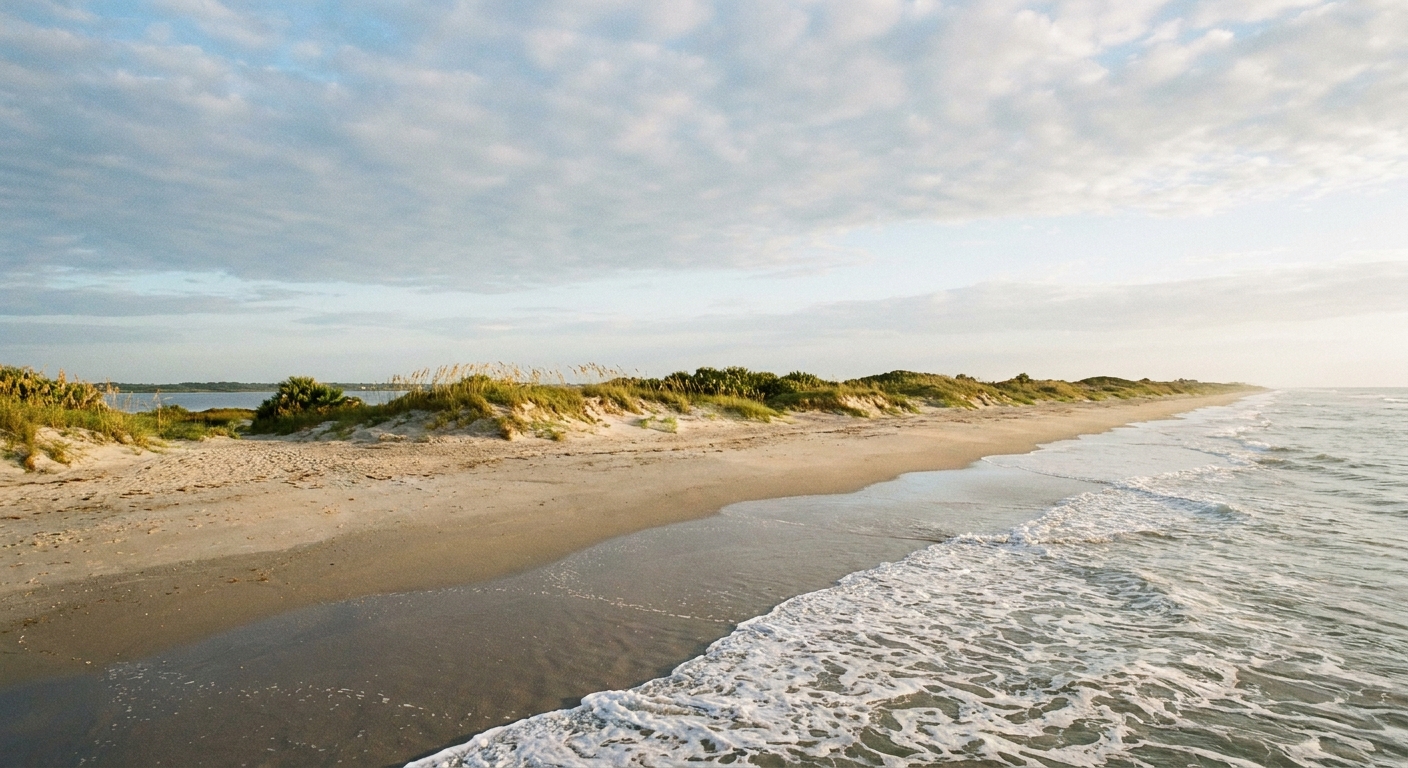
Go in July for an 85.4°F sea and daylight until 8:26 p.m., and put every outdoor stop in the morning, ahead of the 92.0°F inland afternoon and its storms.
SUMMER SCHOOL HOLIDAYS · HURRICANE SEASON FROM JUNE 1 · AIR NORMALS FROM ORLANDO INTL
Go for: dawn swims in 85.4°F water, school-holiday timing, and light for an evening beach walk until 8:26 p.m. on July 15.
Think twice before: midday outdoor plans or nonrefundable bookings. Rain falls on 11.5 days of an average July, and hurricane season opened on June 1.
Air: NOAA NCEI, Orlando Intl station · Sea: Open-Meteo Marine API · Light: sunrise-sunset.org · full sources at the end
On this page
- Space Coast weather in JulyHighs of 92.0°F and 11.5 rain days
- Can you swim at the Space Coast in July?Sea surface at 85.4°F
- Hotel prices and crowds in JulySchool holidays, refundable rates, lodging tax
- Things to do in JulyKennedy Space Center, Playalinda, Black Point Wildlife Drive
- A two-day July itineraryDay one at Cocoa Beach, day two at the refuge
- July vs June and AugustHighs of 90.8°F, 92.0°F and 91.6°F
- Is July a good time to visit?Who should go in July and who should wait
For the season across the whole state, start with our Florida best-time guide. The drive from the airport is in our getting-around guide, and the same coast four weeks earlier lives in the Space Coast in June.
The Space Coast weather in July: average highs, lows and rain days
| July measure | Figure | Source |
|---|---|---|
| Average high | 92.0°F | NOAA NCEI, Orlando Intl, 1991-2020 |
| Average low | 73.2°F | NOAA NCEI, Orlando Intl, 1991-2020 |
| Precipitation | 7.46 in | NOAA NCEI, Orlando Intl, 1991-2020 |
| Days with 0.10 in or more | 11.5 | NOAA NCEI, Orlando Intl, 1991-2020 |
| Days with 1 in or more | 2.0 | NOAA NCEI, Orlando Intl, 1991-2020 |
| Daylight on July 15 | 13 h 49 min | sunrise-sunset.org |
| Sunrise and sunset, July 15 | 6:36 a.m. and 8:26 p.m. EDT | sunrise-sunset.org, converted from UTC |
NOAA’s National Centers for Environmental Information set the July normals for 1991 to 2020 at an average high of 92.0°F, an average low of 73.2°F and 7.46 inches of rain. Those numbers come from a real thermometer, official station USW00012815 at Orlando International Airport, roughly 60 km (about 37 miles) inland. The coast runs cooler by day and milder by night, and it gets a sea breeze Orlando never feels. Read every figure here as Orlando’s: a touch hotter in the afternoon and cooler after dark than the beach.
Measurable rain, at least 0.10 inch, falls on 11.5 days of an average July, or about one day in three. Only 2.0 days bring an inch or more, so most wet days deliver a burst and then clear. Florida’s wet season runs on afternoon thunderstorms, as our Florida orientation sets out, which puts the beach and the boat in the morning and anything with a roof in the afternoon.
From the 92.0°F afternoon to the 73.2°F night the gap is 18.8°F, and even the low stays warm enough to leave the jacket at home. Pack for heat and water: breathable shirts, a wide-brimmed hat, plenty of sunscreen, a light rain shell or compact umbrella, and one thin layer for air-conditioned restaurants and museums.
On July 15 the sun rises at 6:36 a.m. and sets at 8:26 p.m. Eastern Daylight Time, converted from sunrise-sunset.org’s UTC figures, for about 13 hours 49 minutes of daylight. Evenings stay bright well past dinner, so a 7 p.m. meal still leaves time for a walk along the lagoon or the sand before dark.
Can you swim in the Space Coast in July? Sea temperature and what it feels like
Open-Meteo’s Marine API puts the sea surface off the Space Coast at 85.4°F in July, averaged over 2015 to 2024. That value is a mean of daily maxima, the warmest reading of each day, so it runs a shade warmer than a 24-hour average would. It also comes from a marine model, a different source and period from the Orlando station behind the air normals.
In practice, water in the mid-80s means walking straight in, no gasp and no wetsuit. It also offers little cooling. At 85.4°F the sea sits only 6.6°F below the 92.0°F inland high, so a swim softens an afternoon without resetting it. Swimming soon after the 6:36 a.m. sunrise pairs the water with the coolest air of the day.
Our sources carry no July figure for wind or surf height off the Space Coast, so we give none. Check the local surf forecast and the lifeguard flags on the day, and get out of the water at the first rumble of thunder. Our Florida safety guide has the wider picture on beaches and storms.
How busy is the Space Coast in July? Crowds and prices
July falls inside the US school summer holiday, and the week around the July 4 federal holiday counts among the holiday weeks our Florida guide names as statewide price peaks. We found no monthly room-rate or occupancy series for the Space Coast, so we rank July neither cheap nor expensive against the rest of the year.
We found no booking lead-time data either, so we give no week count. Hurricane season opened on June 1 and runs to November 30, with the dates sourced to NOAA in our Florida guide. Book rooms and rental cars on refundable terms. Orlando International (MCO) is the airport for the Space Coast, and a car is essential once you land; our flights guide and getting-around guide cover both.
We could not verify the lodging tax that applies to rooms in Brevard County, the county the Space Coast sits in, so we give no percentage. Compare totals on the final booking screen, where resort fees and parking also appear at the properties that charge them. Our Florida trip-cost guide sets out the budget tiers.
Spend the extra on the refundable rate. A nonrefundable room saves money only if no tropical system forms, while a flexible booking lets you move the stay to June or August dates or cancel outright. Our where-to-stay guide helps pick the base.
Things to do in the Space Coast in July
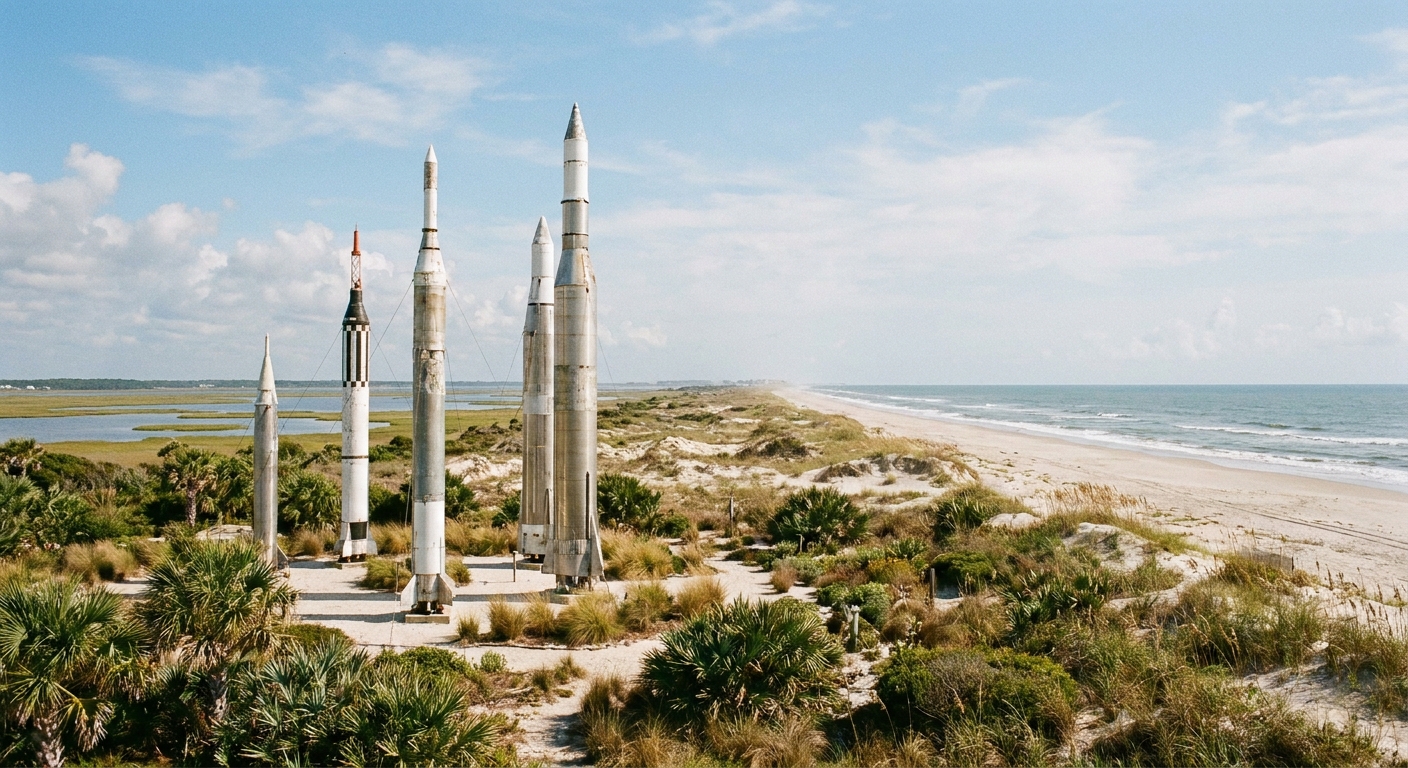
The sea is the reason to come now: 85.4°F in July against 83.1°F in June and 84.9°F in August, all from Open-Meteo’s marine data. With sunset at 8:26 p.m. on July 15 and the kids out of school, a family can swim at dawn and still have light for an evening walk.
Kennedy Space Center Visitor Complex on Merritt Island holds the Rocket Garden and the Space Shuttle Atlantis exhibit. To the north, Canaveral National Seashore keeps undeveloped barrier-island beach at Playalinda (more federal sites in our national parks guide), and Merritt Island National Wildlife Refuge runs Black Point Wildlife Drive through its marshes. Cocoa Beach and its pier anchor the resort strip to the south. We could not verify July admission prices, opening hours or launch dates for any of them, so check each operator and the launch schedule before you travel.
Black Point Wildlife Drive and Playalinda Beach offer little shade, so schedule both before the 92.0°F afternoon and the storms that often follow it. The Visitor Complex mixes outdoor displays with indoor halls and suits the hotter hours. Across the day the sea barely shifts from its 85.4°F, while the air climbs about 18.8°F from night low to afternoon high.
We could not verify parking or entry fees for July, so we call no attraction free. The sunrise needs no ticket: at 6:36 a.m. on July 15 it comes up out of the Atlantic, in full view from any public beach access in Cocoa Beach.
The Space Coast in July: a two-day itinerary
Day one. Be on the sand at Cocoa Beach for the 6:36 a.m. sunrise and swim before 9 a.m., while the air sits closest to its 73.2°F low. Drive to Kennedy Space Center Visitor Complex by mid-morning and walk the outdoor Rocket Garden first, then move to the indoor exhibits after lunch as the heat peaks and storm odds rise. Pool by late afternoon, dinner around 7 p.m., and a beach walk in light that lasts to 8:26 p.m.
Day two. Head north at first light for Black Point Wildlife Drive and a morning on Playalinda Beach, then retreat for lunch before the afternoon thunder. If the forecast turns stormy, reverse the day: lunch or a museum indoors while it rains, the refuge drive once it clears, and the swim moved to the next morning. Longer routes that fold the coast into a bigger trip are in our 7-day Florida itinerary.
The Space Coast in July vs June and August
| Normal | June | July | August |
|---|---|---|---|
| Average high (NOAA, Orlando Intl) | 90.8°F | 92.0°F | 91.6°F |
| Average low (NOAA, Orlando Intl) | 71.6°F | 73.2°F | 73.7°F |
| Precipitation (NOAA, Orlando Intl) | 8.05 in | 7.46 in | 7.69 in |
| Days with 0.10 in or more | 11.5 | 11.5 | 11.5 |
| Sea surface, daily maxima (Open-Meteo) | 83.1°F | 85.4°F | 84.9°F |
On NOAA’s Orlando normals, July tops the three months for daytime heat, 92.0°F against 90.8°F in June and 91.6°F in August, and comes last for rain, 7.46 inches against 8.05 and 7.69. Rain days do not move at all, with 11.5 at 0.10 inch or more in each month. August keeps the warmest nights at 73.7°F. The sea, from Open-Meteo’s Marine API rather than the station, peaks in July at 85.4°F, 2.3°F above June and 0.5°F above August.
Shifting four weeks earlier to June buys days 1.2°F cooler and nights 1.6°F cooler, for 0.59 inch more rain and a sea 2.3°F cooler; our June guide has the full month. Shifting to August barely touches the air (days 0.4°F cooler, nights 0.5°F warmer) and adds 0.23 inch of rain. It also moves the trip closer to the hurricane season’s September 10 peak, a date our Florida guide sources to NOAA.
Is July a good time to visit the Space Coast?
Yes, for swimmers, families tied to the school calendar and anyone content to split the day into a beach morning and an indoor afternoon. No, for travelers who want long midday hikes, open-air sightseeing at 2 p.m. or a storm-free week, because 11.5 rain days and a 92.0°F inland high make those plans hard. Traveling with children? Our Florida with kids guide covers the family angle.
If the answer is no, aim for the dry season, November through April, when our Florida best-time guide finds reliable sun and low humidity across the state. We have not yet sourced Space Coast normals for those months, so we quote no winter figure for this coast.
Of June, July and August, July pairs the warmest sea, 85.4°F, with the least rain, 7.46 inches.
The last word
Book July refundable, do the outdoors before lunch, and head inside when the thunder starts. Pack one more number: the sea’s average daily maximum of 85.4°F sits 12.2°F above the average July night low of 73.2°F, so on a dawn swim off Cocoa Beach the Atlantic feels warmer than the air you step out of.
Sources & data for this guide
- July normals (92.0°F high, 73.2°F low, 7.46 in, 11.5 days at 0.10 in, 2.0 days at 1 in) · NOAA NCEI monthly normals 1991-2020, station USW00012815, Orlando International · checked Sep 24, 2026
- June and August air normals · NOAA NCEI monthly normals 1991-2020, same station · checked Sep 24, 2026
- Sea surface for June, July and August (mean of daily maxima) · Open-Meteo Marine API, 2015-2024 average · checked Sep 24, 2026
- Daylight, sunrise and sunset on July 15 · sunrise-sunset.org, UTC times converted to EDT (UTC-4) · checked Sep 24, 2026
- Hurricane season dates and September 10 peak · NOAA National Hurricane Center, via our Florida guide · checked Sep 24, 2026
- Editorial note · The air normals come from Orlando International, about 60 km inland, and the coast runs cooler by day and milder by night. We could not verify room rates, occupancy, the Brevard County lodging tax, July wind or surf, admission prices, opening hours or launch dates, so we give none of those figures. Check operators when you book.
To plan your stay
- Best Time to Visit the Space Coast: Weather, Sea Temperature and the Quiet Months
- The Space Coast in June: Weather, Sea Temperature, Rain Days and Crowds
- The Space Coast in August: Weather, Sea Temperature, Rain Days and Crowds
- The Space Coast in May: Weather, Sea Temperature, Crowds and a Two-Day Plan