
FLORIDA · THE SPACE COAST · AUGUST
The official August normals for the Space Coast come from a thermometer at Orlando International Airport, about 60 km (roughly 40 miles) inland: an average high of 91.6°F and a low of 73.7°F. The beaches at Cocoa Beach and Cape Canaveral run a little cooler by day and milder by night, and they get the sea breeze the airport never feels. Offshore, the Atlantic averages 84.9°F on our marine source’s daily-maximum measure. That is warm enough for a long swim at either end of the day.
You have picked the coast already, so the question here is the calendar. August brings 13 hours 11 minutes of daylight on the 15th and a sea half a degree below July’s. It also carries the wettest normal from July to September: 7.69 inches of rain, against 7.46 in July and 6.37 in September. The month sits inside the Atlantic hurricane season, June 1 to November 30, as our Florida overview sets out with the NOAA dates.
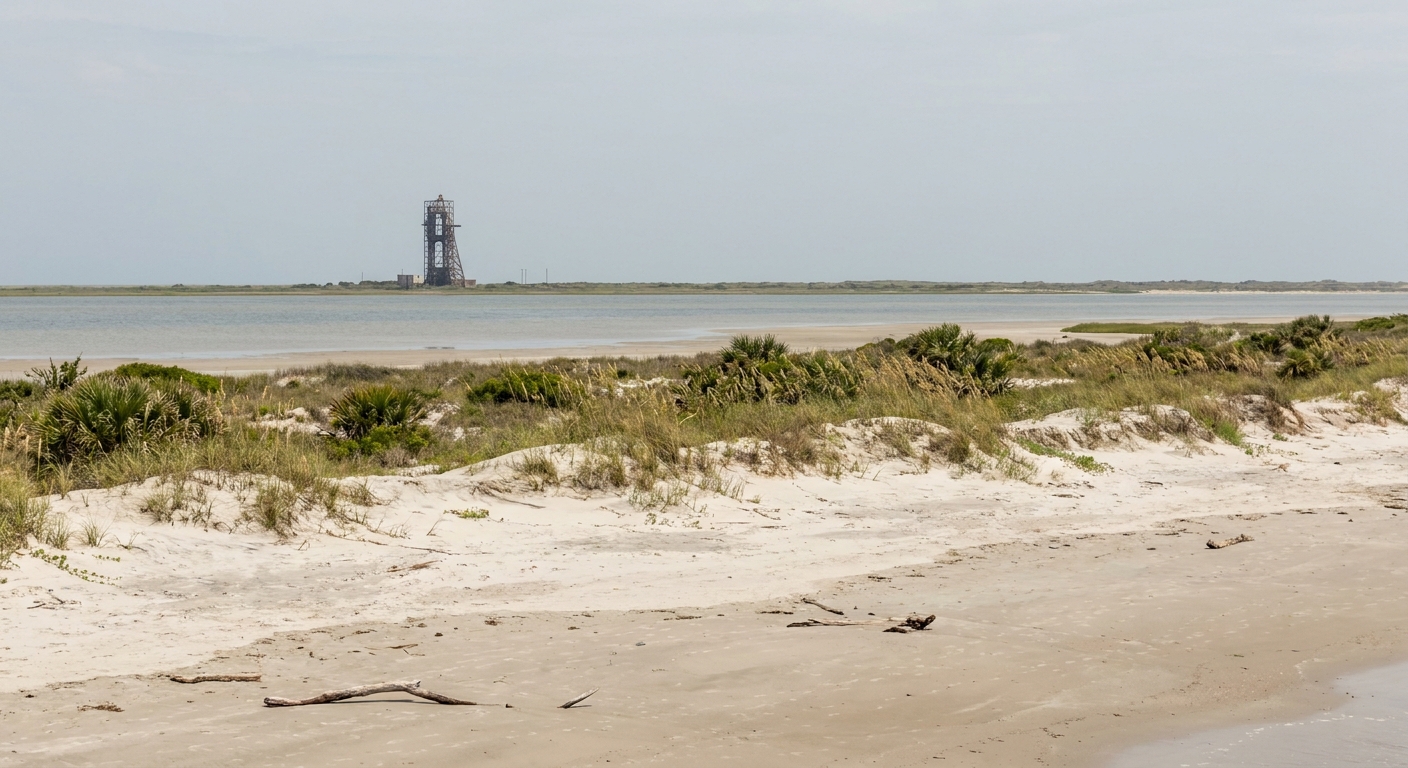
THE MONTH AT A GLANCE · THE SPACE COAST · AUGUST
August on the Space Coast suits swimmers who plan around the heat: water near 85°F, long evenings, and measurable rain on a little more than one day in three.
WET SEASON · HURRICANE SEASON · NORMALS FROM ORLANDO INTERNATIONAL
Go for: sunrise swims in water near 85°F, light until 8:05 p.m., and indoor space exhibits for the storm hours.
Think twice before: booking a prepaid, non-refundable stay, since August sits inside the June 1 to November 30 hurricane season.
Climate: NOAA NCEI, Orlando Intl · Sea: Open-Meteo Marine · Light: sunrise-sunset.org · full sources at the end
On this page
- Space Coast weather in August91.6°F highs and 11.5 rain days at Orlando International
- Can you swim in August?Sea surface near 84.9°F, measured as daily maxima
- August crowds, prices and lodging taxHurricane-season booking and the Brevard County tax
- Things to do on the Space Coast in AugustKennedy Space Center, Merritt Island and Canaveral National Seashore
- Two days on the Space Coast in AugustA sunrise-to-sunset plan from 6:54 a.m. to 8:05 p.m.
- August vs July or SeptemberHow the three months differ on heat, rain and sea
- Is August a good time to go?Who should book August and who should wait for September
Most August trips here start with a flight into Orlando International (MCO), the airport that also hosts the NOAA station behind every figure here. Our Florida flights guide covers the airports, getting around covers the rental car and the tolls, and where to stay covers beds. For the month before, see the Space Coast in July.
The Space Coast weather in August: average highs, lows and rain days
| August normal | Figure | Source |
|---|---|---|
| Average high | 91.6°F (33.1°C) | NOAA NCEI, Orlando Intl, 1991-2020 |
| Average low | 73.7°F (23.2°C) | NOAA NCEI, Orlando Intl, 1991-2020 |
| Precipitation | 7.69 in | NOAA NCEI, Orlando Intl, 1991-2020 |
| Days with 0.10 in or more | 11.5 | NOAA NCEI, Orlando Intl, 1991-2020 |
| Days with 1 in or more | 2.3 | NOAA NCEI, Orlando Intl, 1991-2020 |
| Daylight, Aug 15 | 13 h 11 min | sunrise-sunset.org |
| Sunrise / sunset, Aug 15 | 6:54 a.m. / 8:05 p.m. EDT | sunrise-sunset.org |
NOAA’s National Centers for Environmental Information publish these normals for station USW00012815, a real thermometer at Orlando International, averaged over 1991 to 2020. It is a station record rather than a grid-cell reanalysis, which is why we use it, but it stands about 60 km from the sand. Read 91.6°F as the inland afternoon. On the beach the same afternoon tops out a little lower, and nights stay a touch warmer than the airport’s 73.7°F.
Measurable rain (0.10 inch or more) falls on 11.5 days of an average August, a little more than one day in three. On 2.3 of those days the gauge collects an inch or more, the kind of downpour that empties a beach. Across Florida the wet season runs to afternoon thunderstorms, as our Florida overview notes. Put the beach and the boardwalks in the morning and keep the afternoon for something with a roof.
Between the 91.6°F afternoon and the 73.7°F dawn, the inland swing is 17.9°F, and the coast narrows it further. No sweater goes in the bag. Pack breathable shirts, a hat, sunscreen, a compact rain shell for the storm hours, and one light layer for air-conditioned interiors such as the visitor complex and your rental car.
On August 15 the sun rises at 6:54 a.m. and sets at 8:05 p.m. Eastern Daylight Time, converted from sunrise-sunset.org’s UTC figures, for 13 hours 11 minutes of light. Sunrise comes up over the Atlantic, so an east-facing beach gets the first light directly. Evening beach plans can run right up to 8:05 p.m.
Can you swim in the Space Coast in August? Sea temperature and what it feels like
Open-Meteo’s Marine API puts the sea surface off the Space Coast at 84.9°F in August, averaged over 2015 to 2024. The figure is a mean of daily maxima, the warmest reading of each day, so it runs a shade warmer than a 24-hour average, and a dawn reading would sit a little lower. On the same measure July averages 85.4°F and September 85.3°F, so August trails July by half a degree and September by 0.4°F.
In practice, 84.9°F water means you walk in without a gasp and stay in without a wetsuit. It sits 6.7°F below the inland average high, so a swim cools you down without chilling you, and a long family session in the shallows needs no gear beyond sunscreen and a hat.
We could not find wind, wave or rip-current data for August in our sources, so we give no surf or swell outlook. Check the National Weather Service marine and surf forecast for Brevard County on the morning you swim, and stay near a lifeguard where one is posted.
How busy is the Space Coast in August? Crowds and prices
We found no hotel-occupancy series and no monthly room-rate data for the Space Coast, so we rank August against no other month on price. Two calendar facts hold statewide: holiday weeks and spring break are Florida’s annual peaks, and early December and May are its quiet bargains, as our Florida overview lays out. August is neither a holiday week nor spring break.
We could not verify a typical booking lead time for August, so we give no number of weeks. Hurricane season changes one thing: book refundable where the rate allows and check the tropics before you fly, as we advise for the storm months statewide. Our Florida trip-cost guide has the budget tiers.
We could not verify the lodging tax Brevard County applies to hotel and vacation-rental stays, so we give no percentage. Ask for the all-in nightly total, taxes and fees included, before you pay a deposit.
A refundable rate usually costs more per night than a prepaid one, and in August it is the upgrade worth buying: it lets you move the dates if a storm forms. Budget for the other extras too, since resort fees and parking can add real money per night at beachfront properties.
Things to do in the Space Coast in August
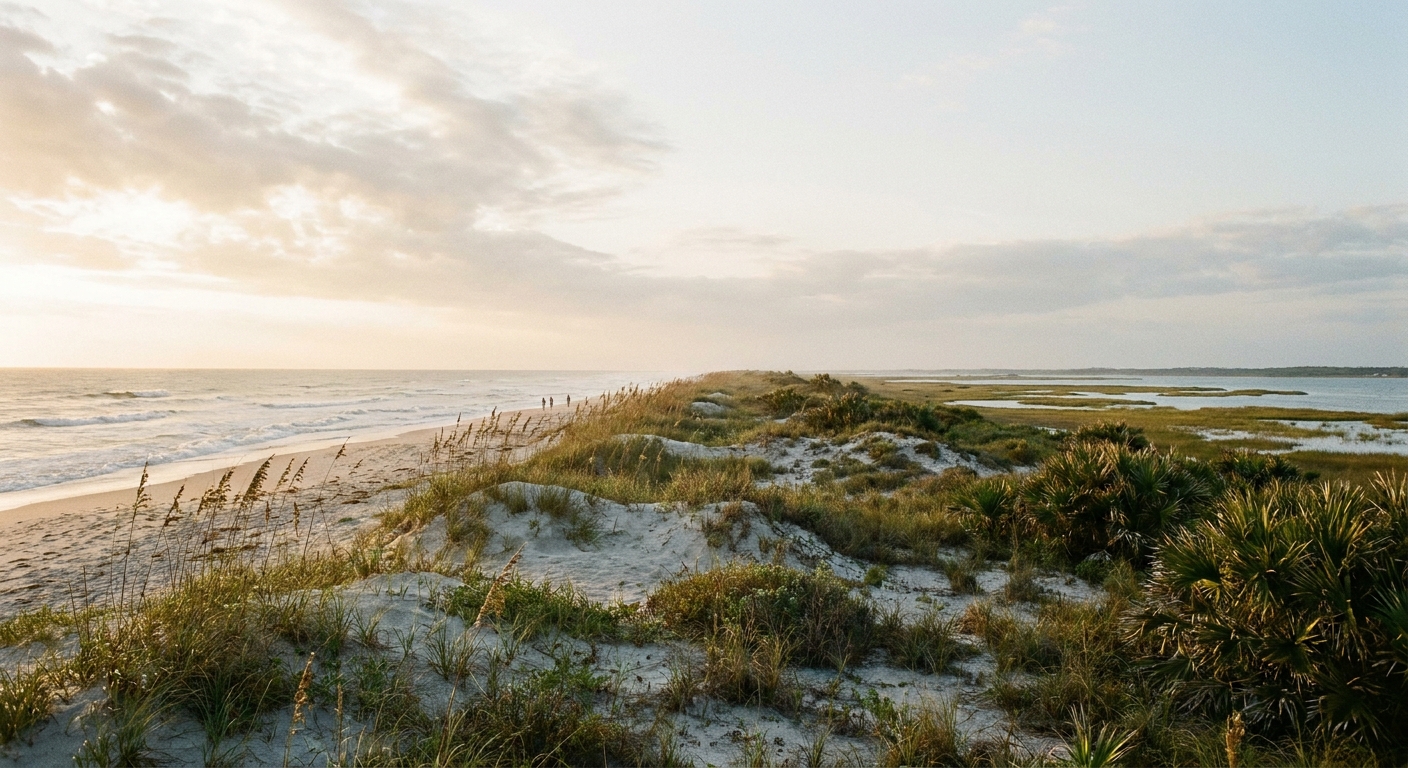
August hands you a 6:54 a.m. sunrise and water near 85°F at the same hour, so a swim before breakfast needs no nerve at all. The light holds until 8:05 p.m., long enough for a second beach session after the storm hours. Plan both swims and give the middle of the day to roofs.
The names to plan around are the Kennedy Space Center Visitor Complex on Merritt Island, the Merritt Island National Wildlife Refuge next door, Canaveral National Seashore to the north, and the public beaches of Cocoa Beach to the south. We could not verify August ticket prices, opening hours or parking fees for any of them, so we quote none. Check each operator when you book. We verified no rocket launch date for August either, and schedules shift. Our Florida things-to-do guide and national parks guide go wider.
Air and water move differently across the summer. The sea stays between 84.9°F and 85.4°F from July to September, while the inland afternoon slides from 92.0°F in July to 91.6°F in August and 89.6°F in September. The sea breeze trims the coastal afternoon, but late morning to mid-afternoon is still better spent in the visitor complex’s exhibit halls than on the refuge’s open trails.
We found no free-admission days for August at any of these sites, so we list none. Watching the sunrise from a public beach access costs nothing, and neither does the Atlantic at 84.9°F, though beach parking fees may apply and we could not verify them.
The Space Coast in August: a two-day itinerary
Day one: be on the sand at Cocoa Beach for the 6:54 a.m. sunrise and swim before 9 a.m., while the air is closest to its morning low. Drive north by late morning to the Kennedy Space Center Visitor Complex and spend the hottest hours, roughly 11 a.m. to 4 p.m., under its roofs, where an afternoon storm costs you nothing. Around 6 p.m. head back to the beach for a second swim and stay until the 8:05 p.m. sunset.
Day two: start at Merritt Island National Wildlife Refuge or Canaveral National Seashore at first light, and be off the open trails and dunes before midday. If thunder builds, leave the water and the beach at once and wait it out indoors; our Florida safety guide has more. If the storm arrives early or settles in for the afternoon, swap the order: museum time first, beach once the radar clears, with the evening light running past 8 p.m.
The Space Coast in August vs July and September
| Normal | July | August | September |
|---|---|---|---|
| Average high | 92.0°F | 91.6°F | 89.6°F |
| Average low | 73.2°F | 73.7°F | 72.4°F |
| Precipitation | 7.46 in | 7.69 in | 6.37 in |
| Days with 0.10 in or more | 11.5 | 11.5 | 9.2 |
| Sea surface (daily max, Open-Meteo Marine 2015-2024) | 85.4°F | 84.9°F | 85.3°F |
On the NOAA Orlando International normals, July and August are close to twins: highs of 92.0°F and 91.6°F, lows of 73.2°F and 73.7°F, 11.5 rain days each, with August collecting 0.23 inch more rain. September breaks away, with its high down to 89.6°F, its low to 72.4°F and its rain to 6.37 inches over 9.2 days. The sea, on Open-Meteo’s separate 2015-2024 marine series, hardly moves at 85.4°F, 84.9°F and 85.3°F.
Move four weeks earlier and you gain half a degree of sea and 0.23 inch less rain, with the same rain days and a high 0.4°F hotter. Move four weeks later and you get a high 2.0°F lower, 1.32 inches less rain and 2.3 fewer wet days. September, though, sits closer to the hurricane season’s statistical peak around September 10, the NOAA date our Florida overview cites, so a refundable rate matters even more then.
Is August a good time to visit the Space Coast?
Yes, for swimmers, beach families and anyone happy to do their outdoor hours before noon and after 6 p.m.: the sea near 85°F and the long evenings make that schedule easy. No, for anyone who wants long midday hikes on the refuge trails, or who can only book a prepaid, non-refundable stay in the middle of hurricane season.
If August looks too wet, September is the nearer fix, cooler and drier on every air normal above with a sea just as warm. If the storm calendar is the worry, skip the wet season altogether and aim for Florida’s dry season, November through April, as our Florida best-time guide sets out.
August’s case in one line: you can swim in 84.9°F water at 6:54 a.m. and again at 7 p.m., and spend the storm hours in between under the visitor complex roofs.
The last word
Book August with a refundable rate, fly into Orlando International, and build every day around the two swims. The rain comes in bursts: 7.69 inches over 11.5 wet days works out to about two-thirds of an inch each time it rains, enough to send you indoors for a while. Keep the Kennedy Space Center tickets for the afternoon and the Atlantic for both ends of the day.
Sources & data for this guide
- August normals (91.6°F high, 73.7°F low, 7.69 in) and rain days (11.5 at 0.10 in, 2.3 at 1 in) · NOAA NCEI 1991-2020 monthly normals, station USW00012815, Orlando International Airport · checked Sep 24, 2026
- July and September air normals and rain days · same NOAA NCEI station and period · checked Sep 24, 2026
- Sea surface temperature for July, August and September, mean of daily maxima, 2015-2024 · Open-Meteo Marine API · checked Sep 24, 2026
- Daylight, sunrise and sunset on Aug 15 (UTC converted to EDT) · sunrise-sunset.org · checked Sep 24, 2026
- Hurricane season dates and the Sept 10 peak · NOAA National Hurricane Center, via our Florida overview · checked Sep 24, 2026
- What we could not verify: August hotel rates or occupancy, the Brevard County lodging-tax rate, venue tickets, hours and parking, launch dates, and wind or wave data. The station sits about 60 km inland, so the beach runs cooler by day and milder by night than every figure here.
To plan your stay
- Best Time to Visit the Space Coast: Weather, Sea Temperature and the Quiet Months
- The Space Coast in July: Weather, Rain Days, Sea Temperature and Crowds
- The Space Coast in September: Weather, Sea Temperature, Rain Days and Hurricane Season
- The Space Coast in June: Weather, Sea Temperature, Rain Days and Crowds