
FLORIDA · THE SPACE COAST · FEBRUARY
The Space Coast in February sits inside Florida’s dry season, the November-to-April stretch that our best-time guide follows month by month. Afternoons reach the mid-70s, rain turns up on fewer than four days, and the sun rises out of the Atlantic just after seven. A trip built around Kennedy Space Center, the Cocoa Beach sand and the marshes of Merritt Island gets comfortable walking weather from lunch until the 6:16 p.m. sunset.
Swimmers have less to celebrate. The sea off the coast averages 67.8°F in February (2015–2024 daily maxima), exactly where it sat in January, and nights still reach the low 50s. If long swims are the point of the trip, March warms the water by 3.6°F and the afternoons by 4°F. If they aren’t, February is the drier of the two, and our January guide covers the month before.
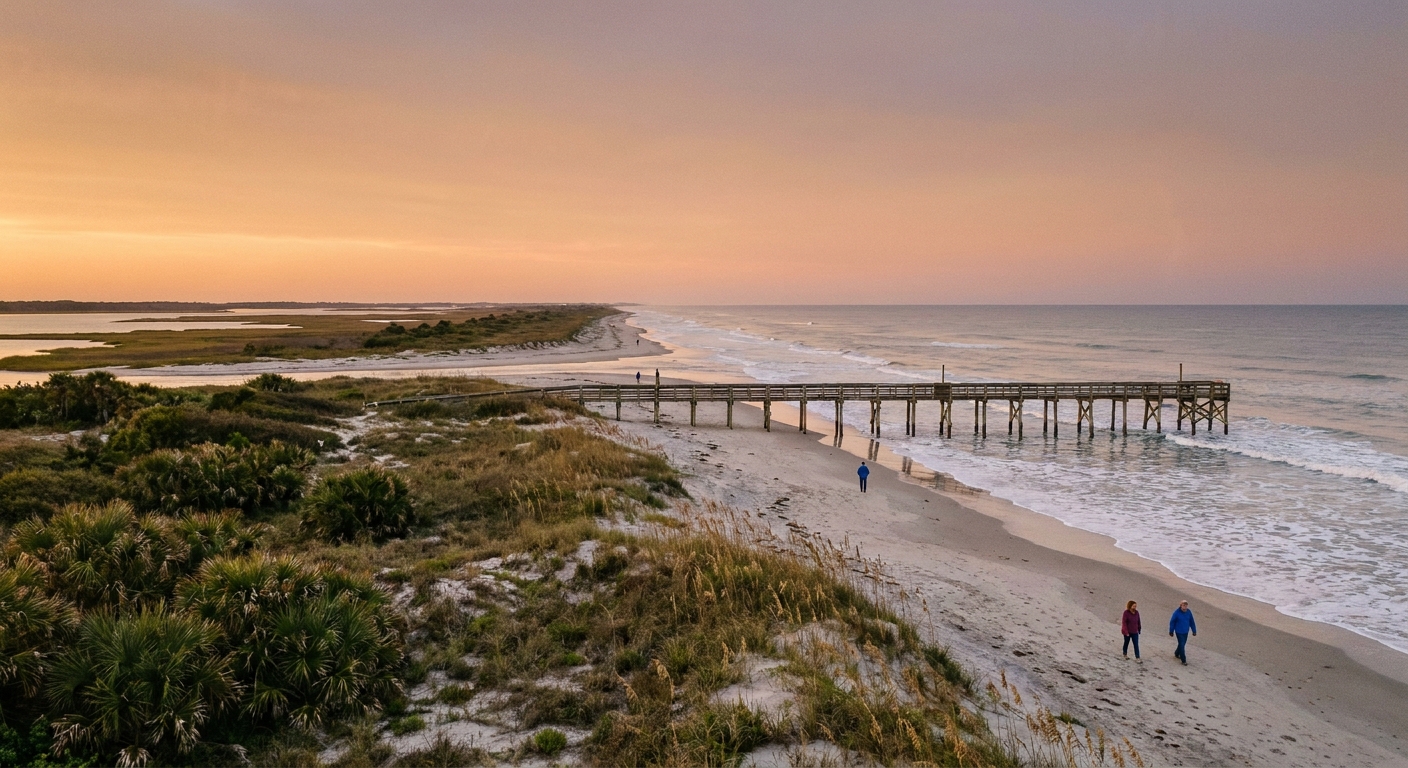
FEBRUARY AT A GLANCE · THE SPACE COAST
February is a dry, mild month for beach walks, wildlife refuges and rocket history, with a sea near 68°F that suits a quick dip better than a long swim.
DRY SEASON · SEA 67.8°F (2015–2024) · AIR NORMALS FROM ORLANDO INTERNATIONAL
Go for: dry afternoons near 75°F, 3.8 rain days in an average February, and 11 hours 14 minutes of daylight by mid-month.
Think twice before: a swim-first beach week. The sea holds at January’s 67.8°F, and March warms it to 71.4°F (both 2015–2024 averages).
Air: NOAA NCEI, Orlando International station · Sea: Open-Meteo Marine · Sun: sunrise-sunset.org · full sources at the end
On this page
- Space Coast weather in February74.9°F highs, 52.4°F lows, 3.8 rain days
- Can you swim in February?Sea at 67.8°F on 2015–2024 daily maxima
- Crowds and hotel prices in FebruaryDry-season demand and the heated-pool upgrade
- Things to do in FebruaryKennedy, Merritt Island and Canaveral National Seashore
- A two-day February itinerarySunrise at 7:02 a.m., sunset at 6:16 p.m.
- February vs January and MarchHighs of 71.8°F, 74.9°F and 78.9°F
- Is February a good time to visit?Yes for beach walks, no for long swims
Every figure here for air temperature and rain comes from one thermometer: the official NOAA station at Orlando International Airport, roughly 60 km (about 40 miles) inland. It is also the airport the Florida orientation recommends for flying to the Space Coast. The coast itself runs cooler than those numbers by day and milder by night, and it gets a sea breeze Orlando never feels. Read the highs in the normals below as the upper edge of a Cocoa Beach afternoon, and the lows as the colder edge of a beach-town night.
Space Coast weather in February: average highs, lows and rain days
| February normal (1991–2020, Orlando International) | Value |
|---|---|
| Average high | 74.9°F (23.8°C) |
| Average low | 52.4°F (11.3°C) |
| Precipitation | 2.04 inches |
| Days with 0.10 inch or more | 3.8 |
| Days with 1 inch or more | 0.5 |
| Nights at 32°F or below | 0.2 |
| Daylight on February 15 | 11 h 14 min |
| Sea surface, mean of daily maxima (2015–2024, Open-Meteo) | 67.8°F |
NOAA’s National Centers for Environmental Information publish the 1991–2020 normals for station USW00012815: an average February high of 74.9°F (23.8°C), an average low of 52.4°F (11.3°C), and 2.04 inches of precipitation across the month. Those are measured station normals from a real thermometer over thirty years, a different product from a reanalysis grid cell, and they describe the airport first and the beach second.
Measurable rain, at least 0.10 inch, falls on 3.8 days in an average February, roughly one day in seven. On a four-night trip that usually leaves you with dry days and, at worst, one damp one. Keep a single indoor block in reserve, such as a morning in the exhibit halls at Kennedy Space Center Visitor Complex, and put the beach on the dry days around it.
The average high and low sit 22.5°F apart, a T-shirt afternoon on one side and a night in the low 50s on the other. Pack a fleece or light jacket for evenings, long pants for a sunrise on the sand, and shorts for the middle of the day. Frost is rare at the airport: 0.2 nights in an average February drop to 32°F or below, about one February in five, and the coast stays milder than Orlando after dark.
On February 15 the sun rises at 7:02 a.m. and sets at 6:16 p.m. Eastern Standard Time, for 11 hours and 14 minutes of daylight. Sunrise comes straight up over the Atlantic on this coast, so a dawn beach walk needs only a 6:30 alarm. After 6:16 the air starts its slide toward the overnight low, so bring the fleece out to dinner.
Can you swim in the Space Coast in February? Sea temperature and what it feels like
Open-Meteo’s Marine API puts the sea surface off the Space Coast at 67.8°F (19.9°C) in February, averaged over 2015–2024. That figure is the mean of daily maxima, the warmest reading of each day, so it runs a shade warmer than a 24-hour average of the same water. A 7 a.m. swim likely meets something a little cooler than 67.8°F.
Water near 68°F catches the breath on the first plunge and invites short swims rather than long ones. Children and anyone planning more than a quick dip do better in a wetsuit top. Aim for mid-afternoon, when the air is near its 74.9°F high and a towel on the sand warms you back up. Our Florida safety guide covers the beach basics before you wade in.
We could not verify February wind or swell data for this coast, so we give no figure for either. The coast feels the sea breeze while inland Orlando does not, so the beach can feel cooler than the airport normals suggest. Check the day’s marine forecast and the lifeguard flags before any swim.
How busy is the Space Coast in February? Crowds and prices
In the Florida orientation, November through April is the state’s season, and February sits squarely inside it. We found no occupancy series or monthly room-rate data for the Space Coast, so we crown no week of February cheap or expensive. March, by contrast, brings spring break, and the same orientation lists holiday weeks and spring break as the annual price peaks.
No booking-lead series turned up in our sources, so we name no number of weeks. Book a refundable room as soon as your dates are fixed, and plan on one to three nights, the span the Florida orientation gives the Space Coast. If a rocket launch is the reason for the trip, confirm the date with the launch provider before paying anything non-refundable, since launch dates move. Our Florida trip-cost guide prices the rest of the stay.
Brevard County’s lodging-tax rate is one we could not verify, so we give no percentage. Ask for the total with taxes and any resort fee when you compare rooms. The Florida orientation flags resort fees and parking as the charges that quietly add real money per night.
A heated pool is the upgrade that changes a February stay. With the ocean at 67.8°F and nights near 52°F, a pool kept warm is the surest route to a long swim this month, so filter for ‘heated’ before you filter for price. We could not check pool temperatures at individual hotels, so ask the front desk before you book.
Things to do in the Space Coast in February
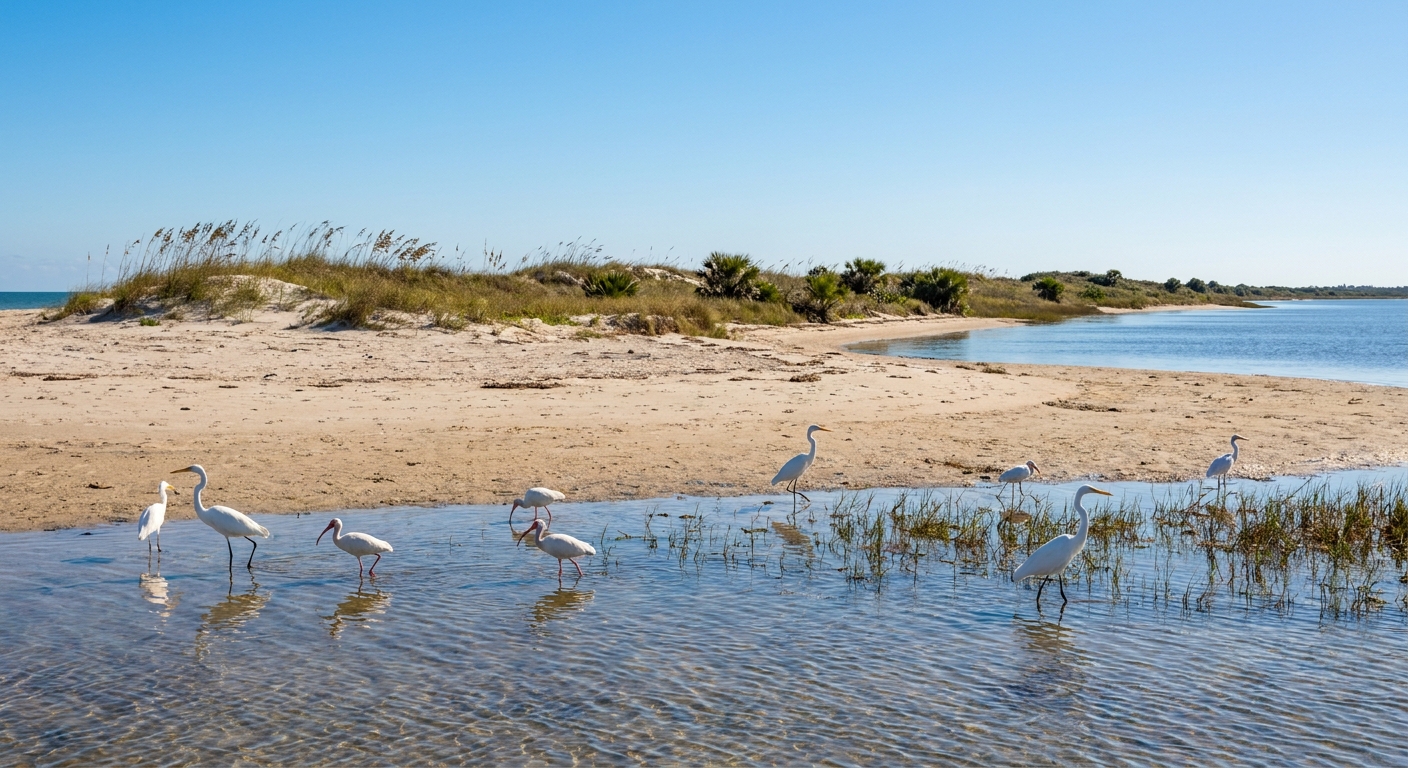
A 74.9°F average high lets you walk a refuge trail at noon or stand on an open beach through a long launch hold. Summer on the same ground brings the 90-degree heat and afternoon storms of Florida’s wet season, as our best-time guide sets out. Winter is also when birds that migrate south use the lagoon marshes.
Most trips build around four names: Kennedy Space Center Visitor Complex, Merritt Island National Wildlife Refuge, Canaveral National Seashore and the Cocoa Beach Pier. We could not verify current admission prices or opening hours at any of them, so we quote none. Check each operator the week you travel, and see our Florida things-to-do guide and national parks guide for passes and federal sites.
The sea at the pier holds at 67.8°F from January into February on the 2015–2024 series, while the average air high climbs 3.1°F, from 71.8°F to 74.9°F. So the air, rather than the water, sets the day: beach walks and pier strolls work from breakfast, and the refuge trails and the outdoor rocket displays at Kennedy are most comfortable from late morning until the 6:16 p.m. sunset.
We could not verify entry fees at the seashore or the refuge, so we list nothing there as free. Sunrise costs nothing. At 7:02 a.m. on February 15 it comes up out of the Atlantic, and any walk-in public beach access in Cocoa Beach puts you in front of it.
The Space Coast in February: a two-day itinerary
Day one: be on the sand at Cocoa Beach by 6:45 a.m. for the 7:02 sunrise, with a fleece for a morning near the low 50s. After breakfast, drive to Kennedy Space Center Visitor Complex for opening (check the hour) and stay through mid-afternoon, when the day nears its 74.9°F high and the outdoor exhibits are at their best. Leave by 4 p.m. for the Cocoa Beach Pier, walk it before the 6:16 p.m. sunset, and take the jacket to dinner.
Day two heads north: Merritt Island National Wildlife Refuge in the cool of the morning, then Canaveral National Seashore after lunch, when the sand is warmest and a quick dip is easiest to bear. With 3.8 rain days in an average February, any given day carries about a one-in-seven chance of measurable rain. If it lands on day two, swap the refuge and the seashore for a slower second morning at the Visitor Complex and move the beach to your next dry day.
The Space Coast in February vs January and March
| Normal | January | February | March |
|---|---|---|---|
| Average high (NOAA, 1991–2020) | 71.8°F | 74.9°F | 78.9°F |
| Average low (NOAA, 1991–2020) | 49.5°F | 52.4°F | 55.8°F |
| Precipitation (NOAA, 1991–2020) | 2.48 in | 2.04 in | 3.03 in |
| Days with 0.10 inch or more | 4.0 | 3.8 | 4.0 |
| Sea surface, daily maxima (Open-Meteo, 2015–2024) | 67.8°F | 67.8°F | 71.4°F |
From January to March the average high climbs from 71.8°F to 74.9°F to 78.9°F, and the average low from 49.5°F to 52.4°F to 55.8°F, all NOAA station normals for Orlando International. February is the driest of the three at 2.04 inches, against 2.48 in January and 3.03 in March, with 3.8 rain days against 4.0 in each neighbor. On the Open-Meteo sea series, January and February both average 67.8°F, and March rises to 71.4°F.
Moving back to January costs 3.1°F off the afternoon high and 2.9°F off the low, adds 0.44 inch of rain and leaves the sea where it was. Moving forward to March buys 4.0°F on the high, 3.4°F on the low and 3.6°F in the water, at the price of 0.99 inch more rain and the spring-break weeks the Florida orientation lists as a price peak.
Is February a good time to visit the Space Coast?
Yes, for travelers who want the Space Coast on foot: rocket history at Kennedy, refuge trails, beach walks and Atlantic sunrises, in a month averaging 74.9°F at its peak and drier than January or March. No, for a family whose vacation depends on hours in the ocean, where 67.8°F water means short dips. Our Florida with kids guide helps weigh that trade.
If the ocean is the point, choose March: the sea reaches 71.4°F on the 2015–2024 series and afternoons 78.9°F, and you book early and refundable around spring break. Our Florida best-time guide carries the calendar through the rest of the year.
Of these three months, February pairs the lowest rainfall, 2.04 inches, with 11 hours 14 minutes of daylight on the 15th, time enough for a morning at the launch complex and a sunset on the pier in the same dry day.
The last word
Book February if dry afternoons and a dawn beach matter more to you than a long swim, and pack for two climates, 74.9°F at lunch and 52.4°F before sunrise. Then leave one day loose. Half a day in an average February records an inch of rain or more, so across two Februaries you can expect one real soaking, and an indoor morning at Kennedy Space Center Visitor Complex is the easy swap.
Sources & data for this guide
- February, January and March air normals, precipitation, rain days and frost nights · NOAA NCEI monthly normals 1991–2020, station USW00012815 (Orlando International Airport, roughly 60 km inland) · checked Sep 24, 2026
- Coastal difference from the station (cooler days, milder nights, sea breeze) · NOAA NCEI station notes · checked Sep 24, 2026
- Sea surface temperature, mean of daily maxima, 2015–2024 · Open-Meteo Marine API · checked Sep 24, 2026
- Sunrise, sunset and daylight for February 15 · sunrise-sunset.org, converted from UTC to Eastern Standard Time · checked Sep 24, 2026
- Dry season, spring-break price peaks, resort fees, airport and nights for the Space Coast · our Florida orientation · checked Sep 24, 2026
- We could not verify February wind and swell, booking lead times, room-rate or occupancy series, Brevard County’s lodging-tax rate, or current admission prices and hours at Kennedy Space Center Visitor Complex, Merritt Island National Wildlife Refuge and Canaveral National Seashore. Launch dates move · check operators and launch providers when you book.
To plan your stay
- Best Time to Visit the Space Coast: Weather, Sea Temperature and the Quiet Months
- The Space Coast in January: Weather, Sea Temperature, Crowds and a Two-Day Itinerary
- The Space Coast in March: Weather, Sea Temperature, Crowds and Things to Do
- The Space Coast in April: Weather, Sea Temperature, Crowds and Things to Do