
FLORIDA · MARCH · BIG CYPRESS NATIONAL PRESERVE
Big Cypress National Preserve in March sits in the later weeks of Florida’s dry season. Afternoons average 80.6°F at NOAA’s Miami station, measurable rain turns up on about three and a half days of the month, and the sun holds the sky for just over twelve hours. For a trip built on boardwalks, cypress strands and slow drives along the Tamiami Trail, that calendar is very easy to plan around.
Those numbers come from a thermometer in Miami, on the coast. The preserve lies inland along US 41, where winter nights run colder than the city’s and summer afternoons hotter. Read the Miami normals as the nearest official reference, then pack one layer warmer than a Miami forecast would suggest for your sunrise walks.
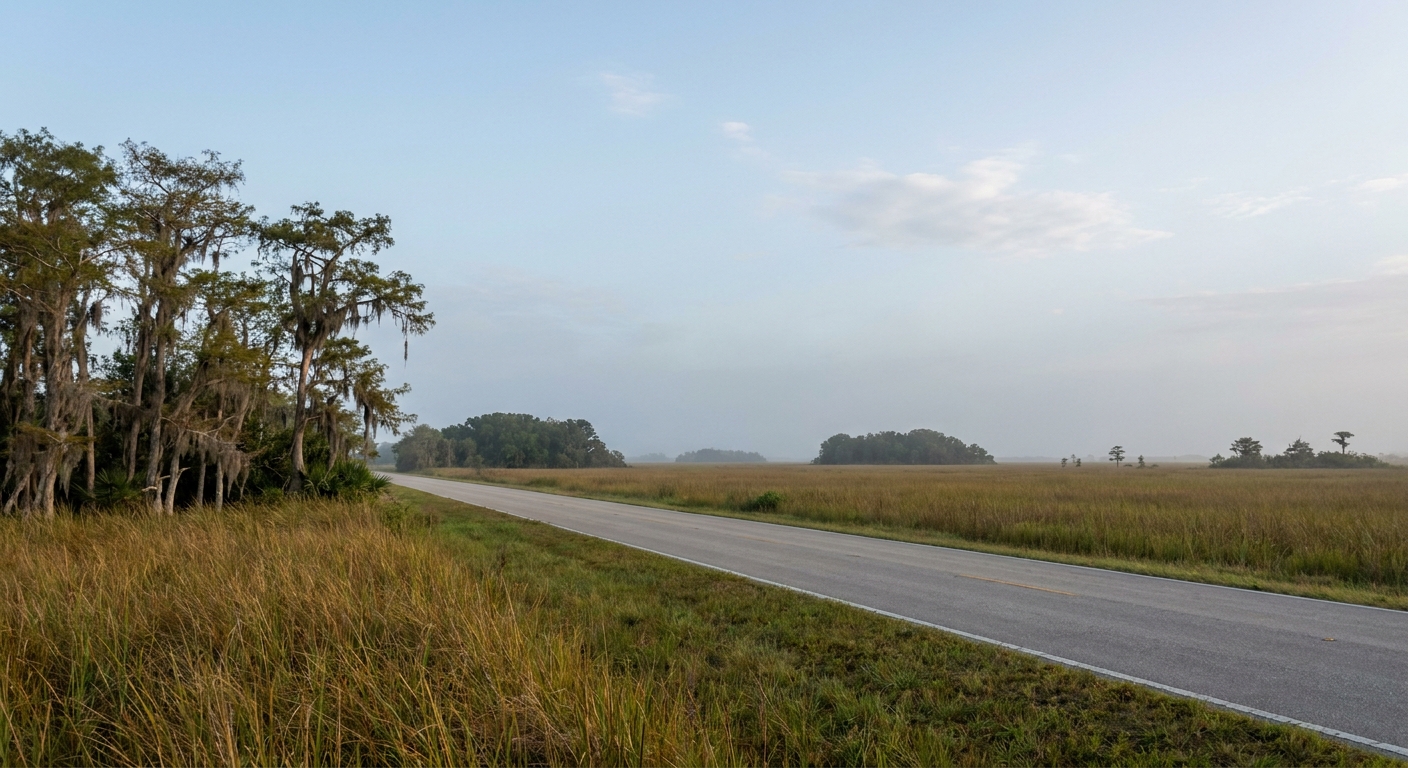
MARCH AT A GLANCE · BIG CYPRESS NATIONAL PRESERVE
Go in March for dry-season walking under 80.6°F afternoons and twelve hours of light, and pack for inland mornings colder than Miami’s 65.6°F normal.
DRY SEASON · 3.5 RAIN DAYS · SUNSET 7:31 P.M. ON MARCH 15
Go for: sunrise boardwalks in the cypress, gravel scenic drives in the late light, and a dry-season month with fewer rain days than April.
Think twice before: booking a non-refundable room in a spring-break week, or trusting Miami’s 65.6°F low for an inland sunrise.
Climate: NOAA NCEI 1991-2020, Miami station · Light: sunrise-sunset.org · full sources at the end
On this page
- Big Cypress weather in March80.6°F highs, 3.5 rain days, sunset at 7:31 p.m.
- How warm are March days and nights?65.6°F to 80.6°F, colder inland at dawn
- Crowds and prices in MarchSpring break, booking and lodging tax
- Things to do in MarchOasis, Kirby Storter, Turner River Road and Loop Road
- A two-day March itineraryTwo days from the 7:27 a.m. sunrise
- March vs February and AprilHighs of 78.2°F, 80.6°F and 83.6°F
- Is March a good time to go?Who should go in March, and who should wait
Everything that holds true all year, from the entrances to the park passes, lives in our Everglades guide and our Florida national parks guide. Flying in, MIA serves the Miami side of the Tamiami Trail and RSW the Naples side, and our Florida flights guide compares the airports.
Big Cypress National Preserve weather in March: average highs, lows and rain days
| March normal | Value |
|---|---|
| Average high | 80.6°F |
| Average low | 65.6°F |
| Precipitation | 2.46 in |
| Days with 0.10 in or more | 3.5 |
| Daylight on March 15 | 12 h 03 min |
| Sunrise · sunset, March 15 | 7:27 a.m. · 7:31 p.m. |
NOAA’s National Centers for Environmental Information publish the 1991-2020 normals we use, from station USW00012839 in Miami: an average March high of 80.6°F, an average low of 65.6°F and 2.46 inches of precipitation. That is a real thermometer at an official station, not a reanalysis grid cell, but it stands on the coast. The preserve sits inland on the Tamiami Trail, where winter nights run colder than the city’s, so every figure here describes Miami first and Big Cypress second.
Measurable rain, 0.10 inch or more, falls on 3.5 days of an average March. Spread over 31 days, that comes to roughly one day in nine. With only 2.46 inches for the whole month, most of those days bring a shower you can sit out in the car or at a visitor center, so plan outdoor mornings with confidence and keep one flexible slot in a two-day trip.
Between the 65.6°F average low and the 80.6°F average high lies a 15°F swing, and inland it can open wider on clear nights. Pack a fleece or light jacket for sunrise, breathable long sleeves for the boardwalks, a hat and sunscreen for midday, and closed shoes for the damp edges of a trail.
On March 15 the preserve gets about 12 hours 03 minutes of daylight, from sunrise at 7:27 a.m. to sunset at 7:31 p.m. local daylight time, converted from sunrise-sunset.org’s 11:27 and 23:31 UTC. Light lingers past 7 p.m., long enough for a full afternoon on the gravel roads and a sunset stop before the drive back.
How warm is Big Cypress National Preserve in March?
Afternoons average 80.6°F and nights 65.6°F at the Miami station, a spread of 15.0°F. Inland, expect the cool end of that range to sit lower, though we found no inland station normal to put a number on the difference.
In practice, start the day in a light jacket and shed it by mid-morning, then walk the afternoon in a T-shirt with sun protection. No beach lies inside the preserve, and we could not verify a water temperature for its rivers or sloughs. If you pair the trip with the coast, remember that many sea-surface figures for Florida are averages of daily maxima, a little warmer than a 24-hour mean.
Our sources give no count of freezing nights for March. The Miami normal low of 65.6°F sits far above freezing, but it is a coastal average, and a cold front can pull inland mornings well below it.
How busy is Big Cypress National Preserve in March? Crowds and prices
March falls inside Florida’s November-to-April dry season and in the middle of spring break, the stretch our Florida guide flags as the loudest and priciest for beach towns and parks. We found no occupancy series or monthly room rates for the towns around Big Cypress, so we crown no month the most expensive. Our Florida best-time calendar sets March against the other eleven months.
Spring-break weeks are when a refundable rate matters most. We have no lead-time data to turn into a number of weeks, so book the bed as soon as your dates are set, keep it cancellable, and weigh Naples, Everglades City and Miami bases with our where-to-stay guide.
We could not verify the lodging-tax rate that applies where you will sleep, so we give no percentage. Expect the checkout total to land above the nightly rate, and ask the property for the all-in figure, resort and parking fees included, before you pay.
Pay extra, if anywhere, for the bed closest to the Tamiami Trail. With sunrise at 7:27 a.m., a room on the preserve’s edge puts you on a boardwalk at first light, while a Miami hotel adds a pre-dawn drive each way. Our Florida trip-cost guide lays out the three budget tiers.
Things to do in Big Cypress National Preserve in March
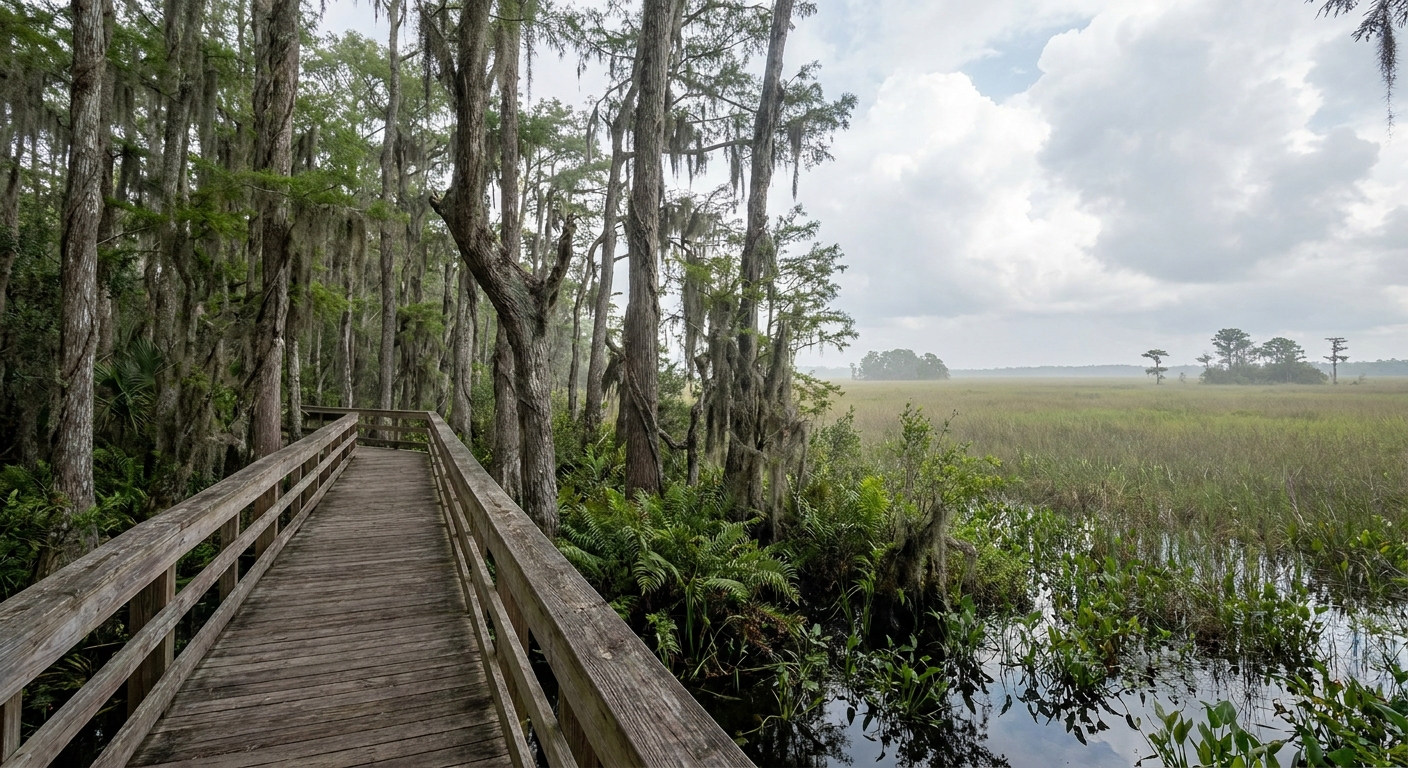
March still delivers the dry season with afternoons at 80.6°F, warm enough for shirtsleeves and mild enough for a midday boardwalk, and it does so with 3.5 wet days against April’s 4.3. Twelve hours of light fit a sunrise walk, a scenic drive and a sunset stop into one day without hurrying.
Start at the Oasis Visitor Center on the Tamiami Trail (US 41) for rangers, maps and current trail conditions. Farther along the same road, the Kirby Storter Roadside Park boardwalk heads into a cypress strand. Turner River Road runs north from US 41 as a gravel drive, and the Loop Road scenic drive curls south off the highway. Check the NPS Big Cypress site for boardwalk lengths, parking counts, hours and fees before you set out.
None of these places moves in March. The air does: afternoons run 2.4°F warmer than February’s 78.2°F and 3.0°F cooler than April’s 83.6°F, while inland mornings start below Miami’s 65.6°F. Walk the boardwalk early, keep the gravel drives for late afternoon, and time Loop Road for the last hour before the 7:31 p.m. sunset.
We could not verify a March fee or a free-entry day for the preserve, so we promise nothing free inside it. Driving the Tamiami Trail itself costs nothing beyond fuel, and park fees and passes sit in our Florida national parks guide.
Big Cypress National Preserve in March: a two-day itinerary
Day one. Be at Kirby Storter for the 7:27 a.m. sunrise, when the air sits near the 65.6°F low and may feel cooler inland. Move on to the Oasis Visitor Center once it opens (we could not verify its hours) for trail conditions and a ranger’s tip on where the birds are. Take lunch through the warmest stretch, when highs reach 80.6°F, then drive Turner River Road in the afternoon. Finish on Loop Road in the hour before the 7:31 p.m. sunset and be back on paved US 41 by dark.
Day two. Repeat the early start at a different stop, or cross to Shark Valley for the classic Everglades loop described in our Everglades guide. With 3.5 wet days in an average March, a turned forecast usually means a shower: move the walk to the hours after it passes and save the gravel roads for once they have drained. If a front brings a cold morning, start later and stretch the day toward sunset.
Big Cypress National Preserve in March vs February and April
| Miami station normal | February | March | April |
|---|---|---|---|
| Average high | 78.2°F | 80.6°F | 83.6°F |
| Average low | 63.2°F | 65.6°F | 69.8°F |
| Precipitation | 2.15 in | 2.46 in | 3.36 in |
| Days with 0.10 in or more | 3.6 | 3.5 | 4.3 |
At the Miami station, the average high climbs from 78.2°F in February to 80.6°F in March and 83.6°F in April, and the low from 63.2°F to 65.6°F and 69.8°F. Precipitation rises from 2.15 to 2.46 to 3.36 inches, with rain days at 3.6, 3.5 and 4.3. We could not verify a water temperature for any of the three months, and the preserve has no sea of its own.
Moving four weeks earlier takes 2.4°F off the afternoon high and makes mornings 2.4°F colder, with near-identical rain days (3.6 against 3.5), as our February guide details. Moving four weeks later adds 3.0°F to the high, 4.2°F to the low, 0.9 inch of rain and nearly one more wet day, as the dry season nears its end.
Is March a good time to visit Big Cypress National Preserve?
Yes, for walkers, photographers and drivers who want the dry season with warm afternoons: 80.6°F highs, 3.5 wet days and twelve hours of light make March easy to plan. It suits you less if your dates land in a spring-break week and you need a cheap, flexible room, since we could not price the season and Florida’s parks run busy then.
If March is a no, pick February. Its 78.2°F afternoons are cooler, its 2.15 inches of rain is a little less, and it sits just as squarely in the dry season. April makes sense only if you want more warmth, at 83.6°F highs with 3.36 inches of rain.
Of February, March and April, March alone pairs an average high above 80°F with the fewest rain days, 3.5.
The last word
A March trip to Big Cypress comes down to where you sleep relative to that 7:27 a.m. sunrise. Book the bed near the Tamiami Trail, hold one slot loose for weather, and know that an average March at the Miami station still brings one day with an inch or more of rain. On that day, trade Loop Road’s gravel for the Oasis Visitor Center and paved US 41, and go back to the cypress the next morning.
Sources & data for this guide
- February, March and April normals (high, low, precipitation, days with 0.10 in and 1 in or more) · NOAA NCEI 1991-2020 monthly normals, station USW00012839, Miami · checked Sep 24, 2026
- Daylight, sunrise and sunset on March 15 · sunrise-sunset.org, converted from UTC to local daylight time (UTC-4) · checked Sep 24, 2026
- Where the thermometer stands · the station is in Miami, on the coast. We found no inland normal for the preserve, and inland nights can run colder than these figures · checked Sep 24, 2026
- Water temperature, frost-night counts, lodging tax, room rates, fees and opening hours · we could not verify them, so we give none · check the National Park Service and your lodging before you go
- Place descriptions and the two-day plan are editorial · road and trail conditions change after rain, so ask at the visitor center.
To plan your stay
- Best Time to Visit Big Cypress National Preserve: Dry Season Months, Summer Heat and Rainfall
- Big Cypress National Preserve in February: Weather, Daylight and January vs March
- Big Cypress National Preserve in April: Weather, Rain Days, Daylight and Things to Do
- Big Cypress National Preserve in January: Weather, Daylight, Crowds and a Two-Day Itinerary